
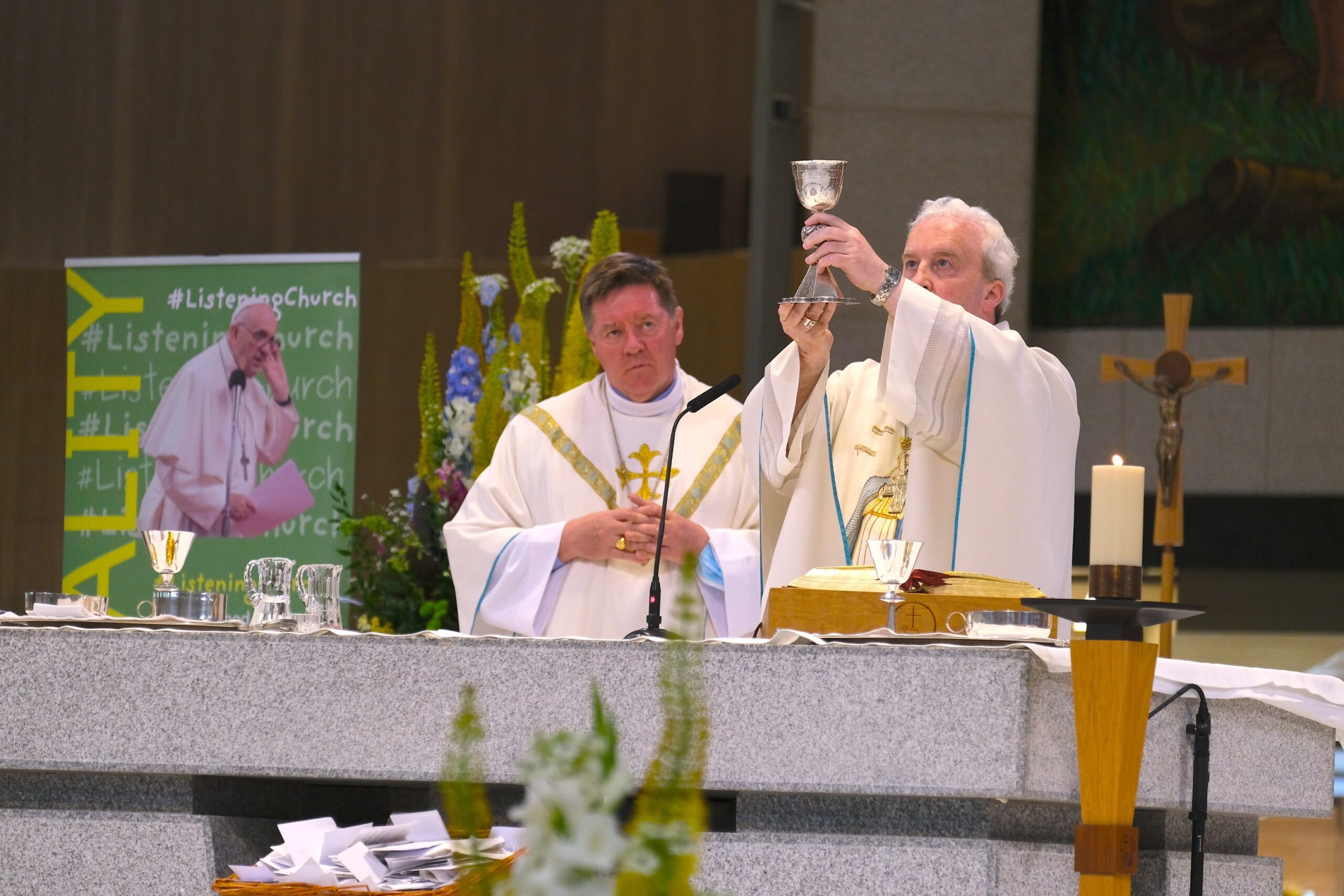
Bishop Michael Router’s Homily, Knock Basilica, Trinity Sunday, 31st May 2026
Text of Bishop Michael’s Homily
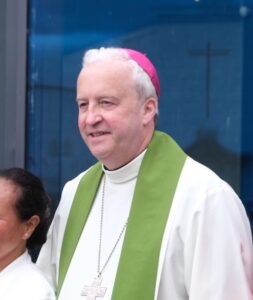
“A synodal Church is a Church that walks together, listens together and discerns together. Synodality is not simply a method of governance or administration. It is rooted in the life of the Trinity itself.”
Bishop Michael Router
This Feast of the Most Holy Trinity that we celebrate today brings us to the very heart of our Christian faith. We do not simply celebrate a doctrine. We celebrate a God who is love, a God who draws us into communion with him and with each other, and a God who teaches us that our deepest dignity is found in relationship and self-giving.
Pope Leo XIV published the first encyclical of his papacy last Monday called Magnifica Humanitas. In it he writes that God is revealed in Jesus Christ as “love itself in relationship, expressed in the mutual gift of self and in sharing with the world.” The Trinity teaches us that relationship is not secondary to life, but that relationship is at the very centre of human existence.
In today’s Gospel, Jesus tells Nicodemus, “God loved the world so much that he gave his only Son.” Those words reveal the inner life of the Trinity. The Father gives the Son. The Son freely offers himself for the salvation of the world. The Holy Spirit is poured into our hearts so that we may live in communion with God and with one another. The Trinity is a mystery of total self-giving love.
And because we are created in the image and likeness of the Triune God, our lives only become meaningful when they are shaped by love, communion and self-gift. The encyclical of Pope Leo reminds us that human beings “can fully discover their true selves only in sincere self-giving.” This is deeply challenging in a culture that often tells us happiness comes through self-obsession, material success or personal achievement. The Gospel teaches the opposite, that we become truly ourselves when we learn to give ourselves away in love.
That is true in every vocation. Parents discover it in sacrifice for their children, married couples discover it in fidelity and mutual care, priests and religious discover it in service to God’s people and communities discover it when they care for the vulnerable, the lonely and the forgotten.
This teaching is especially important in our own technological age. Pope Leo’s encyclical, Magnifica Humanitas, though primarily focused on artificial intelligence and modern society, warns against reducing people to a judgement on their usefulness. The Holy Father speaks about the danger of human beings being valued only for their efficiency and productivity. We see this temptation everywhere today in politics, in social media, in the world of celebrity. People are measured by success, the weak are ignored and the vulnerable treated as burdens. But the Trinity shows us another way. In God there is no domination or exploitation, only communion, mutual love and shared life. The more our world reflects the Trinity, the more human and compassionate it becomes.
Saint Paul captures this beautifully in today’s second reading in words that are often used as the greeting at Mass, “The grace of the Lord Jesus Christ, the love of God and the fellowship of the Holy Spirit be with you all.” Christian life is about fellowship and communion. The Church herself is called to reflect the life of the Trinity.
This is why Pope Leo, and Pope Francis before him, speak so strongly about synodality. A synodal Church is a Church that walks together, listens together and discerns together. Synodality is not simply a method of governance or administration. It is rooted in the life of the Trinity itself. Just as the Father, Son and Holy Spirit exist in communion, so too the Church is called to become a communion of listening, participation and shared responsibility.
Synodality helps us avoid a cold, clinical or authoritarian approach to life and faith because in a synodal Church everyone matters. Every baptised person has gifts to offer. We remain open to being taught by one another and guided by the Holy Spirit speaking through the whole People of God. Pope Leo describes Catholic Social Teaching as “a shared discernment” rooted in the Gospel and attentive to the signs of the times. That vision echoes the ongoing synodal journey of the Church seeking a path that safeguards the dignity of every person.
Today’s feast also reminds us that faith is never private. Those who believe in Christ are drawn into the great work of renewal begun through His passion, death and resurrection. We are called to help build the Kingdom of God here on earth, in our communities and families, by recognising every person as our brother or sister, children of the one father. Christianity always has social consequences because love always reaches out.
In this, Mary is our model. At the moment of the Annunciation, the Trinity was revealed in a unique way. The Father sends the angel Gabriel, the Holy Spirit overshadows Mary, and the Son takes flesh in her womb. In Mary, the mystery of the Trinity becomes close, approachable and human. She teaches us to say yes to God and to become a missionary people.
Today, then, we celebrate God who is love, Father, Son and Holy Spirit. May the mystery of the Trinity shape our relationships, deepen our communion, strengthen our synodal journey and teach us to live lives of generous self-giving. And may “the grace of the Lord Jesus Christ, the love of God and the fellowship of the Holy Spirit” remain with us always.
Amen.
+ Bishop Michael Router
Auxiliary Bishop of Armagh