


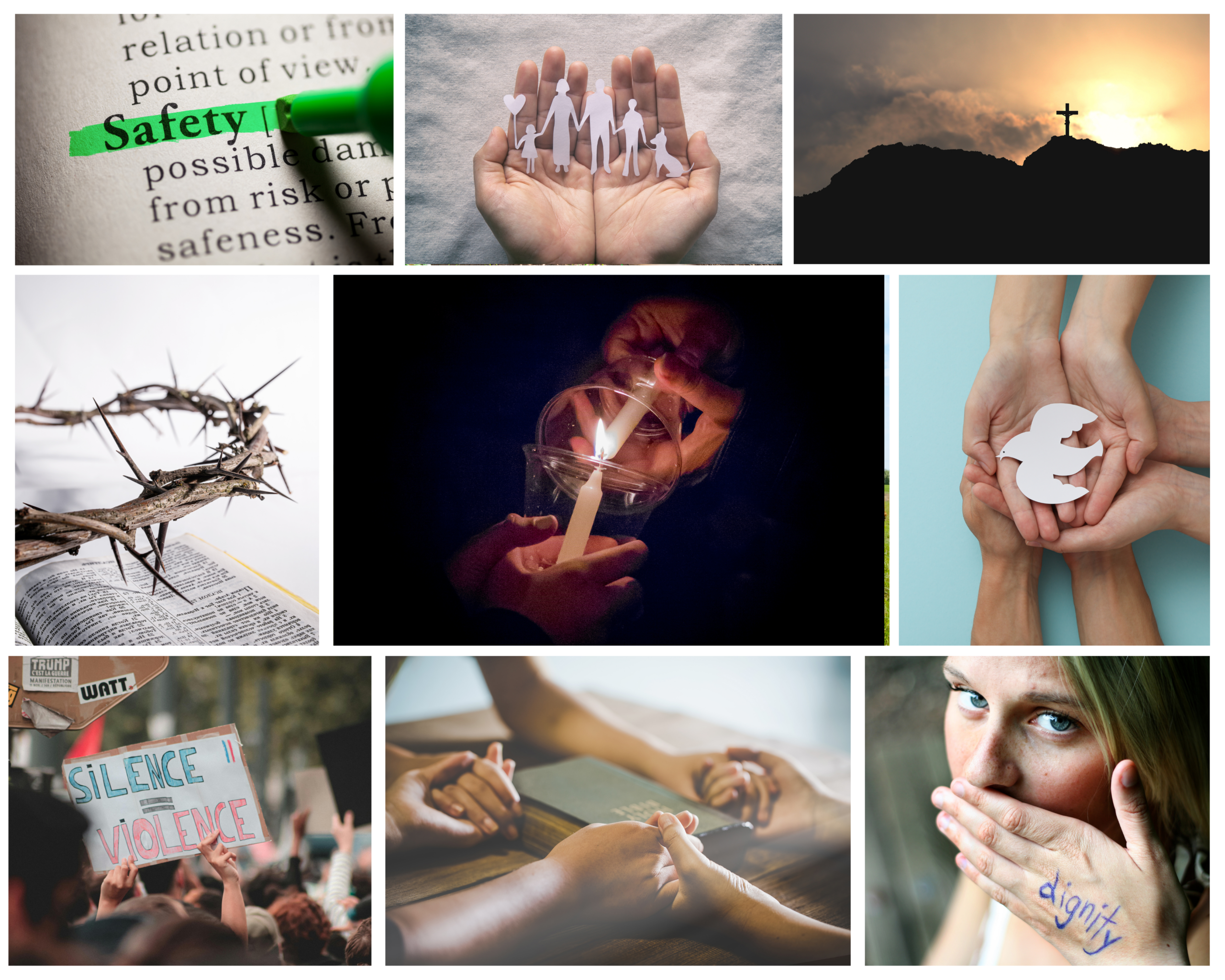
Ending Violence Against Women and Girls: A Call to Compassion, Cultural Change and Responsibility
“Blessed are the peacemakers, for they shall be called children of God.” (Matthew 5:9)
Following their latest meeting, which took place on Friday 1 May, the Church Leaders Group (Ireland), which is made up of the Catholic and Church of Ireland Archbishops of Armagh, the Moderator of the Presbyterian Church in Ireland, and the Presidents of the Methodist Church in Ireland, and the Irish Council of Churches, have expressed their sympathy and prayerful support for all families who have been affected by violence against women and girls, calling it ‘an epidemic sweeping across Ireland.’
Following the horrific murder of Amy Doherty, Christian leaders from across Ireland’s Churches spoke with one voice in condemning femicide, misogyny and all forms of violence against women. In their statement, they described violence against women as “an epidemic sweeping across Ireland.”
The leaders expressed particular concern that Northern Ireland has become one of the most dangerous places in Europe for women, noting that 30 women have been murdered there since 2020 and that many were killed within their own homes — places which should have been safe environments of trust and protection.
Behind every statistic is a human life. A daughter. A mother. A sister. A friend. A person created in the image and likeness of God.
As Christians, we cannot remain silent in the face of such suffering.
The Church Leaders rightly point out that legislation and public policy, while essential, are not enough on their own. Long-term cultural change is needed, a society where misogyny is challenged both online and offline, where women are respected and protected, and where boys and young men are encouraged towards models of positive masculinity rooted in dignity, compassion, responsibility and love.
The Christian understanding of human dignity leaves no room for violence, coercion, control or abuse. The Gospel calls society towards relationships marked by respect, equality, justice and self-giving love.
Church communities also have a vital role to play. Parishes, schools, ministries and faith groups must continue striving to be places where women feel safe, heard, valued and supported. Pastoral accompaniment, safeguarding awareness, practical support and partnership with charities and frontline organisations remain critically important.
At a time when anger, online hostility and dehumanising narratives are increasingly normalised, the statement is also an invitation to reflect deeply on the culture we are creating together and the example being handed on to younger generations.
We pray for all women who have lost their lives through violence, for all survivors of abuse, and for all families carrying unimaginable grief.
Read the full statement from the Church Leaders Group here:
Full Statement
Text of the Church Leader’s Statement
The Church Leaders said, “Following the recent horrific murder of Amy Doherty, which marked the 65th women to be murdered on the island of Ireland since 2020 – as people of faith, we wish to express our sympathy and prayerful support for all those families who have been bereaved in such terrible circumstances and also our deep concern at what has become an epidemic of violence against women sweeping across Ireland.
“As Church leaders we are grieved and shamed by reports that Northern Ireland is now one of the most dangerous places for a woman to live in Europe, with 30 women murdered since 2020. We are deeply troubled by the reports that have found that the most dangerous place in Northern Ireland for a woman is her own home. No one should feel unsafe inside their home. Yet 21 of the 30 women murdered in Northern Ireland were attacked in what should have been for them a safe environment.
“As Christian leaders, we condemn femicide absolutely and all forms of violence perpetrated against women. While we welcome the introduction of policy and strategies to address the horror of violence against women and girls in both jurisdictions in recent years, it is regrettable that this has not resulted in a decrease in this abhorrent murder rate. At this particular time, we urge politicians, men and women together, to continue to work with the emergency services and the courts, to ensure that they have the resources necessary to combat this epidemic.
“While legislation and policy are important, they can only do so much. At all levels of society there needs to be active long-term cultural change, where misogyny is not tolerated online or elsewhere, with boys and young men given the opportunity to discover the joys of positive manhood, that loves, respects, and honours women and girls, just as God loves them equally.
“Together, we want to encourage churches to remain vigilant and where possible to provide practical and pastoral support to women seeking refuge from abuse. At the same time, we want to affirm the work that is being done by charities currently supporting these women.
“Finally, for all who have been let down by society and are grieving the loss of a loved one taken so unnecessarily, it is our prayer that you will know justice, and that the ‘…peace of God, which transcends all understanding, will guard your hearts and your minds in Christ Jesus’ (Philippians 4:7).”
Most Reverend Eamon Martin
Catholic Archbishop of Armagh and Primate of All Ireland
Most Reverend John McDowell
Church of Ireland Archbishop of Armagh and Primate of All Ireland
Right Reverend Dr Richard Murray
Moderator of the General Assembly of the Presbyterian Church in Ireland
Very Reverend Dr Charles McMullen
President of the Irish Council of Churches
Reverend Alan Wardlow
President of the Methodist Church in Ireland