The National Synodal Assembly in Gormanston marks a significant moment for the Church in Ireland as five years of prayer, listening and discernment begin to find expression in practical steps towards renewal and mission.
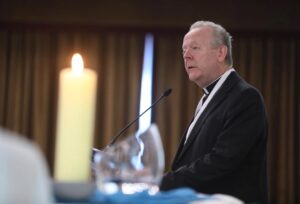
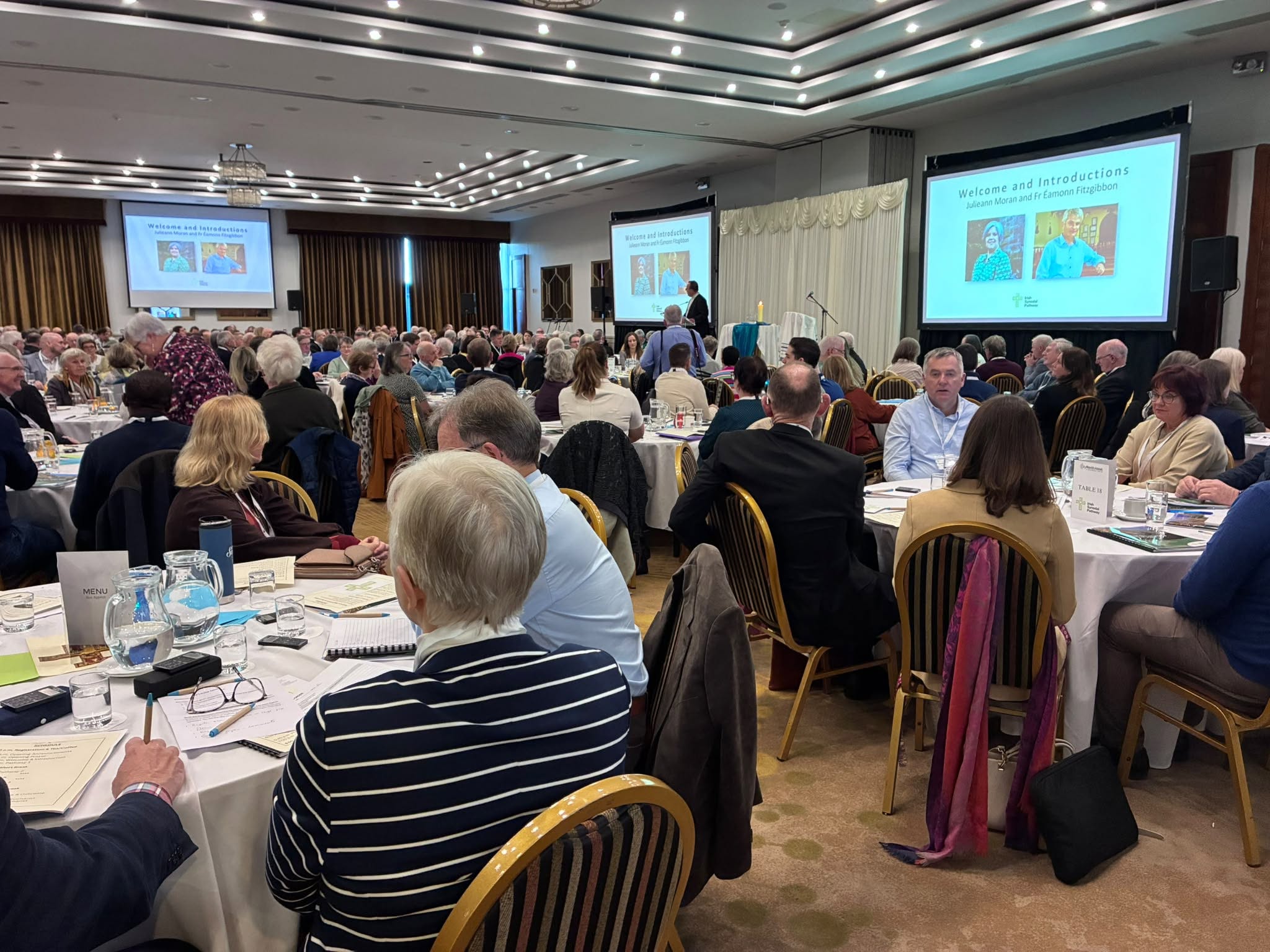
The Archdiocese of Armagh joined representatives from across the Catholic Church in Ireland on Saturday 17 October 2026 for the National Synodal Assembly in Gormanston, County Meath. The gathering brought together lay women and men, bishops, priests, religious and representatives of Catholic organisations and communities to reflect on the future of the Church in Ireland and to discern how it might respond more faithfully to the call of the Gospel.
For the Archdiocese of Armagh, the Assembly represented both a significant moment in the national Synodal Pathway and a continuation of the work already taking place across its own parishes, schools and communities. It offered an opportunity to bring the experience of local listening, prayer and discernment into the wider conversation about the renewal of the Church in Ireland.
Opening the Assembly on behalf of the Irish Bishops’ Conference, Archbishop Eamon Martin recalled the vision of a Synodal Church set out by the late Pope Francis exactly eleven years earlier, on 17 October 2015.
Archbishop Eamon reminded delegates of Pope Francis’ conviction that:
“It is precisely this path of synodality which God expects of the Church of the third millennium.”
Reflecting on the progress of the Irish Synodal Pathway since 2021, Archbishop Eamon emphasised that synodality concerns much more than assemblies, consultations or new ecclesial structures. It represents a deeper conversion in how the Church lives, listens, discerns and carries out its mission.
“Over the past five years we have come to understand that synodality is not simply about events such as this one, or about new structures for the Church in Ireland,” he said.
“Instead it is about a way of BEING Church, centred on prayer and encounter with Christ, nourished by the Holy Mass and the sacraments.”
Armagh’s contribution to the Synodal Pathway
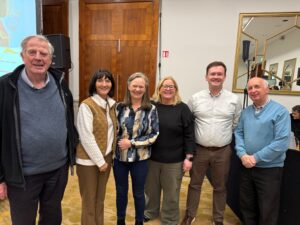
The National Assembly comes at an important time for the Archdiocese of Armagh, which has spent recent years encouraging a renewed understanding of the shared baptismal responsibility of all the faithful for the life and mission of the Church.
In March 2026, nearly 300 delegates gathered in Armagh for the Diocesan Synodal Congress on Youth, Family and Faith. That gathering built upon several years of listening and reflection within the Archdiocese and provided an opportunity for parishioners, clergy, religious, young people and families to consider how the Church might respond creatively and faithfully to the pastoral realities of today.
The Congress helped identify priorities for pastoral renewal, with particular attention to strengthening parish life, accompanying families, engaging young people and encouraging a more missionary Church.
Its work continues through Archbishop Eamon’s pastoral letter, Go, Rebuild My Church, and the five missionary pathways of Formation, Liturgy, Accompaniment, Mission and Encounter, known collectively as FLAME.
These diocesan priorities share much with the concerns emerging across the Church in Ireland. They reflect a growing recognition that renewal cannot depend solely upon national initiatives or decisions. It must also take root in the everyday life of parishes and communities, where people encounter Christ, celebrate their faith, care for one another and share responsibility for the Church’s mission.
The participation of the Archdiocese in the National Assembly therefore formed part of a wider commitment to ensure that the voices and experiences of local faith communities contribute to the continuing renewal of the Church, both locally and nationally.
Five pathways for the Church in Ireland
At the heart of the National Assembly were five pathways which brought together the fruits of prayer, listening and discernment undertaken across Ireland since 2021.
They invited delegates to consider how the Church might become more faithful to its missionary calling, deepen its sense of belonging, respond to experiences of hurt and exclusion, accompany people through the realities of life, and recognise the gifts and responsibilities of all the baptised.
The pathways were:
- The Church that Proclaims the Gospel
- The Church as a Community of Belonging
- The Church as a Place of Healing
- The Church that Accompanies
- The Church that Empowers for Ministry and Co-Responsibility
Through prayer, reflection, conversation and discernment, delegates considered 35 pastoral proposals arising from these pathways. Their recommendations will now contribute to the further discernment of the Irish Bishops’ Conference as it considers the next steps in the national process.
The proposals addressed many of the realities facing the Church in Ireland, including the place of young people and families, the recognition of women’s gifts and leadership, the need for healing and reconciliation, and the development of a more participative and missionary Church.
Although the proposals attracted differing levels of support and some will require further consideration, the Assembly demonstrated a continuing willingness among participants to engage with the difficult questions facing the Church and to seek practical ways forward together.
Archbishop Eamon welcomed this spirit of participation, reminding delegates that the Synodal Pathway must remain open to different experiences, perspectives and even criticism. He recalled Pope Francis’ encouragement of parrhesia, the courage to speak openly and truthfully.
Cardinal Grech: From discernment to mission
Addressing delegates through a recorded message, Cardinal Mario Grech, Secretary General of the Synod of Bishops, praised the commitment of the Church in Ireland to the Synodal Pathway and encouraged participants to move confidently from discernment towards implementation.
Cardinal Grech emphasised that the purpose of synodality is not simply to bring people together for discussion but to enable the Church to become more faithful and effective in its mission.
He reminded delegates of the words of the Final Document of the Universal Synod:
“Mission illuminates synodality and synodality spurs to mission.” (§32)
Reflecting particularly on the importance of marriage and family life, Cardinal Grech encouraged the Church in Ireland to strengthen its pastoral accompaniment of families, recognising both their beauty and the difficulties and fragilities they experience.
He also encouraged participants to look beyond the challenges of declining religious practice and changing parish structures, and instead to recognise the new possibilities for faith and mission which the Holy Spirit may be bringing to birth.
“Do not measure the future of the Church simply by what is disappearing. Discern what the Holy Spirit is bringing to birth,” he told the Assembly.
This call has particular resonance for the Archdiocese of Armagh as it continues to develop the pastoral priorities emerging from its own Synodal Congress. The task facing the Church is not simply to preserve existing ways of doing things, but to discern how its people, gifts and resources can best serve the proclamation of the Gospel today.
The next steps for the Archdiocese of Armagh
As the National Assembly concluded, attention turned towards the practical work that lies ahead.
In his closing address, Archbishop Eamon affirmed the determination of the Irish Bishops to continue the Synodal Pathway and to ensure that the recommendations of the Assembly receive careful consideration.
“We fully intend to continue this work, because we believe it is the way of the Church for today and tomorrow,” he said.
He acknowledged that some recommendations might lead to relatively immediate action, while others will require further discernment, planning and resources. He also recognised the need to build upon the many pastoral initiatives already taking place throughout Ireland.
For the Archdiocese of Armagh, this work is already underway.
During November, parish representatives will gather regionally to reflect further on Archbishop Eamon’s pastoral letter, Go, Rebuild My Church, and the priorities and proposals that emerged from the Diocesan Synodal Congress.
These gatherings will provide an opportunity to consider how the five FLAME missionary pathways can find practical expression within parish life, and how local communities might identify particular priorities for renewal.
Parishes will be encouraged to discern one or two proposals that they can begin to develop, while also considering the support, formation and resources they will need to bring these commitments to life.
An important part of this continuing work will also involve reflecting upon the experience of synodality itself. As the universal Church prepares to evaluate the implementation of the Synod on Synodality during 2027, the Archdiocese will have an opportunity to consider what has been learned through five years of listening, dialogue and discernment, and how these experiences are shaping the life and mission of the local Church.
The challenge is to ensure that synodality becomes more than an occasional gathering or consultation. It must increasingly become part of how our parishes listen, pray, make decisions, share responsibility and respond to the needs of their communities.
Looking towards 2032 with hope
In his concluding remarks, Archbishop Eamon invited delegates to consider the years ahead in the light of several important anniversaries, including the bicentenary of Catholic Emancipation in 2029, the 1,600th anniversary of the coming of St Patrick to Ireland in 2032, and the Extraordinary Jubilee of Redemption in 2033.
These milestones offer opportunities not simply to commemorate the past, but to reflect on the kind of Church we are becoming and the missionary responsibility entrusted to us.
For the Archdiocese of Armagh, the approaching anniversary of St Patrick in 2032 carries particular significance. The vision of renewal expressed in Go, Rebuild My Church invites us to rediscover something of the missionary faith, courage and imagination associated with St Patrick, and to consider what it means to proclaim Christ in the Ireland of today.
The National Synodal Assembly has provided an important moment of encouragement in that work. It has also reminded us that the renewal of the Church will not come about through proposals and plans alone. It will require prayer, personal and communal conversion, trust in the Holy Spirit and the generous participation of the whole People of God.
As the Assembly drew to a close, Archbishop Eamon recalled the theme chosen by Pope Leo XIV for the centenary celebration of World Mission Sunday, which followed on 18 October:
“One in Christ, united in mission.”
These words offer a fitting expression of what lies ahead, both for the Church in Ireland and for our own Archdiocese.
The National Assembly may have concluded, but the work of renewal continues in our homes, schools, parishes and communities, wherever people respond to Christ’s invitation to live and share the Gospel.
As Archbishop Eamon reminded delegates, the Church cannot fulfil its mission if division and cynicism prevent us from recognising the gifts that the Holy Spirit continues to bestow upon us.
The invitation now is to continue together, with faith, courage and hope, trusting that the same Spirit who has accompanied our listening and discernment will guide the next steps.
One in Christ, united in mission. A People Called to Shine, Sent to Serve.