Home Blog Page 110

Year of Vocation Mass

National Co-ordinator of Diocesan Vocations (and director of Vocations in the Archdiocese), Ms Frances Dignan, Director of Vocations Ireland, Ms Marie Hogan, President of St Joseph’s Young Priests Society, Ms Brenda Drumm, Year of Vocation Project Manager, members of the Vocations Committee of the Archdiocese of Armagh and representatives from parishes and religious orders.  All Are Welcome.

Following the Year of Vocation Closing Mass, a new vocations resource DVD will be launched by Cardinal Brady.

The DVD entitled ‘You Will Be My Witnesses’ has been developed by the Conference of Diocesan Vocation Directors and the Vocations Directors of Religious Orders represented by Vocations Ireland.

The DVD comprises three short 10 minute films in which three diocesan priests, two religious sisters, a religious brother and a seminarian, speak about their vocation journey and their ministries. The DVD will be used as a resource to help develop an awareness of what vocation to religious life and to priesthood is like. The DVD will be WIDELY available in dioceses through the vocation Director.

Discerning our gifts and using them in service

Our baptism calls us to use our gifts in service of our community and our society. 

  • What are our gifts?
  • How do we discern them?
  • How do we discern the gifts of others?
  • How do foster the gifts of all the people in the parish?
These are the questions that will be explored on this afternoon of reflection with Br. Loughlan Sofield, ST.
This afternoon of reflection will be repeated in the Armagh Diocesan
Pastoral centre, Dundalk on Saturday 19 September, 2009 from 1.45pm –
5.30pm.
For more information contact the Office of Pastoral Renewal and Family Ministry +353 42 933 6649.

Armagh Diocesan Cursillo Movement

Pronounced “Cur-SEE-yo” Spanish word meaning “short course”
Cursillos de Christianidad is the full title of the movement. This phrase literally means a short course of lectures in Christian living, but it is not intended to simply refer to a course of instruction (lectures). Rather, it means a short running course (such as St. Paul’s admonition to run the good race). It is something to experience, not just to understand intellectually, which is implied in thinking of a course of instruction.
Cursillo includes a three-day weekend which begins on Thursday evening and concludes on Sunday. During these three days, talks are given by lay persons and clergy who have spent time working together carefully planning and preparing for the Weekend.
A Cursillo weekend can be made only once and therefore is not a substitute for a retreat. The basic atmosphere of a Cursillo weekend is unlike the individual solitude of a retreat. During the weekend the teachings of Christ are discussed in a climate of joy and community. Actually the Cursillo weekend makes succeeding retreats more profitable and participants are encouraged to make regular retreats.
The weekend is an opportunity to meet clergy and laity who are seeking to strengthen their faith.

How Did Cursillo Begin?
The first Cursillo Weekends were developed in the 1940’s in Majorca, Spain. The first Cursillo weekends were aimed at young Catholics, in an attempt to bring them back to Christ at a difficult time for Spanish Catholicism.
What happens after the weekend?
Each individual who returns from the weekend with a renewed commitment to work for Christ is encouraged to join in the activities of an existing community of persons who have also experienced the weekend. The purpose of this community is to give strength and support to each other in order that each person might grow in faith and develop their particular gifts of ministry. The support is provided through two methods:
GROUP MEETINGS (Reunions) that are held frequently when several people gather together for mutual encouragement and support through PRAYER, STUDY, and ACTION.
AREA MEETINGS (Ultreyas) that are meetings of larger groups of people who have either participated in a weekend or who might be interested in doing so. Here they share and witness to others so that the Church and their own faith may be built up.

Who can take part?
Cursillo is open to all adult Catholics, men and women, married or single. Laity and clergy alike are invited to join the fellowship.
What is expected of participants?
To be open and willing to respond to what you experience, to share your feelings with others, and to allow them to share theirs with you.
To make a genuine effort to discover where you are and where or how you can grow in your Christian life.
To feel secure in the knowledge that you are accepted where you are and as you are, and to know that a specific response is not expected of you.
To be curious enough and thirsty enough for spiritual exploration and nourishment to acknowledge a need to commit a weekend of your life totally to Christ.
How do I apply?
Every participant has a sponsor, who has attended a Cursillo weekend. This sponsor will assist you in preparation for the weekend and, more importantly, assist you after the weekend. If you know someone in your parish who has attended a Cursillo weekend, ask them to tell you more and how to get started, and let your priest know about your interest. Pray about it, and if you conclude that you should go, submit an application that your sponsor will provide.
Contact:
[email protected]
Armagh Diocesan Cursillo Events:
Cursillo Weekends: Usually in September, held in Benburb Priory
Ultreya (Prayer Meeting): Last Friday of every Month, 8.00pm, Marist Crypt, St Mary’s Road, Dundalk
Rosary for Peace: Every Sunday, 7.00pm, St Nicholas’ Church, Dundalk
Clonoe Ultreya: 3rd Wednesday of Every Month
Christ is counting on YOU!

+++

Many Thanks & God Bless,

Steve Clarke, Secretary

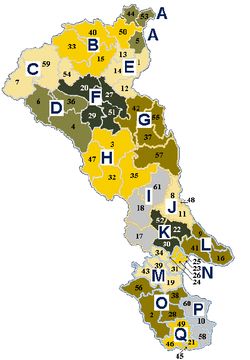
April Draft of the New Pastoral Areas

Referring to the month of May as the final phase of the consultation period Cardinal Brady says:

“In this final phase of the consultation your views are still welcome. My hope is that you will be able to look at the pastoral area proposed for your parish and agree with me that your parish could work with the other parishes in your proposed pastoral area in carrying on Christ’s mission in the world.”

Addressing the people of the diocese the Cardinal explains how people can still share their views with him on the proposed pastoral areas.

“If you believe that this grouping of parishes is not the best way forward and think there is a better grouping that doesn’t impact negatively on another proposed grouping let us know. You are welcome to express your views to your priest or to the chairperson of your parish pastoral council who will then bring your view to your Parish Priest. Your Parish Priest can then represent your view directly to me or to Bishop Clifford. All such viewpoints are to be expressed to us by your Parish Priest by Friday 22 May.

Finally he explains:

“We will then make our final decision about the pastoral areas of the diocese. The official map of the new pastoral areas of the diocese will then be published in June of this year.”

MAP OF PROPOSED PASTORAL AREAS: APRIL DRAFT

CARDINAL BRADY’S PASTORAL ADDRESS

CARDINAL BRADY’S APRIL ADDRESS – Video (including access to previous videos)

CARDINAL BRADY’S APRIL ADDRESS – YouTube

24 April – Meeting between Cardinal Seán Brady, Bishop Noel Treanor and Bishop Gerard Clifford and the Ulster Political Research Group – Ara Coeli, Armagh

Meeting between Cardinal Brady, Bishop Noel Treanor and Bishop Clifford
and the
Ulster Political Research Group
Ara Coeli, Armagh
Friday 24 April 2009

With my colleagues Bishop Treanor and Bishop Clifford, I was glad to have this opportunity to meet the Ulster Political Research Group and I thank them for coming to meet us here in Armagh, the See of St. Patrick.

We agreed to the meeting first and foremost because we are followers of Christ, committed to building peace, understanding and reconciliation in our society.

We wanted to help in any way we can to address fears and build trust. We especially wanted to better understand the concerns and hopes of the Loyalist community. We wanted to convey our concern about addressing social and economic need in areas where the Loyalist tradition is celebrated and cherished. We wanted to talk about building hope and confidence for all in these times of dramatic economic down-turn.

This was a highly significant meeting, important in its symbolism as well as its substance. We met to inspire hope, to encourage each other and our respective communities in working for a future based on peace, justice and a better way of life for all.

All those present agreed that to build this better future it is vital to liberate our society from the scourge of drugs, alcohol abuse, racism and criminality which compound social disadvantage and destroy hope.

Hope can be eroded by fear. Fear stifles individuals and communities; it deepens suspicion and undermines trust. The contribution of Christians is to identify and address fears where they threaten society and its hopes.

We conveyed to the UPRG the real fear that exists within the Catholic community about the possibility of future violent activity by Loyalist groups. We appreciate and are greatly encouraged by the assurance given by the UPRG today that there is no going back to the past, that together we are building a new future.

We all have a responsibility to help  build that future for present and future generations. We all have a duty to ask ourselves what more we can do to remove the obstacles to trust which remain between our respective communities and traditions.

At the beginning of the meeting, I drew the attention of the UPRG representatives to a statement which was attributed to them in 1987. It read, ‘“there must be a mechanism created to harness the love, generosity, courage and integrity of Ulster people, in both religious communities, and direct its great power towards the light of a new beginning.” We share this commitment and we have agreed with the UPRG that we will continue to work with them and with other representatives of the Loyalist tradition, through our Northern Ireland Catholic Council on Social Affairs, to make this vision a reality.

There is no going back. The only viable future for Northern Ireland is a totally peaceful and reconciled future based on mutual respect and a shared commitment to peaceful and democratic means of dealing with age-old political differences. Our meeting today with the UPRG is, in my view, a reason to be hopeful about the future.

I want to thank you each of you, the reporters, for being here today and for reporting on this event. You too make an important contribution to peace by reporting events such as this. I know you will understand the sensitive nature of this meeting and why we have therefore agreed with the UPRG that we will be adding nothing further to our statement at this time.

Thank you again.

NBSCCC Website

The purpose of the website is to give access to a range of information and tools which the Catholic Church is putting into place to safeguard our children and young people. 

NBSCCC was established in 2006 and is sponsored by the Irish Bishops Conference, the Conference of Religious in Ireland and the Irish Missionary Union.  Through the NBSCCC these three Sponsoring bodies are working towards a unified approach to child protection across Ireland.

The role of the NBSCCC is threefold:

  1. to advise the Irish Bishops Conference, the Conference of Religious in Ireland and the Irish Missionary Union on best practice relating to child protection policies and procedures,
  2. to develop policies and procedures, to guide all constituent members of the Church, in the direction of best practice in safeguarding children,
  3. to monitor practice in the various parts of the Church, through processes of audit and review.

If you want to know more about the work of the NBSCCC and the developemtns within the Sponsoring Bodies in relation to child protection then check out the website http://www.safeguarding.ie which is open for all to view.

Forming Pastoral Areas

The bishops along with the pastoral area steering team are now in the process of creating a final draft of the pastoral areas of the diocese.

It is expected that the final draft will be made available to parishes for final consideration on the weekend of 25/26 April.  Parishioners will have until Friday, 22 May to make known any views or concerns they have with regard to the proposed pastoral areas.  At that stage the bishops will make their final decisions on the pastoral areas and the official pastoral area map will be made widely available in early June.

5 April – Mass of Remembrance for the Disappeared – St Patrick’s Cathedral, Armagh

MASS OF REMEMBRANCE FOR THE ‘DISAPPEARED’
ST. PATRICK’S CATHEDRAL, ARMAGH
HOMILY GIVEN BY
CARDINAL SEÁN BRADY
PALM SUNDAY – 5 APRIL 2009

We come to celebrate this Remembrance Mass for the Disappeared.  We remember with love and affection all the disappeared:

Those whose remains have been recovered:

Eamon Molloy
Brian McKinney
John McClory
Jean McConville and
Danny McILhone

And those for whom the searches continue:

Seamus Ruddy
Seamus Wright
Robert Nairac
Kevin McKee
Columba McVeigh
Gerry Evans
Charles Armstrong and
Brendan Megraw

The logo on the cover of the Mass booklet incorporates a Forget-me-not flower.  Jesus told his friends:  ‘Do this in memory of me’ when he took bread, blessed it and gave it to them.  That is what we are doing here today.  We are remembering those who have disappeared and we are remembering Jesus. 

The beautiful Entrance Hymn reminds us that the Lord Jesus hears the cry of his people.  His plans are to save all who dwell in dark and sin.

In every Mass we remember the saving death of Christ. We not only remember it but we re-enact the saving death of Christ under the appearance of bread and wine and we believe that Jesus is really and truly present with us.  At the Last Supper Jesus said to his disciples:  “Do this in memory of me” – in other words:  Forget me not. We are determined not to forget the disappeared.  We are also determined not to forget our one and only Saviour, Jesus Christ.  Today we give thanks for the discovery of the remains of Danny McIlhone last year, we get hope from this. 

Each and every one of us is a member of the Body of Christ.  The Gospel which we have just heard reminds us how some people treated Christ and his dead body with the utmost respect – especially regarding its burial.  Others treated Christ with terrible disrespect.  Some people showed amazing love and respect for the body of Christ. 
Each and every one of us is, by baptism, part of the body of Christ.  We are called to respect our own bodies and the bodies of each other.  We believe in the Resurrection of the body.

Once again in this Mass I repeat the call to anyone who has any information which could help locate the bodies of the disappeared.  I beg them to pass that information onto the Commission for the Location of Victims.  I do so for two reasons:

I ask myself what would Jesus have done in that situation?   I am not quite sure but I have an idea.   I know what Jesus did when he met the widow who had lost her only son.  Jesus had pity on her and said to her:  “Do not weep”.  Jesus then approached and touched the coffin, the bearers halted, and he said:  “Young man I say to you, arise” and the young man sat up and began to talk and he gave him to his mother.  I think we have answer there the answer to our question – What would Jesus have done? 

I invite you to consider the attitudes of different people to Jesus during his passion as described by Mark.  There were those who showed him immense respect and love and affection, especially women and Joseph of Armathea and Nicodemus.  On the other hand, there was Judas who betrayed him and the soldiers who mocked him – men who had absolutely no respect for him.  While he was in Bethany there came a woman.  She had an alabaster jar of perfume, genuine and very expensive.  She broke the alabaster jar and poured it over his head.  Some people were very upset, especially Judas.  To what end is this waste of myrrh taking place?  For this myrrh could have been sold for more than 200 denarius and given to the poor.  Jesus said:  ‘Leave her be.  Why do you give her hassle?  She is working a good work in regard to me.  She took an early opportunity to anoint my body for burial’ and wherever the Gospel is preached in the whole world, even what she has done will be spoken in remembrance of her’.

Contrast that with the attitude of Judas who arrived in the Garden of Gethsemane with a crowd with swords and cudgels.  When Judas came he immediately came to him and said:  ‘Rabbi’ and kissed him.  It was a false and treacherous respect which he showed despite the fact that he had spent years in the company of Jesus and saw his kindness and goodness.  Then the armed men arrested him and held him tight while his disciples left him and ran away.  They put a purple robe on Jesus and made a crown of thorny branches and put it on his head.  They mocked him and ridiculed the idea of his being a king.  They beat him over the head with a stick.  They spat on him and fell on their knees in mock reverence to him.  Then they led him out to crucify him.  What we have there is immense disrespect that was shown to Jesus and to his body. 

Finally, there is Joseph of Arimathea, who was daring enough to go to Pilate and ask for the body of Jesus. He brought a linen cloth and took him down and wrapped him in the linen cloth and placed him in a tomb which was hewn out of rock.  He rolled a stone over the door of the tomb.  
Mary of Magdalene, Mary, the Mother of Joset were watching and took note of where he was laid.  Once again immense respect and love and veneration being shown there for the dead body of Jesus. 

One of the most beautiful and most famous works of art in the world is Michael Angelo’s Pieta, it shows Mary holding the dead body of Jesus in her arms and on her knees.  Here we are touching on very sacred and holy things. 

People live on many different kinds of crosses, illness, loss, loneliness, sorrow, rejection.  We need those who want to take them down – people who will lay them in places where life will be kinder and fuller.

I don’t know where the bodies of the disappeared are.  Perhaps there are some who do.  But I know they are with God and God knows where they are and God knows who has that information.  Perhaps God alone has the power to look into those hearts and change them.  Perhaps those people are prevented from doing the right thing by fear or misguided loyalty.

Earlier today I prayed for those people that they may allow their hearts to be touched and that they may be moved to do the right thing.  I was praying my breviary and I was saying these words from one of the psalms:
It is better to trust in the Lord
Than to trust in men.
It is better to trust in the Lord,
Than to trust in princes.

We are at the beginning of Holy Week.  Holy Week teaches us many things:
It teaches:

•    That it is a lonely thing to carry a cross on your own
but that none of us need to carry our cross alone
for God carries our cross as he carried it with his son.
•    That he carried it with his love
•    It teaches that others help us too
•    They are the people who care for us in our lives
•    Who help us to take up our crosses
•    For they are the care and love of Jesus for us.

AMEN.

4 April – 50th Anniversary of Our Lady of Lourdes Church, Drogheda

50TH ANNIVERSARY OF OUR LADY OF LOURDES CHURCH, DROGHEDA
HOMILY GIVEN BY
CARDINAL SEÁN BRADY
SATURDAY 4 APRIL 2009

We are here today to celebrate the 50th anniversary of the official opening of this magnificent Church of Our Lady of Lourdes 50 years ago for on 5 April 1959 this Church was dedicated to the praise and glory of God by Cardinal John D’Alton.  On that day the Mayor, Councillor Eugene Hughes, and the members of the Corporation processed in their beautiful robes to the opening ceremony.  Cardinal D’Alton was escorted by canopy bearers and a Scouts Guard of Honour. 

The architect, Simon Aloysius Leonard, of the firm W. H. Byrne, Architects, Dublin had been planning this new church along with Mgr Stokes for years.  The tender of Creedon Construction for £132,000 had been accepted in 1956 and the length of the building was set as two years. 

The decision to build a new church was taken for two reasons:
1.    The condition of the original church – The Chapel of Ease at Hardman’s Gardens had deteriorated seriously.
2.    Expansion of the town, in this area, Bothar Brua, Pearse Park and Yellowbatter Ascal needed a larger church.  People wanted a house of prayer and a place of worship to meet their needs

I reckon the choice of name was determined by the centenary, in 1958, of the Apparition of Our Lady to Saint Bernadette at Lourdes.  So it was placed under the patronage of our Lady of Lourdes.
Some of you will remember the Sales of Work and the Carnivals to raise the funds.  Others will recall the search for donors.  Their donations are listed in the Commemoration booklet and are acknowledged on the plaques.  The brochure says that Monsignor had a keen appreciation of the requirement for money to finance his capital projects.  Donors were found for each of the 84 pews on which you sit and for the windows, rails and altars as well as the Mortuary Chapel and the Baptistery.  Then there was the Golden Book which included a contribution from one Senator John F Kennedy of Boston, Massachusetts.  It is no wonder Monsignor Stokes was conferred with the freedom of the Borough of Drogheda.

About 15,500 people gave a minimum of £1 each to the construction of this wonderful Church, dedicated to Mary, the Mother of Jesus and our Mother also.  That in itself must have given to the people of this area, of this town, of this parish, a great sense of ownership – a great feeling of pride and satisfaction.  Yes, it was the House of God – the House of Prayer – but it was also the House of the Faith of the People of Drogheda. 

Today I congratulate you, and your parents and grandparents, on all of that.  I congratulate everyone associated with producing the lovely booklet which captures so well, in words and photographs, the atmosphere of that wonderful weekend. 

We are gathered here this evening to thank God for all of that.  I am very happy to be joined in this celebration by so many priests – native sons of the parish, priests who formerly ministered here and by priests ministering here in Drogheda at present.  I recall also the fact that Bishop Austin Quinn and Bishop James Lennon were here at the opening. 

As we look to the past, we also contemplate the present and keep an eye on the future.  The Catholic population of this parish is now estimated at 15,500, the same number as contributed £1 or more to the original church.  Then there are almost 2,000 in the parish of Mell.  There were big challenges facing Mgr Stokes and his companions.  They faced them and they succeeded. 

There are big challenges facing us today but challenges of a different kind.  The challenge today is to build the faith of the Catholic community and to re-build it where it has deteriorated.  These challenges must be addressed and they too can be managed.  The challenge is for us to go and make disciples of each and every one of these people.  Each and every one is made in the image and likeness of God.  Each and every one has been purchased by the saving blood of Jesus Christ.  Each and every one of us is to play our part. 

We are celebrating the Year of St. Paul – a year called to mark the 2,000th anniversary of his birth.  The Second Reading this evening is from St. Paul.  He tells us “let this mind be in you which was in Christ, Jesus”, for the attitude which we should have is the one which Jesus had.  Jesus always had the nature of God but he did not think that he should try and remain equal to God.  Jesus didn’t jealously hold on to the glory that was his by right.  Instead, he emptied himself; he made himself powerless as a slave is powerless.  He gave up all he had and took the nature of a servant.  He was humble and he walked a way of obedience -all the way to death on a cross.  His attitude was that he put others first and thought others before himself. 

If we are lead others to Christ, we ourselves must first find Christ in our own lives.  We must try to be like him.  We must have the same attitude.  We normally think of saving our own skins first.  This was not the way Jesus thought. 

Here in this Church of Our Lady of Lourdes I am reminded of the example of St Bernadette.  After Our Lady had appeared to Bernadette, she entered the convent and became a nun.  She could have reasonably expected to have been be left in Lourdes to gives talks to pilgrims and to generally promote the shrine.  But not at all, she was asked to transfer to a convent in Nevers which was a long distance from Lourdes.  I am not sure if she ever came back.  Bernadette obeyed because she believed that that was what God wanted her to do.  She made a big sacrifice but today she is a great saint in Heaven because she did not try to seek out her own interests, but she obeyed what her superiors asked of her. 

Today is the Foundation Day of the Medical Missionary of Mary.  We rejoice in the news of the election of their new Congregational Leader, Sister Siobhan Corkery and we pray God’s blessing upon her and her newly-elected Council. 

The Medical Missionaries became great by having the attitude of Christ.  They too became great by giving up all that they had and answering God’s call to become medical missionaries in faraway Africa.  They answered the call by, first of all, forgetting themselves and their own self-interest.  They thought first of the good of the African people and of the advantages which the Good News of the Gospel could bring to Africa.

Today the mission territories are nearer home.  All of those 15,500 people are part of the Body of Christ by baptism.  Christ said:  “Whatsoever you do to the least of my brethren you do to me”.  It is interesting to see the different ways the Body of Christ is treated in Mark’s account of the passion. 

First of all we have the fact that it was anointed by a woman with an alabaster jar full of a very expensive perfume made of pure nard.  Some people ridiculed the idea and criticized her harshly.  For them it was a waste of good perfume.  “It could have been given to the poor” they said.  But Jesus defends her action robustly.  They could help the poor any time they liked.  They could not always prepare her body for burial.  She had done a fine and beautiful thing.  She had shown great and devout respect for the body of Christ.

Mercy – compassion – this will be the quality on which we will all be judged at the final judgement.  One of the earliest writers in the Church went so far as to say that “those who have no mercy will be condemned”.  Traditionally these demands of the Gospel have been handed down to us as the corporal and spiritual works of mercy.  They are the kind of works that should characterize the life of every follower of Christ. 

The corporal works of mercy require us to feed the hungry; give drink to the thirsty; clothe the naked; shelter the homeless; care for the sick; visit those in prison and bury the dead.  Tomorrow in Armagh we will be remembering the ‘Disappeared’ whose bodies have not received Christian burial.  Today’s Gospel indicates the care taken to make sure that the dead body of Christ got a respectful burial. 

I am sure that over the past 50 years many followers of Christ went out from this Church to carry out those same corporal works of mercy.  They would have been inspired to do so by the words of God which they heard here.  They would have been empowered by the Bread of Life which they received here. 

Over the next fifty years may Mary help us all to continue to do so. 
May Mary, Our Lady of Lourdes, Mother of Hope accompany us on that journey.  May she teach us to proclaim the Living God,
Help us to bear witness to Jesus, the one Saviour.
May she make us kindly to our neighbours,
welcoming to the needy,
Concerned for justice,
impassioned builders of a more just world.
Our Lady of Lourdes, intercede for us
As we carry out our work in history,
Certain that the Father’s plan will be fulfilled.

AMEN

5 April – Mass of Remembrance for the Disappeared

STATEMENT BY CARDINAL SEÁN BRADY
MASS OF REMEMBRANCE FOR THE DISAPPEARED

Speaking ahead of tomorrow’s Annual Mass of Remembrance for the Disappeared in St. Patrick’s Cathedral, Armagh, Cardinal Seán Brady appealed to anyone with information which could possibly lead to the discovery of the bodies of the ‘disappeared’ to pass that information on to the appropriate people.

He said:
“I hope that those who have even the tiniest item of information will get the courage to pass it on and so, perhaps, help to ease the pain of the families who have suffered so much for so long”.

The Mass takes place in St. Patrick’s Cathedral, Armagh at 3.00 pm.