Home Blog Page 118

20 March – Launch of Pastoral Letter from Pope Benedict XVI to the Catholics of Ireland – St Patrick’s Cathedral, Armagh

LAUNCH OF PASTORAL LETTER FROM
POPE BENEDICT XVI TO THE
CATHOLICS OF IRELAND
20 MARCH 2010
HOMILY GIVEN BY
CARDINAL SEÁN BRADY
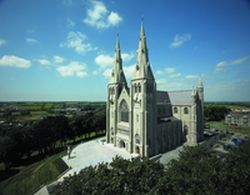
ST PATRICK’S CATHEDRAL, ARMAGH

After this Mass I will present to you the Pastoral Letter of Pope Benedict.  In that context, I thought the Gospel acclamation this morning very powerful.  It says: Blessed are those who, with a noble and generous heart, take the Word of God to themselves and yield a harvest through their perseverance

The Pastoral Letter is not the Word of God.  It is the word of the Successor of Peter – who is the Vicar of Christ – the word made flesh.

I know that you are a noble and generous hearted people.  I urge you to take this word and read it for yourselves.  Read it, little by little.  It is written in clear, simple language but it contains deep and rich sentiments.  If you persevere in reading it – prayerfully and carefully – I have no doubt but that you will reap a rich harvest both for yourselves and for those you love.

During these weeks of Lent I ask you to make time to pray for an outpouring of God’s mercy and the Holy Spirit’s gift of holiness and strength upon the Church in Ireland.

We must all take the word to heart so that we can have a personal friendship with Jesus.  His wounds are the means by which the power of evil is broken and we are reborn to life and hope.

Bereavement Support Training Programme

bereavement-support-trainin
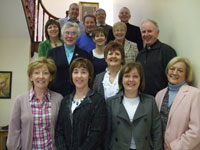
On 13th March 2010, eleven participants successfully completed a twelve week training programme as Bereavement Support Facilitators. The participants were from Dungannon and Dundalk.The programme was presented by the highly respected bereavement therapist and educator, Jean Woods, and was held at the Diocesan Pastoral Centre in Dundalk.

Most Rev. Gerard Clifford brought the programme to a conclusion with the celebration of the Eucharist. The concelebrants were Very Rev. Dean Colum Curry and Rev. Seamus White.

bereavement-support-traininThe photo shows Bishop Clifford, the concelebrants, Jean Woods and the programme participants.

Statement from Cardinal Brady concerning a priest of the diocese

STATEMENT FORM CARDINAL SEÁN BRADY CONCERNING A PRIEST OF THE DIOCESE
27 MARCH 2010

Click here for statement

27 March 2010 – Statement from Cardinal Brady Concerning a Priest of the Diocese 27 March 2010

STATEMENT FROM CARDINAL SEÁN BRADY
CONCERNING A PRIEST OF THE ARCHDIOCESE OF ARMAGH
27 MARCH 2010

After celebrating Vigil Mass in a parish in the Archdiocese of Armagh, Cardinal Seán Brady spoke to the congregation about a decision he has made concerning their Parish Priest.

Cardinal Brady said “The policy of the Archdiocese of Armagh is that in all matters relating to child safeguarding, the safety and welfare of the child must be our paramount concern.”

Cardinal Brady said that in the light of information relating to child safeguarding issues, he has asked  the priest concerned to take a period of leave from his ministry which he has agreed to do.   “This is to allow the civil authorities, who have been informed, to investigate this matter” he said.  

Cardinal Brady emphasised that the priest “continues to enjoy the right to the presumption of innocence whilst these matters are being investigated.”

Cardinal Brady concluded “May I take this opportunity again to invite any person who may have been abused by a priest or religious to come forward to the diocese and/or to make contact with the civil authorities.”

ENDS

24 March – Statement by Cardinal Seán Brady on the resignation of Bishop John Magee

“I wish to acknowledge the long and varied ministry of Bishop John Magee in the Church.  I thank him for his contribution to the work of the Irish Bishops’ Conference over the past twenty years, particularly in the area of liturgy.  I assure him of my prayers at this time and wish him good health in his retirement.

“However, foremost in my thoughts in these days are those who have suffered abuse by clergy and those who feel angry and let down by the often inadequate response of leaders in the Church.”

Statement by Cardinal Seán Brady on the resignation of Bishop John Magee

“I wish to acknowledge the long and varied ministry of Bishop John Magee in the Church.  I thank him for his contribution to the work of the Irish Bishops’ Conference over the past twenty years, particularly in the area of liturgy.  I assure him of my prayers at this time and wish him good health in his retirement.

“However, foremost in my thoughts in these days are those who have suffered abuse by clergy and those who feel angry and let down by the often inadequate response of leaders in the Church.”

Pastoral Letter

PASTORAL LETTER OF THE HOLY FATHER POPE BENEDICT XVI
TO THE CATHOLICS OF IRELAND


20 March – Cardinal Brady’s Summary of the Pastoral Letter of the Holy Father to the Catholics of Ireland

ADDRESS BY CARDINAL SEÁN BRADY
WELCOMING THE
PASTORAL LETTER OF THE HOLY FATHER, POPE BENEDICT XVI,
TO THE CATHOLICS OF IRELAND

GIVEN AT 11 A.M. TO THE CONGREGATION AT MORNING MASS
IN ST PATRICK’S CATHEDRAL, ARMAGH
SUNDAY, 20 MARCH 2010


My dear people of the Cathedral Parish of Armagh:

Today is a very historic day for the Catholics of Ireland.

Pope Benedict has written a pastoral letter to express his closeness to us at this challenging time. He says ‘with words that come from my heart… I wish to speak to each of you individually and to all of you as brothers and sisters in the Lord’. He speaks of the wounds inflicted on Christ’s body by child sexual abuse and of the sometimes painful remedies needed to bind and heal them. He talks of the need for unity, charity and mutual support in the long-term process of restoration and renewal.

I welcome this letter. I am deeply grateful to the Holy Father for his profound kindness and concern.

It is evident from the Pastoral Letter that Pope Benedict is deeply dismayed by what he refers to as ‘sinful and criminal acts and the way the Church authorities in Ireland dealt with them.’

He says the Church in Ireland must acknowledge before the Lord and others the serious sins committed against defenceless children.

He addresses various groups within the letter, but the first group he addresses are the victims of abuse and their families. He says to them, ‘You have suffered grievously and I am truly sorry. Your trust has been betrayed and your dignity violated.’ Pope Benedict acknowledges that when many survivors were courageous enough to speak of what happened to them, no one would listen. He says it is understandable if they find it hard to forgive or be reconciled with the Church. But he also hopes that they will find reconciliation, deep inner healing and peace, by knowing how close Christ is to them in their pain, who was himself a victim of injustice and sin.

In the name of the Church, Pope Benedict openly expresses the shame and remorse that we all feel about the abuse that has occurred. He expresses his readiness to meet victims of sexual abuse in the future, as he has done in the past.

In addition, the Pastoral Letter has particular words addressed to young people, parents, priests and religious, as well as the Bishops of Ireland.

To us Bishops he says we must admit ‘that grave errors of judgement were made and failures of leadership occurred’ which have seriously undermined our credibility and effectiveness. He calls on us to continue to cooperate fully with the civil authorities. He exhorts us to fully apply and keep updated our child safeguarding policies. ‘Only decisive action carried out with complete honesty and transparency’, Pope Benedict says, ‘will restore the respect and good will of the Irish people towards the Church.’ He asks us as Bishops to renew our sense of accountability before God.

The Holy Father offers very stern words to priests and religious who have abused children. He says directly to them: ‘You betrayed the trust that was placed in you by innocent young people and their parents, and you must answer for it before Almighty God.’ He says they must also be accountable to the processes of civil and canon law.  He tells them that their crimes brought shame, dishonour and damage to the Church. ‘Openly acknowledge your guilt,’ he says, ‘submit yourselves to the demands of justice, but do not despair of God’s mercy.’

Throughout the letter Pope Benedict talks about the need for healing, repentance and renewal. He expresses the depth of the pain that has been caused and acknowledges that some people find it difficult even to go inside the doors of a Church after all that has occurred. He recognises the deep shock of parents at the ‘terrible things that took place in what ought to be the safest and most secure environment of all.’ Yet he believes in the healing power of Christ’s love, even in the darkest and most hopeless situations.

The Holy Father calls on us to face the future with courage and determination. No one imagines that the present painful situation will be resolved quickly. Yet with perseverance, prayer and working together in unity, the Holy Father says we can be confident that the Church in Ireland will experience a season of rebirth and spiritual renewal.

Central to this renewal is the lay faithful playing their full part in the life of the Church. Specifically addressing the children and young people of Ireland, he invites them to bring their ‘much needed enthusiasm and idealism to the rebuilding and renewal of our beloved Church.’ He calls on all the faithful to find new ways of passing on the beauty and richness of friendship with Christ. ‘A new vision is needed,’ he says, ‘to inspire future generations to treasure the gift of our faith.’

The Holy Father then goes on to signpost some concrete initiatives to assist the grace of healing and renewal in the Church in Ireland. He calls on all the faithful to make reparation for the sins of abuse. Some initiatives suggested include offering up Friday penances for the coming year, fasting, offering up works of mercy and reading of Scripture. We are invited to discover anew the sacrament of Reconciliation and in particular the practice of Eucharistic adoration. Another proposal is that a nationwide Mission be held for all Bishops, priests and religious.  

To assist the Church in Ireland in the process of renewal, Pope Benedict has announced that there will be an ‘Apostolic Visitation’ of some Dioceses, of Irish Seminaries and of Religious Congregations. This will involve Representatives of the Holy See visiting, reviewing and offering support to all concerned.

My dear people, as Pope Benedict said at his General Audience this week on St. Patrick’s Day, I ask you that you read this letter with an open heart and in a spirit of faith.

Ladies and gentlemen of the Communications media, I warmly welcome you to Armagh today. I thank you for your dedication to duty, your commitment to truth and your work for justice. I thank your producers and editors who asked you to come here this morning. I am pleased to present each of you with a copy of the Pastoral Letter – in the hope that you will have time to read it and to reflect its spirit and content. The Pastoral Letter is but one of many steps on the road to healing, repentance and renewal. I wish you well in your work of communicating this special message of national and international importance.

The Holy Father concludes his Letter with a special Prayer for the Church in Ireland, which he composed himself. He asks us to make use of this prayer in our families, parishes and communities.

Let us pray that the Holy Father’s Pastoral Letter will be the beginning of a great season of rebirth and hope in the Irish Church, under the protection of the Blessed Virgin Mary. In a spirit of faith – and in conclusion – let us pray together Pope Benedict XVI’s Prayer for the Church in Ireland.

Let us stand and pray.

ENDS.

Cardinal Brady’s Summary of the Pastoral Letter of the Holy Father to the Catholics of Ireland

Address by Cardinal Seán Brady, Archbishop of Armagh
Welcoming the ‘Pastoral Letter of the Holy Father, Pope Benedict XVI,
to the Catholics of Ireland’

Click here for the address given by Cardinal Seán Brady to the congregation at morning Mass in St Patrick’s Cathedral, Armagh on Saturday 20 March 2010:


Statement regarding Fr Joseph Quinn

Fr Quinn was interviewed by the police regarding these allegations and denied them.

The day following the police interview, Cardinal Brady suspended Fr Joseph Quinn from ministry as a priest, forbidding him to say Mass publicly, to hear confessions and to have unsupervised access to minors.

Following the police investigation, the Director of Public Prosecutions considered the evidence and directed that Fr Joseph Quinn be tried on only one of the allegations.

The priest was tried in a public trial, before a Judge and Jury, at Omagh Crown Court and was acquitted.

Following Fr Quinn’s acquittal, Cardinal Brady met him again and reinforced that Fr Quinn remained suspended on the same terms, in spite of having been acquitted by the Court.

After that acquittal the complainant on behalf of whom no prosecution had been brought sought compensation for her injuries from the Criminal Injuries Compensation Board and, separately, from Fr Quinn and from Cardinal Brady.

The complainant and Fr Quinn subsequently settled the case between themselves.

The complainant withdrew her proceedings against Cardinal Brady and her proceedings before the Compensation Board.

Cardinal Brady was not involved in the discussions between the complainant and Fr Quinn other than to make it clear that he would not be a party to any confidentiality agreement between Fr Quinn and the complainant, that he intended to commence a canonical process against Fr Quinn and to invite the complainant to assist as a witness by giving evidence in that canonical process.

The complainant agreed to give evidence in the canonical process against Fr Quinn and has, in fact, done so.

Father Quinn remains suspended from ministry as a priest.

Cardinal Brady has forbidden Father Quinn from wearing clerical attire.

Cardinal Brady met the father of the complainant in the early stages, following her original complaint to the police, and also arranged for his representative, Fr Bradley, to meet the complainant and her parents.  Cardinal Brady also met her father recently.

The complainant has been offered pastoral support and help, including independent counselling.

Further information:
Martin Long, Director of Communications (086 172 7678)