Sunday, April 5, 2026
Home Blog Page 10

Homily of Archbishop Eamon Martin at Mass in memory of the Disappeared for Palm Sunday 2021
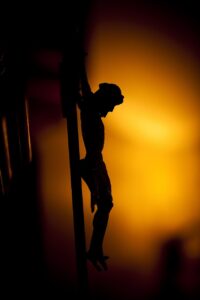
Homily of Archbishop Eamon Martin at Mass in memory of the Disappeared for Palm Sunday 2021

Standing through the solemn reading of the Lord’s passion, from the Gospel of Mark, acts like a great overture to Holy Week. As if in a great symphony, its themes will keep returning in the prayers and readings of the coming days. And then on Good Friday next, at three o’clock, we will stand again  – as if in a great recapitulation – to listen to Saint John’s account of the Passion at the dry hour when Jesus gave his life on the cross for our salvation.

The word “Passion” denotes suffering. Each of the Gospels graphically presents the cruelty, the inhumanity, the pain and the loneliness of the suffering of Jesus.

The hurtful betrayals;

That treacherous kiss;

The friends could not even stay awake with him one hour and who fled as soon as they came under pressure;

The people who changed their tune from “hosanna” to “Crucify him”.

Even Peter, his stalwart, the one he had nicknamed “Rock”,  folded in fear and denied even knowing him.

Jesus had always faced opponents, but now that opposition brimmed over into cruel hostility and murderous intent. He became the victim of jealousy and corrupt power, subject to the violence that begets violence, and unjustly condemned by the flawed testimony of false witnesses cynically rounded up to discredit him.

But Jesus showed amazing courage during his passion. In Gethsemane he found strength to do the will of his Father, despite his fears.

He found resilience to endure horrendous abuse, mockery, scourging and torture.

Still, in the darkness of Golgotha, stripped of his clothes and his dignity, his agony and isolation were heard in that heartfelt cry from the cross: “My God, my God, why have you forsaken me?”. There ends the passion of our Lord Jesus Christ.

The Gospel today brings to mind another word – the word “Com-passion”. Compassion means “to suffer with” another.

We see “compassion” in the gentle loving fidelity of the woman who tenderly anointed Jesus, in Simon who helped carry the cross, and in the witness of those faithful women who didn’t abandon him. When everyone else had gone, they remained to keep vigil. They were there until his burial, and even afterwards – so much so that it was they who first witnessed that the tomb was empty and he had risen.

Passion and Compassion; suffering and “suffering-with”: these joint themes are knitted together in the verses of today’s Gospel. They are the recurring themes of Holy Week.

It is comforting to know that, although there is so much suffering in the world, thankfully there is also no lack of compassion – people who are prepared to “suffer with others”. During the Covid19 pandemic for example: love and care, have been found side by side with the suffering, isolation, and pain that the virus has brought.

And in your story, my dear brothers and sisters, the story of the “Disappeared”, suffering and compassion have met and embraced.

You and your loved ones have known terrible suffering; you have shared in so many ways in the Passion of Jesus.

But your story has also brought out tremendous love and compassion – the way that you have supported each other over the years – in many cases even after your own loved one has been found – that has been a powerful witness to “suffering with others”. There is compassion also in the people who have come forward to the Independent Commission with information to help ease your suffering, and in the painstaking forensic work that so many have done to try to find the bodies of your loved ones.

Sadly there has been little progress over the last year in the search for answers. For some of you, especially those outside of Ireland, the Covid19 restrictions will only have added to your sense of separation and loss. We think of those members of your families who are sick and vulnerable and those who have died – in some cases never having been united with the bodies of their loved ones.

Our annual Mass is a humble expression of our compassion for you. Not to know where your murdered loved one is buried must bring an unbearable burden of suffering – some of you have carried that burden for almost fifty years. Not to be able to grieve properly, to have a Christian burial, to lay flowers on a grave – we cannot imagine your pain. Conscious of this heartache, I appeal once more today,  that anyone out there who has even the slightest amount of information, to show compassion and mercy by sharing it with the Independent Commission. It is never too little, or too late, to bring the key that will ease the suffering of others, and help them find peace and consolation. For the love of God, do not remain silent. Have compassion.

Our thoughts and prayers today are especially with the families of Columba McVeigh, Joe Lynskey, Robert Nairac and Lisa Dorian. The recent unsuccessful searches for Columba in Braggan Bog and for Lisa near Ballyhalbert, must have brought you, their families, so much pain. Our hearts go out to you. We encourage you, as Pope Francis has often said, “do not allow yourselves to be robbed of hope”.

We also remember that there are other families who continue to struggle with the disappearance of their loved one, including those who may not have been recognised on the official list of the Disappeared. You too are in our prayers today.

The prayers and readings of Holy Week remind us that where there is suffering, the crucified Christ is present. Many people who suffer find it helpful to unite their pain, their agony and loneliness with the suffering of Jesus  for us on the cross. And they feel his presence in their suffering.

Similarly, Christ is present where there is compassion, tenderness, mercy and kindness. And because Christ is Risen, hope cannot die. An ancient hymn for Holy Week promises that, “where charity and love are found, God is there”.

Today’s Gospel and the core message of the Christian faith, continue to remind us that where suffering and compassion are found, God is there – both in the suffering, and in the compassion that goes with it.

Eternal rest…

Amen.
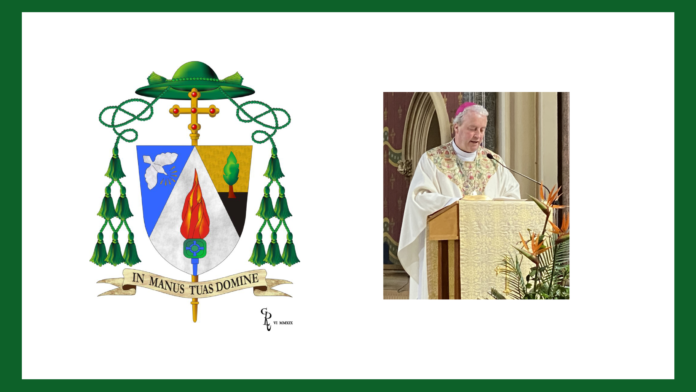
 

Bishop Michael Router: Homily on Synodality – St Patrick’s Day, 2021

Bishop Michael Router: Homily on Synodality – St Patrick’s Day, 2021, 

Our Lady Star of the Sea, Boher, Co. Louth


Text of Bishop Michael’s St. Patrick’s Day Homily

It’s hard to believe that we are facing into our second consecutive St Patricks Day in lockdown. This time last year we were getting used to restrictions that were somewhat novel and that we thought would be relatively short lived. I don’t think anyone would have believed that 12 months later we would still be in the same situation. Yes, the vaccines have brought hope and a sense that there is an end in sight, but our patience is wearing thin and we just wish but we could get back to some sense of normality.

St Patrick’s Day is usually a great day of colour and pageantry around the country with parades, sporting occasions, concerts and many opportunities for socialising. It is, perhaps, true that St Patrick’s Day in normal times has moved well away from its religious foundations and become a very secular celebration. I suppose one of the spiritual benefits of this day being severely restricted is that we have a little bit more time to reflect on our Christian faith and its growth and impact on our island over the past 1600 years. In that sense the last year has had a deep reflective quality about it and most people, both inside and outside the Church, realise that we are on the cusp of a time of change and challenge.

We as Church, like every other organisation in this country and in the world, will have to adapt to that change and assess and reflect on the long-term effects of this pandemic. It is fair to say, however, that long before this pandemic, the Church in Ireland, and the practise of the faith, was coming under severe pressure. There is an obvious need for reform so that Church structures will become more fit for purpose in the 21st century.

At our spring meeting, held last week, the bishops of Ireland decided to embark on a synodal process for the Church in Ireland. Already I can hear many people saying ‘What on earth does a synodal process mean and what difference could it possibly make?’

In the past the Church has been very hierarchical with those at the very top making all the decisions and handing them down to those below with little discussion or consultation, particularly with those who were marginalised because of gender or social status. The great council of the modern Church, Vatican II, which took place in the 1960s, opened the possibility of changing the structures to allow for greater participation of the lay faithful in all aspects of Church life. The message and the model proposed by Vatican II has, unfortunately, been very slow in getting off the ground. There have been great strides made at local level over the past 30 or 40 years but we still remain quite a hierarchical Church with limited formal channels for wider consultation and cooperation between bishops, clergy, religious and laity.

The synodal process that the bishops have announced is similar to that which is underway in Australia and Germany at present. Yes of course we will have a gathering, an assembly, at a national level within five years but that won’t be the beginning of the synod, or the end of it, or even the most important part of it, because synodality is a way of being Church where everyone walks the path together and that journey begins now.

Over the coming years there will be widespread consultation with everyone inside and outside the Church, those who are faithful and committed and those who have turned their backs and walked away. There will be much more information released as we go along, but the announcement is an exciting moment for all of us who value and love our Christian faith and who know the importance of the sacraments provided by the Church to nurture and nourish that faith. So, on this St. Patrick’s Day let us rededicate the Irish Church to the care and protection of our patron saint who set out on a missionary journey in a difficult and challenging time with little more than faith and hope in his heart. St. Patrick discovered, however, that faith and hope were all you needed. Inspired by the Holy Spirit, Saint Patrick achieved a miracle in this land and planted a seed off renewal in the heart of all Irish men and women.

May the journey we undertake together into the future, uncertain and challenging as it may be, plant the seed of faith and renewal once again in our country. The Church will never be the same as it was. We are not trying to re-invent the Church of the past, but we are beginning a journey to somewhere new and, hopefully, to somewhere where people can rediscover the joy of being part of the family of God.

Saint Patrick’s Day 2021 message to the people of Ireland at home and abroad from Archbishop Eamon Martin

Saint Patrick’s Day 2021 message to the people of Ireland at home and abroad from Archbishop Eamon Martin


  • I pray that people who are struggling with the pandemic, whose livelihoods have been threatened, or have contracted the virus, that they will find in Saint Patrick the courage and resilience to go on
  • I pray, as we reflect on our shared history, that we will find in Saint Patrick a source of courage and values as we face with confidence new possibilities for today and tomorrow on this island
  • I pray that we will be as open, as Saint Patrick’s was, to the cry of the poor, the lonely and isolated, the bereaved, the stranger and exile among us; the prisoner, the homeless and the hungry

For the second year running, celebrations of the Feast of Saint Patrick are curtailed by Covid19 restrictions.  The traditional parades, parties, an rince, na seisiúin and the usual big sporting events have had to be cancelled or postponed.  Even the White House presentation of the bowl of shamrock has gone virtual!

Down the centuries many customs, myths and paraphernalia have grown up around Saint Patrick and the celebration of his feast day at home and abroad.  But perhaps, paradoxically, the restrictions this year are opening up an opportunity for us to focus a little more on Saint Patrick himself, and even rescue the real Saint Patrick from the legends and distractions surrounding him.

If you want to find the true story of Patrick, and get an authentic understanding of who he was,  the best place to look is in his own words which are preserved for us in two ancient writings – Saint Patrick’s Confession, and Saint Patrick’s Letter to Coroticus.  You won’t find any mention there of green beer, snakes or even shamrock – but you will discover the testimony of a real person who dedicated his life and energies to spreading the Good News of Jesus Christ.

You will read about a young man who was seized from his family home as a teenager and trafficked to Ireland where he worked as a slave until he escaped back to his homeland.  You will learn that even though Patrick had been raised in a Christian home and family, he says he had little knowledge or understanding of the true God.  It was only while he was isolated and alone in captivity, minding flocks in the cold and rain on the hills and valleys of Ireland, that he found strength and courage in prayer and grew to know God’s love and protection in a powerful and personal way.

You will discover that much later in Patrick’s life he heard the “voice of the Irish” calling him to come back and walk once more among them, and he returned to Ireland as a priest and bishop to share the joy of the Gospel with the people who had once held him captive.  His writings relate his struggles and trials as a missionary, the dangers and opposition he faced not only from those who resisted the spread of Christianity, but also from those within the Church who argued that Patrick had a questionable past and was unlearned and unfit to be a bishop.

But even though he accepted his sinfulness, his lack of proper education and preparation for the mission, Saint Patrick never doubted that God – Father, Son and Holy Spirit  – was with him, shielding him from danger and falsehood, and ultimately guiding him, every step of the way.

Although it is not contained in Saint Patrick’s own writings, the traditional prayer which we know as St Patrick’s Breastplate, harmonises with the picture of the saint which we pick up in his own writings.

Patrick prayed: Christ on my right hand; Christ on my left hand; Christ all around me.

Thinking today of those in our country and beyond who are struggling during the pandemic – either from contracting the virus themselves, or having to isolate; those in hospital and intensive care; those whose jobs or livelihoods have been threatened; those who are exhausted from caring and worrying – I pray that they will find in Saint Patrick the courage and resilience they need to go on, surrounded, as he was, by the love and protection of God.

Patrick prayed: Christ behind me; Christ before me.

Thinking about Ireland, north and south, at this pivotal moment in our shared history, a time when we look back one hundred years: to separation and partition on this island and all that has happened to divide, grieve and polarize us; thinking at the same time about the achievements and progress of Irish people, and about the possibilities for lasting peace and reconciliation, for harnessing the beauty and uniqueness of our land, and for building relationships that will bring us closer together rather than divide us  – I pray that we will find in Saint Patrick a source of courage, shared identity and values and the resilience we need to face with confidence new possibilities for today and tomorrow on this island.

Patrick prayed: Christ in the heart of everyone who thinks of me; Christ in the mouth of everyone who speaks of me; Christ in every eye that sees me; Christ in every ear that hears me.

Thinking about Family on this feast of our patron saint – about those who are with us at home, those who are far away or in hospital or care, or otherwise unable to join us – I pray that our hearts and lips, our eyes and ears will be as open as Saint Patrick’s were to the cry of the poor, the lonely and isolated, the bereaved, the stranger and exile among us; the prisoner, the homeless and the hungry.  I pray that we, like Saint Patrick will bring faith to life and life to faith.  May we be missionaries of God’s love, forgiveness, healing, mercy and joy everywhere we go, this day and always.


Bishops’ statement on the Covid-19 restrictions in Republic of Ireland

Bishops’ statement on the Covid-19 restrictions in Republic of Ireland


Statement released on the second day of the Spring General Meeting of the Irish Bishops’ Conference


On 19 February the four Catholic Archbishops had a meeting with Taoiseach Micheál Martin to continue the dialogue about the impact of the Covid-19 pandemic on the lives of people in our Church. At that meeting the Archbishops affirmed the Church’s commitment to the protection of life, health and the promotion of the Common Good.  During their Spring Conference, bishops reflected on that meeting and released the following statement:

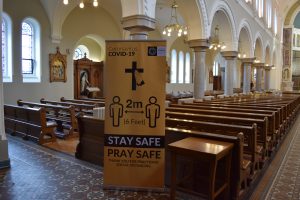
 “We strongly believe that people’s freedom to worship publicly should be restored as soon as the current Level 5 restrictions begin to be eased.  It is particularly painful for Christians to be deprived, for the second year running, of the public expression of our faith during the most sacred time of Holy Week and Easter.  This is especially true given that it has been clearly demonstrated that church buildings are among the safest places for people to gather.  We also re-emphasise that the ongoing severe restrictions on attendance at Funeral Masses (currently limited to ten) are causing untold grief to many families.

“Throughout this time of pandemic the approach of the Church has been firmly grounded in the protection of health and life and in the promotion of the Common Good.  We recognise that strong restrictions are necessary in times of grave threat to public health.  However, such restrictions on personal freedom should be proportionate and for the shortest time possible.  Consideration must also be given to people’s mental, spiritual and emotional wellbeing. For people of faith, gathering for worship is fundamental to their identity and to their spiritual lives.

 Despite assurances from the Taoiseach last month that the concerns expressed by the Archbishops would be given serious consideration, we note with disappointment that none of the issues raised has been responded to.  We therefore make an urgent appeal that the following matters be addressed:

  • That the easing of restrictions from Level 5 should include the restoration of public worship, albeit in a safe and limited way.  For people of faith not to be free to worship until regulations return to Level 2, whilst many other restrictions are eased, is seen as particularly distressing and unjust.
  • That the number of mourners permitted at funeral services be increased, with immediate effect, noting that in Northern Ireland this number has not been reduced below 25.  The current restriction places immense burdens on grieving families, compounding the pain of their loss.

We strongly believe that allowing these measures would contribute greatly to giving a sense of hope and consolation to many in our Church – in line with the central message of Easter.  These measures would be a substantial support to the wellbeing of individuals and parish communities, and ultimately serve the Common Good of all. 

We encourage Catholics to make their views on these issues known to their own TDs and local representatives.

We wish to remain responsive to public health messaging. For this reason we are recommending the postponement of the sacraments of First Holy Communion and Confirmation ceremonies for the time being.   

We continue to keep in prayer all who are suffering in this time of Covid, and all who contribute so much to their care.


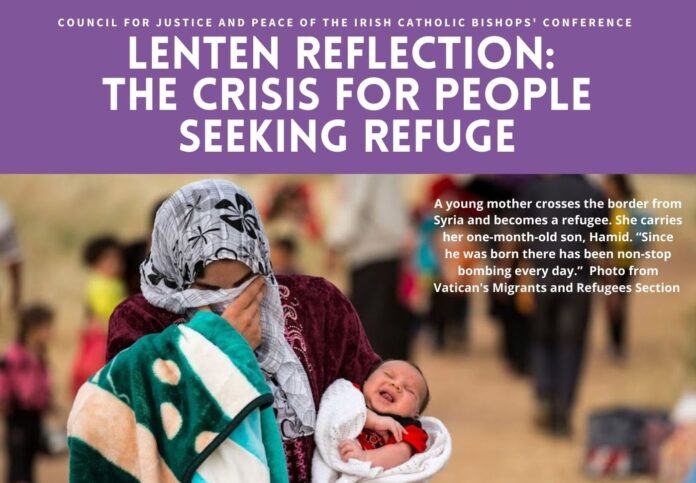
Council for Justice and Peace, Lenten Reflection: The Crisis For People Seeking Refuge

Council for Justice and Peace, Lenten Reflection: The Crisis For People Seeking Refuge


The Council for Justice and Peace has created a  Lenten Reflection entitled “The Crisis for People Seeking Refuge”.   In this short resource, the CJP invites all to reflect through the ‘See, Judge and Act’ model.

We are all called to recognise and consider the great difficulties encountered by those who face devastating realities that force them to believe that their best option is to flee to another country seeking refuge.  In seeing an recognising these difficulties we are called to discern our own responsibilities, seeking ways in which we can take positive action to help and assist all seeking refuge in todays world.

Click here to access the resource in PDF format

For more information on the Council for Justice and Peace see www.justiceandpeace.ie


St Patrick’s Archdiocesan Trust Limited – Annual General Meeting – 3rd March 2021

St Patrick’s Archdiocesan Trust Limited – Annual General Meeting – 3rd March 2021


The Annual General Meeting of St Patrick’s Archdiocesan Trust Limited (Trust) was held by Zoom conference on Wednesday 3rd March 2021, in which the audited Annual Report and Financial Statements to 31st March 2021 was presented. Presenting at the meeting were Archbishop Eamon Martin (Director of the Trust), Mr John McVey (Secretary to the Trust) and Mrs Roisin Traynor (Audit Manager – Cavanagh Kelly Accountants).


In attendance at the meeting where the Directors of the Trust, Members of the Diocesan Committees, Diocesan Clergy, Members of Parish Finance Committees, External Auditors, staff members throughout the diocese and volunteers throughout the Diocese.

A full copy of the Annual Report and Financial Statements and the presentation of the summary of the Financial Statements to 31st March 2020 can be view below.


Annual Report and Financial Statements for the Year Ended 31st March 2020

AGM Presentation 


Bishops encourage support of vaccine programmes against Covid-19

Bishops encourage support of vaccine programmes against Covid-19


Council for Healthcare of the Bishops’ Conference urges everyone to support the vaccination programmes currently in place in the Republic and in Northern Ireland

As a matter of priority, vaccines should be made available to carers and to priest-chaplains to nursing care facilities and who preside at funerals


Last December the Irish Catholic Bishops in a statement said that “safe and effective vaccination is an essential aspect of the prevention of disease”. They encouraged Catholics to support the programme of vaccination “not only for their own good, but for the protection of life and the health of those who are vulnerable and for the common good of humanity”. The Vatican Congregation for the Doctrine of the Faith made a similar call to all Catholics in its Note on the morality of Covid-19 vaccines (21 December 2020). The Council for Healthcare of the Irish Catholic Bishops’ Conference wishes to reiterate that message and urges everyone to support the vaccination programmes currently in place in the Republic of Ireland and in Northern Ireland.

The development and provision of the vaccines is already providing reassurance for those who are most vulnerable to the virus and will help us to return to normality in terms of work, education, religious practice, and sporting and leisure activities as soon as possible.

We note that many people both North and South have already received the vaccine and we particularly welcome the fact that all residents and staff of nursing care facilities have been vaccinated at this stage. At present the group prioritised in the Republic of Ireland to receive the vaccine in the coming weeks are those over 70 years of age while in Northern Ireland it is those over 65 years of age along with others who are clinically vulnerable. We encourage all parishes and Church personnel to promote this programme and to encourage elderly parishioners, relatives and neighbours to avail of the opportunity to protect their health and the health of the whole community.

In Northern Ireland the main carers in the home for those who are elderly or disabled can now book a vaccination online at one of the 7 trust centres. An appointment can be made at  https://covid-19.hscni.net/get-vaccinated or, if you cannot access the internet, by telephone at 0300 200 7813. The phone line is open Monday to Friday from 8.30 am to 5.30 pm. We call for the Department of Health and public health authorities to make vaccines available to carers in the Republic of Ireland as a matter of priority and to priests who are chaplains to nursing care facilities and who preside at funerals. 

Trustworthy and updated information on vaccines is available on https://www2.hse.ie/covid-19-vaccine/ in the Republic of Ireland andhttps://www.publichealth.hscni.net/covid-19-coronavirus/northern-ireland-covid-19-vaccination-programme in Northern Ireland.

Reflecting on Church as the Family of God, Lenten video Series

“Reflecting on Church as the Family of God” 

As we approach the season of Lent we find our public prayer and worship still severely curtailed by the public health guidelines. Thankfully the progress in digital and social media has allowed us an opportunity to reach out to people over the past year and will continue to do so as we enter this sacred season of preparation for Easter.

In addition to a prayer service resource and video created for Ash Wednesday the Pastoral team has also created a video series entitled “Reflecting on Church as the Family of God”.  The first video is included above and a new video will be released each Wednesday during Lent.  Information on two resources for Ash Wednesday and Lent provided by the Diocesan Pastoral Team can be found by clicking here.

We invite all would ask all to share these resources with the sick, elderly and those shielding in the coming days and weeks.

Annual Day of Prayer for Survivors and Victims of Sexual Abuse

“Prayer and outreach to survivors of abuse is a modern-day corporal and spiritual work of mercy”

Archbishop Eamon Martin


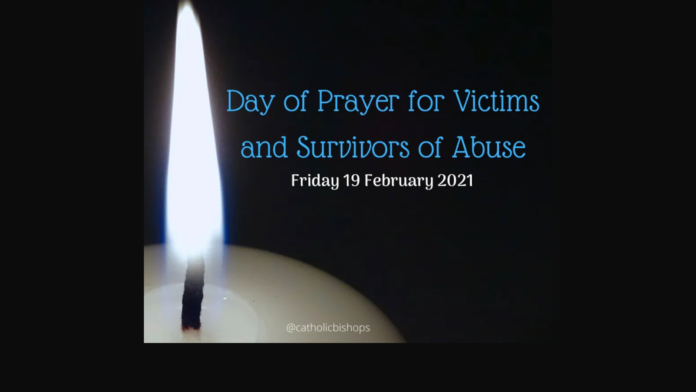
The annual Day of Prayer for Survivors and Victims of Sexual Abuse will take place on Friday 19 February 2021, the first Friday of Lent. The Day of Prayer is an initiative by Pope Francis and was first marked in Irish dioceses and parishes in 2017.

The bishops of Ireland have blessed and dedicated Candles of Atonement for use in cathedrals and parishes throughout the country on the Day of Prayer and thereafter during the celebration of Mass and other liturgies.

Introducing the Candles of Atonement in 2019, Archbishop Eamon Martin said, “In lighting these candles we will bring to mind our brothers and sisters, and their families, who have been left with a lifelong suffering as a result of abuse, whose trust was so deeply betrayed and whose faith has been so cruelly tested within the sanctity of the Church by perpetrators of abuse.

“I have been privileged to meet with victims and survivors of abuse and members of their families in the four provinces of Ireland.  Many have spoken to me about the importance of prayer for survivors, and for the need for the Church to be open to justice, to atone and never forget them. I have been humbled by their courage and overwhelmed by their generosity of spirit.

“I encourage dioceses and parishes to undertake this prayer initiative and to light the ‘Candle of Atonement’ in Cathedrals and churches across Ireland again this year. It would mean a lot to survivors if the ‘Candle of Atonement’ was a permanent feature in our Cathedrals and parish churches.  People visiting the church for quiet prayer might light the ‘Candle of Atonement’, pray the prayer, and bring to mind someone they know who has been directly impacted or affected by abuse.  I am convinced that prayer and outreach to survivors of abuse is a modern-day corporal and spiritual work of mercy.”

Archbishop Eamon continued, “The simple prayer ritual for the dedication and lighting of the ‘Candle of Atonement’ in Cathedrals and parish churches is based on the very moving Penitential Rite composed and prayed by Pope Francis at the final Mass of the World Meeting of Families 2018 in Phoenix Park when he implored the Lord’s mercy for the crimes of abuse and asked for forgiveness.

“The ‘Candle of Atonement’ and accompanying prayer are offered as a reminder to all of the need for us to atone, to ask forgiveness as a Church for the suffering caused by abuse. My hope is that these candles will be lit in Cathedrals and parishes across the country as a reminder of the need for atonement and that they will symbolise repentance, light in the darkness and hope.”

The bishops have made resources available for use in parishes and these can be downloaded from www.catholicbishops.ie

Ash Wednesday Prayer Service 2021

Archbishop Eamon acknowledges that while Ash Wednesday 2021 will be mostly without ashes, families can still pray, fast and be generous this Lent.


Speaking as the Church prepares to celebrate the Season of Lent in the context of Covid-19 restrictions.  

Archbishop Eamon said, “The season of Lent is a forty day penitential period leading up to Holy Week and Easter when Christians mark the crucifixion, death and resurrection of Jesus Christ. For Catholics the beginning of  Lent is traditionally marked by a day of fasting and by the distribution of ashes on the foreheads of church-goers.  Believers are encouraged to make a commitment to prayer, charity and fasting or self-denial. Many Catholics make Lenten promises or resolutions to mark the importance of this holy season.

The Video above offers some ideas on how all can mark Ash Wednesday at home this year. 

“This year, with the strong ‘Stay at Home’ message from public health authorities, north and south, it will not be possible for Catholics to gather in Church buildings to receive the ashes, which are normally applied to the forehead in the shape of the sign of the cross. The words used are Remember that you are dust and to dust you shall return”, or “Repent and believe in the Gospel

At this time when gathering for public worship is suspended, parishes will continue to mark Ash Wednesday using online services over webcam and also by encouraging family prayer services in the home. The Northern Pastoral Network, for example, has prepared resources which are being made available to families (see armaghprays.com).  Instead of the usual ashes, families are being encouraged to keep the fast, to make their normal Lenten promises, and to consider making little crosses to wear using black ribbon or card.

“Even in parts of the world where there are less restrictions on gathering for worship, the Vatican has asked that ashes would not be applied to the forehead in the usual manner, but would be sprinkled on the top of people’s heads.

“Some parishes are making small envelopes of blessed ashes available for those who will be visiting their parish churches in the early days of Lent for individual prayer when out for their daily exercise. People will also be able to collect their Trócaire Box from parishes in the same way.”