Home Blog Page 112

22 March – Service with the Ballynafeigh Clergy Fellowship, Ballynafeigh Methodist Church

Sermon given by Cardinal Seán Brady
on Sunday 22 March 2009
Service with the Ballynafeigh Clergy Fellowship, Ballynafeigh Methodist Church

I am very grateful to Reverend Wesley Blair and the members of the Ballynafeigh Clergy Fellowship for their kind invitation to be here this evening.  It is a privilege and a joy to preach at this Inter-Church Service.

We come to celebrate the shared Christian witness given by the Ballynafeigh Fellowship for the past thirty-six years. It has been a remarkable and a constant witness. Even in the darkest days of the troubles the clergy of the Ballynafeigh Fellowship stood side by side.  They brought hope, healing and encouragement to so many people by their courageous witness to Christ in joint action and prayer. We give thanks for that witness in praise and prayer. In the great tradition of John Wesley we give thanks for that witness this evening in joyful proclamation of the Word and in heartfelt song.

Though, I have to say that I am not sure how much John Wesley would be pleased to see me, a man from Cavan here this evening. You see, in my research for this evening’s service I discovered something very interesting. I discovered that John Wesley’s first visit to Ireland was in August 1747.  But it wasn’t until May 1758, during his seventh visit to Ireland, that he visited County Cavan. He preached in Cootehill, the part of Cavan I come from.

Shortly after his visit to Cootehill, it seems that the small class of Methodists there, under the care of John Smith, began to experience persecution.  Charles H Crookshank, tells us in his History of Methodism in Ireland  ‘Members of the different Churches in the town began to oppose the little band… Their malice was chiefly directed against John Smith … as the most zealous of the Methodists … They collected mobs, surrounded the place of meeting, seized the worshippers, knocked them down, beat and even dragged them through cesspools and sewers.’  Not a very inspiring description of my native Cavan!  But please note he says:  “Different Churches – As you know, Cavan also has a strong Presbyterian and Church of Ireland tradition.’

Despite this terrible opposition, however, Methodism continued to flourish in Cootehill.  Wesley visited the town again in 1760 and 1762. Interestingly, however, he did not return until 1778 despite being in County Cavan on virtually all of his Irish visits during the intervening years! Clearly he was not too impressed with the Catholics, Presbyterians and Anglicans of Cootehill!

As if that wasn’t enough, when the Rev Thomas Coke arrived in 1797 to preach at the new Methodist Chapel in Cootehill, the crowd was so big that the service had to be held in the Presbyterian Meeting House.  But if Rev Coke was impressed with the size of the crowd in Cootehill he was less impressed with their musical talents.  For when he gave out the hymn books to the people he is reported to have said that this motley crew from Cootehill could raise no tune at all! So our poor musical talent rather than our reaction to his preaching might have made John Wesley very surprised to see a Cardinal from Cootehill singing his heart out here this evening!  

Progress in Ecumenism
We have come a long way from those fraught and fractious days in Cootehill. We have come a long way from the tumult of the plantation and the penal laws in Ireland. We have also come a long, long way from the daily fear and foreboding of years of bloody conflict here in Northern Ireland.

The reason we have come so far is because in every age God raises up people like the Rev Pat Lowry of St John’s Presbyterian Church and Msgr Robert Murphy of Good Shepherd Catholic Church, the founders of the Ballynafeigh Clergy Fellowship. He brings forth women and men who understood that their friendship in Christ is a bond of greater depth and significance than any national or cultural identity. Those who speak of Rev Lowry and Msgr Bob always comment on two things: their holiness – derived from immersion in their own tradition – and the depth of their friendship with one another. This is a mark of two men who were ‘in Christ’ and who, because they were so close to Christ in their own lives, could see Christ very clearly in each other. It was Christ who was the bond between them.

This is a useful barometer for all who claim to live and love like Christ in ecumenical endeavour. It begs the question:  Am I so ‘in Christ’ through the grace offered to me within my own tradition that others immediately see Christ in me? If so, then Christ in me will draw me into friendship with others who are in Christ. Not just a human friendship but a ‘spiritual friendship’, a friendship which perseveres and deepens in spite of, perhaps sometimes because of difference and misunderstanding.

I am reminded here of something said in the Decree on Ecumenism of the Second Vatican Council: ‘All the faithful should remember that the more effort they make to live holier lives, according to the Gospel, the better will they further Christian unity and put it into practice. For the closer their union with the Father, the Word, and the Spirit, the more deeply and easily will they be able to grow in mutual brotherly love.’ (Unitatis Redintegratio, #7)

In this the words of Dr David Stevens of the Corrymeela Community are particularly apt. ‘The Gospel,’ he explains, ‘invites us into the space created by Christ and to find there those who were previously our enemies.  It therefore seeks to break down the enmity between us; enmity caused by different traditions and national, political and religious loyalties.  The Gospel opens up for us a view of wholeness, justice and living in right relations which sees the whole world as potential brothers and sisters – a nourishing and fulfilment of the human.  This is a vision of a new humanity, reconciled in Christ and living together in a new community.’

Pope Benedict has described this vision of a new humanity, reconciled in Christ and living in a new humanity as the civilisation of love. We are called to build it through concrete gestures of compassion and solidarity. We are called to live it through ordinary, everyday acts of kindness and care carried out with selfless concern for others.

I believe it is this simple call to friendship and fraternal love ‘in Christ’, so evident in the relationship which formed and sustained the Ballynafeigh Clergy Fellowship, which is still the most urgent and radical challenge of ecumenism today. We cannot ignore the beautiful simplicity and the ever-present challenge of Jesus’ words: ‘by this shall all people know that you are my disciples – by the love you have one for another’ (Jn 13:35). This fraternal love between the followers of Jesus can exist and grow, even in the midst of difference about matters of deep conviction. It is a love which is real, tangible and transforming, especially when it is expressed as joint witness in the midst of conflict.

Churches and the Peace Process
The spontaneous, united and prayerful response of the Churches in Antrim to the murders of Sappers Cengiz Azimkar and Mark Quinsey, is a reminder of just how deep-rooted this shared Christian spirit of healing, unity and peace has become in our society. The overwhelming rejection of a return to violence and the unprecedented level of cross-community support for the PSNI which followed the murder of Constable Stephen Carroll are evidence that we have come further along the road to a shared and settled society than many had realised. Peace has taken deep hold among us. Suspicion and fear are gradually giving way to a new atmosphere of ease and trust. This is something we should thank God for constantly and never take for granted.

The shared witness of the Ballynafeigh Fellowship, the impact of a myriad of other Church-based initiatives which generated the language and modelled the modus of the peace process, played a very significant part in moving us forward on that journey. In the spirit of the Gospel we do not seek any credit or recognition for the positive influence of Churches on the search for peace in Northern Ireland. Where this contribution was real and positive, we merely did our duty. Where we were chaplains rather than challengers to the communities which bore our denominational labels, giving cover to attitudes of hatred and exclusion, we must continue to repent and change.  The Churches are sometimes described as being part of the problem, just as they were, and will continue to be, part of the solution. Facing up to this truth requires a humble acknowledgement of just how far we have yet to travel as Churches and as a reconciled Christian community, both locally and internationally, to become as Christ would wish us to be.

For this reason the Consultative Group on the Past was quite right to highlight the need for critical reflection by the Churches in its recent Report. It recommends that the proposed  ‘Legacy Commission should engage specifically with the Christian Churches in Northern Ireland to encourage them to review and rethink their contribution to a non-sectarian future in the light of their past, particularly in the area of education.’ It is important that as Churches we give full and serious consideration to this recommendation.

Dealing with the Past: The Morality of Violence
It is also important that in our approach to the past we do not treat the violence of the past with a moral ambiguity which it did not receive or deserve at the time. It is now generally accepted that one of the most important contributions the Churches made to moving people away from violence into a peaceful, democratic methodology was their consistent repudiation of any moral justification for violence.

Glamorising the violence of the past is dangerous.  Any attempt to do so must be challenged.  Young people with no memory of the misery wrought by violence or its utter futility, are more likely to be lured into violence if its evil and horror are not clearly and consistently acknowledged.

We cannot forget that the overwhelming majority of people on the island of Ireland had already rejected recourse to violence before the Good Friday Agreement was ever constructed. We cannot forget that the basic architecture of a political agreement was available long before the violence stopped.

The Consultative Group on the Past speaks of achieving a more humane, comprehensive and rounded assessment of what it describes as the ‘conflicting moral assessments of the past’. It is not clear what this means for those Churches and political parties who consistently rejected violence as a means to political ends.

The Positive Contribution of the Churches
The proposed assessment will require great wisdom.  Healing and reconciling the past must be built on solid foundations.  What is required is honest acknowledgement by everyone of evil as evil, perpetrated by omission or commission.  Genuine repentance from that evil and a recovery of the largely lost art of Christian forgiveness are also required.

I am reminded here of a particularly poignant paragraph by Dr David Stevens in the Book, Inter-Church Relations: Developments and Perspectives: A Tribute to Bishop Anthony Farquhar, edited by Professor Brendan Leahy. In it Dr Stevens quotes an economist who in November 2007 said of Ireland:  ‘the cycle of violence that Cromwell did so much to create lasted for over three hundred years. The beginning of the end began to come when preachers from both sides of the divide began to condemn violence.  In most parts of the world that has yet to come.’ Dr Stevens then goes on to comment:

‘This is a very interesting suggestion – that something changed in Ireland and it changed in the religious world first.   It is the tangle of religion with other things – economics, culture, politics, colonisation that is the potent thing.  Change in the realm of religion may lead to change in other areas of life.  It is true that Protestant and Catholic Church people engaged long before the politicians.  Still the Churches need to critically examine separately and together their roles in the Troubles.  Churches are in the business of acknowledgement and repentance – not avoidance and evasion which seems to be the preferred societal and political mode of dealing with the past plus, of course, blaming religion and the Churches.’

It is very easy to blame the Churches for a divided society. It is easy to point to differences of doctrine and modes of worship. It is easy to point to schools that in any other society would be accepted and welcomed as a normal and confident expression of diversity. It is more difficult to take responsibility for the more pervasive and damaging inclinations we have to hate and exclude that have no basis in religion at all.  These are the silent and more hidden prejudices based on politics, class or ethnicity which are often more alive and pernicious than those based on religion in Northern Ireland.

As with so much of the violence of the past, the recent murders of the two soldiers and a PSNI officer were not likely to have been motivated by religion. The shocking lawlessness and violence against residents and the PSNI by the crowd of students in the Holylands area nearby this Church, were hardly motivated by a zeal for the Christian ideals of St. Patrick.

No, religion is all too often the convenient scapegoat.  It is especially so for those who want to ignore the fact that what really threatens peace and stability in Northern Ireland today is a rejection of the values of personal responsibility, moral goodness and concern for others. The Churches were largely responsible for instilling those values in previous generations. Would the Churches have the same restraining influence on young people today as they did, to an important degree, during the troubles? It doesn’t seem likely, with obvious consequences.

Conclusion: Communion in the World
And this brings me to the final point I would like to make. This year sees the 150th anniversary of the great religious revival in Northern Ireland. At the heart of that revival was a return to faith in the power of God’s Word to make all things new. It is also the 500th Anniversary of the Birth of John Calvin, a man who called us to recover the original vitality and purity of Sacred Scripture.

Last October it was my privilege to be present at the Synod of Catholic Bishops in Rome. The title of the Synod, chosen by Pope Benedict, was The Word of God in the Life and the Mission of the Church.  It was a great experience to be present with fellow bishops from all over the world but also with representatives of the Christian Churches.  At the end of the Synod some fifty propositions were sent to the Pope for his consideration.  

One of those propositions (proposition 34) is headed ‘On the unity of Christians’.  It goes like this: 

‘The Bible is truly a place of encounter between the different Christian confessions.  Hearing the Scriptures together causes us to live a real communion, even if it is not full communion.  To hear the Word of God together, to practice Lectio Divina of the Bible constitutes a journey to be travelled in order to reach unity of faith as a response to the Word of God.  The common hearing of the Scriptures pushes us to dialogue – to the dialogue of charity and increases the dialogue of truth”. 

Rev Tony Davidson, a Presbyterian minister in Armagh, states:  ‘In a community where there are two distinctive stories, we need to work on finding a common story that will help us create a genuine future, based on truth and filled with hope……To find a common story involves prophets, in all Churches, challenging us to think about the past and take responsibility for it.’

He says he suspects that we will need help from people of different traditions to pose difficult questions and to begin to answer those questions.  He proposes a series of small meetings, in safe places, where stories can be told and people listened to attentively.  I would suggest that posing and answering such questions, in the light of the Scriptures and in the context of joint Bible prayers, might prove most fruitful.

It is sometimes said that practical ecumenism is experiencing something of a crisis, that it is difficult to find new and meaningful things to do to deepen our understanding and our encounter. Yet the opportunities for common hearing, sharing, reflection and prayer around the Scriptures are immense and largely untapped. They offer real opportunities for communion in the Word.

John Wesley once said of the Bible:

‘I want to know one thing — the way to Heaven!
How to land safe on that happy shore!
God Himself has condescended to teach the way!
He hath written it down in a book! Oh, give me that book!
At any price, give me The Book of God!
I have it: here is knowledge enuff for me!
Let me be a man of one book!’

Let me echo his words. As you seek new ways to express and maintain your long established and respected Clergy Fellowship.  As we seek to deepen the ecumenical journey at every level of Christian life, let us become again, and in a very practical way, people of the one book! The Book of God!

Finally, in the words of Wesley’s famous Letter to a Roman Catholic:

‘In all things, and for the sake of Christ, let us endeavour to help each other on in what¬ever we are agreed leads to the kingdom. So far as we can, let us always rejoice to strengthen each other’s hands in God. Above all, let us each take heed to himself that he fall not short of the religion of love. O let you and I, whatever others do, press on to the prize of our high calling! That, being justified by faith, we may have peace with God through our Lord Jesus Christ.’

Thank you again for inviting me and thank you for listening so patiently.
Safeguarding Children Training for Parish Representatives

The training will take place from 9.30am – 5pm on Friday 27th March and 9.30am – 1pm on Saturday 28th March.The cost of the training is £50 per person and includes a resource pack, lunch, and morning and afternoon break.

This training delivers the Keeping Safe model and covers all areas of safeguarding children including information on abuse, recruitment and selection and good practice when working with children and young people. Legislation for both Northern Ireland and the Republic of Ireland will be included.

As there is a demand for this training, priority is being given to all new Parish Representatives that have not yet completed the training programme and clergy.To enquire about this training contact Pierce on 37525592.

Further dates will be published after Easter.

Diocesan Year of Vocation Liturgy

Whatever we do, wherever we are – whether we are single or married, young or older, priest or religious, men or women – the Year of Vocation will have something to say to all of us in our following of Jesus Christ. It will also be a ‘Year’ when everyone can deepen their appreciation and understanding of belonging to the Church. The Year of Vocation gives us all a wonderful opportunity to reflect on the beauty and meaning of our Christian calling.

Please support this initiative in your parish!

Recruiting new Armagh Diocesan Youth Officer

The deadline for applications was Friday 3rd April 2009.

The postholder will work alongside the Diocesan Youth Director to develop:

  1. The implementation of the John Paul II Awards in the Archdiocese
  2. The new diocesan youth ministry website
  3. The leadership development aspect of the Armagh Diocesan Youth Council’s strategic plan
  4. The support of youth ministry in parishes
  5. An annual local youth pilgrimage

The job description can be downloaded by clicking the link below.

Job Description


Publications

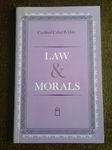
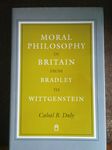
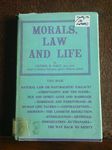
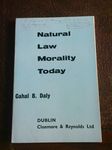
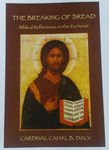
Listed below, in alphabetical order, are most of Cardinal Daly’s Publications.  Each cover is displayed, along with a short summary of the book.

Title

Summary


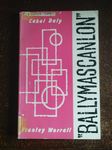
Ballymascanlon

It is now five years since the first official meeting of representitives of the Irish Churches and Ballymascanlon.  At first the mere fact that the Roman Catholic Church was to enter into dialogueswith the other Churches on matters of doctrine and practice was hailed as a great step forward; later many came to feel a sense of disappoiontment that nothing very “newsworthy” seemed to have been achieved.Information percolates only slowly from those who represent their Chruches to the respective governing bodies; and still more slowly and unreliably to the parishes and congregations.  This book is an attempt to provide, within a limited compass, a clear record of what has in fact occurred at the successive Ballymascanlon conferences.It comprises a digest of all the documents, i.e. of the papers contributed by theologians and church leaders and of the reports made by the various working parties set up by the conferences.  It has been jointly edited by a Roman Catholic bishop and by a Methodist layman; the contributors have apporved the summaries of their contributions; and the book is issued on the authority of the joint steering committee which arranges the conferences.

Apart from a brief introduction the editors have avoided comment.  They hope that this publication will dispel uncertaintly about what has taken place and provide a convenient point of reference for the continuing dialogue.

The full text of many of the papers here condensed can be obtained in typescript from the office of the Irish Council of Churches at 48, Elmwood Avenue, Belfast

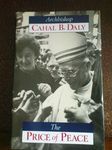
The Price of Peace

‘Our society is desperately in nmeed of a change of heart.  A change of heart cannot be forced, but it can be evoked.  Only mercy can evoke merc. Compassion cannot be compelled by force or fear; it can only be shown.  By being shown, it justifies itself and indeed justifies justice.  Clemency and mercy are not simply Christian virtues. They can also be forces for political change and social transformation’.During the polotocal and social upheaval of the troubles, Cahal Daly, now Primate of All ireland, was bishop of the Ulster diocese of Down and Connor from 1982 to 1990.The Price of Peace explores many of the dramatic events in Northern Ireland in those years and covers a wide range of issues from paramilitary violence and urban deprivation to the Anglo-Irish Agreement and the case of the Birmingham Six.  The moral and religious themes that emerge in this major work focus on the responsibility of all – government, political parties, security forces and republican and loyalist groups – to face the challenge of ending the tragic conflic in Northern Ireland.

Cahal Daly’s outstanding reputation as a man of vision and courage will be further affirmed by this thought-provoking new book.

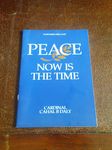
Peace – The Work of Justice

Bishop
Cahal B. Daly has been amongst the most constant and constructive
Churcxh commentators on the Northern Ireland situation over the last
ten years.  His unconditional opposition to violence has been
frequently repeated and reaffirmed.  His condemnation of violence,
however, has always been backed up with constructive and incisive
coommentary on its causes, its effects and its possible remedy.  A
northerner himself, his is only too well aware of the complexities, and
the overtones and undertones of every aspect of the Irish political,
economic and social scene.In 1973, Vertias Publications
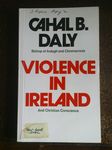
published his Vioolence in ireland and Christian Conscience, made up
mainly of various statements and addresses which he had made over the
previous five years.  The book, which has been sold out for some years
now, was welcomed as essential reading for anyone hoping to get a real
grasp of the Northern Ireland tragedy.
Violence In Ireland
It has often been said in the last few years that Church leaders on both sides in Northern Ireland have not spoken out often enough, strngly enough, or constructively enough against the evils of the conflict there.In this book, we bring together statements and articles by Bishop Daly which comprise a very strong and constructive criticism of the conflict, it’s causes and it’s solutions.
Dr. Daly sets out to interpret the word of Christ for all the people involved and offers a clear and constructive lead for Christians who wish to find a just and lasting solution to their problemsin the light of Christian morality.

17 March – Cardinal Sean Brady St Patrick’s Day Message 2009

St Patrick’s Day Message 2009
Cardinal Seán Brady
Lá fhéile Pádraig faoi shona do Ghaeil tríd an domhain agus beannachtaí na féile orthu go léir.

It is my very great pleasure on this our National Feastday to wish Irish people everywhere a very happy and faith-filled St. Patrick’s Day. All over the world today, Irish men and women, and those who claim Irish descent, will gather to celebrate their identity and their heritage.
St. Patrick’s Day unites Irish people all over the world. For Patrick has become at once a symbol of Irish history and of Irish heritage. But simply to reduce Patrick to a symbol of that kind, worthy as it may be, without any reference to his own Christian faith distorts the truth and in no way does justice to the real stature of the man.

Amidst the music, parades and merriment, the real focus of the celebration may become lost. 17 March is the anniversary of St. Patrick’s death. We join together today not just to celebrate Irish culture and identity, but also to remember the man who described himself as an ambassador for God and who prayed that it might never happen that he (Patrick) should lose the people which God had won for himself at the end of the earth. Today we honour a man who nurtured and spread Christianity throughout our native land – setting down a strong foundation by building on the solid rock of steadfast faith.

My hope, on this St. Patrick’s day, is that more and more Irish people, who have lost their connection with faith, will rediscover it and rediscover what St. Patrick called: the joy and love of faith.

This St Patrick’s Day I am very much aware that violence has returned to the streets of Northern Ireland. If the awful and tragic events of last week teach us anything, it is that all of us must work unceasingly for peace here on our island. I would urge all citizens to redouble efforts to build a peaceful society. Violence is not the answer. The perpetrators of violence are seeking to destroy the peace we are building. I would ask that all people support the politicians who are working so hard to move away from the dark days of our past, to build a better future on foundations of trust, justice and respect for all.

My prayer for all of us on this St. Patrick’s Day is taken from St. Patrick’s Breastplate:

“Christ be in all hearts thinking about me
Christ be on all tongues telling of me
Christ be the vision in eyes that see me
In ears that hear me
Christ ever be.”

Cardinal Sean Brady – St Patrick’s Day Message 2009

St. Patrick’s Day unites Irish people all over the world. For Patrick has become at once a symbol of Irish history and of Irish heritage. But simply to reduce Patrick to a symbol of that kind, worthy as it may be, without any reference to his own Christian faith distorts the truth and in no way does justice to the real stature of the man.

Amidst the music, parades and merriment, the real focus of the celebration may become lost. 17 March is the anniversary of St. Patrick’s death. We join together today not just to celebrate Irish culture and identity, but also to remember the man who described himself as an ambassador for God and who prayed that it might never happen that he (Patrick) should lose the people which God had won for himself at the end of the earth. Today we honour a man who nurtured and spread Christianity throughout our native land – setting down a strong foundation by building on the solid rock of steadfast faith.

My hope, on this St. Patrick’s day, is that more and more Irish people, who have lost their connection with faith, will rediscover it and rediscover what St. Patrick called: the joy and love of faith.

This St Patrick’s Day I am very much aware that violence has returned to the streets of Northern Ireland. If the awful and tragic events of last week teach us anything, it is that all of us must work unceasingly for peace here on our island. I would urge all citizens to redouble efforts to build a peaceful society. Violence is not the answer. The perpetrators of violence are seeking to destroy the peace we are building. I would ask that all people support the politicians who are working so hard to move away from the dark days of our past, to build a better future on foundations of trust, justice and respect for all.

My prayer for all of us on this St. Patrick’s Day is taken from St. Patrick’s Breastplate:

“Christ be in all hearts thinking about me
Christ be on all tongues telling of me
Christ be the vision in eyes that see me
In ears that hear me
Christ ever be.”

12 March – Official Opening of St Patrick’s College, Dungannon

OFFICIAL OPENING – ST PATRICK’S COLLEGE, DUNGANNON
12 MARCH 2009
HOMILY GIVEN BY
CARDINAL SEÁN BRADY

Today we give thanks in this Mass for this wonderful new College.  We thank God in this Mass for the talents of all the people who built it. We give thanks for the gifted pupils and staff who will continue to make it a vibrant, welcoming and creative community of life and learning every day.

St. Paul wrote of the importance of building on good foundations. I am sure the architects of this school put a lot of thought and care into building the foundations. Yet the good architecture and foundations of this new school are not just physical. They are also spiritual and religious. They were laid by those who first founded this school. St Patrick’s College, Dungannon was founded when the Presentation Brothers’ School and the Mercy Sisters’ School amalgamated some years ago.  The Mercy school and Brothers’ school had, in turn, been founded to meet the need felt by the Catholic parents of Dungannon and the surrounding area for help in educating their children at post-primary level. 

The Presentation Brothers, founded by Blessed Edmund Ignatius Rice, and the Sisters of Mercy, founded by Mother Catherine McCauley, responded to that need.  They came from every part of Ireland and dedicated their lives to the glory of God and to the service and education of young people. We should never forget their generosity or their dedication.

The people, and especially the parents of Dungannon, were, in turn, inspired by this generosity and spirit of self-sacrifice. They responded by contributing generously and faithfully to the building of the Schools and Convents.  They did so because they saw in these religious sisters and brothers something of great value for their children and for society. They saw in them people who could provide an education based on Christian values and on faith.

Parents know that to prepare young people for a happy and fulfilling life involves much more than helping them to do well in exams. They knew that young people cannot grow into mature and responsible active members of society just by learning facts and figures, or dates and diagrams. Education is about the formation of the whole person – morally, spiritually, physically, mentally, intellectually, culturally and in so many other ways.

That is why Catholic education emphasises the partnership between the home, the parish and the school in preparing young people to achieve their full potential. There is a profound truth in the African saying that ‘it takes a whole village to raise a child’.

As Christians we are part of the body of Christ. Every one of us has a vital part to play in building up that body. Every one of us makes a vital contribution to that body through our own God-given gifts and talents.

No one person has all the gifts which make up the body of Christ. No one person has all the gifts which make up a school community. We depend on each other. For those who have a Catholic understanding of education, the value of faith, family, communion and community are all vitally important.

A Catholic approach to education can never be limited to the interests of any one school, of any one Parish or to any one Diocese or Religious Congregation. The deepest level of communion and unity among the family of Catholic schools is what St. Paul in the second reading describes as our common foundation – that is – Jesus Christ. There can be no deeper bond than this. There can be no more morally binding principle for a Catholic school than the great commandment of Jesus – that we should love God and our neighbour, as ourselves.

This simple commandment challenges all those tasked with managing Catholic schools through the period of extensive change that now confronts us in Northern Ireland. That change includes the prospect of a substantial demographic downturn in the school-going population, the difficult challenge of an unregulated system of post-primary transfer, a new curriculum and area-based planning, not to mention the end of CCMS and the prospect of a highly centralized Education and Skills Authority.

Each of these imminent changes will present a significant challenge for every school in Northern Ireland. For the family of Catholic schools, responding to all of these changes in a unified and coherent way is very important.  For those who claim to offer schooling based on Christian principles and the Gospel, commitment to the commandment of love of neighbour means, in fact, that I am ‘my brother’s keeper’. I would appeal to every principal and to every Board of Governors in the family of Catholic schools in Northern Ireland to give priority to this Gospel value in responding to the changes in educational policy which lie ahead.

In vigorously defending the right of all parents to have schools for their children that are in accord with their religious convictions, I also want to emphasize that to be Catholic is to be called to peace, reconciliation, tolerance and respect for diversity. The Catholic sector in Northern Ireland is fully committed to exploring ways of working in co-operation and partnership with other educational stakeholders and school sectors.
A lot of progress has been made in this area in recent years and I encourage every Catholic school to have a project of co-operation with at least one school from another sector.

The Presentation Brothers and the Mercy Sisters may have moved out of St Patrick’s College, but it is clear to me that the Catholic people of this era in Northern Ireland are still prepared to take up the mantle of responsibility for providing Catholic schools for their children. They are still committed to that tradition of generations of Catholics in Northern Ireland of helping parents to educate their children in the values and beliefs which sustained their own parents and grandparents through the most difficult of times. This included those times when Catholic parents in Northern Ireland struggled to provide Catholic schools for their children with little if any support from the State.

Today, I would like to appeal to politicians in Northern Ireland to continue to respect the hard won right of Catholic parents to have fair and appropriate support from the State for Catholic schools. I would appeal to them to remove the threat to the very future of Catholic Education in Northern Ireland posed by the draft Education Bill currently under consideration by the Northern Ireland Assembly. While public attention in recent months has been focused on the future of the eleven-plus, an even more urgent and fundamental issue for the Trustees of Catholic schools has been the implications of the draft Education Bill for our ability to continue to provide schools with a Catholic ethos. As this Bill stands, it can not be accepted by Catholic Trustees as providing a viable basis for the future of Catholic schools.

For this reason, I make an appeal on behalf of the Trustees of Catholic Schools to the Catholic community in Northern Ireland and to all those who believe in religious freedom in our society. I appeal to you to ask your political representatives why would they allow the right of those who wish to have their children educated in Catholic schools to be undermined in such a fundamental and unacceptable way.

The author of Book of Ecclesiastes in our first reading reminded us that for everything there is a season – a time for keeping silent, and a time for speaking. The welcome establishment of a local administration at Stormont, with locally elected representatives, means that it is time for Catholic parents and others to speak out in defence of their right to have schools which reflect their philosophical and religious convictions. This is a right which is recognized in the European Convention on Human Rights. It is a right which is recognized more fully in England, Scotland, Wales and the Republic of Ireland than it is in this draft Education Bill. It is a right which we defend and support for all Churches and faith communities, not just for the Catholic community.

How ironic it will be, if one of the fundamental and hard won rights of the Catholic community in Northern Ireland were to be so radically undermined by a new power-sharing administration – the right to Catholic education! How ironic and unacceptable it would be if parents in Northern Ireland who want the option of a faith based education – whether Catholic or otherwise – for their children, would find their right was less respected in Northern Ireland than in England, Scotland, Wales and the Republic of Ireland.

I ask all Catholics, whatever their political allegiance, and all those who believe in religious freedom in our society, to ask their elected representatives not to put the future of Catholic Education in such jeopardy and what will they do to respect your right to have schools with a Catholic ethos and defining character.

In our second reading, St. Paul also goes on to say: ‘Do you not realise that you are God’s building, his Temple. YOU ARE SACRED’. In this he captures another key value at the heart of a Catholic school – respect for the inherent dignity of every person. This is a God-given dignity which exists irrespective of our particular gifts and talents.  It involves absolute respect for the sanctity of all human life from the moment of conception to natural death.

All human life is sacred. Those who deliberately set out to murder or to maim others commit a grave offence against God, against their own humanity and against society. The recent murder of Constable Stephen Carroll in Craigavon on Monday evening was an evil, odious and cowardly attack. Anyone with information about this or about the murderous attack on Masereene Barracks on Saturday night which killed Sappers Mark Quinsey and Patrick Azimkar, should give that information immediately to the Police, so that those who carried out these attacks can be brought to justice.

To members of the Police Service of Northern Ireland in particular I want to say – have courage. You enjoy unprecedented support across the community. That community is with you. You have a noble vocation in service of the common good of all. Honour your vocation by what you do and how you do it in service of a just and peaceful society.  I will continue to pray for you, for your safety and for the success of your vital work.

I also want to say to all young people. Give serious consideration to the noble vocation of policing as a future career. Whatever section of the community you are from, we need courageous police women and men who will protect and lead our society with integrity and with a genuine commitment to the safety and rights of all.

To all young people I would also like to say – you have a right to peace. No one has a right to take it away from you and with it the economic and social opportunities which are also destroyed by violence. Do not give any heed or support to those who might seek to lure you into violence for political ends. Do not be tempted to glamourise the violence of the past. It brought misery and death and destruction.

The spontaneous, united and prayerful response of so many in our society in rejection of those who have committed these acts of violence has been most encouraging.  It is an inspiring source of hope. It is vital that the whole community continues to stand together against any attempt to undermine the progress towards a just and peaceful society which has been made in recent years.
Our politicians have given outstanding, courageous and dignified leadership over recent days. They deserve our encouragement and support. Let us pray that the tragic events of recent days will help all of us, including our politicians, to redouble our efforts to build a vibrant, peaceful and reconciled society.

Teachers of course, also deserve our thanks, our encouragement, our praise and our admiration.  To form the minds, character and future of the young is one of the most privileged vocations in the world. I want to thank the teachers, past and present, for their excellent commitment and dedication to the young people they teach and seek to inspire. Young people will remember you for the type of person you are and the way you treat them perhaps more than the facts and formulae you have taught them. Be the best of teachers by what you say and what you do. Teach as Jesus taught – by word and example. Thank you for the wonderful work that you do in this school.

I was at World Youth Day in Sydney last July and Pope Benedict said to the three hundred thousand young present:  Dear young people let me now ask you a question. What will you leave to the next generation? Are you building your lives on firm foundations, building something that will endure? Are you living your lives in a way that opens up space for the Spirit in the midst of a world that wants to forget God, or even rejects him in the name of a falsely-conceived freedom? How are you using the gifts you have been given, the “power” which the Holy Spirit is even now prepared to release within you? What legacy will you leave to young people yet to come? What difference will you make?      Today, I put the same questions to each of you.

Blessed Edmund Ignatius Rice answered them in his life. This is what he said: “were I to know the merit and value of only going from one street to another to serve a neighbour for the love of God, I should prize it more than Gold or Silver”.

If each of us could find an answer like that in our lives, then our lives and the future of the new St. Patrick’s College would continue to be built on very firm foundations indeed. Like Edmund Ignatius Rice and Catherine McAuley, we too could become a light of Christ to the world, a city built on a hill top, which can not be hidden.

Statement from Church Leaders re: Prayer and Purple Ribbon Initiative

Across the community people have been united in anger, sympathy and revulsion, but underlying the raw emotions has been a firm determination not to go back to what we all thought had been left behind. We offer our sincere sympathy to the families, friends and colleagues of those who have been killed. We also assure those who have been injured of our prayers and continuing concern.

We commend our politicians for their resolute leadership, both in condemnation of the murders and their determination to draw the community together. We also offer our full support to the police service in their challenging work to make our communities safer places to live.

As Church Leaders, and in discussion with others, we are very aware that people want to do more and send a clear unambiguous message that we are one community united against anyone who wants to return to threat and violence rather than democracy and peace as a way forward.

We are therefore asking all our Churches to create opportunities for our people to send out a strong message of hope and determination to move forward together. It is particularly appropriate this Sunday, the closest to St. Patrick¹s Day, that we offer special prayers for our land and people.

Each Church and community will naturally find a different way of doing this some in the context of their normal services; some by creating special times and space for people to come together; some communities joining together with neighbours from other traditions. We are simply encouraging everyone to do something.

Some themes which may be helpful are:

* Remembering those who have been bereaved and praying for the recovery of those injured.
* Giving thanks for how far we have come as a community.
* Asking for guidance for our politicians and community leaders.
* Giving thanks for the leadership skills of the PSNI and praying that they may carry out their work      safely.
* Encouraging people to think and work for a better future and to speak and act for peace.

We are also suggesting that, as a practical sign of our revulsion towards violence and our determination as one community to speak with one voice on this issue, people wear a purple ribbon or other item of purple clothing.

Purple is associated with Lenten reflection and is offered as a strong outward symbol of people’s commitment to working together for good.

12 March – Statement from Church Leaders re: Prayer and Purple Ribbon Initiative

Statement from Church Leaders re:
Prayer and Purple Ribbon Initiative
“TOGETHER FOR GOOD”

We have all been shocked and hurt by the tragic events of the last few days, with the murders of two young soldiers and a policeman Sapper Mark Quinsey and Sapper Patrick Azimkar, at Massereene and Constable Stephen Carroll in Craigavon. Across the community people have been united in anger, sympathy and revulsion, but underlying the raw emotions has been a firm determination not to go back to what we all thought had been left behind. We offer our sincere sympathy to the families, friends and colleagues of those who have been killed. We also assure those who have been injured of our prayers and continuing concern.
We commend our politicians for their resolute leadership, both in condemnation of the murders and their determination to draw the community together. We also offer our full support to the police service in their challenging work to make our communities safer places to live.

As Church Leaders, and in discussion with others, we are very aware that people want to do more and send a clear unambiguous message that we are one community united against anyone who wants to return to threat and violence rather than democracy and peace as a way forward.

We are therefore asking all our Churches to create opportunities for our people to send out a strong message of hope and determination to move forward together. It is particularly appropriate this Sunday, the closest to St. Patrick¹s Day, that we offer special prayers for our land and people.

Each Church and community will naturally find a different way of doing this some in the context of their normal services; some by creating special times and space for people to come together; some communities joining together with neighbours from other traditions. We are simply encouraging everyone to do something.

Some themes which may be helpful are:

* Remembering those who have been bereaved and praying for the recovery of those injured.
* Giving thanks for how far we have come as a community.
* Asking for guidance for our politicians and community leaders.
* Giving thanks for the leadership skills of the PSNI and praying that they may carry out their work      safely.
* Encouraging people to think and work for a better future and to speak and act for peace.

We are also suggesting that, as a practical sign of our revulsion towards violence and our determination as one community to speak with one voice on this issue, people wear a purple ribbon or other item of purple clothing.

Purple is associated with Lenten reflection and is offered as a strong outward symbol of people’s commitment to working together for good.