Saturday, April 4, 2026
Home Blog Page 30

Archbishop Eamon Martin tells Synod ‘the Holy Spirit rejuvenates the Church’

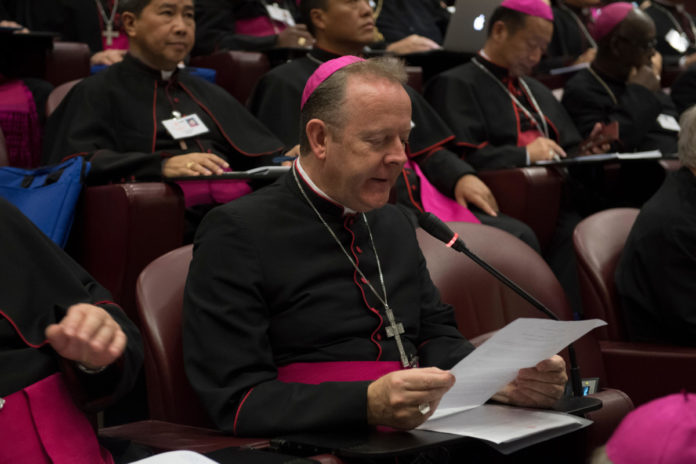
On Wednesday, 10 October Archbishop Eamon Martin told the Synod on Young People, Faith and Vocational Discernment that by reconnecting with young people, we can bring fresh joy and enthusiasm to the mission of the Church.

Archbishop Martin of Armagh and Bishop Donal McKeown of Derry are representing Ireland at the XV Ordinary General Assembly of the Synod of Bishops which is taking place in Rome from 3-28 October.  Archbishop Martin is Relator (reporter/secretary) of English speaking Group A.

Speaking on Wednesday Archbishop Martin said: “At the final Mass of the World Meeting of Families in Dublin, Pope Francis remarked that it is ‘the Spirit of God, who constantly breathes new life into our world, into our hearts, into our families, into our homes and parishes’.  He said that ‘each new day in the life of our families, and each new generation, brings the promise of a new Pentecost, a domestic Pentecost, a fresh outpouring of the Spirit, the Paraclete, whom Jesus sends as our Advocate, our Consoler and indeed our Encourager’.

“In other words, it is the Holy Spirit who ‘rejuvenates’ the Church. That is why I would like us to speak more about the work of the Holy Spirit in the lives of our young people.  For me, the Working Document lacks the punch and fire that the Spirit brings! Did you realise that Baptism is only mentioned three times in the entire Document and Confirmation is not mentioned at all?

“I’d like to hear more of the joyful language of the ‘new springtime’, the ‘new Pentecost’ which every Pope since the Council has called for. As our new Saint (to be) Paul VI famously said: ‘The Church needs her eternal Pentecost.  She needs fire in her hearts, words on her lips, a glance that is prophetic (General Audience 291172)’.

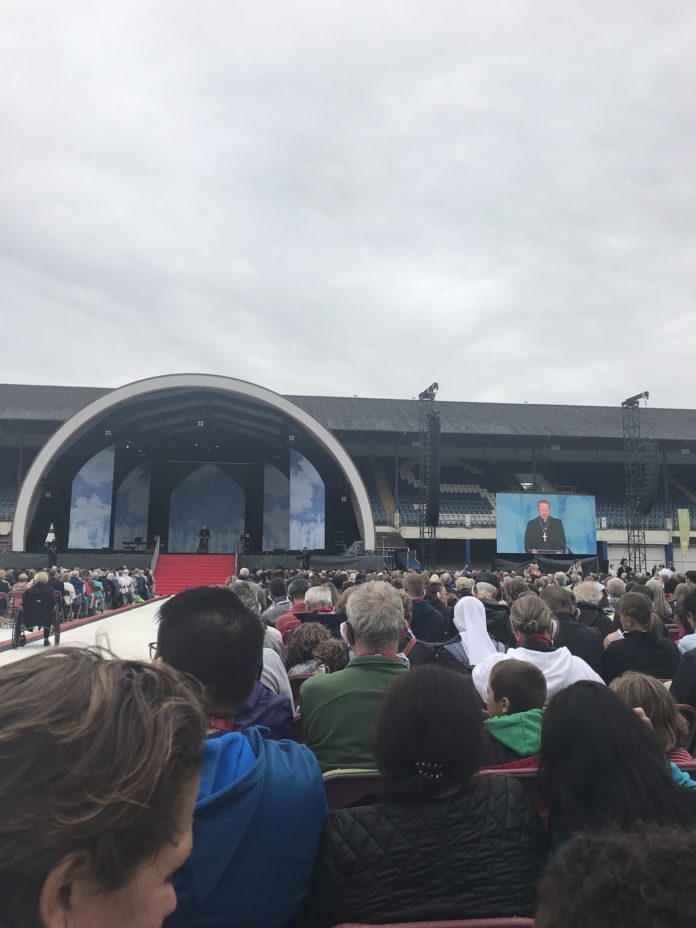
“I am convinced that the Spirit is already actively at work preparing us for a new springtime of growth and abundance in faith. During the recent abortion referendum in Ireland many young people showed extraordinary courage by being ‘ambassadors for life’ despite enormous peer pressure to do otherwise.  They were responding to the Holy Spirit challenging them to get right out of their comfort zones in the service of something much bigger than themselves.  Similarly, at the World Meeting of Families we met thousands of young people in the ‘Teen Global Village’ who were clearly filled with the gifts of the Holy Spirit.

“How can we encourage our young people to be more alert and open to the Holy Spirit, calling them and ‘gifting’ them for the service of the Gospel?  Every day I pray for vocations to the priesthood and to the consecrated life.  But I also pray that all our young lay faithful will find ‘new life in the Spirit’ and realise more and more that they are called personally by Baptism and Confirmation to be part of the ‘new springtime’ for the faith.  It is the Holy Spirit who can enable them to embrace their unique role in the new evangelisation.

“How I long for the New Pentecost, for a fresh outpouring of the Holy Spirit to transform and renew the faith of our young people and, through them, to rejuvenate our Church!”

Homily of Archbishop Eamon Martin for the Columban Centenary Mass

Celebration of Mass at 11.00am in Saint Patrick’s Cathedral, Armagh, Sunday 9 September 2018

“Columban missionaries are at the forefront of teaching about reconciliation and justice, caring for the earth, our common home, and pointing out how the poorest peoples of the world suffer most from the throwaway culture of greed and waste” – Archbishop Eamon Martin

On 8 September 1916, the young Cork priest Father Edward Galvin left a meeting with Cardinal Logue, delighted to have received his support for the foundation of an Irish Missionary Society for China. A month later, the Irish bishops formally backed the proposal, saying they were thankful to God “for this new and striking evidence of the continued life of the ancient Irish missionary spirit.” With the help of Father John Blowick, a professor of Moral Theology, and several others, people from all over Ireland joined together to raise the funds for the Maynooth Mission to China. It took almost another two years, and further persuasion by Cardinal Logue and others, before Pope Benedict XV gave approval for the Society of Saint Columban – this year celebrating one hundred years of missionary endeavour.

The first new missionaries arrived in China in 1920, with people speaking of “a million souls in China to be won for Christ”! But others, including Father Galvin, the co-founder, thought at times it was “a bit of a mad thing to do”! God’s grace blessed their efforts – the Columban missions in China continued until they were expelled in the early 1950s. By then, the Columban Sisters had been founded, and new missions opened in the Philippines, Korea, Burma and Japan. Eventually Columban missionaries – priests, religious and lay women and men – would proceed to Latin America, Australia, Fiji, Pakistan and Taiwan, Brazil, Jamaica and Belize and Myanmar.

“Go out to the whole world”, Jesus said – “proclaim the Good News to all the nations”. Sometimes we tend to think that this commission was only for “special” disciples, that the call to mission is only for the chosen few. Pope Francis, on the other hand keeps reminding us that every baptised person is a missionary. “Every Christian is a missionary to the extent that he or she has encountered the love of God in Christ Jesus: we no longer say that we are “disciples” and “missionaries”, but rather that we are always “missionary disciples” (EG120).

At our Eucharistic celebration today we are giving thanks in a special way for those men from the towns and countryside of the Archdiocese of Armagh who heard the call of God’s word to become Columban priests. The motto of Saint Columbanus was “Christi simus non nostri – Let us live for Christ and not for ourselves”, and that is exactly what they did, by leaving their native counties of Armagh, Louth, Tyrone and Derry to bring the message of God’s love to the ends of the earth.

I welcome members and representatives of their families who have gathered with us this morning. In a personal way I also add the name of my own cousin, Father Eddie McColgan, a Columban priest from Iskaheen in Co Donegal, who ministered for forty five years on the island of Fiji.

In his letters home, and in the pages of the Far East magazine, my cousin Father Eddie spoke of learning an entirely new culture and language, of horrific hurricanes which flattened their homes and church, of fragile politics and a mixed welcome for the Gospel and the work he was doing. Many missionaries who left these parts had to carry heavy crosses along with their people, to cope with the ravages of conflict and climate, hunger and disease, persecution and imprisonment; some even gave their lives for the faith. Over the past century twenty-four Columban missionaries laid down their lives for Christ. May the Lord reward them.

In sending His disciples out on mission, Jesus was clear that they were to bring the Good News especially to the poor and downtrodden, to the marginalised and the suffering. And this has been a consistent characteristic of the good work of Columban missionaries throughout the world – they have worked for justice and peace; witnessed against oppression; stood up for human dignity – often putting themselves in danger by doing so. Today, Columban missionaries are at the forefront of teaching about reconciliation and justice, caring for the earth, our common home, and pointing out how the poorest peoples of the world suffer most from the throwaway culture of greed and waste.

Two weeks ago in the Phoenix Park, Pope Francis reiterated, “How much our world needs this encouragement that is God’s gift and promise!” He accepted however that the task of bearing witness to this Good News is not easy nowadays. People are easily distracted by the allurements and passing fashions of our secularised culture. There are so many contradictory messages competing for their attention and allegiance – in some ways our ears are blocked from hearing the voice of the Lord gently calling us back to solid, sound values – the message of the Gospel challenges our contemporary, “throwaway”, individualistic culture. Pope Francis put it well during that special Mass in the Phoenix Park:

“Let us also humbly acknowledge that, if we are honest with ourselves, we too can find the teachings of Jesus hard. How difficult it is always to forgive those who hurt us; how challenging always to welcome the migrant and the stranger; how painful to joyfully bear disappointment, rejection, betrayal; how inconvenient to protect the rights of the most vulnerable, the unborn or the elderly, who seem to impinge upon our own sense of freedom”.

No one ever said that being a disciple of Jesus was easy! Pope Francis drew our attention to Saint Columbanus, the patron saint of the Columbans:
“I think of Saint Columbanus, who with his small band of companions brought the light of the Gospel to the lands of Europe in an age of darkness and cultural dissolution … It was their daily witness of fidelity to Christ and to each other that won hearts yearning for a word of grace and helped give birth to the culture of Europe … Of course, there will always be people who resist the Good News, who “murmur” at its “hard words”. Yet like Saint Columbanus and his companions, who faced icy waters and stormy seas to follow Jesus, may we never be swayed or discouraged by the icy stare of indifference or the stormy winds of hostility”.

My brothers and sisters, let us be inspired by the example and power of Jesus in today’s Gospel story, who was able to open the ears of the deaf man to hear His word – by Jesus who can make the blind see, who can set free those imprisoned in their sinfulness, who can say to any faint heart: Courage! Do not be afraid!

As we celebrate and give thanks today for a centenary of missionary courage within the Columban Missionary Society, let us be inspired by this century of commitment to renew our own baptismal calling and our determination to be missionaries ourselves, bringing the joy of the Gospel to everyone that we meet. Amen.

ENDS

Keynote address of Archbishop Eamon Martin at the Family Arena at the WMOF2018 Pastoral Congress ‘The welfare of the family is decisive for the future of the world’

Family “Circle” of Tender Love

Recently someone sent me a collection of old prayers known as “Circle prayers”. Apparently they were popular in Celtic countries like Ireland. Circle prayers ask God to surround us with his love and protection – one beautiful prayer goes like this:

Circle me Lord, Keep protection near, And danger afar.

Circle me Lord, Keep light near, And darkness afar.

Circle me Lord, Keep peace within, Keep evil out.

Circle me Lord, Keep hope within, Keep doubt without.

Perhaps one of the most beautiful of these prayers is the one we know as St Patrick’s breastplate –

Christ with me,

Christ before me,

Christ behind me,

Christ in me,

Christ beneath me,

Christ above me,

Christ on my right,

Christ on my left,

Christ all around me.

When we are in need, or sad, or ill, or lonely, it’s good to know that God surrounds us with love, care and protection.

I’ve always liked the term “family circle”. It captures that sense of unique closeness, and connection, which Family represents. Here at the World Meeting of Families we celebrate the ‘Good News’ of the Family which is ‘Joy for the World’. This afternoon I will explore how the Family circle of love and prayer and trust and care is so important for the Church, for society, and for the whole world. And even though we all know that sometimes relationships in families don’t always work out, we still hold that circle of relationships within the family – between grandparents, parents, children, siblings, grandchildren – as something special and unique.

My dear mother died just five months ago at the age of ninety (God rest her soul). One of the most moving and special moments for me at that time was when we gathered as a family, circling her bedside, and shared her last Eucharist. I touched the sacred host to her lips and placed a tiny drop of the precious blood on her tongue. The Body of Christ. The Blood of Christ. It was a privileged moment of communion, intimacy and tenderness in our family – as if we were returning to my mother some of the love and tenderness she had shared with us, growing up – but above all to be with her in prayer – it was the least we could do for the beautiful, strong woman who had handed on the faith to us and always prayed for us – her 6 sons and 6 daughters. Mama lived the faith by the example of her prayer, her deep friendship with the Lord, her powerful witness in time of trouble and suffering, the way she offered every moment of every day to God.

Among my earliest memories is of my mother lining us up in the kitchen before school to comb our hair – like steps of stairs – one by one as she combed and brushed, she prayed with us a morning offering – O my God I give to you, all I think and say and do. All my work and happy play, I will give to God today.

These days when I think about living and handing on the faith, I think of my mother and father wrapping us around in a circle of faith, love, service, tenderness.

We often describe God’s fatherly love for us; but don’t we sometimes forget that God’s tender loving kindness is also like the love of a mother which is there for us no matter what, despite our mistakes and sinfulness? And together, the tender love of father and mother in the family – circling their children around with warmth, safety, teaching, learning, mercy, forgiveness, freedom, responsibility, charity, generosity – together this generates and nourishes the first and vital cell of Church and society – which is the family.

Pope Francis speaks about the need for a ‘revolution of tenderness’ in today’s world to melt the ‘hardness of heart’ that is so prevalent nowadays. Hardness of heart. We see it in so much violence, aggression, greed, destruction of property, defamation of character, vengeance, hatred. Instead, a ‘revolution of tenderness’, fostered and nourished in the family circle, challenges us to show sensitivity and concern for everyone and everything, and especially to protect the wonder of life in our common home. And since, as Pope Francis puts it: ‘everything is connected’, this includes the way we care for the environment; how we welcome and accept refugees, the elderly, the unborn, the forgotten and the abandoned; how we acknowledge the worth of a poor person, a human embryo, a person with disabilities (seeLaudato Si’ 117).

Family – school of humanity and domestic Church

As the ‘school of humanity’ and the ‘domestic Church’, it is in the family that values are transmitted, the wisdom of generations is passed on, the choices between right and wrong are evaluated, connections with the past are made, links with other families are made and upheld. It is in the family that we first are loved and where we first learn how to love. It is in the family that we discover who we are, where we have come from, our inter-generational relationships, our links with a place, with the land and, of course, with a worshiping community.

Family is all about ‘connection’– family connects us to a home, to the people who are our flesh and blood. Family also links us to a community, a parish, a county, a country, to a history and culture, a language and tradition, our past, present and future. For believers, family also connects them to faith and values, to baptism and a worshiping community. And so that first, vital cell that is the immediate family circle multiplies and divides and multiplies again, connecting us a much larger family of families in the Church and in society.

Listen to these beautiful words of Pope St John Paul II where he reflects on the family:

“‘The family is the domestic church’. The meaning of this traditional Christian idea is that the home is the Church in miniature. The Church is the sacrament of God’s love. She is a communion of faith and life. She is a mother and teacher. She is at the service of the whole human family as it goes forward towards its ultimate destiny. In the same way the family is a community of life and love. It educates and leads its members to their full human maturity and it serves the good of all along the road of life the family is the “first and vital cell of society”. In its own way it is a living image and historical representation of the mystery of the Church. The future of the world and of the Church, therefore, passes through the family (JPII in Perth 1986 November)”.

In the family we also discover how we can connect with society, and how we can bring it personal gifts to serving the Common Good and the well being of all humanity. The Catechism of the Catholic Church sums this up very well:

“The family is the original cell of social life. It is the natural society in which husband and wife are called to give themselves in love and in the gift of love…Family life is an initiation into life in society” (CCC, n. 2207).

During this World Meeting of the Families we will reflect, communicate and distil for our times this beautiful and prophetic vision of God’s plan for marriage and the family which was celebrated at the Synods and which is enunciated so positively in Amoris Laetitia. Of course this Good news, this ‘Gospel of the Family’ has its origins in ‘the creation of humanity in the image of God who is love and who calls man and woman to love according to his own likeness’ (Relatio Synodi 2015, 35).

Amoris Laetitia traces the Gospel of the Family from Sacred Scripture to Church tradition and the teachings of the magisterium. I particularly like the way Pope Francis reminds us how God chose to save us by sending his Son into the world in a human family which was open to receive him in love.

Facing Cultural Challenges in Communicating the Family

We believe that the Church’s proclamation of the family – founded on a circle of faithful loving between a man and a woman which is open to the gift of children who are the fruit of that love – is Good News for society and the world. There is no getting away, however, from the fact that communicating the family in this way can appear increasingly counter-cultural in many parts of the world, including Ireland. This has been accelerated to a large extent by the departure in public discourse from the philosophical and anthropological underpinning of marriage and the family in natural law, and by the erosion of social supports for traditional marriage in the form of constitutional guarantee and positive legislation. In presenting God’s plan for marriage and the family which includes God’s plan for the transmission of life itself, the Church sometimes be accused of being exclusive or lacking in compassion.

How difficult it must be for young people to make sense of all the contradictory messages presented to them by the secular world. They are easily drawn towards an overly emotional and romantic concept of love and marriage which, Pope Francis has observed, ‘can be constructed and modified at will’ (Evangelii Gaudium, The Joy of the Gospel, 66). They face considerable pressure to resist becoming ‘tied down’ by commitments, relationships or attachments – to delay or avoid lifelong commitments, including marriage and having children for as long as possible. Employers will often expect them to be flexible, movable, able to travel and work long, unsocial hours. With regard to the transmission of life, they are surrounded by a contraceptive, anti-birth mentality with its increasing indifference to abortion; then, when later they earnestly desire to have children, they struggle with a technocratic, commodification of child-bearing which, if necessary, can be accessed independently of any sexual relationship.

Into this complicated ‘topsy turvy’ world we have the joy and challenge of communicating a clear and positive vision of family and marriage: the Good News that human life is sacred, that each human being comes from God, who created us, male and female; that we are willed by God who loves each and every one of us; that self-giving love and commitment in the marriage of a man and a woman open to life is not only possible, but is a beautiful and fulfilling gift with the power of God’s grace; that chastity is achievable, healthy and good for our young people; that the giving of oneself to another in marriage for life is special, rewarding and a wonderful symbol of Christ’s forgiving, faithful love for his Church.

We proclaim the Gospel of the Family because we believe in it, and we also believe and firmly hope that, with the help of God, it is attainable.

Of course, it is one thing to have a joyful message to proclaim and propose – it is quite another to find effective ways of communicating this message. If no one is listening, it is difficult to communicate! The task of proclaiming the Gospel of the Family in the Church therefore belongs to all of us because it is communicated most effectively from cell to cell, from family to family, witnessing intentionally and courageously, and by lived example, to the Church’s vision.

Together we proclaim the Gospel of the Family because we are convinced that the welfare of the family is decisive for the future of the world! Or, as Pope St John Paul II loved to put it: “As the family goes, so goes the nation, and so goes the whole world in which we live”.

Pastoral Challenges in Communicating the Family

Three years ago I had the privilege of attending the Synod on the Family in Rome, 2015. It was very moving for me to hear the bishops as shepherds of the Church describing the hopes and anxieties that face their flocks – the families of the world. We heard passionate, first-hand accounts of forced migration, persecution and war; we were shocked by the extent of human trafficking and the exploitation and commodification of women and children. We heard about ‘wombs for hire’, child soldiers, forced prostitution and the exploitation of street children in large cities. We shuddered at the prevalence of abuse and domestic violence. We considered the challenges presented in some cultures by polygamy, arranged marriages, mixed and inter-faith marriages. We spoke about the pressures on family life from individualism and isolation and the spread of abortion, euthanasia and gender ideology. We faced the reality that in many countries the majority of marriages take place without any reference to faith or to God. At the same time, however, we shared our tremendous admiration and gratitude for the many families who do their best in complex situations to persevere, to grow in love and to generously witness to commitment, forgiveness, and lifelong faithfulness.

The overwhelming sense among the bishops at the Synods was a desire to be with all families, and especially with those whose homes are visited by tragedy or violence and those who, for whatever reason, have experienced breakdown in their relationships and those who may feel excluded from the Church for this reason or other reasons. The Synods and Amoris Laetitiawere clear that we need to be mindful of those who have begun new relationships and unions, and find sincere and truthful ways of welcoming and including them in the life and worshiping community of the Church.

This World Meeting of Families provides us with another opportunity to propose ways of accompanying families in these, and other difficult situations, including developing a ministry of care for those whose marriage relationships have broken down, conscious that the Christian message of truth and mercy converges in Christ.

A the Synod on the Family 2015 Synod, I really sensed that desire among the bishops to help all God’s people find God’s plan for them, knowing that no one is excluded from the circle of God’s love and that all are included in the Church’s pastoral activity (e.g. see Relatio Synodi, 34).

In bringing our message about marriage and the family into the world, we are challenged to find and learn new ways of communicating our sincerely held perspectives about family and other matters. We realise that we must do so now alongside those of other faiths and none, and thereby continue to encourage conversations at a national and international level on the importance of the family. We must also be aware that in the aftermath of child abuse scandals and other shameful episodes of the past, there are those who feel they can no longer trust our message, perhaps because they have been directly hurt and betrayed in their families by their experience of Church, or because the revelations of such heinous crimes have shocked them to the core. In his 2010 Letter to the Catholics of Ireland, Pope Benedict XVI alerted us to the fact that the sins and crimes of sexual abuse in the Church have not only had tragic consequences in the lives of victims and their families, but they have also ‘. obscured the light of the gospel’. For me, that is particularly true about the Gospel of the Family.

State support for family

But still, if we truly believe the Good News that the welfare of the family is decisive to the future of the world, then how can we keep from singing and proclaiming this vital truth? We must work together with all people of goodwill to encourage the State to support the family, and especially the uniqueness of the faithful and exclusive union between a married man and a woman as a cherished space for the bearing and upbringing of children. In doing this, the State is not only caring for its citizens, but it is also strengthening and nurturing the foundations of society itself. As Pope Francis has said: ‘The family deserves special attention by those responsible for the common good, because it is the basic unit of society, which brings strong links of union that underpin human coexistence and, with the generation and education of children, ensure the renewal and the future of society.’

Taking inspiration from the powerful 1983 ‘Charter of the Rights of the Family’, we might discuss with public representatives in our various countries: to what extent does public policy support Family and Life, freedom of education and conscience, a proper work-life balance, which respects the role of mothers and fathers? What do our economic and social policies say to poorer families, particularly those policies which impact directly on family: the needs of children and the elderly; tackling the proliferation of drugs, alcohol, gambling and other addictive behaviours which can destroy home and family life? How do welfare policies and benefit programmes support families who are most in need and who are so easily targeted and exploited by loan sharks and other criminal elements? How can we better assist young people who wish to establish a family, mortgage a home, take out insurance, but who may sometimes be convinced by economic policy to remain single?

In asking these questions of public policy makers we are not suggesting that we want the State to overly intrude into, or replace, the important autonomy of the family. On the contrary. We do so because we believe that if the institution of the family is harmed, then all of society suffers. As the vital circle and community of love and support in society, the family is much more than an economic or social unit. It is a privileged space for care, education, health promotion, mediation, security, community cohesion and safety. When the family is neglected by society, social problems multiply and become increasingly more complex. It would be a mistake to neglect the importance of the family in favour of some kind of ‘society of ones’, founded upon the undisputed supremacy of the ‘pure individual’ – to replace “we” entirely with “me”. Again, on the contrary, individuals thrive best with the nourishment, primary support and ‘wrap-around’ care of the family. All those simple, everyday gestures of love, trust, gratitude, concern, forgiveness, healing and challenge that are part and parcel of family life, help to create stability, solidarity on which society depends.

In entering this kind of dialogue, we in the Church are of course very conscious from our pastoral experience that family relationships do not always work out, and can even require direct intervention for the safety and well-being of families members. We must also be cautious about thinking that people who disagree with us on the issue of the Family are necessarily hostile. The engagement of people of faith together with all people of good will in conversations about family, marriage and other critical life matters is to be encouraged and welcomed. Drawing upon its rich tradition of social teaching, the Catholic Church will sometimes bring uncomfortable questions into such a dialogue. However, in an atmosphere of respectful encounter, it is possible for two-way, critical interaction and conversations to take place between religious traditions and the broader culture, including constructive critiques of social, political, legal, and economic practices as they affect the family.

Conclusion

Friends, this World Meeting of the Families gives us a privileged opportunity to communicate the Gospel of the Family ‘ad intra’, and ‘ad extra’, as good for society and good for the Church; in short, a message of Joy for the world! The family is a gift for the Church and a gift for society!

To conclude I offer some words from the Second Vatican Council, where Gaudium et Spes (47-48) speaks about “fostering the nobility of marriage and the family”.

“The well-being of the individual person and of human and Christian society is intimately linked with the healthy condition of that community produced by marriage and family”…

“For, God Himself is the author of marriage , endowed as it is with various benefits and purposes.(1) All of these have a very decisive bearing on the continuation of the human race, on the personal development and eternal destiny of the individual members of a family, and on the dignity, stability, peace and prosperity of the family itself and of human society as a whole”.

So finally, my friends, conscious that Pope Francis offers us the Holy Trinity as an icon of Love for our reflection during this World Meeting, I pray with you as I began, an ancient Celtic circle prayer, this time a prayer of blessing for your family and for the family of families that is the Church:

The compassing of God the Father be on you,

The circling of the God of life.

The compassing of Christ be on you ,

The circling of the Christ of love.

The compassing of the Spirit be on you ,

The circling of the Spirit of Grace.

May the compassing of the Three shield you this day, this night and always. Amen.

22 August 2018.
LETTER OF HIS HOLINESS POPE FRANCIS TO THE PEOPLE OF GOD

“If one member suffers, all suffer together with it” (1 Cor 12:26). These words of Saint Paul forcefully echo in my heart as I acknowledge once more the suffering endured by many minors due to sexual abuse, the abuse of power and the abuse of conscience perpetrated by a significant number of clerics and consecrated persons. Crimes that inflict deep wounds of pain and powerlessness, primarily among the victims, but also in their family members and in the larger community of believers and nonbelievers alike. Looking back to the past, no effort to beg pardon and to seek to repair the harm done will ever be sufficient. Looking ahead to the future, no effort must be spared to create a culture able to prevent such situations from happening, but also to prevent the possibility of their being covered up and perpetuated. The pain of the victims and their families is also our pain, and so it is urgent that we once more reaffirm our commitment to ensure the protection of minors and of vulnerable adults.

1. If one member suffers…

In recent days, a report was made public which detailed the experiences of at least a thousand survivors, victims of sexual abuse, the abuse of power and of conscience at the hands of priests over a period of approximately seventy years. Even though it can be said that most of these cases belong to the past, nonetheless as time goes on we have come to know the pain of many of the victims. We have realized that these wounds never disappear and that they require us forcefully to condemn these atrocities and join forces in uprooting this culture of death; these wounds never go away. The heart-wrenching pain of these victims, which cries out to heaven, was long ignored, kept quiet or silenced. But their outcry was more powerful than all the measures meant to silence it, or sought even to resolve it by decisions that increased its gravity by falling into complicity. The Lord heard that cry and once again showed us on which side he stands. Mary’s song is not mistaken and continues quietly to echo throughout history. For the Lord remembers the promise he made to our fathers: “he has scattered the proud in their conceit; he has cast down the mighty from their thrones and lifted up the lowly; he has filled the hungry with good things, and the rich he has sent away empty” (Lk 1:51-53). We feel shame when we realize that our style of life has denied, and continues to deny, the words we recite.

With shame and repentance, we acknowledge as an ecclesial community that we were not where we should have been, that we did not act in a timely manner, realizing the magnitude and the gravity of the damage done to so many lives. We showed no care for the little ones; we abandoned them. I make my own the words of the then Cardinal Ratzinger when, during the Way of the Cross composed for Good Friday 2005, he identified with the cry of pain of so many victims and exclaimed: “How much filth there is in the Church, and even among those who, in the priesthood, ought to belong entirely to [Christ]! How much pride, how much self-complacency! Christ’s betrayal by his disciples, their unworthy reception of his body and blood, is certainly the greatest suffering endured by the Redeemer; it pierces his heart. We can only call to him from the depths of our hearts: Kyrie eleison – Lord, save us! (cf. Mt 8:25)” (Ninth Station).

2. … all suffer together with it

The extent and the gravity of all that has happened requires coming to grips with this reality in a comprehensive and communal way. While it is important and necessary on every journey of conversion to acknowledge the truth of what has happened, in itself this is not enough. Today we are challenged as the People of God to take on the pain of our brothers and sisters wounded in their flesh and in their spirit. If, in the past, the response was one of omission, today we want solidarity, in the deepest and most challenging sense, to become our way of forging present and future history. And this in an environment where conflicts, tensions and above all the victims of every type of abuse can encounter an outstretched hand to protect them and rescue them from their pain (cf. Evangelii Gaudium, 228). Such solidarity demands that we in turn condemn whatever endangers the integrity of any person. A solidarity that summons us to fight all forms of corruption, especially spiritual corruption. The latter is “a comfortable and self-satisfied form of blindness. Everything then appears acceptable: deception, slander, egotism and other subtle forms of self-centeredness, for ‘even Satan disguises himself as an angel of light’ (2 Cor 11:14)” (Gaudete et Exsultate, 165). Saint Paul’s exhortation to suffer with those who suffer is the best antidote against all our attempts to repeat the words of Cain: “Am I my brother’s keeper?” (Gen 4:9).

I am conscious of the effort and work being carried out in various parts of the world to come up with the necessary means to ensure the safety and protection of the integrity of children and of vulnerable adults, as well as implementing zero tolerance and ways of making all those who perpetrate or cover up these crimes accountable. We have delayed in applying these actions and sanctions that are so necessary, yet I am confident that they will help to guarantee a greater culture of care in the present and future.

Together with those efforts, every one of the baptized should feel involved in the ecclesial and social change that we so greatly need. This change calls for a personal and communal conversion that makes us see things as the Lord does. For as Saint John Paul II liked to say: “If we have truly started out anew from the contemplation of Christ, we must learn to see him especially in the faces of those with whom he wished to be identified” (Novo Millennio Ineunte, 49). To see things as the Lord does, to be where the Lord wants us to be, to experience a conversion of heart in his presence. To do so, prayer and penance will help. I invite the entire holy faithful People of God to a penitential exercise of prayer and fasting, following the Lord’s command.1 This can awaken our conscience and arouse our solidarity and commitment to a culture of care that says “never again” to every form of abuse.

It is impossible to think of a conversion of our activity as a Church that does not include the active participation of all the members of God’s People. Indeed, whenever we have tried to replace, or silence, or ignore, or reduce the People of God to small elites, we end up creating communities, projects, theological approaches, spiritualities and structures without roots, without memory, without faces, without bodies and ultimately, without lives. 2 This is clearly seen in a peculiar way of understanding the Church’s authority, one common in many communities where sexual abuse and the abuse of power and conscience have occurred. Such is the case with clericalism, an approach that “not only nullifies the character of Christians, but also tends to diminish and undervalue the baptismal grace that the Holy Spirit has placed in the heart of our people”.3

Clericalism, whether fostered by priests themselves or by lay persons, leads to an excision in the ecclesial body that supports and helps to perpetuate many of the evils that we are condemning today. To say “no” to abuse is to say an emphatic “no” to all forms of clericalism.

It is always helpful to remember that “in salvation history, the Lord saved one people. We are never completely ourselves unless we belong to a people. That is why no one is saved alone, as an isolated individual. Rather, God draws us to himself, taking into account the complex fabric of interpersonal relationships present in the human community. God wanted to enter into the life and history of a people” (Gaudete et Exsultate, 6). Consequently, the only way that we have to respond to this evil that has darkened so many lives is to experience it as a task regarding all of us as the People of God. This awareness of being part of a people and a shared history will enable us to acknowledge our past sins and mistakes with a penitential openness that can allow us to be renewed from within. Without the active participation of all the Church’s members, everything being done to uproot the culture of abuse in our communities will not be successful in generating the necessary dynamics for sound and realistic change. The penitential dimension of fasting and prayer will help us as God’s People to come before the Lord and our wounded brothers and sisters as sinners imploring forgiveness and the grace of shame and conversion. In this way, we will come up with actions that can generate resources attuned to the Gospel. For “whenever we make the effort to return to the source and to recover the original freshness of the Gospel, new avenues arise, new paths of creativity open up, with different forms of expression, more eloquent signs and words with new meaning for today’s world” (Evangelii Gaudium, 11).

It is essential that we, as a Church, be able to acknowledge and condemn, with sorrow and shame, the atrocities perpetrated by consecrated persons, clerics, and all those entrusted with the mission of watching over and caring for those most vulnerable. Let us beg forgiveness for our own sins and the sins of others. An awareness of sin helps us to acknowledge the errors, the crimes and the wounds caused in the past and allows us, in the present, to be more open and committed along a journey of renewed conversion.

Likewise, penance and prayer will help us to open our eyes and our hearts to other people’s sufferings and to overcome the thirst for power and possessions that are so often the root of those evils. May fasting and prayer open our ears to the hushed pain felt by children, young people and the disabled. A fasting that can make us hunger and thirst for justice and impel us to walk in the truth, supporting all the judicial measures that may be necessary. A fasting that shakes us up and leads us to be committed in truth and charity with all men and women of good will, and with society in general, to combatting all forms of the abuse of power, sexual abuse and the abuse of conscience.

In this way, we can show clearly our calling to be “a sign and instrument of communion with God and of the unity of the entire human race” (Lumen Gentium, 1).

“If one member suffers, all suffer together with it”, said Saint Paul. By an attitude of prayer and penance, we will become attuned as individuals and as a community to this exhortation, so that we may grow in the gift of compassion, in justice, prevention and reparation. Mary chose to stand at the foot of her Son’s cross. She did so unhesitatingly, standing firmly by Jesus’ side. In this way, she reveals the way she lived her entire life. When we experience the desolation caused by these ecclesial wounds, we will do well, with Mary, “to insist more upon prayer”, seeking to grow all the more in love and fidelity to the Church (SAINT IGNATIUS OF LOYOLA, Spiritual Exercises, 319). She, the first of the disciples, teaches all of us as disciples how we are to halt before the sufferings of the innocent, without excuses or cowardice. To look to Mary is to discover the model of a true follower of Christ.

May the Holy Spirit grant us the grace of conversion and the interior anointing needed to express before these crimes of abuse our compunction and our resolve courageously to combat them.

FRANCIS

Vatican City, 20 August 2018

‘A Journey through Amoris Laetitia’ TV Series

https://amoris.ie/tv/


As part of the preparation for the World Meeting of Families 2018 and the visit of Pope Francis to Ireland, a 6-part television series has been commissioned by the World Meeting of Families to help explore the document written by Pope Francis on love in the family.

‘A Journey through Amoris Laetitia’ features a wide variety of well-known commentators, as well as families from all walks of life and from all over the world.  Contributors include President of Caritas Cardinal Luis Antonio Tagle, speaker and author Jeff Cavins, Bishop Robert Barron, John and Clare Gabrowski (Pontifical Council for the Family) and Primate of all Ireland Archbishop Eamon Martin.

Through the six episodes, presented by Wendy Grace, we reflect on what Amoris Laetitia has to say to families as they experience the ups and downs of family life and how Pope Francis addresses key themes like imperfection, mercy and wider society while also offering an uplifting vision for the family.

The series was a co-production between iCatholic.ie and KAIROS Communications.  The series producers were Petra Conroy, Wendy Grace and Fr Bill Kemmy.

“In Amoris Laetitia, Pope Francis asks us to keep walking together,  to continue to encourage families in their daily commitments and challenges.  I warmly welcome the ‘A Journey through Amoris Laetitia’ series as a great aid to our on-going reflection and dialogue on family life in the light of what Pope Francis has written for us. (Archbishop Eamon Martin)

‘A Journey through Amoris Laetitia’ will be available on-line through the website Amoris.ie which hosts all of the resources that were made available to help people prepare for the World Meeting of Families 2018. These videos can be embedded on any church website eg see www.kandle.ie

Along with being available on-line, ‘A Journey through Amoris Laetitia’ is being broadcast internationally through a range of broadcast partners including Salt and Light TV, Catholic TV, EWTN and Shalom TV.  Contact from other broadcasters is welcome.

“This is an excellent series to help us prepare for the World Meeting of Families in Dublin.  But the quality and message of this series is not only limited to Dublin’s great event! Your ability to bring to life “Amoris Laetitia” through the series gives the videos a very long shelf life and serves as a very fine teaching tool of Pope Francis’ landmark Apostolic Exhortation – the rich fruit of the two Synods on the Family! Congratulations to all who made this series possible.  Thank you for allowing us to share it with Canadians from coast to coast to coast!” (Fr. Thomas Rosica, Salt and Light TV)

Clergy appointments for the Archdiocese of Armagh, effective 8 September 2018

Archbishop Eamon Martin, announces the following clergy appointments for the Archdiocese of Armagh, effective 8 September 2018.

Archbishop Eamon thanks the priests for their continued ministry and service in the Archdiocese and wishes them well in taking up these new appointments. He also thanks the people of the Archdiocese of Armagh for their ongoing prayers and support of their priests. He encourages them to welcome their new pastors in the coming weeks.

V Rev Bobby McKenna, PE, AP, Lower Killeavy, to retire, remaining in residence at the Parochial House, Camlough.

Rev Bernard King, SM, CC, Glassdrummond (Upper Creggan), to retire and return to his Marist Congregation.

V Rev Stephen Duffy, PE, Adm, VF, Termonfechin, to be PP, Lordship.

V Rev John McGoldrick, Adm, Aghaloo, to go on loan to the Diocese of Palm Beach, Florida.

V Rev Pádraig Murphy, PP, Lordship, to be Pastor Emeritus and Priest in Residence, Jenkinstown, and Diocesan Archivist / Curator.

V Rev Paul Clayton-Lea, PP, Tallanstown, to be Pastor Emeritus and Priest in Residence, Termonfechin assisting in local parishes.

V Rev Aidan Murphy, PP, Termonfechin, on return from sabbatical studies, to be PE, AP, VF, Coalisland (Ballyclog and Donaghenry).

V Rev Seán McCartan, PP, Ardboe, to be Chaplain to the Irish Defence Forces, based at Aiken Barracks, Dundalk, and Gormanstown Army Camp.

Rev Shajan Panachickal Michael, Eparchy of Kothamangalam, India, to be CC Holy Redeemer Parish, Dundalk, and serve the Syro-Malabar Community.

V Rev Paul Byrne, PP, VF, Coalisland (Ballyclog and Donaghenry), to be PP, VF, Termonfechin.

V Rev Phelim McKeown, PP, Kilsaran, to be Pastor Emeritus and Priest in Residence, Caledon (Aghaloo), assisting in local parishes.

V Rev Michael Sheehan, Adm, Kilsaran, to be Adm, Holy Redeemer Parish, Dundalk.

Rev Neil O’Donoghue, Vice-Rector, Redemptoris Mater Missionary Seminary, Dundalk, to join the Theology Faculty, St Patrick’s College, Maynooth.

Rev Eugene O’Neill, CC, Coalisland (Ballyclog and Donaghenry), to be PP, Coalisland (Ballyclog and Donaghenry).

V Rev Paul Montague, Adm, Holy Redeemer Parish, Dundalk, to be PP, Tallanstown.

Rev Anselm Emechebe, MSP, CC, Ardee and Collon, to be PP, Kilsaran.

V Rev Mark O’Hagan, Adm, VF, St Patrick’s Parish, Dundalk, to be PP, VF, St Patrick’s Parish, Dundalk.

Rev Radoslaw Szymoniak, SChr, CC, Dungannon, to return to his Society of Christ Congregation for a new assignment.

Rev Linos Dube, currently assisting in the Parish of Lordship, to be CC, St Peter’s Parish, Drogheda

Rev Leonard Okoli, MSP, on sabbatical, to be CC, Keady and Derrynoose.

Rev Maciej Zacharek, CC, St Peter’s Parish, Drogheda, to be CC, St Patrick’s Parish, Dundalk, and Director of Studies at Redemptoris Mater Missionary Seminary, Dundalk.

Rev Seán McGuigan, CC, Holy Redeemer Parish, Dundalk, to be PP, Ardboe.

Rev Brian Slater, CC, St Patrick’s Parish, Dundalk, to be CC, Ardee and Collon.

Rev Deacon Paul O’Reilly, newly-ordained, to serve in St Patrick’s Parish, Dundalk, and Holy Redeemer Parish, Dundalk.

Relics of Family of Saints to visit St Patrick’s Cathedral, Armagh

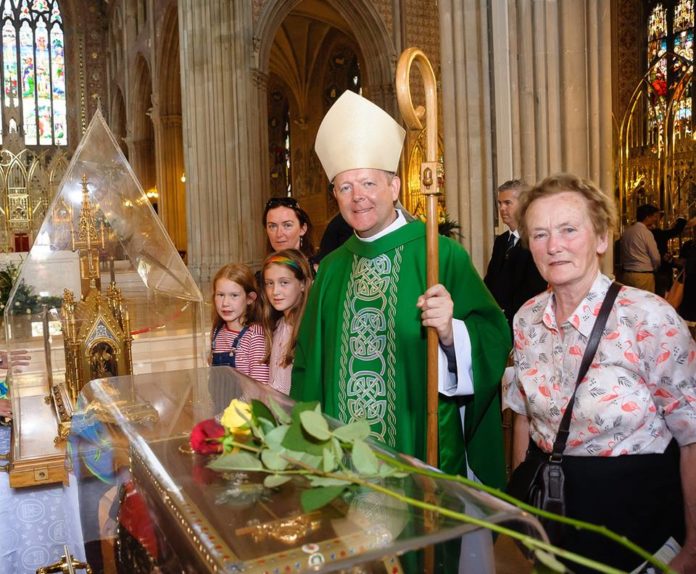
Looking forward to the World Meeting of Families, the Relics of Saints Louis and Zelie Martin and their daughter, Saint Therese of Lisieux visited St Patrick’s Cathedral on Sunday 12 August 2018. The Relics arrived at the Cathedral for the 11am Mass on that morning and they left at 9am on the morning of Monday 13 August. During that time, people had an opportunity to come and venerate the Relics of the family that embodies what is best in family life and they offer a wonderful example of what a family can become.

St Therese of Lisieux, otherwise known as The Little Flower is one of the most popular saints in the history of the Church and Pope St Pius X called her “the greatest saint of modern times”. At a young age, she felt the call to religious life and at the age of fifteen, she became a nun and joined two of her older sisters in the cloistered Carmelite Community in Lisieux in Normandy. After nine years as a religious, she died at the young age of twenty four and she was canonised a saint in 1925. Her feast day is 1st October. Three years ago, Pope Francis canonised her parents and they were the first spouses in the history of the Church to be canonised as a couple. Blessed Roses will be available in St Patrick’s Cathedral during the visit of the Relics.

Prayer for the Family
Father in heaven, you called Saints Zelie and Louis Martin to holiness through their married life. You gave them as Mother and Father to St Therese of Lisieux. Through their intercession, we ask you to bless married couples, bless our children and grandchildren. Guide us as citizens to make the kind of decisions that will support family life. We make this prayer through Christ our Lord. AMEN

‘After the Eight and Before the World Meeting of Families conference’ Carrickdale Sat 7 July

Armagh Justice and Peace Commission

will be hosting a conversation about your thoughts on the recent Referendum
and how you feel about the upcoming World Meeting of Families.

This gathering takes place in

The Carrickdale Hotel outside Dundalk from 10 am – 1pm.

It is a free event and we look forward to meeting you and giving you a unique opportunity to express your views and to listen to other voices.

Tea and coffee will be served and everyone is most welcome.

http://armagharchdiocese.org/justice-peace/


After the Eight Referendum and Before The World Family Meeting:

Where To Now for the Catholic Church?

The referendum in the South to remove the constitutional ban on abortion except when the mother’s life is at risk seemed like a crushing blow for the Catholic Church. The people of Ireland rejected the Church’s position, and by a large majority.

But this view suggests that the Church is only the bishops. In fact the Church is all the baptised people of God. And it is clear that a very large proportion of those who define themselves as Catholics (over 78% in the 2016 census) chose to vote Yes to the removal of the Eighth amendment.

One bishop responded by saying that all those who voted Yes and intended by so doing to support abortion needed to go to confession. A priest said they would go to hell if they did not repent. But another priest, Fr Gerry O’Hanlon, S.J., said many Catholics felt torn by the referendum and did not see it as a black and white issue. Others, who voted No, were committed to a consistent ethic of life.

Certainly some voted Yes because they felt the issue was too complex to be handled in a Constitutional clause.

This conference, which will be addressed by Grainne Doherty who works freelance in pastoral ministry, lecturing and facilitation, will help Catholics to explore their feelings and thoughts both about the referendum and the World Family Meeting which will be held in Dublin in August, and which Pope Francis will attend.

Mary Vallely, a member of the Justice and Peace Commission, said `We decided to hold this conference because we found a need among ourselves on the Commission to talk through the issues. Then we asked, “How many others need the same opportunity?”’.

Fr Brian Lennon, S.J., another Commission member, said `It will be good to give people a chance to talk through not only the referendum result, but also how they feel about the World Family Meeting. Do they feel connected with it? Do they feel that some groups, such as people in second relationships or LGBT people, are not sufficiently included?’

The Conference will be a follow-up to a recent survey by the Justice and Peace Commission of a small number of estates in Armagh city and Louth. One of the main issues raised by people was that they wanted to see married priests, because they felt these would be more able to talk about issues relevant to the lives of lay people.

The conference will be free of charge, and all are welcome to attend.

For further information contact:

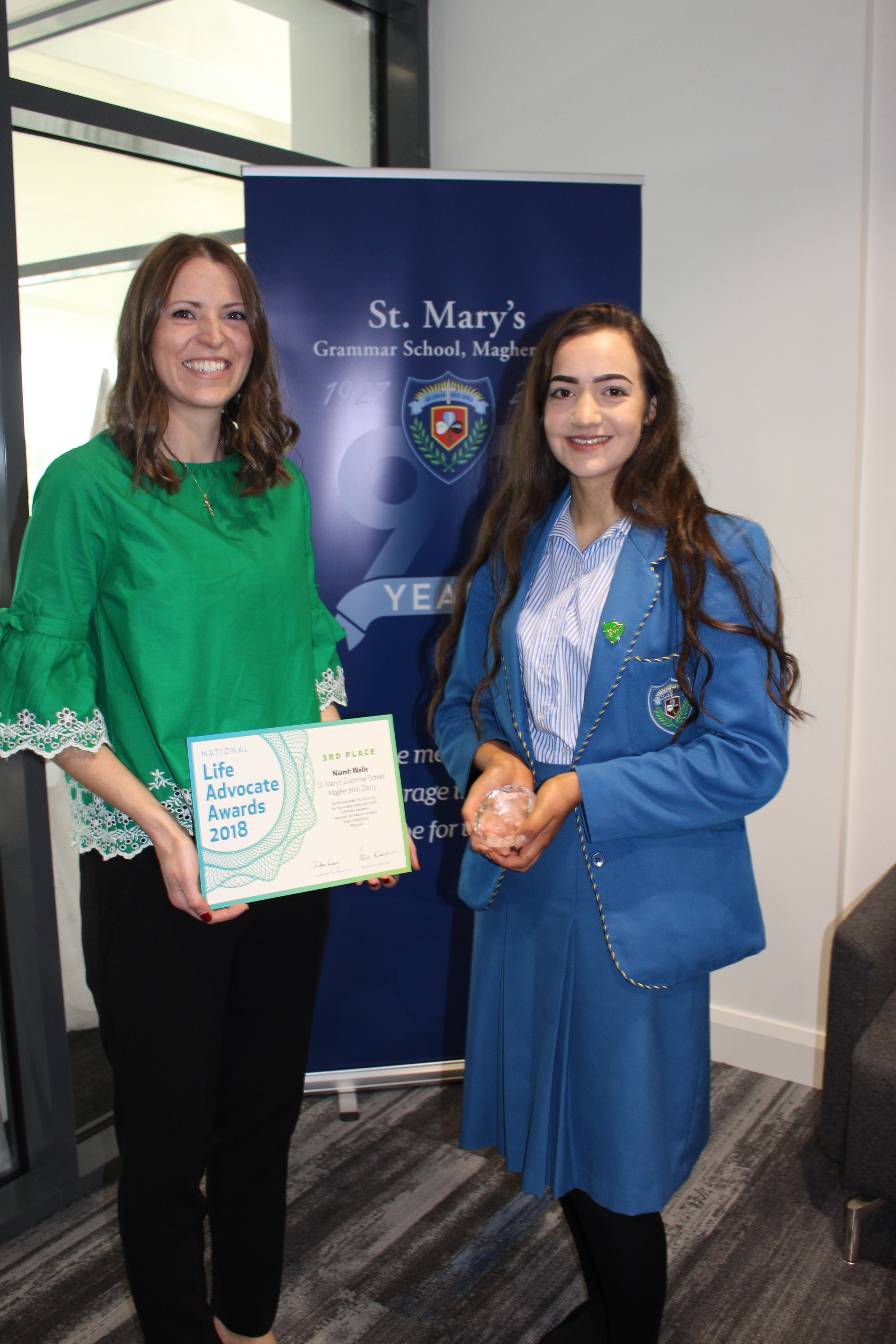
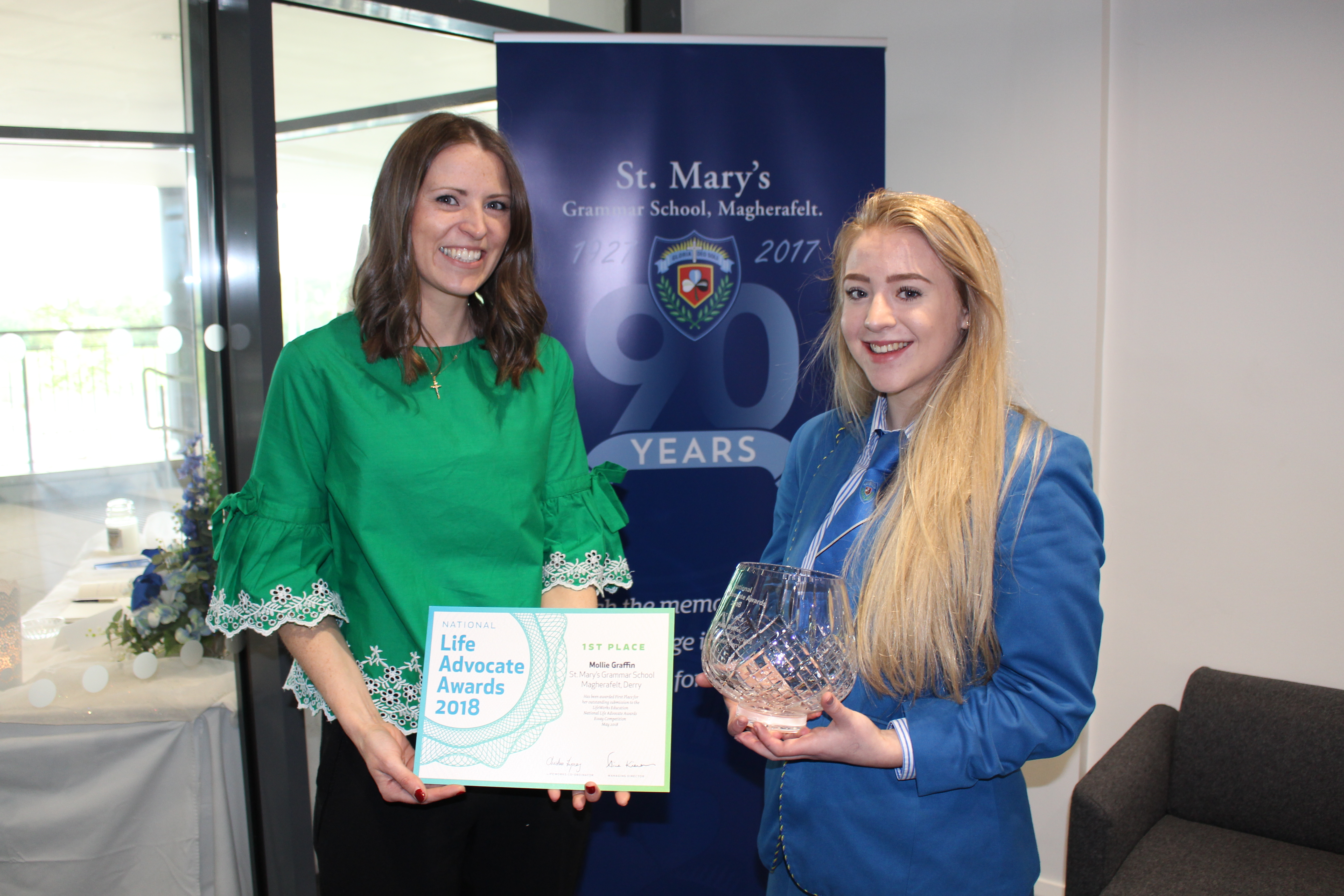
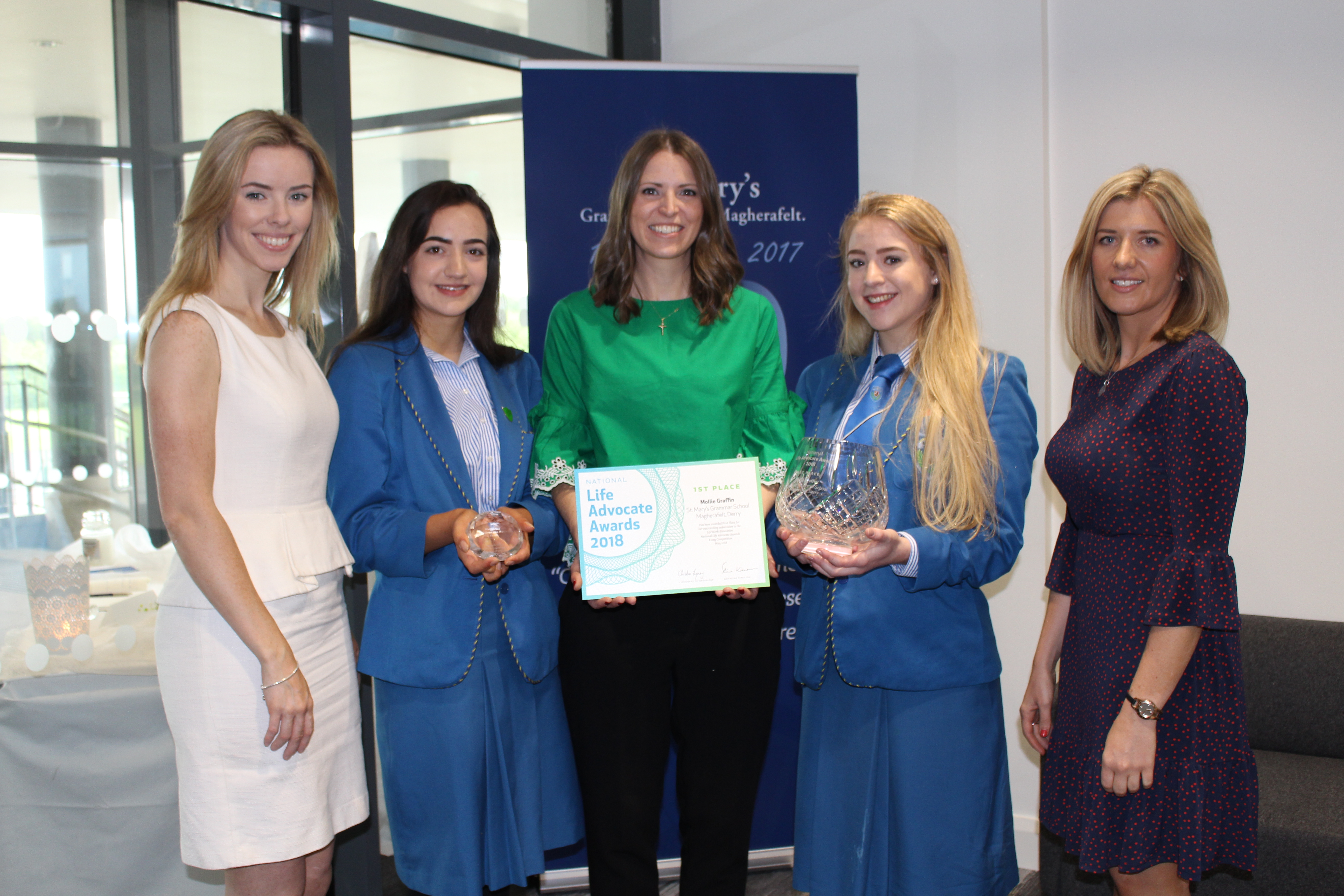
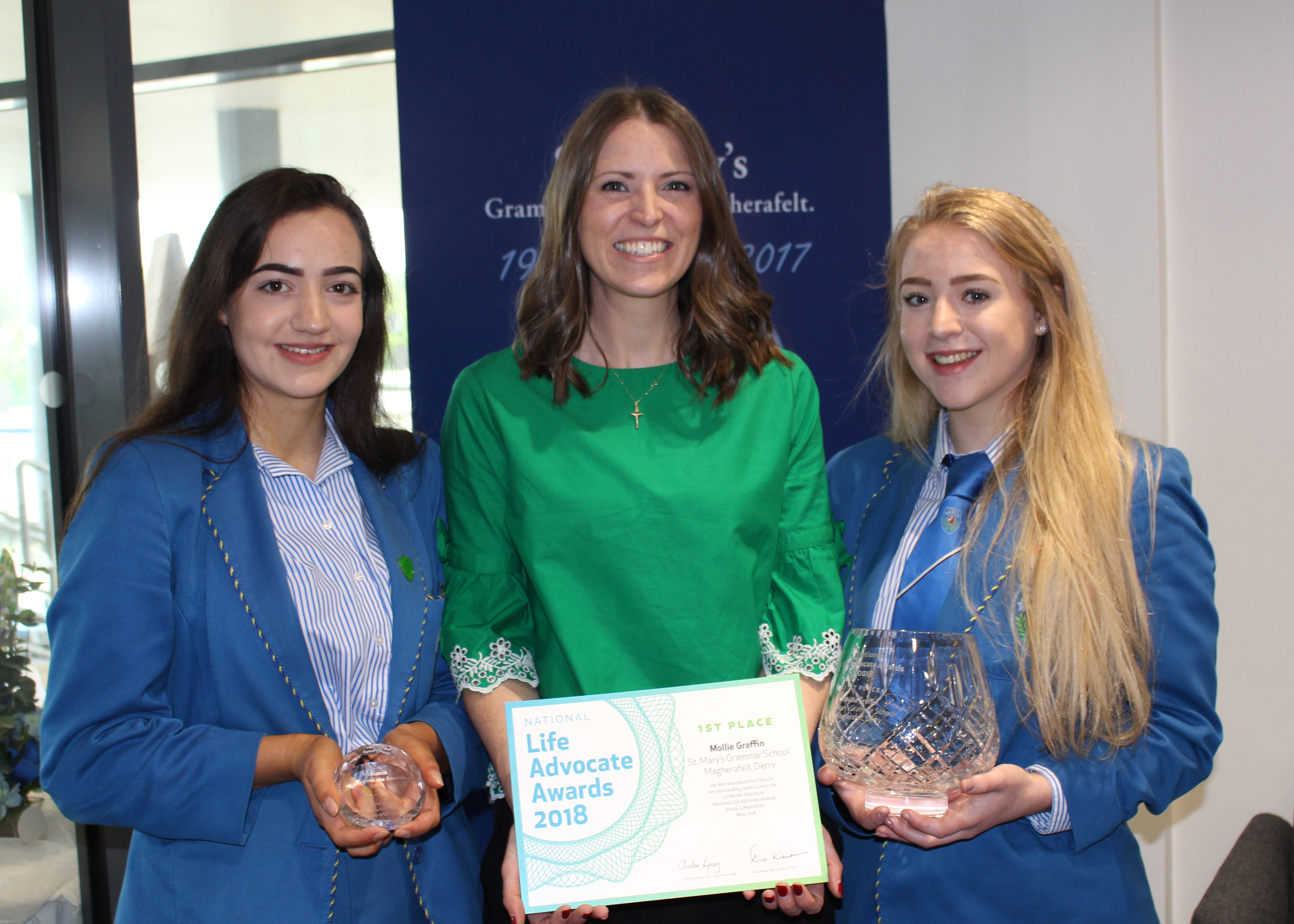
St. Mary’s students sweep board at National Life Advocate Awards

Two St. Mary’s students have been awarded first and third place in a national essay-writing competition for senior cycle students.
Mollie Graffin, 16, took first place in the Life Advocate Awards.
The Life Advocate Awards were set up to encourage research and critical-thinking on human rights and right to life issues.
Students were asked to discuss the words of Mother Teresa who said: “Human rights are not a privilege conferred by Government. They are every human being’s entitlement by virtue of our humanity”.
Niamh Walls, 17, won joint third place.
The winning pupils were presented with their awards by members of the LifeWorks Education schools programme who sponsor the awards.

Programme for the Pastoral Congress, and Papal schedule, for the 9th World Meeting of Families

The Holy See Press Office publishes the itinerary of the Holy Father Pope Francis for his pastoral visit to the 9th World Meeting of Families in Ireland on 25 and 26 August. Please see details of Pope Francis’ itinerary below.

Please see the homepage of www.worldmeeting2018.ie for the full Programme of the Pastoral Congress for the World Meeting of Families, and highlights from this programme are provided below.

At a press conference this morning in Saint Patrick’s College, Maynooth, details of the Programme of the Pastoral Congress for the World Meeting of Families 2018, and the itinerary of Pope Francis, were announced by Archbishop Diarmuid Martin, President and host of WMOF2018; Archbishop Eamon Martin, President of the Irish Catholic Bishops’ Conference; Father Timothy Bartlett, Secretary General of WMOF2018; and WMOF2018 volunteers. Welcoming statements by Archbishop Diarmuid Martin and Archbishop Michael Neary, Archbishop of Tuam, can be found below. For photographs from today’s press conference, please contact John McElroy 00353 (0) 87 241 6985 and [email protected].

• Apostolic journey of His Holiness Pope Francis to Ireland on the occasion of the World Meeting of Families in Dublin 25-26 August 2018

Saturday 25 August 2018
ROMA-DUBLIN
08:15 Departure by plane from Rome/Fiumicino for Dublin
10:30 Arrival at Dublin International Airport
OFFICIAL WELCOME
10:45 Transfer to Áras an Uachtaráin
11:15 Arrival at the Presidential Residence
WELCOME CEREMONY in front of the main entrance of the Residence
11:30 COURTESY VISIT TO THE PRESIDENT in the Presidential Residence
12:00 Transfer to Dublin Castle
12:10 Arrival at Dublin Castle
MEETING WITH AUTHORITIES, CIVIL SOCIETY AND DIPLOMATIC CORPS in Dublin Castle Speech of the Holy Father
15:30 Arrival at St Mary’s Pro-Cathedral
VISIT to the CATHEDRAL Greeting of the Holy Father
16:15 Transfer to the Day Centre of the Capuchin Fathers
16:30 PRIVATE VISIT to the DAY CENTRE FOR HOMELESS FAMILIES of the CAPUCHIN FATHERS
19:30 Arrival at Croke Park Stadium
19:45 FEAST OF FAMILIES in Croke Park Stadium Speech of the Holy Father

Sunday 26 August 2018
DUBLINO-KNOCK-DUBLINO-ROMA
08:40 Departure by plane for Knock
09:20 Arrival at the Airport in Knock
Immediate transfer to the Shrine
09:45 Arrival at Knock Shrine
VISIT to the CHAPEL of Knock Shrine
ANGELUS on the square in front of the Shrine Angelus of the Holy Father
10:45 Transfer to the airport in Knock
11:10 Arrival at the airport in Knock
11:15 Departure by plane for Dublin
11:50 Arrival at Dublin International Airport
Lunch with the Papal Delegation
14:30 Arrival at Phoenix Park
15:00 HOLY MASS in Phoenix Park Homily of the Holy Father
MEETING WITH THE BISHOPS in the Convent of the Dominican Sisters Speech of the Holy Father
18:30 Arrival at Dublin International Airport
FAREWELL CEREMONY
18:45 Departure by plane for Roma/Ciampino
23:00 Arrival at the Airport of Roma/Ciampino

• Highlights from the Pastoral Programme for the 9th World Meeting of Families in Dublin from 21 to 24 August 2018

– Of the 200 announced speakers, 91 are lay women, 65 are lay men and 44 are Clergy/Religious.
– The largest group are couples. This a lay-led, couples-led programme.
– It is an international programme, with speakers from all five main continents of the world.
– Amoris Laetitia is the guiding theme of all three days of the Pastoral Congress and of all the topics chosen.
– This is the first WMOF to have a specific workshop on Safeguarding.
– Other themes include:
o The future of marriage preparation in Parishes.
o Finding new ways of the joy of commitment and sacramental marriage in today’s culture.
o The challenges of handing on faith in the home today.
o Finding new language to affirm the joy, beauty and goodness of sexual love within marriage.
o The importance of solidarity between the generations in family.
o Exploring the impact of technology on the family.
o Exploring the key role of the family in caring for ‘our common home’, the earth.
o Looking at the relationship between business and the family.
o Exploring the relationship between sport and the family.
o What does Pope Francis mean by the ‘Throwaway Culture?’ (Address by Cardinal Tagle).
o The link between the family and the forthcoming Synod on Vocational Discernment.
o Looking at key challenges faced by many families today, including:
 Homelessness
 Addiction
 Domestic Violence
 Displacement as Migrants and Refugees.
 Disability.
 Separation and Divorce.
o Exploring how Parishes can support those families with members who identify as LGBTI+ (presentation by James Martin SJ)
o The joy of belonging to a family reflect in contemporary interest in our genealogies.
o The vocation of fatherhood in today’s world.
o There will be fun cookery demonstrations with faith and family themes.

Some additional speakers/panellists will be announced over coming weeks, particularly in the area of technology and the family and the family and sport.

– Registrations are going extremely well with almost 30,000 already registered. This is the largest of any WMOF.
– Of these almost 6,000 are 18 years old and under. The largest of any WMOF and the reason for an enhanced Teen & Children’s programme.
– More than a quarter are couples aged from 29-40. Young families are clearly registering for the event.
– Over 11,000 of those registered are international. The largest of any WMOF. 103 countries are represented.
– People need to register soon, if they wish to attend the RDS. Organisers may have to close registration in advance of the event because of demand.
– There are already 5,500 volunteers with one day volunteers still needed for the Mass in Phoenix Park.

• Comments of Archbishop Diarmuid Martin on the launch of the programme of the visit of Pope Francis to Ireland on the occasion of the World Meeting of Families

We are here to officially announce the programme of the visit of Pope Francis to Ireland on the occasion of the World Meeting of Families together with the details of the Programme for the Family Pastoral Congress that will be held at the RDS in Dublin on the days before the visit of the Pope.

Today we launch the programme of the final stage of a process that has been underway for over two years here in Ireland and has reached out to parishes throughout the country through the Amoris pastoral programmes,

My hope is that now the World Meeting of Families – the pastoral preparation, the Pastoral Congress in the RDS and the visit of Pope Francis – will open out for families renewed inspiration, hope and healing.

The visit of Pope Francis to the World Meeting of Families in Dublin must not be just a once off event. It comes as the Church in Ireland struggles to find a new place in Irish society and culture – a very different one from the dominant one it held in the past.

Pope Francis is above all a free man. He shows us we can live in a world where faith seems marginal and yet manage to touch hearts and challenge them to reflect on and discern those fundamental values vital for society. What he does is to find ways in which he can win hearts for what the teaching of Jesus involves, not through imposing and judging, but through winning and attracting.

Pope Francis said to me that he considers the World Meeting of Families as a gift to the Irish Church. His idea, however, is not that we will receive a gift to be placed in a glass-case for ourselves. He looks on the World Meeting of Families as a gift that the Irish Church can then share with others.

Family is about love, no matter how imperfect and failing: it is about a love that enriches lives. I am thinking about the love of spouses, the love of parents for children, the goodness with which families enrich communities. We have great families who would never think of themselves as great: they simply do their best. Where would any of us be without the love and generosity we received from our parents?

I wish to sincerely thank all those in the Church in Ireland and the public authorities all of whom, in their own areas of competence, have made an enormous contribution to ensure that as many people who wish to can take part in the events.

I encourage families to take part in the global event that is World Meeting of Families. I encourage families to take this unique opportunity to see Pope Francis where they can. All are welcome.

• Archbishop Michael Neary welcomes the announcement that His Holiness, Pope Francis will visit the Shrine of Our Lady of Knock during the World Meeting of Families 2018

Pope Francis has gifted the World Meeting of Families 2018 to Dublin. From the moment of the announcement of the Holy Father’s decision, the work of preparation began, and, thank God, it continues to gain momentum day by day, not only in Dublin but in every part of Ireland, and I welcome the official announcement from the Holy See this morning

The Church in Ireland is delighted and honoured that Pope Francis will attend the World Meeting of Families in person.

When accompanying the Irish Bishops in their visit to the Holy Father in January 2017, I availed of the opportunity to invite the Pope, in the event of his being able to visit Ireland for the World Meeting of Families, to also make a pilgrimage to the Shrine of Our Lady of Knock, Queen of Ireland which is located within the territory of the Archdiocese of Tuam.

I warmly welcome the announcement this morning of a papal visit to Knock which is a very appropriate link with the World Meeting of Families which takes place in Dublin on 25 and 26 August.

Pope Francis will arrive at Knock Shrine at 9.45am on Sunday, August 26 where he will circuit in the pope mobile and pray the Angelus at the Apparition Chapel before departing from Knock Shrine at 11.15am.

One of the most beautiful sights at Knock is to see families, sometimes the three generations praying and enjoying the peace and tranquillity of the Shrine. The Apparition at Knock was family apparition incorporating Our Lady, Saint Joseph, Jesus as the Lamb of God, and John as representing the extended family.

The Holy Father’s personal devotion to Mary, the Mother of God, is well known, and his visits to the Basilica of Saint Mary Major before and after his various apostolic journeys are powerfully inspirational. It seems to me that an opportunity to visit Knock is something the Holy Father personally desires. It will be the second time a Pope visits Knock Shrine following the historic visit of Saint Pope John Paul II on 30 September 1979 to mark centenary of the Apparition.

Knock was considered to be a most suitable venue for the official launch, on 21 August 2017, of the unveiling of the World Meeting of Families icon, and the one-year countdown to the beginning of the World Meeting in Dublin in August 2018.

Knock Shrine has the capacity to continue the momentum generated by the World Meeting of Families, and it is a place where the fruits of the World Meeting will be nourished and blossom long after the World Meeting has concluded.
ENDS
Notes for Editors

• Archbishop Michael Neary, Archbishop of Tuam, is the custodian of the Marian Shrine at Knock. The story of Knock began on the 21 August 1879 when Our Lady, Saint Joseph and Saint John the Evangelist appeared at the south gable of Knock Parish Church. This miraculous apparition was witnessed by fifteen people, young and old. Knock is an internationally recognised Marian Shrine and was visited by Saint Pope John Paul II as part of his 1979 apostolic pilgrimage to Ireland. Please see: knockshrine.ie.

For media contact
– Brenda Drumm, Media and Communications Manager, World Meeting of Families +353 (0) 87 310 4444. See also www.worldmeeting2018.ie
– Annette O’Donnell, Director of Communications, Archdiocese of Dublin +353 (0) 87 814 3462
– Catholic Communications Office, Maynooth: Martin Long +353 (0) 86 172 7678 and Katie Crosby +353 (0) 86 862 3298