Saturday, April 4, 2026
Home Blog Page 45

New Year’s message and World Day of Peace homily of Archbishop Eamon Martin

01 January 2019

Reflection on the message of Pope Francis for 52nd World Day of Peace: ‘Good politics is at the service of peace’
◦“On this World Day of Peace I ask all our public representatives to make a resolution to reject divisive language and actions at all times during 2019. The progress we have made over the past twenty years is fragile and should be handled with care. There can be no going back to the days of violence and death on our streets.”
◦“In 2019 I urge everyone – in their families, communities, schools, colleges and workplaces – to sensitively and respectfully present life-saving alternatives to abortion, so that no vulnerable woman in crisis will feel that the only way out for her is to end the life of her unborn child. This life-saving work deserves the full support of our local and national political representatives.

In his message for today, the 52nd World Day of Peace, Pope Francis recalls the words of Jesus to His disciples as He sent them out on mission. Jesus told them, “Whatever house you enter, first say, ‘Peace be to this house!’” At the start of this New Year, Pope Francis makes this greeting his own. The Holy Father wishes that we might find true peace in three ways: peace with ourselves, peace with others, and peace with all creation.

Pope Francis entitles his New Year message: “Good politics is at the service of peace”. “Peace”, he says “is based on respect for each person, whatever his or her background, on respect for the law and the common good, on respect for the environment entrusted to our care and for the richness of the moral tradition inherited from past generations”. “Good politics” respects and promotes fundamental human rights. Those holding political office and political responsibility in any country should therefore “make every effort to protect those who live there and to create the conditions for a worthy and just future”. They should exercise their politics “with basic respect for the life, freedom and dignity of persons”.

Recent circumstances in Ireland, Britain, Europe and the United States have led many people to become disheartened with politics and with politicians. Still, it is important to pray that all politicians will work at the service of peace. Politics is a noble vocation, and those who answer the call to public service often have to make great sacrifices in their personal and family life. We depend on our politicians to protect life and to build peace, to make just laws that enable us, our families, and the wider community to live good and constructive lives. We need them to lead and govern us, to work for the common good, to enable everyone to live in security and hope. In particular, politicians must speak and work for the voiceless, supporting the poor and disadvantaged, the homeless, migrants and the most vulnerable – even though doing so may not always win them popularity or votes.

In addition to praying for our politicians, it is important that people actively contribute to public discourse. People of faith are called to bring to these discussions their conviction that the teaching and Gospel of Jesus Christ have consequences for every aspect of our lives.

Before Christmas I pointed to the danger of increased community polarisation on account of the Brexit debate and the political impasse at Stormont. Ireland’s Church leaders are urging political leaders to make a real difference as we enter 2019 and to help restore a sense of hope. We feel that with ongoing political and economic uncertainty, “many businesses here are fearing for the future, while many families, struggling to make ends meet today, are anxious about what that future might hold”. Added to this, the lack of a functioning devolved government in Northern Ireland concerns us. It “not only drains hope from our society, but also has meant an ever increasing pressure on our schools, our hospitals, our welfare system and many other aspects of society’s infrastructure. As so often happens, it is the vulnerable and the marginalised that suffer most and they should be at the forefront of our thoughts and prayers as we enter into a new year”.

Last September the Church leaders invited political party leaders to meet with us, and we sought to provide a safe space to facilitate open discussion and mutual understanding. We were encouraged by this meeting and we have begun a series of regional meetings, “bringing together local politicians, community and church leaders to talk with one another, to build relationships and again to foster mutual understanding”. We hope that this initiative can help bring at least a glimmer of hope.

On a personal note, I encourage all our politicians in the coming challenging months to beware the temptation to retreat into partisanship. Many of our politicians and their predecessors have played their part in creating a more peaceful and more prosperous society here over the past twenty years. On this World Day of Peace I ask all our public representatives to make a resolution to reject divisive language and actions at all times during 2019. The progress we have made over the past twenty years is fragile and should be handled with care. There can be no going back to the days of violence and death on our streets.

Having just marked the seventieth anniversary of the Universal Declaration of Human Rights, it is important to remember that the principle of the inviolability of innocent human life is the most fundamental of all moral principles. It is the basis upon which every human right we enjoy as persons is predicated. This is not only a religious doctrine, but a universal human value, rooted in human nature itself, upon which our very freedom and dignity as a person rests. Freedom of conscience and freedom of religion are also internationally agreed human rights

The right to life is not given or taken away by the law of the land or by any politician. It cannot be relegated beneath the right to individual choice. Despite the legislation for abortion that is taking effect this month in Ireland, it remains gravely morally wrong to deliberately and intentionally take the life of an innocent person, whatever their state or stage of life. To co-operate in such an act, by supporting it directly or indirectly, either as an individual act or as a social policy, shall always be gravely wrong.

Although the Eighth Amendment has been removed from the Constitution of Ireland, it remains no less true that the life of a woman and her unborn baby are equally deserving of love, respect and protection. Any law which suggests otherwise has no moral force. In good conscience it cannot be supported; it has to be resisted and we must continue to call and work diligently for its limitation, amendment and repeal. No one should be forced, against their conscience, to participate in abortion or to refer patients to others for abortion.

As a bishop I have been overwhelmed over the past year by the courage and witness of so many people – including some consistently pro-life politicians – who kept reminding us that in pregnancy we are dealing with TWO human lives. In 2019 I urge everyone – in their families, communities, schools, colleges and workplaces – to sensitively and respectfully present life-saving alternatives to abortion, so that no vulnerable woman in crisis will feel that the only way out for her is to end the life of her unborn child. This life-saving work deserves the full support of our local and national political representatives. I also encourage the development and ongoing formation of pro-life support teams in every pastoral area throughout the country.

Last August Pope Francis, speaking to An Taoiseach and other political and civil representatives gathered in Dublin Castle, said, “True peace is ultimately God’s gift; it flows from a healed and reconciled heart and branches out to embrace the entire world”. Pope Francis explained that true peace requires a spiritual foundation and constant conversion on our part. Pope Francis then raised a challenging question – one which ought to continue ringing in our ears during 2019. The Holy Father asked, “Could it be that the growth of a materialistic ‘throwaway culture’ has in fact made us increasingly indifferent to the poor and to the most defenceless members of our human family, including the unborn, deprived of the very right to life?”

As we begin this new year, I invite you to pray regularly, at home and in your parishes, the ‘Choose Life’ Prayer for Ireland (below) and to consecrate yourselves, your homes and our country to the heart of Mary the Mother of God:

Lord Jesus, you are the source and lover of life.
Reawaken in us respect for every human life.
Help us to see in each child the marvellous work of our Creator.
Open our hearts to welcome every child
as a unique and wonderful gift.
Guide the work of doctors, nurses and midwives.
May the life of a mother and her baby in the womb be equally cherished and respected.
Help those who make our laws to uphold
the uniqueness and sacredness of every human life, from the first moment of conception to natural death.
Give us wisdom and generosity to build a society that cares for all.
Together with Mary, your Mother,
in whose womb you took on our human nature, Help us to choose life in every decision we take.
We ask this in the joyful hope of eternal life with you, and in the communion of the Blessed Trinity.
Amen.

Our Lady of Knock, pray for us.

All the Saints of Ireland, pray for us.
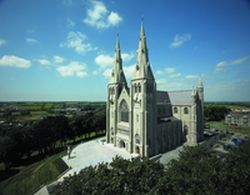
Homily of Archbishop Eamon Martin for Christmas Midnight Mass in Saint Patrick’s Cathedral, Armagh

25 December 2018

“As we reflect on the Christ’s birth in the poverty of the stable, may we always be thankful for the food we have to eat, for our health, and for the warmth and security of a home; may we be more conscious of those less fortunate – the poor and the hungry, the sick, the lonely … We pray that all children – born and unborn – will be protected from violence, trafficking, abuse, abortion, neglect or exploitation” – Archbishop Eamon Martin

Homily

Two weeks ago NASA scientists announced that the Voyager II spacecraft has left our solar system and is hurtling on into interstellar space towards the next star. Since its launch in 1977 the spacecraft has travelled eleven billion miles – and counting … but don’t wait up! It won’t reach the next star for another 40,000 years!

Voyager’s fascinating journey into the heavens leaves me speechless at the vastness of the universe and the miracle of God’s creation. No wonder the psalmist wrote (Psalm 8):

Lord, when I consider your heavens,

the work of your fingers,

the moon and the stars,

which you have set in place,

what is mankind that you are mindful of them,

human beings that you care for them?

In many ways that psalm expresses the amazing mystery of Christmas:

To think that God, the Almighty, the creator of all that exists, could love each one of us uniquely and intimately!

To realise that, of all the millions of planets in the universe, God loved the world so much that he sent His Only Son to be our Saviour!

To see in that little child, born in a stable on a bitter Bethlehem night, the Eternal Word, who is God, made flesh and living among us!

An ancient Latin hymn sums up the “great and mighty wonder” of Christmas: O magnum mysterium et admirabile sacramentum!

O what a great mystery,

and wonderful sacrament,

that animals should see the newborn Lord, lying in a manger!

Just as it is not easy to imagine the vast galaxies of stars that make up the universe, so it can be difficult for us to comprehend that God loves each one of us uniquely and personally. God understands our weaknesses and mistakes, but still calls out of each of us the very best of what we are capable. The Christmas story reminds us that, although we are small and frail, with the grace of God, and our “yes”, like Mary’s, to God’s will in our lives, we can (as the second reading says): “give up everything that does not lead to God”. We can be transformed and in turn we can help to change the world for the better!

On this Christmas night, as we marvel at the wonder of the universe, let us pledge to care for Planet Earth, our common home, by being less wasteful, and more conscious of the damage that we can do to our environment by selfish living.

As we reflect on the Christ’s birth in the poverty of the stable, may we always be thankful for the food we have to eat, for our health, and for the warmth and security of a home; may we be more conscious of those less fortunate – the poor and the hungry, the sick, the lonely.

As we contemplate this Christmas the Holy Family of Jesus, Mary and Joseph, let us pray for our family members at home or away, and spare a thought for families who are wounded or separated by war and violence, distrust or relationship breakdown.

And, as we gaze in wonder and awe at God’s presence in the newborn infant Jesus, let us bring to mind children who bring so much joy and happiness into our lives. We pray that all children – born and unborn – will be protected from violence, trafficking, abuse, abortion, neglect or exploitation.

As Pope Francis prays in his 2015 encyclical letter Laudato Si on care for our common home:

All powerful God, you are present in the whole universe and in the smallest of your creatures.

You embrace with your tenderness all that exists.

Pour out upon us the power of your love, That we may protect life and beauty.

Fill us with peace, that we may live

as brothers and sisters, harming no one.

With that beautiful prayer, I wish you, and your families every blessing for Christmas and for the New Year. Beannachtaí na Nollag oraibh go leir. Amen.

Homily of Archbishop Eamon Martin for #RedWednesday 2018

28 November 2018

Mass celebrated at 7.30pm in Saint Malachy’s Church, in the Cathedral Parish of Armagh
◦Next year it is my hope to erect a Shrine in the Cathedral to former Archbishop of Armagh, Saint Oliver Plunkett and all those who, like him, were persecuted and martyred for the faith in this diocese
◦We should not be afraid to hold and teach our sincerely held Christian convictions about, for example, the dignity of the person and the sacredness of all human life from the first moment of conception. In post-referendum Ireland, it remains as important as ever to affirm the sanctity of all human life

All over the world this week, cathedrals, churches and other public buildings have been lit up in red in solidarity with persecuted Christians, and with other faith minorities who suffer because of their religious beliefs.

Sadly their suffering often goes unnoticed – most of us go on about our business, unaware of the injustice and discrimination which affects our brothers and sisters throughout the world. By lighting our churches up in red or by wearing something red, we have been reminding ourselves that too many Christians and other religious minorities are victims of insult, violence, torture and even death because of their beliefs. Today, especially, they are in our thoughts and prayers.

The powerful words of Jesus in this evening’s Gospel Reading could have been written for the persecuted Christians today in China, India, North Korea, Saudi Arabia, Yemen, Eritrea – or in any of the 38 countries identified this year as places where persecution is serious and ongoing:

‘Men will seize you and persecute you; …You will be hated by all men on account of my name, but not a hair of your head will be lost. Your endurance will win you your lives (Luke 21:12 ff)’.

Article 18 of the United Nations Declaration of Human Rights states: “Everyone has the right to freedom of thought, conscience and religion; this right includes freedom… to manifest his religion or belief in teaching, practice, worship or observance”. However the Report on “Religious Freedom in the World 2018” published last week by Aid to the Church in Need, shockingly illustrates how countless numbers of people around the world have been killed, “disappeared” or indefinitely imprisoned simply for belonging to the wrong religion.

The Report found significant religious freedom violations in almost one fifth of all countries examined. Among its most troubling findings for me was the observation that “Aggressive nationalism, hostile to religious minorities, has worsened” together with “increasing evidence of a curtain of indifference behind which vulnerable faith communities suffer” and that “in the eyes of Western governments and the media, religious freedom is slipping down the human rights priority rankings, being eclipsed by issues of gender, sexuality and race”.

This is why it is important for us to gather like this on #RedWednesday to raise awareness of these matters, to express our solidarity in prayer with the persecuted, and to pledge our charity and support for organisations like Aid to the Church in Need who are working to promote religious freedom and highlight abuses.

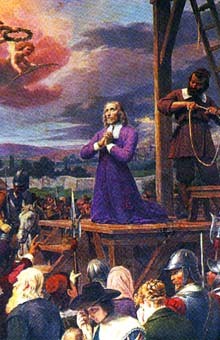
Of course Ireland has historically been no stranger to persecution and martyrdom for the faith. This evening in Armagh I bring to mind and prayer the Franciscan friars, Rodger McConvill, Conor McWard and Fergal Ward who were flogged and dragged to death here on the streets of Armagh in the 16th century, Father James O’Fallegan, Parish Priest of Armagh who was tortured to death in the 17th century because he would not recant the faith, and Dean Brian McGurk who in the early 18th century was imprisoned and chained to his death for his faith. Next year it is my hope to erect a Shrine in the Cathedral to former Archbishop of Armagh, Saint Oliver Plunkett and all those who, like him, were persecuted and martyred for the faith in this diocese.

Jesus said in the Gospel of John: “If the world hates you, remember that it hated me before you… if they persecuted me, they will persecute you too”. But he also promised in the Beatitudes: “Happy those who are persecuted in the cause of right: theirs is the kingdom of heaven”.

The fact that persecution and martyrdom of our fellow Christians continues today in many parts of the world invites us to consider how we ourselves witness to our faith in Irish society. We are all called to be prophetic in shining the light and truth of the Gospel into the world, even when it brings ridicule, insult, criticism or leads to our being ostracised in public discourse.

Last week Pope Francis remarked that, in addition to the bloody “red martyrdom” suffered by Christians throughout the world who die for their faith, many others, in democratic countries, experience “white martyrdom” because their freedom of religion is restricted.

We should not be afraid to hold and teach our sincerely held Christian convictions about, for example, the dignity of the person and the sacredness of all human life from the first moment of conception. In post-referendum Ireland, it remains as important as ever to affirm the sanctity of all human life, and to remind people that the direct and intentional taking of the life of any innocent human being is always gravely wrong. Sadly we must now do this in a context where we might be shouted down, told to “go away”, or even have our right to freedom of conscience and religion questioned because they do not “fit in” with the prevailing attitudes and opinions around us.

The Book of Wisdom (chapter 3) promises that no torment shall touch the souls of the virtuous… they are in the hands of God, their hope is rich with immortality. And Saint Paul says “we prove we are the servants of God by great fortitude in times of suffering: in times of hardship and distress; when we are flogged, or sent to prison, or mobbed… we prove we are God’s servants by being armed with the weapons of righteousness… prepared for honour or disgrace, for blame or praise (1 Cor 6:4-10)”.

On this #RedWednesday, I invite you to pray for the gift of courage, the grace of witness and loyalty to Christ for Christians here in Ireland and all over the world, and especially for those who continue to be challenged, attacked, displaced or even murdered for what they believe in.

Sermon of Archbishop Eamon Martin for the World War I Commemorative Service in Saint Anne’s Cathedral, Belfast

11 November 2018

◦Service to be broadcast from 3:45pm by BBC1 NI and on BBC Radio Ulster

Earlier this year I was honoured to lay a wreath during the Last Post ceremony at the Menin Gate in Ypres with my friend Archbishop Richard Clarke and some of our young people. It was deeply moving for all of us, but still, it is difficult for any of us to imagine the thoughts and feelings of the young men on the battlefields of the First World War who heard the haunting tones of the Last Post each evening at sunset and, in the darkness, prayed for home, for family, for peace.

On our previous visit to Ypres back in 2016 I found the spot about five miles outside the town where my great uncle Edward is buried in Canada Farm cemetery. Because he was tall and strong from working on the farm in Donegal, they put him to operate the heavy guns of war. Today he lies, in Flanders fields, another young man among the half a million who perished in the infamous battle of Passchendaele, in the ‘flower of youth’.

At that time the chaplain wrote to my great granny to reassure her that her son Edward had received a Catholic burial “in a blessed grave with a proper cross”.

Last month in Rome I launched a new film about Father Willie Doyle SJ Chaplain to the Royal Dublin Fusiliers who also died at Passchendaele. He was struck by a shell as he crawled out to minister to two wounded men on ‘no man’s land’. By all accounts Father Doyle was a saintly priest who knew no fear and was greatly respected by the men, of all traditions. Somehow, despite the deafening bombardment and sickening stench of battle, Father Doyle was able to bring the gentle and comforting presence of Jesus into that hellish place. He once wrote in his personal diary: “I long to go and shed my blood for Jesus and, if he wills it, to die a martyr for charity … To do something great and heroic may never come, but I can make my life heroic by faithfully and daily putting my best effort into each duty as it comes round”.

Father Doyle’s body was never found. His name is inscribed at Tyne Cot with so many other brave and heroic people from north, south, east and west. As we remember them today I am comforted by the words of Saint Paul:

“Brothers and sisters we want you to be quite certain about those who have fallen asleep, to make sure that you do not grieve for them, as others do who have no hope. We believe that Jesus died and rose again, and that in the same way God will bring with him those who have fallen asleep in Jesus… At the signal given by the voice of the Archangel and the trumpet of God… we shall be with the Lord for ever (1 Thess 4)”.

My visits in recent years to the Somme and to Flanders, with Archbishop Richard and the other Church leaders, have really opened my eyes to the grief and suffering that was shared by families of all traditions and from every part of Ireland. Three granite blocks at the Peace Park in Messines remind visitors of those from across the island of Ireland who were killed, wounded or missing during the war: 32 thousand from the 36th Ulster division; 28 thousand from the 16thIrish division; 9 thousand from the 10th Irish division.

Sadly, because of the cruel twists and tensions of our history of conflict, the fact that Irish Catholics and Protestants fought and died, side by side, was neglected for too long – and perhaps conveniently – by all sides, both north and south of the border. People preferred to cling on to a history of difference and separation, rather than recognise and embrace our shared story of common suffering. That is why it was very moving for me to stand in Messines with the other Church leaders and to read with them these words from the Peace Pledge there:

“From the crest of this ridge … as Protestants and Catholics, we apologise for the terrible deeds we have done to each other and ask forgiveness … we appeal to all people in Ireland to help build a peaceful and tolerant society … we affirm that a fitting tribute to the principles for which men and women from the Island of Ireland died in both World Wars would be permanent peace.”

Gathered here this afternoon, in Belfast, let us renew that peace pledge, together, in our hearts. The brave people we are remembering are calling us to recognise their shared suffering by building a better future where difference is accepted and respected.

Although standing at war memorials, wearing poppies, laying wreaths and the Last Post may not have been part of my tradition or upbringing, to remember the dead, to honour and pray for them – especially during the month of November – is important to the practice of my faith. In recent years I have grown to understand more fully that, whilst we may remember in different ways, and whilst our forebears had differing and often conflicting approaches to the war, what unites us now in their memory is so much greater than anything that is talked up to divide us.

Can we learn from their shared sacrifice, a full century after the so-called “war to end all wars”? They have bequeathed us a shared responsibility for healing the past and building lasting trust and peace. Peace is not merely ‘ceasefire’ or the absence of violence and war. Peace is an ongoing work of reconciliation, justice and hope: it means coming out of our own trenches; building bridges, not parapets; “beating swords into ploughshares, spears into pruning hooks (Isaiah 2)”.

Jesus said, “Love one another as I have loved you (John 15)”. Peace is the fruit of that love which urges us to uphold the value and dignity of every human life and to be passionate about respecting others, especially those who are poor or marginalised. Our hope remains for a lasting peace on the island of Ireland. May Christ, the Prince of Peace, help us make that hope a reality for the youth of today and tomorrow. Amen.

Launch of Campaign of Prayer and Fundraising

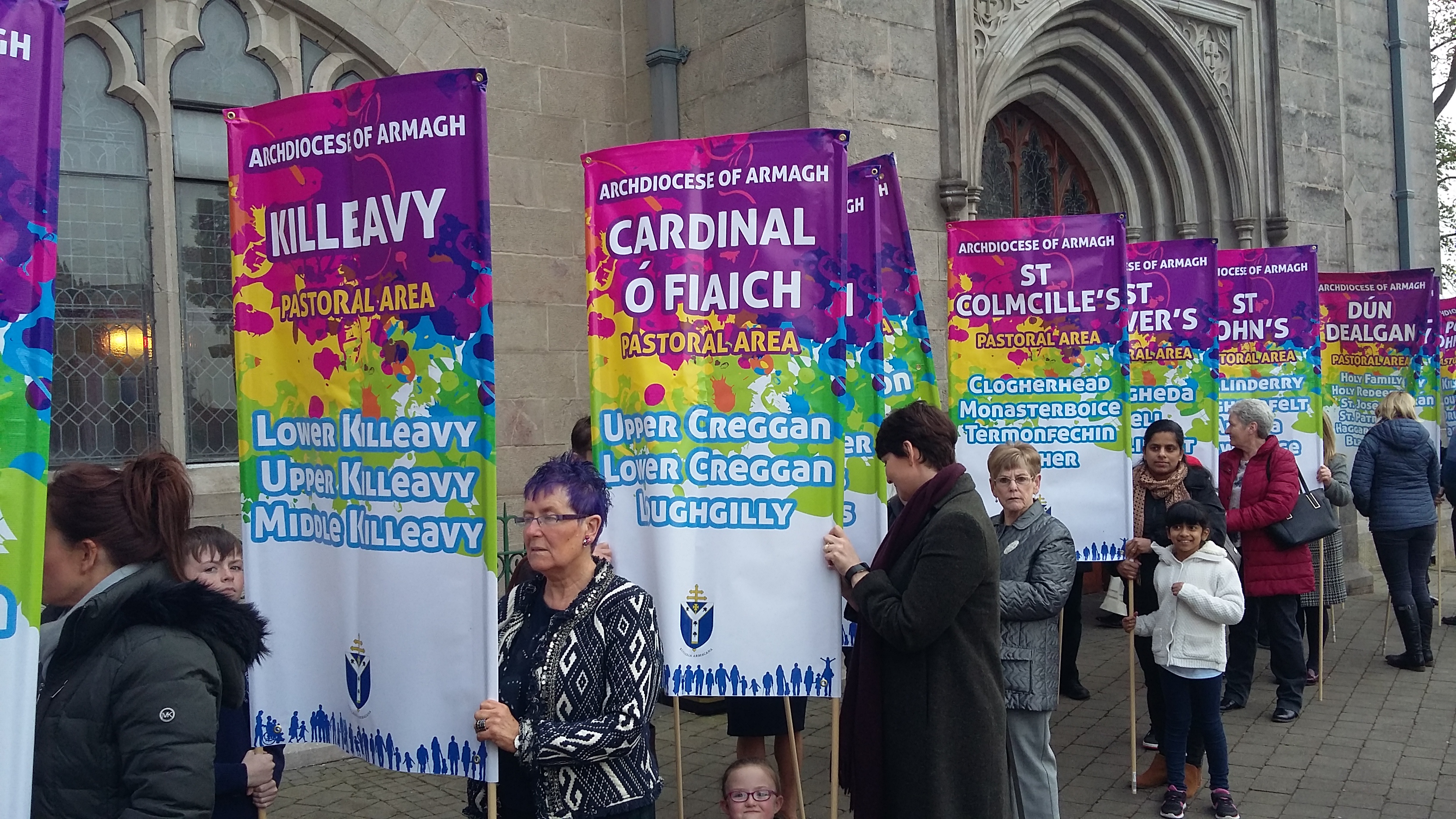
On Sunday March 24th, a campaign inviting prayer and asking for donations was launched in the Archdiocese in preparation for the unveiling of a new statue of Saint Oliver Plunkett, bishop and Martyr, in St Patrick’s Cathedral, Armagh. This statue will be unveiled by the Archbishop on July 9th 2019 to mark the350th anniversary of the Appointment of his 23rd predecessor St Oliver to the See of Armagh on July 9th 1669.

In the prayer leaflet available in all the Churches of the Archdiocese, Archbishop Eamon Martin writes “Last November, during the annual Mass for Red Wednesday to remember Christians around the world who suffer for their faith, I announced my hope to erect a Shrine in St Patrick’s Cathedral to our former Archbishop, Saint Oliver Plunkett, and to all those, who like him are persecuted or martyred for the faith.

Saint Oliver was appointed Archbishop of Armagh on 9th July 1669, 350 years ago this year. Since my arrival in Armagh, people have encouraged me to establish a fitting monument in the Cathedral to the memory of this man of courage and ardent faith who shed his blood for Christ. We are, of course, most grateful to the faithful of Drogheda and the surrounding area who continue to honour his relics there. In this significant year I believe it is time to acknowledge St Oliver Plunkett in a special way at St Patrick’s Cathedral, Armagh. I ask for your prayers and invite your financial support to help bring this project to fruition.”

It will also honour the Martyrs of Yesterday, Today and Tomorrow. Martyrs such as Fr Ragheed Ganni of Iraq, who like Saint Oliver studied in Rome and resided as a Seminarian in the Irish College. Fr Ganni was shot to death in his native Iraq in June 2007. Martyrs like the 21 Coptic Christians beheaded in February 2015 or again the 20 people killed and 80 injured, some with life changing injuries as a result of a bomb explosion in the Cathedral on the island of Jolo in the Philippines on January 21st this year yes the list is long and shows no sign of abating. Yet whenever there is persecution there is hope; Saint Pope VI who canonised Saint Oliver was wont to quote the 2nd century Church Father, Terullian, “The blood of the Martyrs is the seed of the Church.”

Donations can be forwarded to Rev Canon B Fee P.P. Secretary of the Organising committee3 Cloghog Rd, Clonoe, Co –Tyrone BT71 5EF

Cheques/money orders should be made payable to Archdiocese of Armagh (St Oliver Plunkett Appeal)

Prayer leaflets, envelopes etc are also available from Rev Canon B Fee.

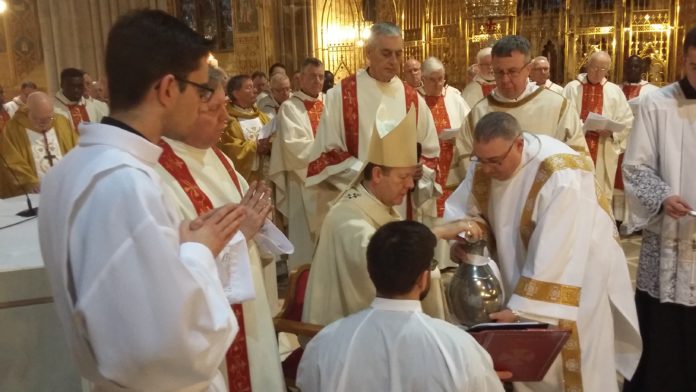
Homily of Archbishop Eamon Martin for the Mass of Chrism

“We are challenged to present the vocation to priesthood, to consecrated life and to marriage, as fulfilling vocations to love God who loved us first!”

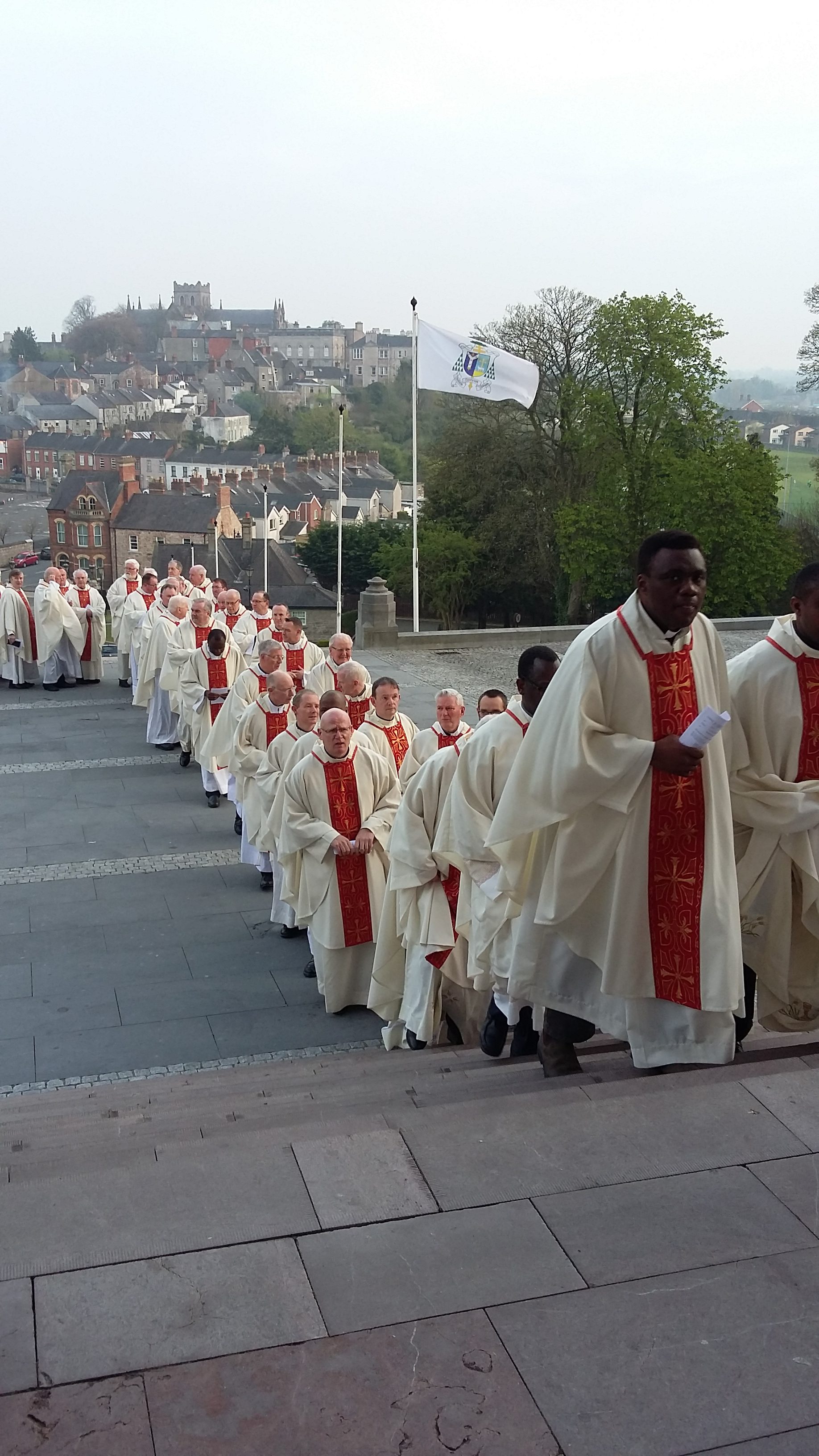
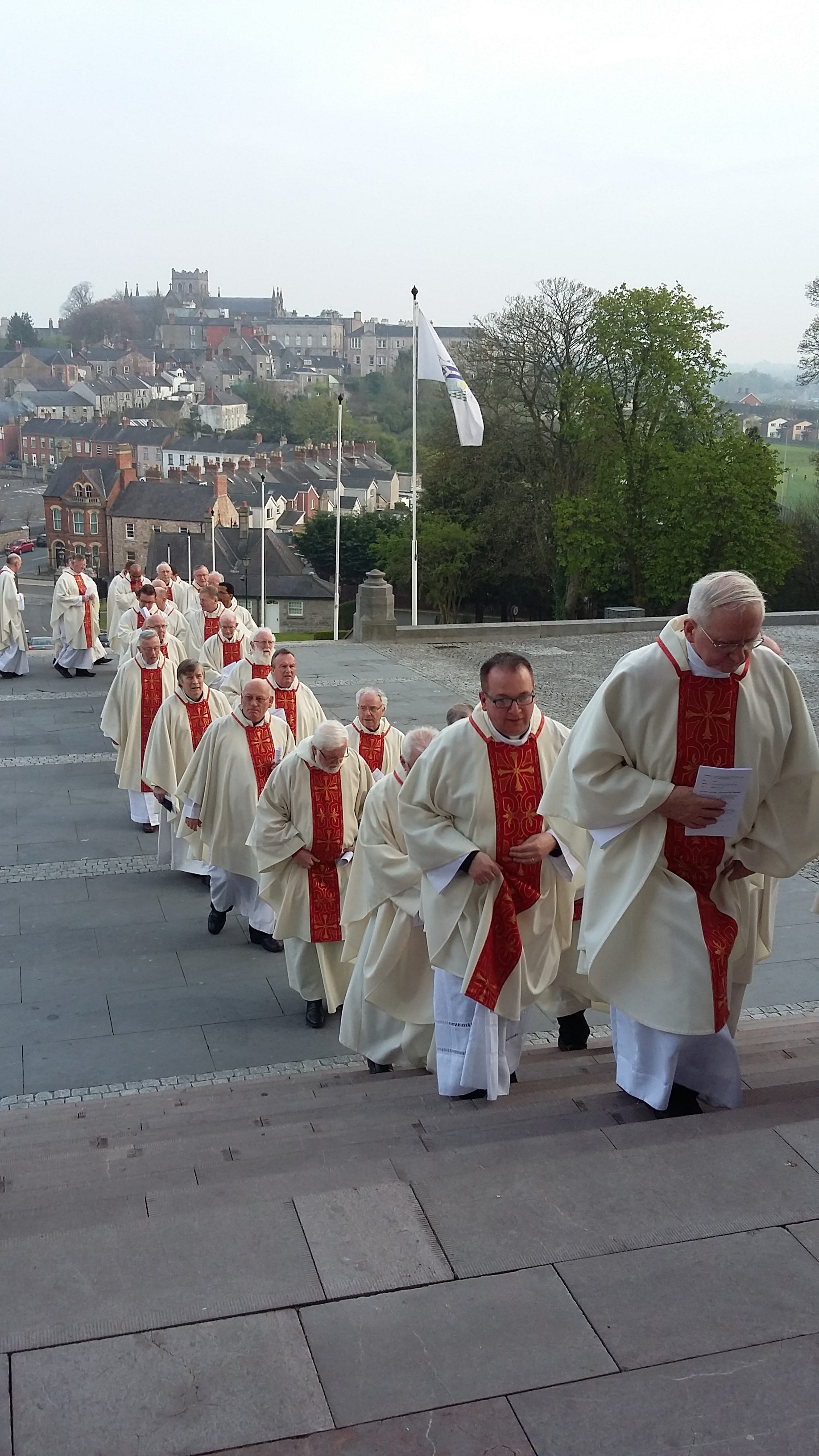
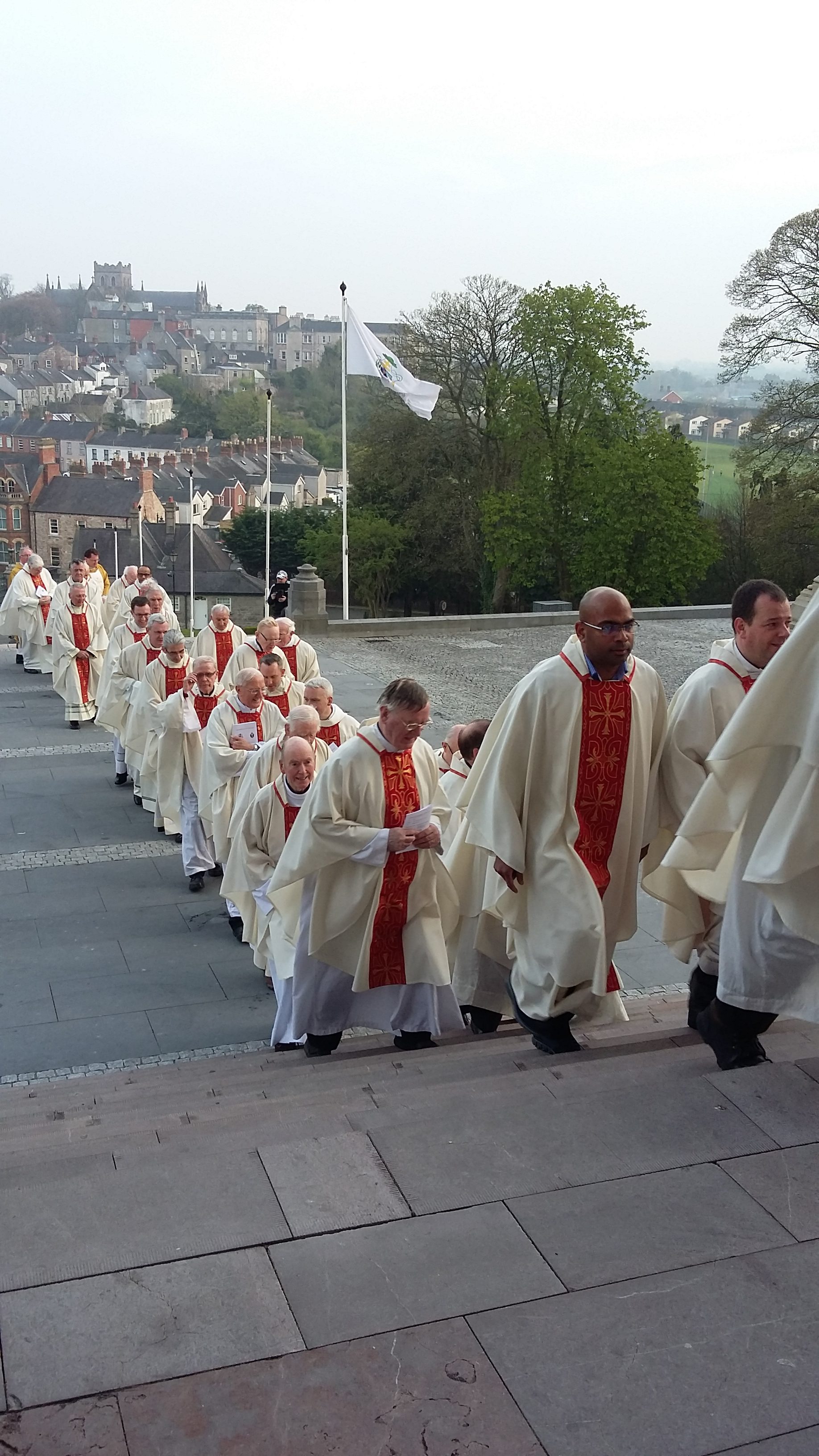
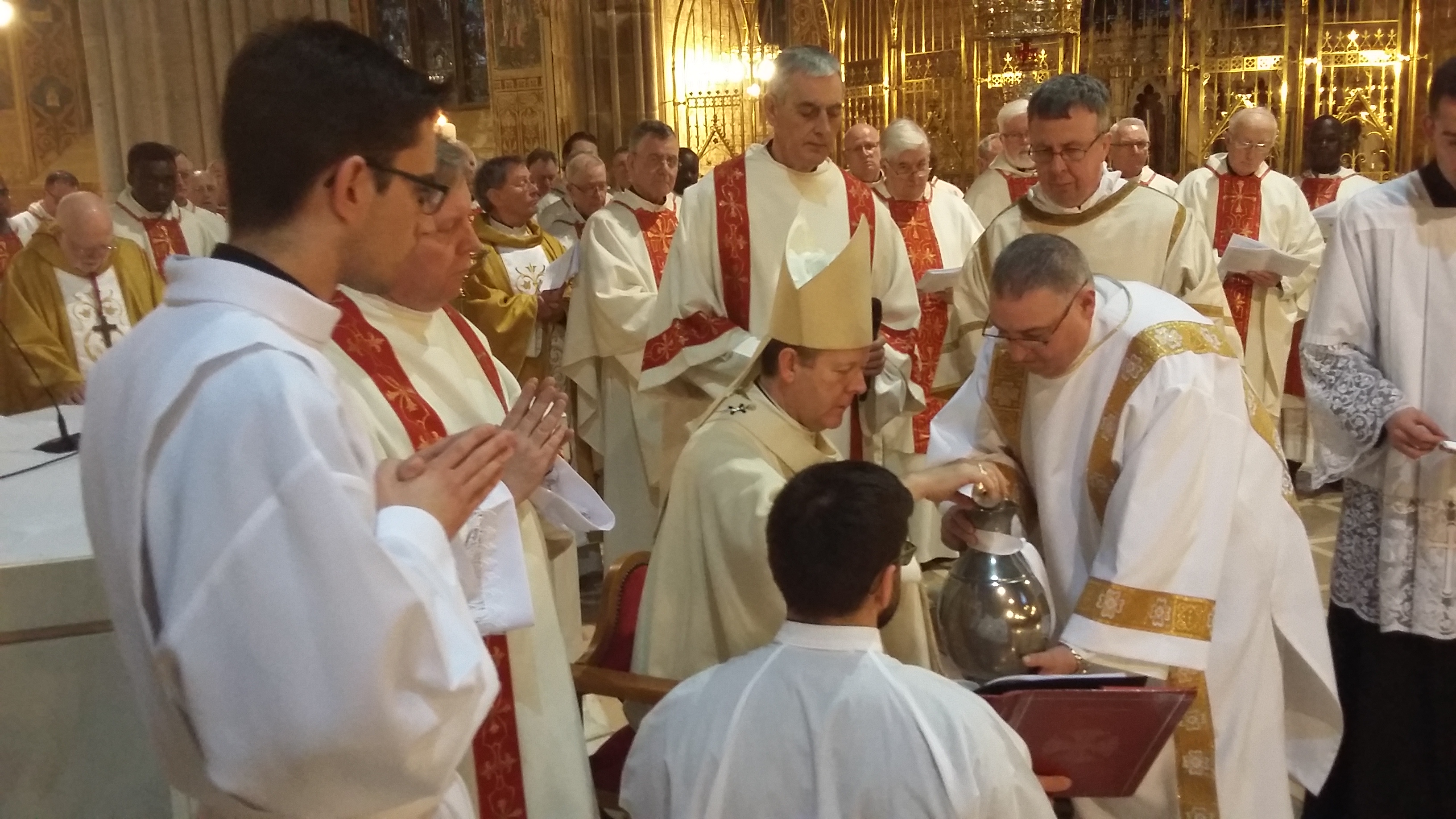
My dear brothers and sisters, the traditional greeting to a priest on his ordination day or on a special anniversary is “Ad multos annos” – “To many years” of priestly service. Allow me to wish “Ad multos annos” to all our priests who have gathered to renew their priestly promises and to consecrate with me the Oil of Chrism. We do so on (the eve of) Holy Thursday – the day which marks the gift of the priesthood and the institution of the sacrament of the Holy Eucharist.

Those of you who have marked special anniversaries of priesthood, religious profession or marriage, know and understand what such a commitment means; you have given great witness to the values of fidelity, self-sacrifice and of course, love – because love is at the heart of it all. In a few moments I will ask the priests:

“Are you resolved to be more united with the Lord Jesus and more closely conformed to Him… confirming those promises (…) which, prompted by love of Him, you willingly pledged on the day of your priestly ordination?”

“Prompted by love of Him” – Saint John Vianney described priesthood as “the love of the heart of Jesus”. It is love of Jesus that sustains our priestly commitment – our priestly life is a “love affair with the Lord Jesus”! And the same is true of the commitment to marriage – the love of husband and wife is a “mirror” of the love of Christ for His Church.

Last year, not long before he came to Ireland for the World Meeting of Families, Pope Francis met with couples celebrating significant wedding anniversaries. He told them about how he once asked a couple celebrating their diamond anniversary, “Are you happy?”. To his surprise they replied with great emotion, “We are in love!”.

And the Holy Father said to all those gathered: “See, love is possible! You can live your whole life “in love”, … despite the problems that come your way…This is beautiful.”

My dear brother priests, we chose our vocation because we too were ‘prompted by love’. Imagine if someone was to ask: are you happy in the priesthood? Might you answer: “Of course I’m happy – I’m in love with Christ! That is what sustains me as a priest, I celebrate it every day in the Holy Sacrifice of the Mass. I dispense His merciful love in the confessional; I anoint the sick and the dying with the healing love of Christ; what marks me out as a priest is the love I have for the people I serve”?

The love of Christ is at the heart of every Christian vocation. On Holy Thursday evening at the “washing of the feet”, we remember the parting words of Jesus to his disciples, “I give you a new commandment; love one another as I have loved you; this is how people will know that you are my disciples – the love you have for one another”.

To live our vocation every day prompted and inspired by the love of Christ brings us back to the joy and happiness of our ordination day. It “rejuvenates” us. It keeps us young! And it attracts others. No young person will want to consider a vocation to priesthood or to the religious life or, indeed, to marriage unless they see priests or sisters or married couples who are living happy lives in the Lord – in love with the heart of Jesus!

In his recent message to young people, Christus Vivit, “Christ is alive”, Pope Francis encourages adults, as they grow older, not to lose the joy of their youthful enthusiasm and openness to an ever greater reality” (CV160). Pope Francis described how, when he began his ministry as Pope, the Lord broadened his horizons and granted him renewed youth. It was as if he got renewed joy in his heart, a new spring in his step! He said the same thing can happen to a couple married for many years, or to a monk in the monastery – “growth in maturity can coexist with a fire constantly rekindled, with a heart ever young”.

The Holy Father would want the golden and diamond “jubilarians” among today’s priests to pass on their priestly joy and wisdom to those in the seminary and to the newly ordained. He would encourage those who have been happily married for thirty, forty, fifty years to communicate their happiness and shared love to young people today – many of whom are fearful of making any kind of long term commitment. Pope Francis asks:

“What can we elderly persons give to the young? “We can remind today’s young people, who have their own blend of heroic ambitions and insecurities, that a life without love is an arid life”. What can we tell them? “We can tell fearful young people that anxiety about the future can be overcome”. What can we teach them? “We can teach those young people, sometimes so focused on themselves, that there is more joy in giving than in receiving, and that love is not only shown in words, but also in actions” (CV197).

He also cautions us about reducing the Gospel to something dry, joyless, distant and separate from the reality of the lives of young people today. He says:

“Let us ask the Lord to free the Church from those who would make her grow old, encase her in the past, hold her back or keep her at a standstill. But let us also ask him to free her from another temptation: that of thinking she is young because she accepts everything the world offers her, thinking that she is renewed because she sets her message aside and acts like everybody else. No! The Church is young when she is herself, when she receives ever anew the strength born of God’s word, the Eucharist, and the daily presence of Christ and the power of his Spirit in our lives. The Church is young when she shows herself capable of constantly returning to her source” (CV35).

Dear brothers and sisters, these days of Holy Week and Easter give us an opportunity to “return to the source” – to God who is love; to Jesus Christ our Saviour who died on the cross out of love and mercy for us, sinners; to our Risen Lord who is alive and who is the answer to the confusion and shallowness that bombards all of us nowadays – and especially our young people.

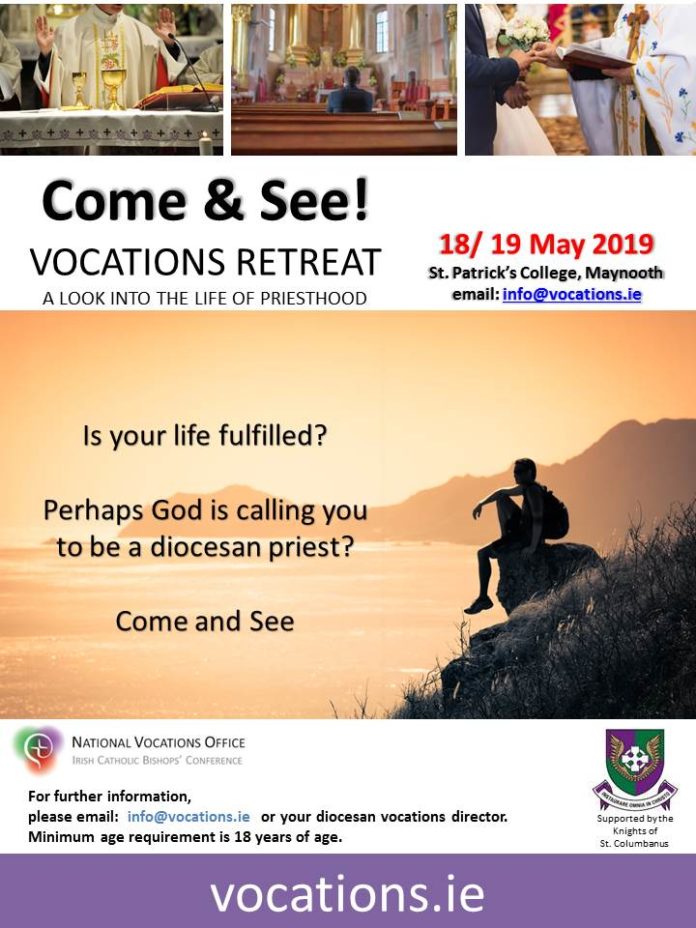
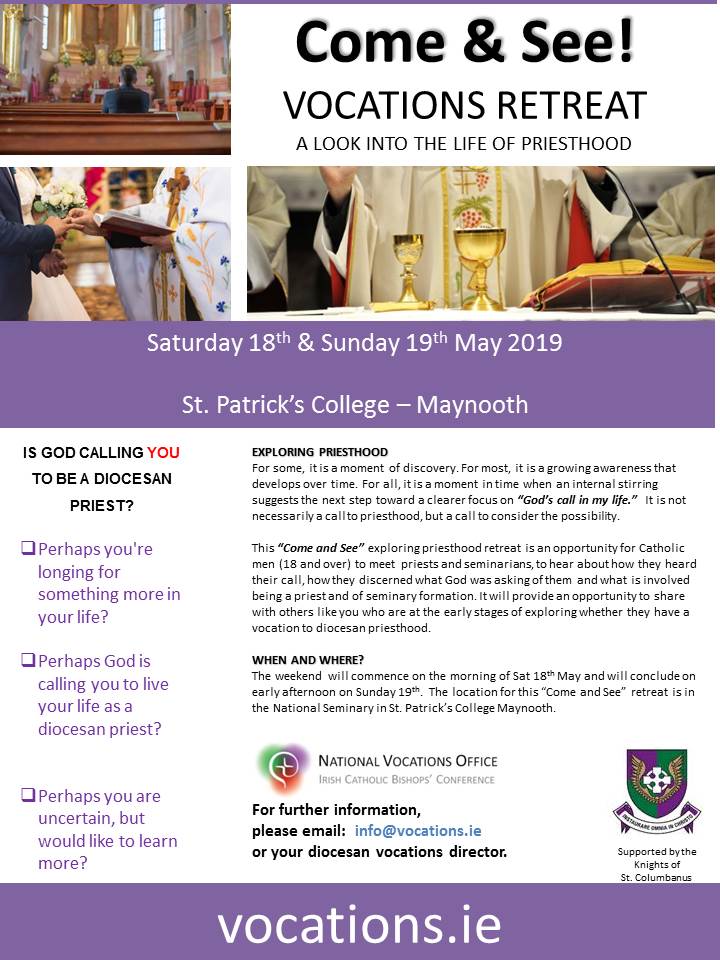
In an Ireland where vocations to the priesthood and religious life are dwindling, where by 2030 the rate of marriage is expected to have declined by almost sixty percent over fifty years, we are challenged to present the vocation to priesthood, to consecrated life and to marriage, as fulfilling vocations to love God who loved us first!

Only a committed witness to the joy of love will attract young people to faithful, lifelong commitment and service of any kind. As Pope Francis says to young adults in the opening words of his new message:

“Christ is alive! He is our hope … and he wants you to be alive! ” (CV1)

Ad multos annos!

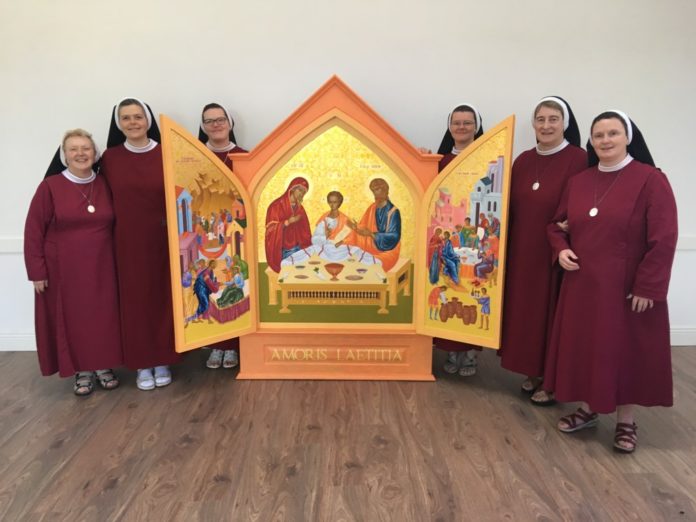
Icon for the World Meeting of Families has been placed in St Patrick’s Cathedral, Armagh

The Icon for the World Meeting of Families has been placed permanently in St Patrick’s Cathedral, Armagh. The Icon which invites us to prayer was produced by a Romanian, assisted by the Redemptoristine Sisters of the Monastery of St Alphonsus in Dublin. As we gaze upon the Icon, we’re invited to pray with the Holy Family, discovering what each figure, colour, posture and element means.

There are stories within the images, references to other Icons and symbols that invite us to immerse ourselves in the mystery of love and the Gospel of the family. The Icon has been placed for the moment in the sanctuary of St Patrick’s Cathedral and it will be placed in a permanent position in the Cathedral in the coming months. People are encouraged to pray before the Icon of the Holy Family for the protection of all our homes and families when visiting the Cathedral.

Archbishop Eamon Martin Appointed Apostolic Administrator of Diocese of Dromore

15 April 2019

Dear brothers and sisters in the Archdiocese of Armagh,

Last year, on Monday of Holy Week (26 March 2018), following the resignation of Bishop John McAreavey, Pope Francis appointed Bishop Philip Boyce OCD, as the Apostolic Administrator of the diocese of Dromore. 

One year on from that announcement, the Holy Father has asked me to take over the role of Apostolic Administrator from Bishop Boyce whilst continuing my roles as Archbishop of Armagh and President of the Irish Episcopal Conference. I am humbled by this request from Pope Francis and grateful for his confidence in me. It will now also be an honour for me to serve the people, priests and religious of Dromore during this transitional time for their diocese.

Please pray for me as I take on this new responsibility.

Thank you and may God bless you all during Holy Week and the Easter season.

 Yours sincerely,

+Eamon Martin
Archbishop of Armagh

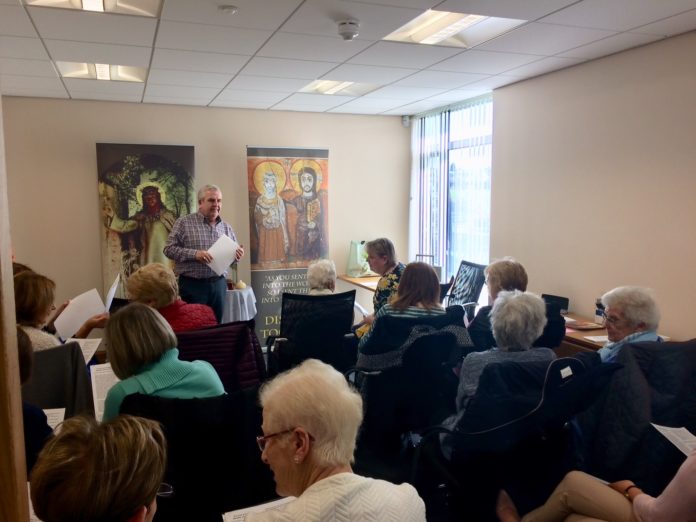
Prayerfest at Kilmore Pastoral Centre

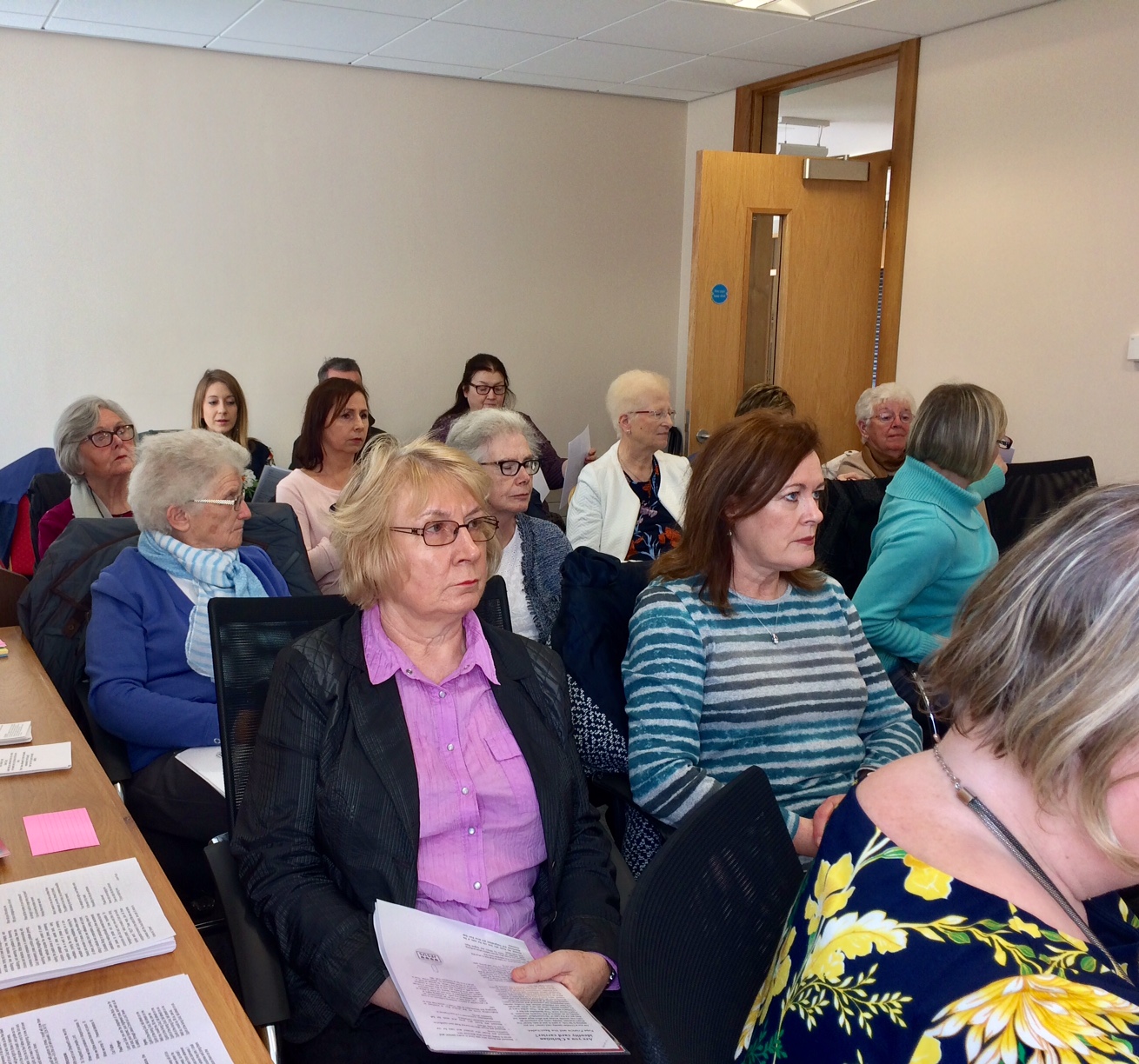
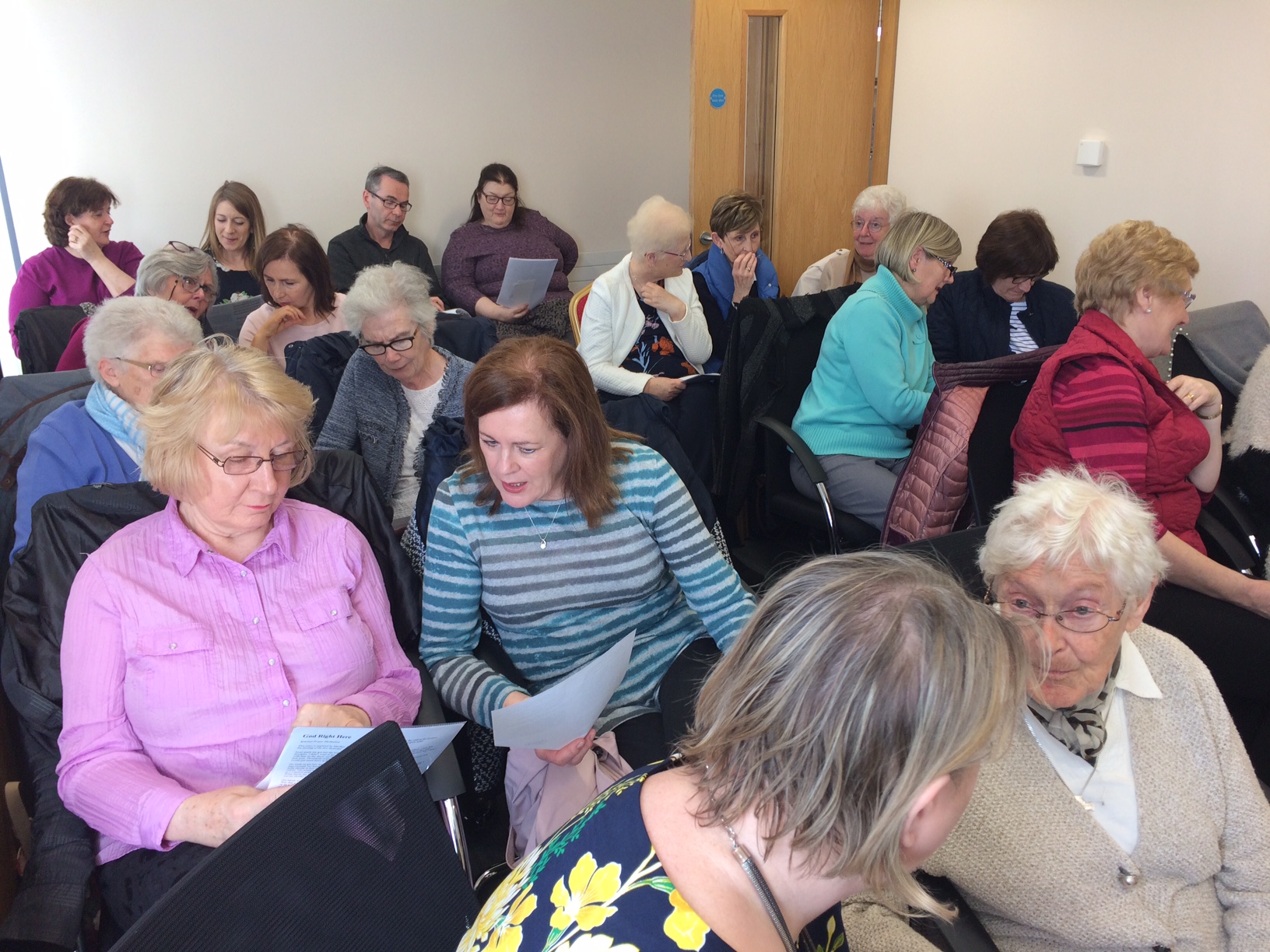
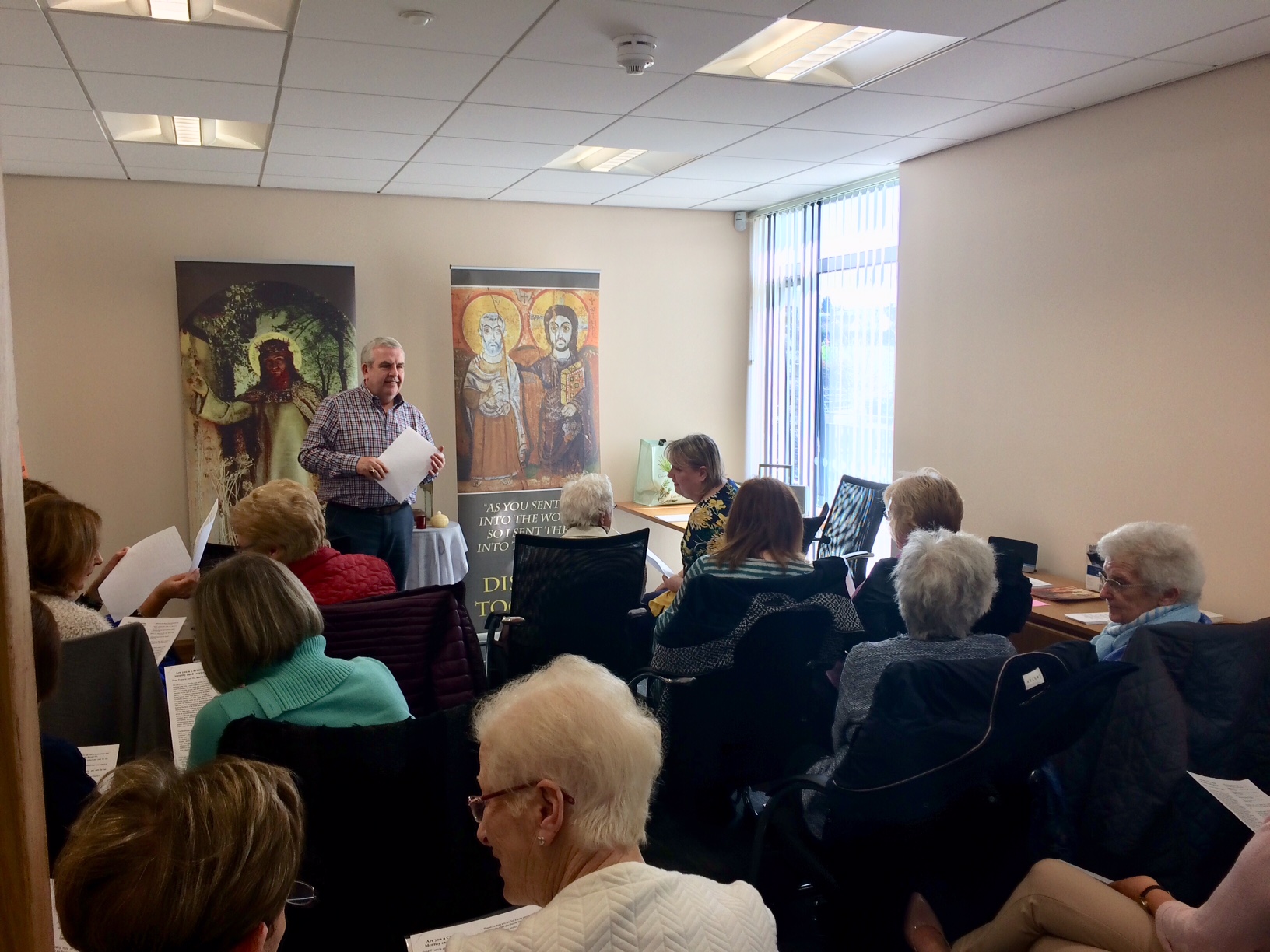
The Prayer and Spirituality Commission were delighted to host Prayerfest in two locations this Lent. The first in the Franciscan Missionary Community at Mount Oliver Dundalk and yesterday at the Kilmore Pasoral Centre. Yesterday we numbered 24 in all. We explored Pope Francis call to holiness in an atmosphere of prayer. Time was given to answering the Question of Jesus. Who do you say I am ?   Very positive feedback from both gatherings which ran from 10 am till 3.45 pm. God bless all for participating and making both events so prayer filled and encouraging! Prayer in presence of Blessed Sacrament meditative reflections and Taize Lectio all helped meet our spiritual hunger.