Home Blog Page 188

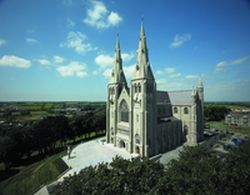
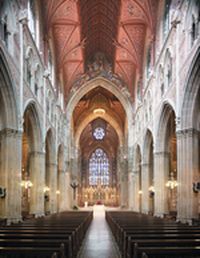
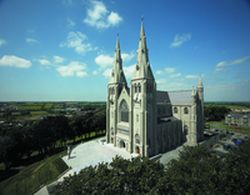
St. Patrick’s Cathedral


Guided Tours
Groups wishing to book tours of the Cathedral should contact the Office of the Parish of Armagh which has responsibility for the Cathedral.Tel: (028) 3752 2813
E-mail: [email protected]History of the CathedralPlan of CathedralWatch Live
Virtual Tour
360 Degree views of the Cathedral

Front of Cathedral

SanctuarySupport

Blessed Sacrament Chapel / Epistle Aisle

Centre Aisle

View from Organ Gallery

Gospel Aisle

Sacristy

Cardinals’ Tombs

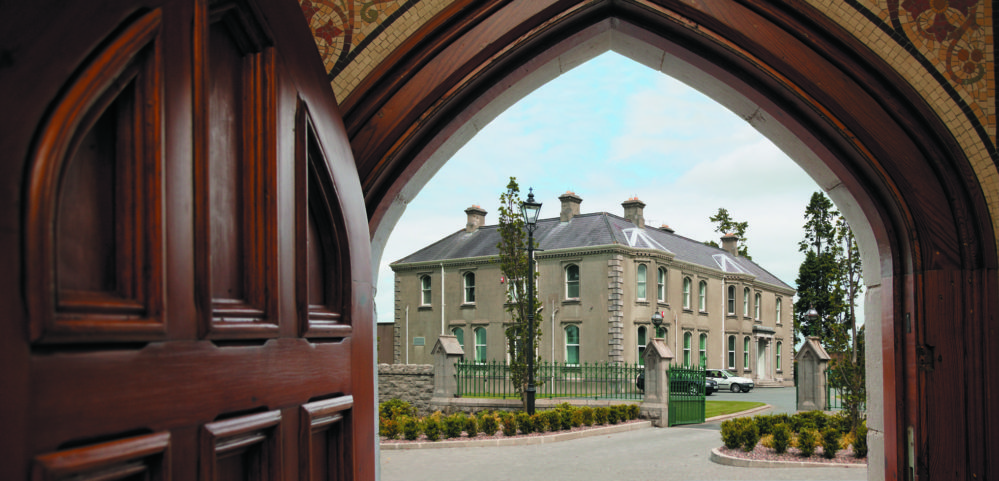
Outside Archbishop’s House

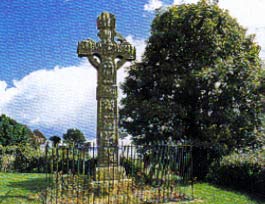
Termonmaguirc High Cross, Carrickmore

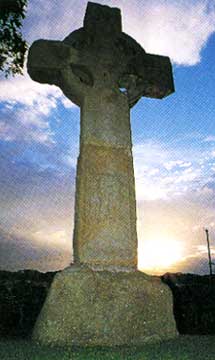
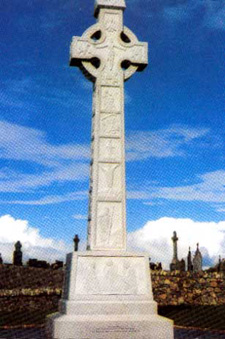
This High Cross was erected in the Parish of Termonmaguirc, Co Tyrone, to celebrate Jubilee 2000. It was blessed by Archbishop Seán Brady on Sunday, 10 September 2000. It sits in an area known as Fód na Marbh (sod of the dead) and is 24 feet high.

It features scenes from the lives of Irish saints. It has a 21st century depiction of the historic moment when Pope John Paul II inserted a prayer of reconciliation into the Western Wall in Jerusalem during his pilgrimage to the Holy Land in March 2000.

Best described as ‘a prayer in stone’, some of the cross’s other motifs and panels include: The Nativity, the Crucifixion and the Resurrection, The Assumption of Our Lady, Christ preaching the Beatitudes, the Miracle of the Loaves and Fishes, the three patrons of Ireland – Ss. Patrick, Brigid and Columcille, St Oliver Plunkett, St Teresa of the Child Jesus, St Malachy, an emigrant boat, the sacraments and family life, the Archbishop of Armagh’s coat of arms and the motif of the papal visit to Ireland in 1979.
Ardboe

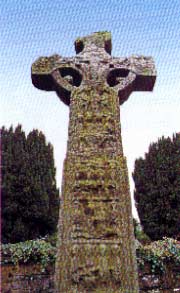
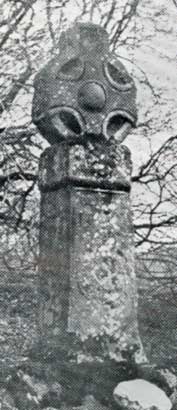
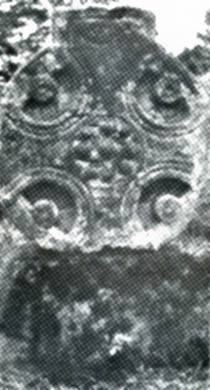
The Cross at Ardboe is unusually tall standing some 20 feet. It is profusely decorated by abstract motives and by a comprehensive series of figure sculptures which are treated with exceptional detail and fullness. Its ornateness sets this cross among the most distinguished of the Irish monuments.

The cross stands on a two-part base, the lower stone rectangular and flat-topped and surmounted by a smaller stone cut in truncated pyramidal form. The base is undecorated except for a simple roll moulding defining the sides. From the base the shaft rises to a band or collar, slightly wider than the sides of the shaft. Above this band the lowest part of the head is treated as a panel above which the open ring, decorated with billets, surrounds the intersection of the arms with the shaft. The cross is finished with a house-shaped cap.

Abstracted from Seanchas Ardmhacha, Vol. 2, No. 1 (1956) p. 81

Donaghmore

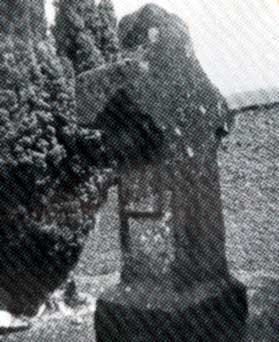
The High Cross of Donaghmore now stands outside the churchyard wall in the village street. It is recorded that the cross formerly stood within the Abbey grounds, where, during the religious conflicts of the late 17th Century, it was pulled down and seriously damaged. In 1776 the fragments were removed and set up on the present site.

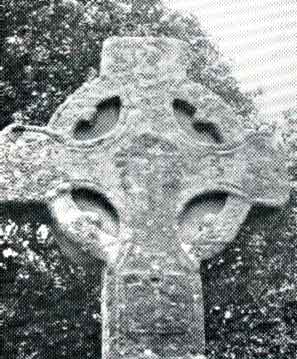
The monument consists of a two-tiered base on which is an incomplete length of shaft, surmounted in turn by a portion of shaft with an open ring cross-head. The head is much injured, the two upper ring arcs are gone, the top of the shaft broken and the cap missing.

Abstracted from Seanchas Ardmhacha, Vol. 2, No. 1 (1956) p. 85

Errigal Keerogue (Ballygawley)

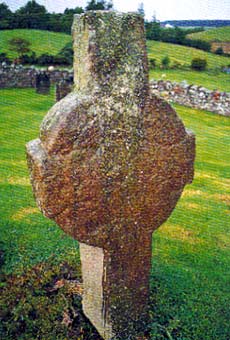
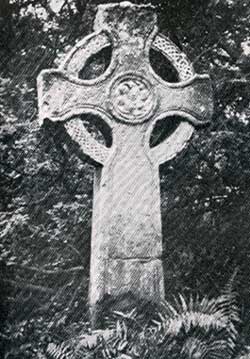
In the old graveyard of Errigal Keerogue is a massive sandstone cross. Between six and seven feet in height it consists of a shaft of about one foot in width, surmounted by a circular solid head, 2 feet 4 inches in diameter. Above this head the shaft projects about seven inches and at each side the arms, which are extremely short, protrude by an inch or so. It is clear that the cutting of this monument was never completed, perhaps on account of the serious flaw in the stone. One can clearly see the worker’s guide lines in the stone.

Abstracted from Seanchas Ardmhacha, Vol. 2, No. 1 (1956) p. 88

Clonfeacle (Moy)

In the churchyard of St Jarlath’s Church, Clonfeacle, is a massive sandstone cross set on a modern base. It is said that this monument formerly lay prostrate in a place nearby which is known as the “Nine Wells”.

Abstracted from Seanchas Ardmhacha, Vol. 2, No. 1 (1956) p. 84-85

Clonarb (Well Cross at Tynan Abbey)

Clonarb (moved to Tynan Abbey)

In the grounds of Tynan Abbey, Co. Armagh, three crosses were erected about the year 1844. Two of these, the “Well Cross” and the “Island Cross” are said to have been brought from the monastic foundation of Glenarb (Clonarb) and the third, the “Terrace Cross”, was removed from Tynan churchyard.

This cross has been placed on the top of a stone vault over a well. The base and a greater part of the shaft appear to be modern. On this is set a short section of a shaft surmounted by a massive solid ring-head with deeply recessed panels and decorated billet mouldings. The angles of the shaft and of the head are rounded and the surface is delimited by a single incised line between two shallow rolled mouldings.

This cross has been set up on a island in the lake. The base and a short length of shaft are modern. The shaft and head have rounded angle mouldings and the surface is delimited by two parallel incised lines. The head is a large open ring without billets on the arcs.

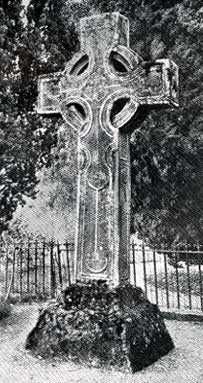
This monument has been placed at one end of the terrace at the south side of Tynan Abbey house. It stands on a substantial stepped base which is said to be modern. Except for a cap the monument is complete and consists of a shaft surmounted by an open ring cross-head without billets. All four sides of the shaft and both sides of the head are decorated by mouldings and small isolated designs carved in low relief.

Abstracted from Seanchas Ardmhacha, Vol. 1, No. 2 (1954) p. 111

Caledon (Aughnacloy)

Above the vaulted arch over a well in the grounds of Caledon Demesne a cross-shaft and a head have been set up. These remains are said to have been removed from Clonarb (see below). They represent parts of two monuments, the head being that of a smaller cross than the shaft was designed to support.

The shaft is an almost square column rising from a slightly splayed plinth and finished on the upper part by a bank or collar. The angles of the shaft are rounded and each side is treated as a single full-length panel, delimited by a shallow rounded moulding. In the middle of each panel is a large roundel or medallion containing a decorative device.

Abstracted from Seanchas Ardmhacha, Vol. 2, No. 1 (1956) p. 84

Tynan

The cross known as Tynan Cross stands by the roadside, opposite the churchyard wall in the village of Tynan. It is said that formerly the monument was within the church grounds, that it fell and that about the middle of the 19th Century it was repaired and set up in its present site. As it stands the monument is a composite one representing parts of two or three crosses. The base, which is somewhat battered and irregular in outline, is a truncated pyramid with a shallow step at the top. It does not appear to have been decorated. The shaft is in two parts. The lower portion has rounded angles and the surface on all four sides is delimited by a roll moulding. The upper portion is a short length of shaft surmounted by an open-ring cross. The head is extensively repaired and restored.

Abstracted from Seanchas Ardmhacha, Vol. 1, No. 2 (1955) p. 113

Eglish

In the old churchyard there is one cross base and two broken cross-heads. There seems to be no trace of the shafts belonging to these fragments and while the base may indicate the original position of one of these monuments, there is nothing to suggest the site of the other. The base is a truncated pyramid with a flat top without a step. It does not appear ever to have been decorated. The cross-heads are solid ring heads with deeply sunk panels.

Abstracted from Seanchas Ardmhacha, Vol. 1, No. 2 (1955) p. 110-111