Home Blog Page 9

Season of Creation 2025 Concludes with Woodland Liturgy in Dromintee Parish

Season of Creation 2025 Concludes with Woodland Liturgy in Dromintee Parish

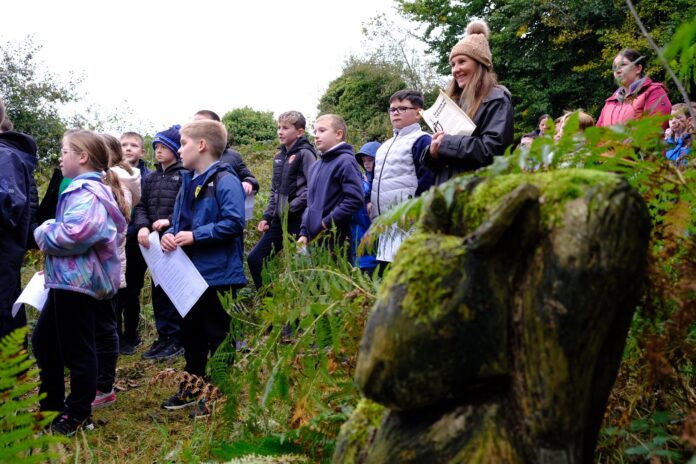
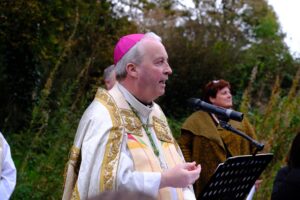
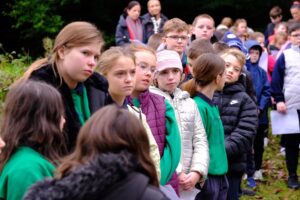
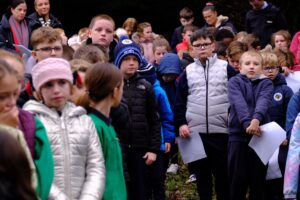
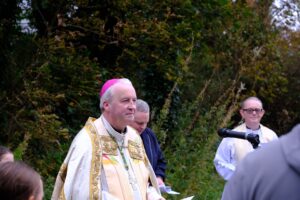
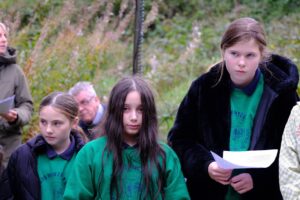
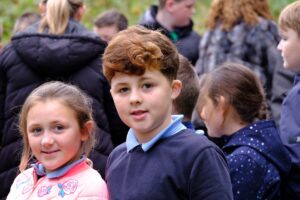
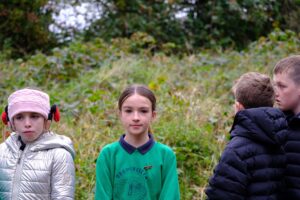
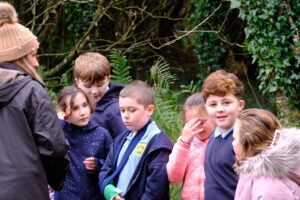
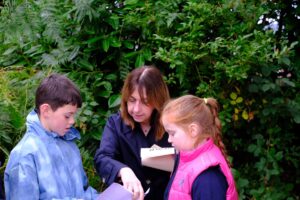
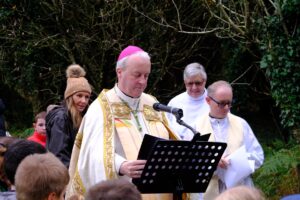
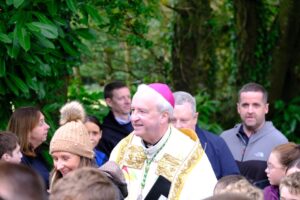
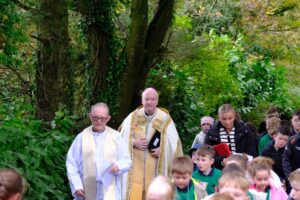
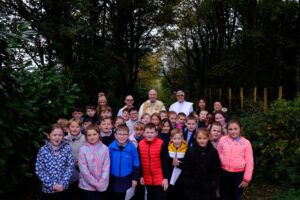
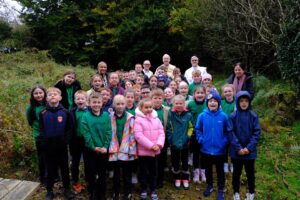
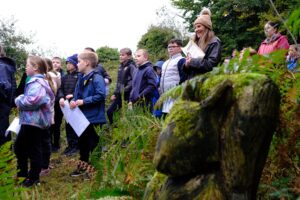
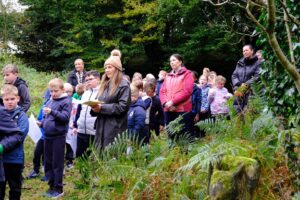
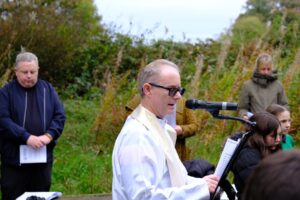
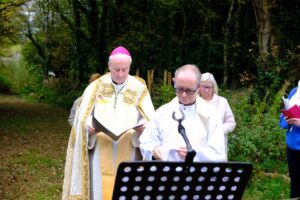
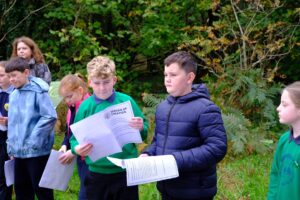
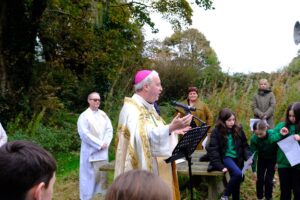
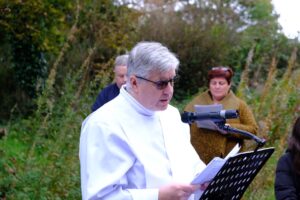
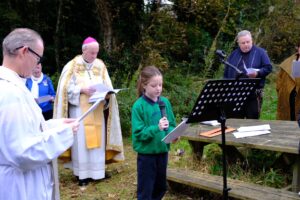
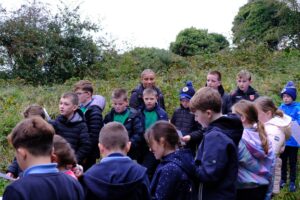
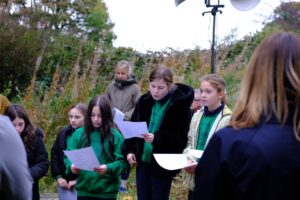
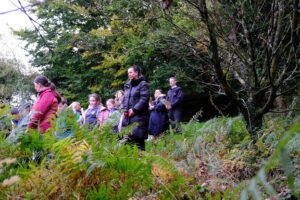
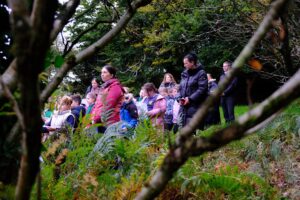
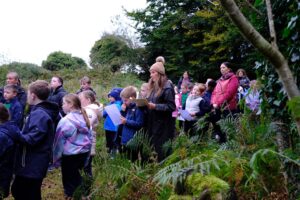
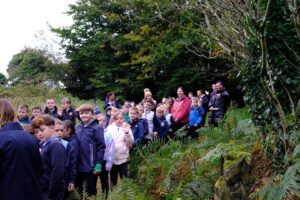
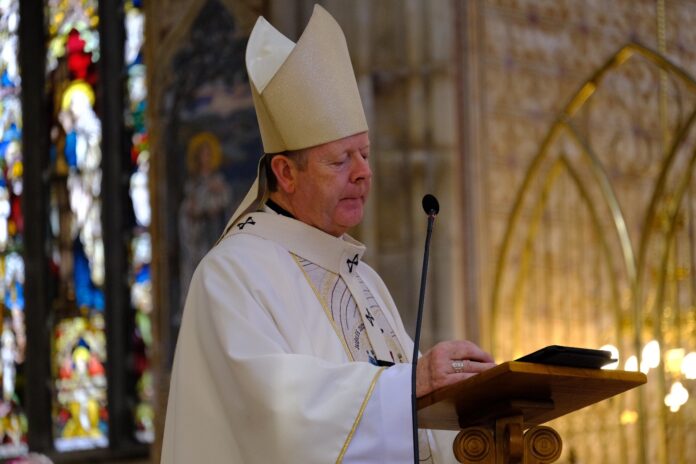
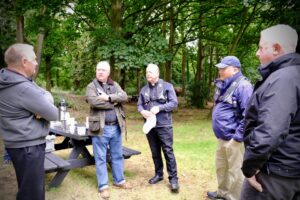
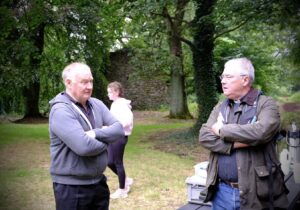
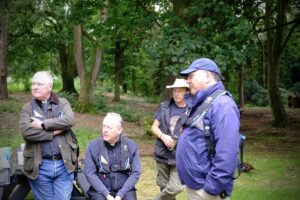
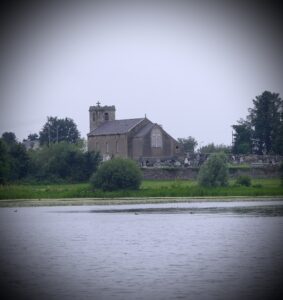
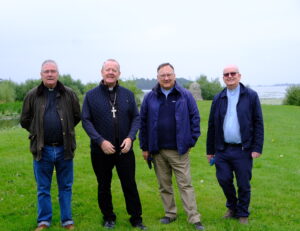
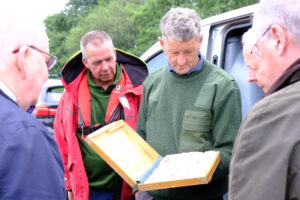
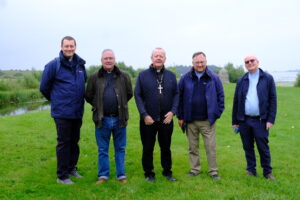
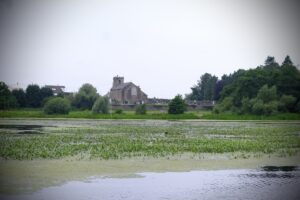
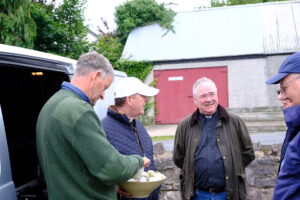
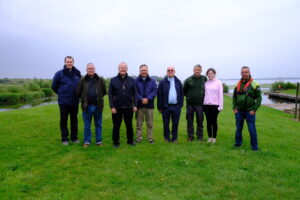
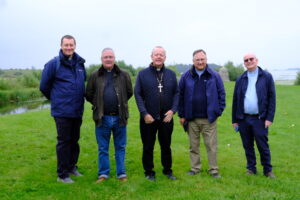
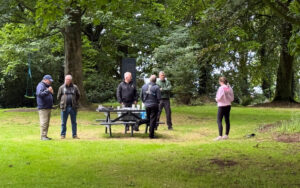
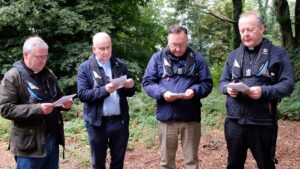
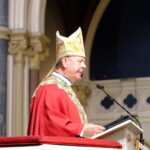
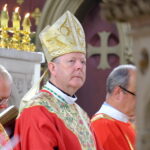
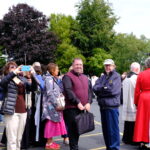
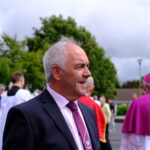
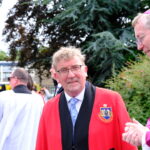
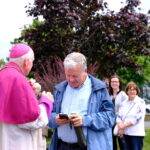
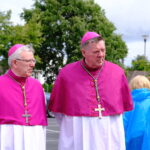
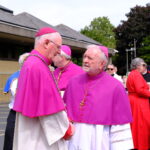
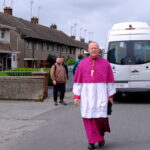
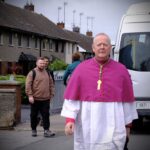
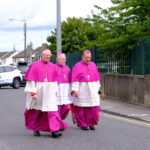
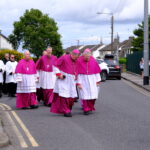
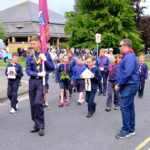
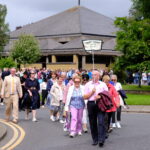
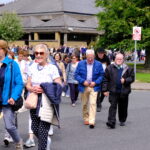
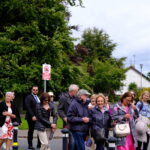
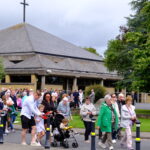
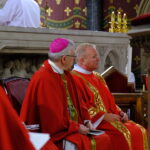
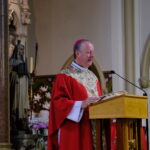
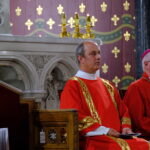
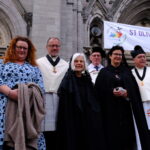
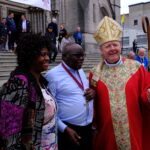
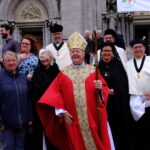
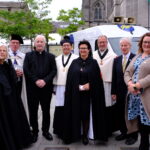
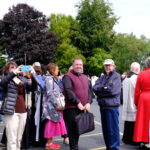
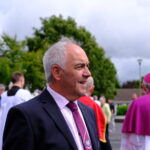
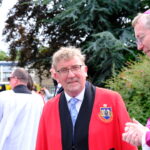
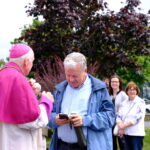
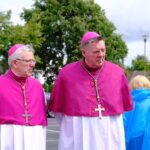
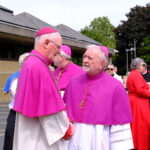
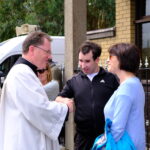
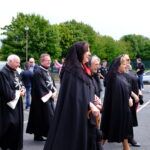
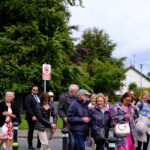
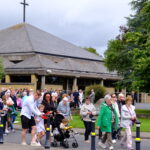
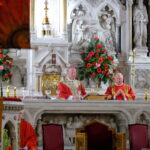
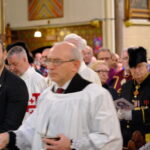
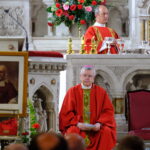
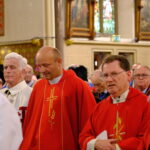
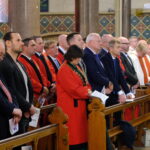
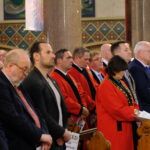
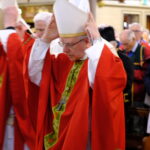
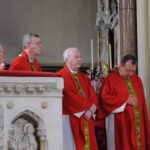
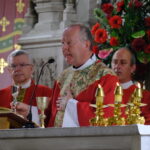
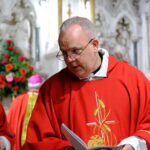
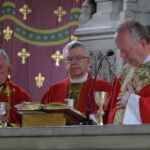
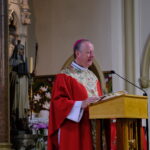
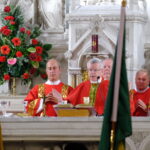
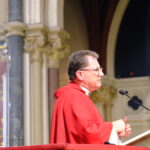
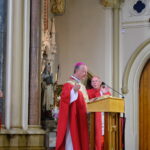
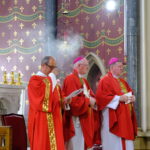
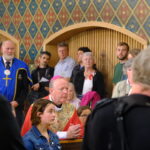
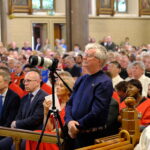
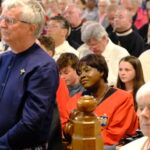
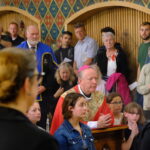
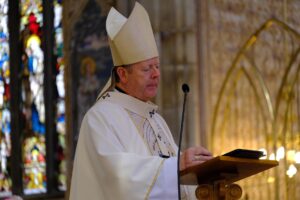
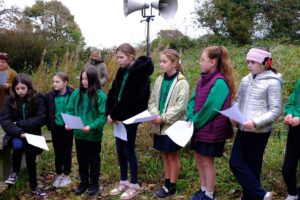
Many thanks to Dromintee Parish for hosting a beautiful liturgy to mark the conclusion of the Season of Creation 2025. The celebration took place in the peaceful woodland setting of Jonesborough, where Bishop Michael Router was joined by Fr Seamus White, Parish Priest of Dromintee, Deacons George Kingsnorth and Brendan McKernan, and members of the Pastoral Team from the Archdiocese of Armagh.

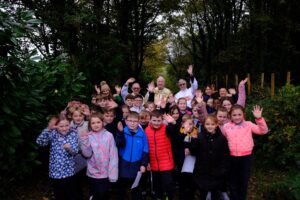
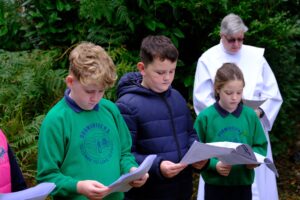
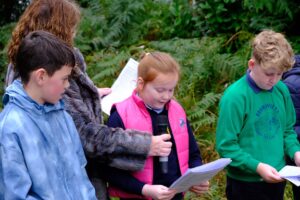
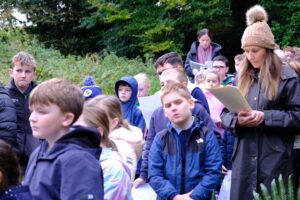
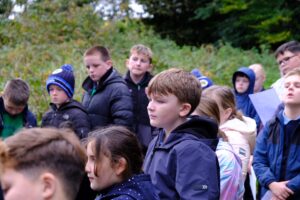
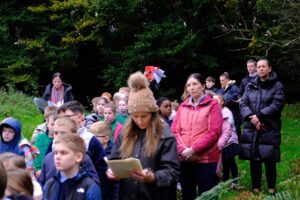
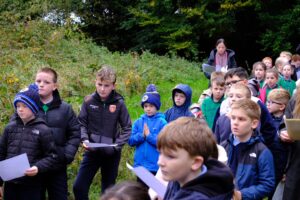
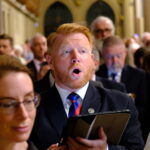
A special word of thanks goes to the children and staff of Dromintee and Jonesborough Primary Schools, whose enthusiasm, prayers, and singing added so much joy to this outdoor celebration. Their participation reminded everyone that care for our common home begins with a sense of wonder and reverence for the world God has entrusted to us.

Season of Creation 2025 carried the theme “Peace with Creation.” This year’s theme invited us to reflect on how living in harmony with the natural world is part of living in harmony with God and one another. True peace is not only the absence of conflict, but the presence of right relationship, relationship with God, with our neighbours, and with the earth itself.

The woodland liturgy in Jonesborough was a living sign of this peace: surrounded by the beauty of creation, the community gathered to in prayer, gratitude and hope for a renewed world.

As we conclude this year’s Season of Creation, may St Francis of Assisi and the late Pope Francis inspire us to continue walking the path of peace with creation—protecting, cherishing, and nurturing the gift of our common home.

“Peace, justice, and the safeguarding of creation are three absolutely interconnected themes.”
— Pope Francis, Laudato Si’


A reflection from St Hildegard of Binge

Glance at the sun. See the moon and stars.
Gaze at the beauty of Earth’s greenings.
Now think what delight God gives to humankind.
But we are to work with it.
For without it we cannot survive.


Archbishop Martin: shed light on the scale of missing people in Ireland and abroad

“We place our hands and our struggles in the hands of God”

Homily of Archbishop Eamon Martin during the celebration of Mass for the loved ones of Ireland’s missing persons


Homily

During this universal Jubilee Year of Hope, I have been able to bring the Christian message of Hope to a wide variety of parishes and congregations, including to many people who struggle to find Hope in their lives.  This afternoon I am truly humbled to meet and to pray with you, the family members and friends of Ireland’s many missing persons.  I offer you today the support of the Church and the comfort of Faith, Hope and Love.

It is difficult for those who have not experienced, as you have, the immense loss of having a loved one go missing, or to fully appreciate the pain and grief you go through.  You have a daily heartache and sense of absence; you experience a whole range of emotions, not knowing what happened, where they are today as we gather here in Drogheda.  In so many ways normal life and living was suspended on the day they went missing, and you have had to find ways to keep going while grappling with the many unanswered questions of an unsolved mystery.

Still, you rightly hold out the Hope of someone or something emerging that might lift the veil of uncertainty, and shed some light into the mist and darkness of ‘unknowing’.  But although in many ways their being missing leaves an empty space, their presence never leaves your hearts and your prayers.  Hence we gather today to remember them, to comfort and encourage each other, to pray for answers, and to intercede for the various investigations and search efforts to find clues to their disappearance, and even, with the help of God to Hope for their return – to “hope against hope.”

I trust that our gathering here this afternoon might also help to raise greater awareness of the sheer scale of the reality of missing people here on the island of Ireland, as well as Irish people missing abroad.  In 2024 alone, more than eleven thousand people were reported missing in Ireland, of whom more than 60 are still missing.  There are currently over 900 unsolved missing people cases in Ireland, sadly including dear children, some from our own parishes here in Co Louth and other parts of the Archdiocese of Armagh.

But you – the families, friends and supporters of the cause of missing persons – you know your loved one not as some statistic, suspended file or unsolved case; you know them as the unique individual that they were and are – the sister, the brother, the parent, the child, the cousin, other relative, the friend, the colleague.

Friends in preparing for this afternoon’s gathering, my mind kept turning to the logo for this Jubilee year of Hope.  The logo shows four figures on a boat, representing the people of the whole world – north, south, east and west – holding on to each other for safety in the midst of choppy and stormy waters.  But the lead figure of the four is clinging to the cross, which is also in the shape of an anchor.  Surrounding the logo are the words: ‘Pilgrims of Hope’.  This message is clear: when we are troubled by uncertainty, worries and fears, and it seems at times that we are forgotten, abandoned and alone, we can find comfort in knowing that our Lord, who suffered such pain and abandonment on the Cross, is truly with us in the midst of the storm.  We hold on to His cross, heeding His words: ‘Do not be afraid’.

As Pope Francis put it:
‘We have an anchor: by his cross we have been saved.
We have a rudder: by his cross we have been redeemed.
We have a hope: by his cross we have been healed and embraced so that
nothing and no one can separate us from his redeeming love.’

There are so many passages in the Bible which speak about the pain of loss and separation and about holding on to Hope.

In his letter last year to launch the Jubilee of Hope, Pope Francis quoted from Saint Paul’s letter to the Romans:
‘Since we are justified through faith, we have peace with God through our Lord Jesus Christ, through whom we have obtained access to this grace in which we stand; and we boast in our hope of sharing in the glory of God… Hope does not disappoint, because God’s love has been poured into our hearts through the Holy Spirit that has been given to us (Rom 5:1-2.5).’

We pray this afternoon for the gift of that ‘Hope which does not disappoint’.  We bring our thoughts and prayers firstly, to those missing who are still alive but who, for whatever reason, feel they cannot come home or get in touch.  We trust that God will look after them, so that they will know our enduring love for them, and that they will know how much we think about them always and that we are here today to remember and pray for them.  No matter what has happened in the past, we would love to hear from you, to know how you are and, if it is possible, to welcome you back home to be with us.

We also think of those missing loved ones who have died, either by natural causes; by tragic accident; by the crime and wrongdoing of others, or by their own hand.  How much it would mean to be able to know where their bodies are, to have a grave to visit, to have a funeral and remembrance.  And we are so conscious also of the many unidentified persons’ remains that have been found, and the need for more information, full coordination of resources and the development and use of all new techniques and advances in DNA technology.

We pray for those who are working on various investigations, gathering information and targeting searches for missing people: those involved in forensics, profiling, police and coroner services both at home and abroad, and those who support us in counselling, helplines and other caring services.  Your work is a compassionate lifeline for so many of us.

Our gathering today points us also to be conscious of the global scale of the reality of missing persons.  We do not forget those lost in human trafficking, the millions buried or displaced in the destruction and violence of war, or in the aftermath of natural disasters, air and sea accidents.  And then there are the enforced disappearances in some countries for political reasons, where people are abducted, imprisoned or deliberately killed and secretly buried.

Our thoughts are once more with the remaining families who continue their painful search for the so-called ‘Disappeared’ during the conflict in Ireland.

Down at Kilkenny Castle Park, the National Missing Persons Memorial reminds the people of Ireland of the reality of the suffering of so many families here on this island.  It shows many hands, (the actual hands of family members which were cast in bronze by the sculptor); hands reaching up in Hope and pleading for some answers, some closure; hands like our hands here today which are raised and joined in prayer this afternoon for each other and for the cause of missing persons.

Today we place our hands and our struggles in the hands of God, knowing that if we can have faith even the size of a mustard seed, then anything is possible.  If we can have the hope that does not disappoint, then one day we will be reunited with our loved ones.  And, meanwhile, if we can have love, like the love of Christ our Saviour, whose hands and feet were nailed to the Cross, then we too can one day experience the joy and consolation of His resurrection.

Amen.

Archbishop Eamon Martin is Archbishop of Armagh, Apostolic Administrator of Dromore and Primate of All Ireland. 

RIGHTING A WRONG – AN APPEAL TO WOMEN AND THEIR LOVED ONES

RIGHTING A WRONG – AN APPEAL TO WOMEN AND THEIR LOVED ONES

The Northern Ireland Assembly’s Committee for the Executive Office is beginning its work on scrutinising the Inquiry (Mother and Baby Institutions, Magdalene Laundries and Workhouses) and Redress Scheme Bill. The Bill will see the establishment of a formal Inquiry into Mother and Baby Institutions, Magdalene Laundries and Workhouses in Northern Ireland between 1922 and 1995. It will also set up a Redress Scheme for the victims and survivors of these institutions.

Hearing from those who will be directly affected by the Bill and the schemes it creates is key to the Committee’s work. The Committee wants to hear from as many people as possible and is holding a series of events to help those who want to get involved understand the process. The Chairperson of the Committee for the Executive Office, Paula Bradshaw MLA, said:

“We deeply value the lived experiences and personal testimonies of those affected by Mother and Baby Institutions, Magdalene Laundries and Workhouses and as a Committee we’re committed to listening to the people affected in as respectful and open a way as possible… The consultation is available online here: https://lk.cmte.fyi/InquiryRedressBill but we can also email or post hard copies to anyone who is interested. Email us at: [email protected]  You can also contact the Committee for the Executive Office by writing to us at: Room 247, Parliament Buildings, Belfast, Northern Ireland BT4 3XX”.

Why Sunday Matters – An Invitation to reflect on Sunday Mass

Why Sunday Matters: An Invitation to Reflect on the Gift of Sunday Mass

As we journey through this Jubilee Year of Hope, the Irish Catholic Bishops’ Conference is inviting every parish and every person of faith to reflect anew on the gift of Sunday Mass. On 31 August, Bishop Denis Nulty will officially launch a new pastoral resource entitled Why Sunday Matters.

This publication is designed first and foremost for Parish Pastoral Councils and Liturgy Groups, but it is also an invitation for all Catholics — individuals, families, and parish communities — to pause and rediscover the central place of Sunday in our lives of faith.


Why Sunday?

From the earliest days of the Church, Sunday has been the day of the Lord:

  • the day of Resurrection

  • the day of Eucharist

  • the day we gather as a community of faith

The Mass is not simply a ritual. It is the source and summit of Christian life. In the Eucharist we encounter the Risen Christ, are nourished by His Body and Blood, and are strengthened to live as disciples in the world.

A Synodal Invitation

Why Sunday Matters approaches this reflection through the lens of synodality:

  • Communion: recognising that the Sunday Eucharist unites us as the Body of Christ.

  • Participation: valuing the involvement of all, from liturgical ministers to families and young people.

  • Mission: sending us forth to share Christ’s love and hope in our daily lives.

This resource will help parishes open up conversations about how we celebrate Sunday together and how the Eucharist shapes us for mission.

Questions for Reflection

The Bishops invite us to reflect on questions such as:

  • How can I enrich my experience of Sunday Mass and make it central to my life?

  • How can we encourage more young people to be involved in our Sunday celebrations?

  • How does my participation in Mass inspire me to live my mission as a follower of Christ?

Looking Ahead

Copies of Why Sunday Matters will be sent to parishes in the coming weeks, with additional study and reflection materials to support parish groups.

Whether you are a regular Mass-goer, someone who has stepped back in recent years, or simply seeking to reconnect with your faith, this is an opportunity to return, reflect and renew.

Together, let us rediscover why Sunday truly matters, as a day of faith, communion and hope.


Click Here to Access

Thinking About Becoming Catholic? Start Your Journey Here.

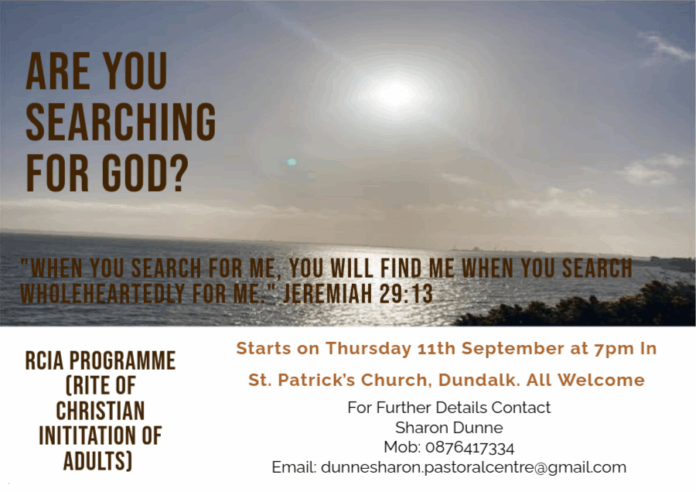
Are You Searching for God?
Have you ever felt drawn to explore the Catholic faith? Do you feel God may be calling you to something more?

The RCIA/OCIA Programme (Rite of Christian Initiation of Adults) offers a welcoming pathway for adults who wish to:

  • Learn more about the Catholic faith

  • Prepare for Baptism, Confirmation, or Eucharist

  • Deepen their relationship with God and the Church

This year’s programme begins on:

📅 Thursday 11th September at 7.00pm
📍 St. Patrick’s Church, Dundalk

As the prophet Jeremiah reminds us:
“When you search for me, you will find me when you search wholeheartedly for me.” (Jer 29:13)

✨ All are welcome – whether you are beginning your journey of faith, returning after time away, or simply searching for meaning and community.

For further information, please contact:
Sharon Dunne
📞 087 6417334
📧 [email protected]


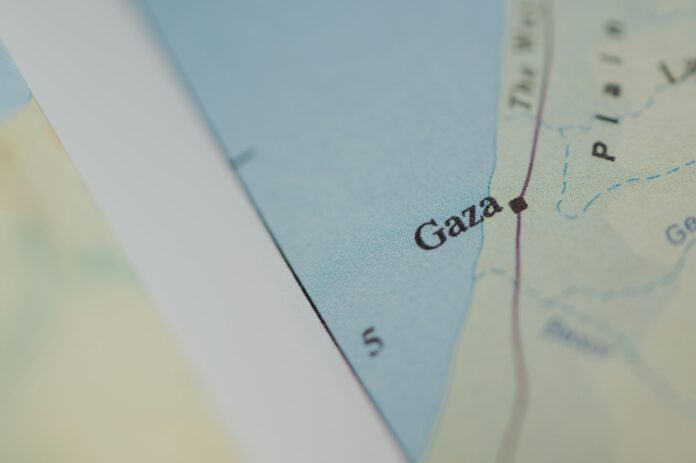
Day of Prayer and Reflection for Gaza – Sunday, 24 August 2025

An Invitation to Prayer from the Archdiocese of Armagh

On Sunday, 24 August parishes across Ireland are invited to unite once more in a Day of Prayer and Reflection for Gaza. 

Ten weeks ago, the Catholic Bishops of Ireland called for the month of June to be a time of prayer and solidarity with the suffering people of Gaza. Heartbreakingly, since then, the situation has deteriorated further. Innocent lives continue to be lost, many of them children and families while hunger, violence and devastation tighten their grip on a people caught in the crossfire.

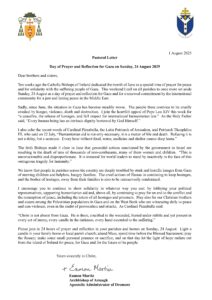
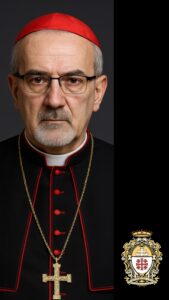
In his most recent pastoral letter, Archbishop Eamon echoes the urgent appeals of Pope Leo XIV, the Latin Patriarch of Jerusalem, Cardinal Pierbattista Pizzaballa and the Heads of Churches in the Holy Land for an immediate ceasefire, the release of hostages and respect for international humanitarian law. As Pope Leo reminds us, “Every human being has an intrinsic dignity bestowed by God Himself.”

The Irish Bishops have condemned, in the strongest terms, the genocidal acts being carried out with the sanction of the Israeli government, actions that have led to the deaths of tens of thousands of civilians. Such disproportionate violence is described as “unconscionable… and immoral for world leaders to stand by inactively.”

The ongoing suffering of hostages held by Hamas and the cruel withholding of their remains from their families is also acknowledged and unequivocally condemned.

In the face of such darkness, this call to prayer is a call to hope.


CLICK HERE TO ACCESS LETTER


“Christ is not absent from Gaza, He is there, crucified in the wounded, buried under rubble, and yet present in every act of mercy, every candle in the darkness, every hand extended to the suffering.”

Cardinal Pizzaballa.


How Can We Respond?

On Sunday, 24 August, you are invited to take part in 24 hours of prayer and reflection.

Whether as a parish or in the quiet of your own home, please consider:

  • Attending Mass and offering it for peace in Gaza
  • Spending time in Adoration before the Blessed Sacrament
  • Praying the Rosary for peace and justice
  • Lighting a candle at home or in your parish church
  • Making a small personal sacrifice or act of penance
  • Reaching out to your political representatives to advocate for justice and humanitarian aid
  • Supporting trusted aid organisations bringing relief to Gaza

This is a moment for our nation to radiate the light of Christ into the darkness, a light of peace, of justice and of hope for our world. Let us stand together, as one body in Christ, for the people of Gaza and for all who long for a just and lasting peace in the Holy Land.


CLERGY APPOINTMENTS FOR THE ARCHDIOCESE OF ARMAGH – EFFECTIVE 6 SEPTEMBER 2025

CLERGY APPOINTMENTS FOR THE ARCHDIOCESE OF ARMAGH

EFFECTIVE 6 SEPTEMBER 2025

Archbishop Eamon Martin announces the following clergy appointments for the Archdiocese of Armagh, effective 6 September 2025.

Archbishop Eamon thanks the priests and deacons of the Archdiocese for their continued ministry and service, and wishes well those who are taking up these new appointments.  He also thanks the people of the Archdiocese of Armagh for their ongoing prayers and support of their clergy.  He encourages them to welcome their new priests in the coming weeks.

V Rev Sean McArdle, SM, PP, Louth, to retire.

V Rev Brian Slater, Adm, Donaghmore, to be PP, Donaghmore.

Rev Emanual Fasakin, MSP, CC, St Patrick’s Cathedral Parish, Armagh, on loan from the Missionary Society of St Paul Congregation, Nigeria, to serve in the Diocese of Dromore.

Rev Giacomo Taffi, newly-ordained, to be CC, St Patrick’s Cathedral Parish, Armagh.

Rev Jibin James, on loan from Archeparchy of Kottayam, India, CC, Dungannon and assisting in the pastoral care of the Syro-Malabar community to complete his term.

Rev Manu Mathai, on loan from Archeparchy of Kottayam, India, to be CC, Dungannon and to assist in the pastoral care of the Syro-Malabar community.

1 August 2025

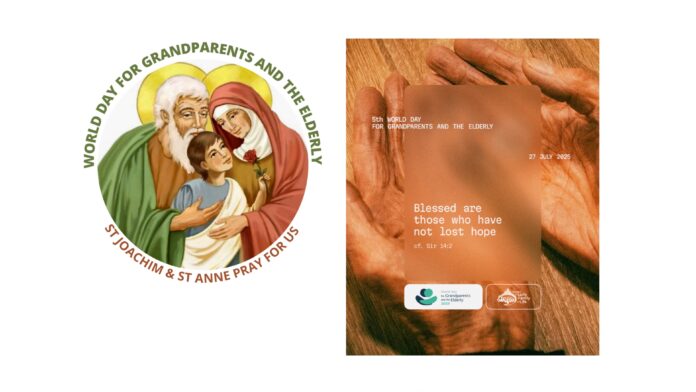
World Day for Grandparents and the Elderly 2025

“Blessed are those who have not lost hope”

This Sunday, 27th July 2025, we pause as a Church and as families to celebrate the lives, faith and love of all grandparents and older people. It is the fifth World Day for Grandparents and the Elderly, which was instituted by the late Pope Francis, since its institution it has been celebrated on the Sunday nearest the feast of Saints Joachim and Anne, grandparents of Jesus.  

“In a world that often forgets or sidelines the elderly, Pope Leo reminds us that they are witnesses of God’s promises. Their lives speak of joy, struggle, prayer and quiet strength. We honour their presence among us and we bless them for all they continue to give.”

Archbishop Eamon Martin


This year’s theme, chosen by Pope Leo XIV, reminds us that hope is not reserved for the young or strong, it is also the quiet, steadfast light nurtured by those whose years and experiences have shaped in them the strength and resilience to sustain faith. It is the kind of hope we so often see in our grandparents, neighbours, and elderly relatives, who ground our families through their love, prayer, and enduring example.

Click Here for Link to Pope Leo’s message


Jubilee of Hope

This year’s World Day is special as it takes place during the Jubilee year of Hope and it also marks the 25th anniversary of the Catholic Grandparents Association. As Archbishop Eamon Martin says in his special video message this is a time to thank our grandparents for their faith, wisdom and for never giving up on us.

Link to Jubilee Website


“God’s Secret Weapon”

The Catholic Grandparents Association calls grandparents “God’s secret weapon.” In today’s world of constant change, where family life can be fractured and faith often dismissed, grandparents are often the steady hands and prayerful hearts holding things together. They love deeply, pray quietly and pass on a faith that endures.

Back in 2017, Irish grandparents gathered at Knock Shrine to pray for this day to be established. Their prayers were answered and their legacy now spans parishes and dioceses across the world.


Ways to Celebrate the Day

Every parish, school and family is encouraged to join in a “revolution of gratitude and care.” Here are some simple ways to mark the day:      

  • Light a Candle: Invite a grandparent or elder to light a candle at Sunday Mass.
  • Plant a Memory Tree or Garden: Create a space to remember grandparents who have died or inspired you.
  • Acts of Love: Send a card, write a note, or call an elderly neighbour.
  • Creative Tributes: Invite children to write or draw messages of thanks.
  • Join in Prayer: Pray the special prayer for this World Day together.

Pilgrimage to Knock

A special National Grandparents Pilgrimage will take place at Knock Shrine on 27 July, led by Archbishop Francis Duffy. Whether in person or online at www.knockshrine.ie, all are invited to participate in this moment of prayer, thanks, and celebration.

Archbishop Eamon Visits Lough Neagh with the Irish Church Leaders Group

“Put out into the deep.” (Luke 5:4),  A Pilgrimage of Listening, Witness and Stewardship

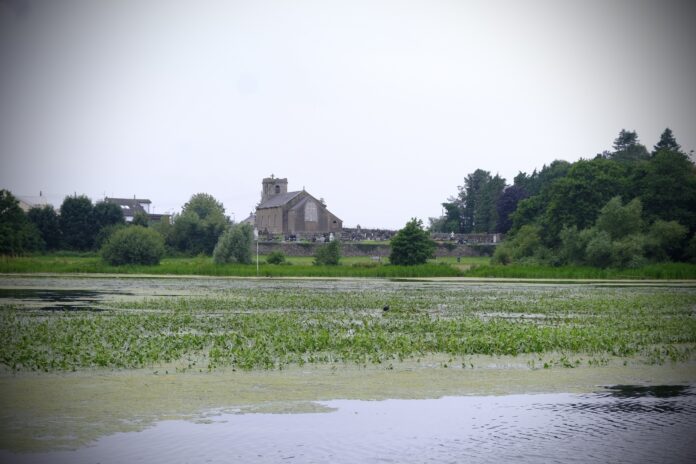
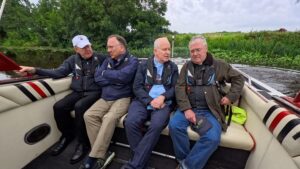
On Wednesday 23 July 2025, the Irish Church Leaders Group made a visit to Lough Neagh and Coney Island, a landscape steeped in beauty, history, ecological importance and growing crisis. This pilgrimage was not only about witnessing the natural wonders of Lough Neagh but also about listening deeply to the voices from local communities, conservationists and those whose livelihoods have long been tied to the Lough.

In the short video reflection above from the day, Archbishop Eamon shares the group’s sense of responsibility and the spiritual call they felt as they stood amid the environmental challenges facing this treasured body of water.


A Lough in Crisis

Lough Neagh, the largest freshwater lake in the British Isles, is a vital ecological, economic and cultural heartland for Northern Ireland, yet today it faces grave threats from nutrient pollution, invasive species like zebra mussels and increasingly severe blue-green algal blooms. These issues have devastated local fisheries and threatened unique species like the pollan and dollaghan trout.

In 2025, for the first time in generations, eel fishing was suspended, not because of legislation, but because export markets rejected the eels due to poor fat content, likely a result of the Lough’s ecological deterioration. For many families, a centuries-old way of life has come to an abrupt and painful end.


Listening to the Community

Beginning at Maghery Country Park, the Church Leaders began their visit with a boat crossing to Coney Island. There, they met members of the South West Lough Neagh, Rivers and Islands Association, some local people, including fishermen and environmental advocates, people working tirelessly to restore and protect the Lough’s ecosystems. Their testimonies bore witness to both the beauty of this place and the depth of the crisis.


A Shared Call to Care

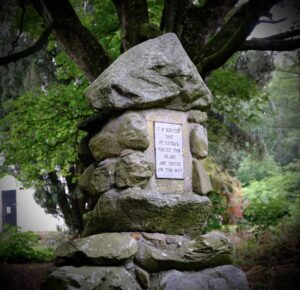
The theme for the visit, “Put out into the deep”, invited deep spiritual reflection. As the Church Leaders travelled to and walked the ground of Coney Island, including a visit to St. Patrick’s Stone, they were reminded of the Gospel call to trust, to listen and to act boldly for the sake of God’s creation. Lough Neagh is more than a lake but a place that represents a shared heritage that crosses political, religious and social boundaries. The Church Leaders visit offered an opportunity to model collaboration, care and prophetic witness in the face of ecological collapse.

Their presence signalled not just solidarity but a shared commitment to healing and hope.


Towards Renewal and Responsibility

Archbishop Eamon  acknowledged that environmental degradation is not only a scientific and political issue but also a deeply spiritual and moral one. Reflecting on his visit he posed important questions for all people of faith:

  • What does it mean for faith communities to “put out into the deep” and face the ecological crises of our time?

  • How can we collaborate across denominations, sectors and borders to renew our responsibility as stewards of creation?

  • What prophetic voice might the Churches raise in solidarity with vulnerable ecosystems and communities?


A Symbol of Unity and Hope

Coney Island, with its 5,000 years of human habitation from Neolithic farmers to the present day has stood as a symbol of continuity, resilience and renewal. Today, cared for by the National Trust, it also symbolises the need to protect what is precious before it is lost.

The visit included a moment of prayer and shared reflection on Coney Island, allowing the Church leaders the opportunity to offer a quiet but powerful witness to the Churches’ desire to walk together, listen deeply and act with courage.


Watch the Reflection: Archbishop Eamon Martin’s video message from the visit

All are invited to learn more about the environmental challenges facing Lough Neagh and reflect on how they can do their part and protect creation. 

Irish Catholic Bishops – Care for Our Common Home   


Archbishop Martin: St Oliver Plunkett was completely aware of his call to martyrdom

St Oliver Plunkett was completely aware of his call to martyrdom

“It is fitting to note that Saint Margaret Mary Alacoque, the visionary of the Sacred Heart, was canonised by Pope Benedict XV on 13 May 1920, just ten days before he beatified our own Saint Oliver Plunkett”

Archbishop Eamon Martin


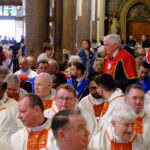
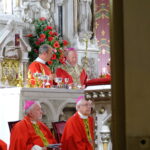
Homily of Archbishop Martin at Mass for the ‘Oliver400’ celebrations

In this Jubilee Year of Hope, we have been very fortunate here in Ireland to be able to celebrate special moments, like the 800th anniversary of the canonisation of Saint Laurence O’Toole; the centenary of Venerable Matt Talbot’s death; 80 years since the outstanding witness of our Columban missionaries who were martyred in the Philippines – ‘like lambs among wolves’ – and also the 75th anniversary of the Columban martyrs who gave their lives in Korea.

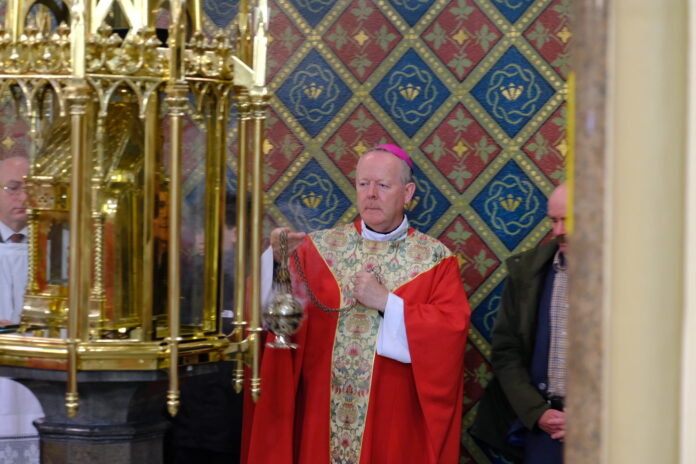
In the Archdiocese of Armagh – and especially so here in Drogheda – the pinnacle of our Jubilee Year celebrations is the double anniversary of Saint Oliver Plunkett: born 400 years ago in 1625, and canonised 50 years ago in 1975.

During his first four years as Archbishop, Oliver threw himself energetically into mission mode.  Bishop Desmond Forristal described him as “a man in a hurry”, who wasted no time in administering the sacraments; establishing a school here in Drogheda to educate the youth and instruct clerics.  Archbishop Oliver also conducted many pastoral visitations and convened synods and councils to reform the Church.  When necessary, he stepped in as a mediator and peacemaker to help heal various disputes and divisions.  He built relationships with the Protestant Archbishop and clergy, and he was particularly zealous to ordain, instruct and form the clergy, driven, no doubt, by those Gospel words: “the harvest is rich, but the labourers are few”.

But within four years, by the end of 1673, the political tide was turning against the Catholic Church.  Archbishop Oliver Plunkett, showed immense courage.  Taking little account of his own needs and health, he tirelessly and unapologetically proclaimed the Gospel, despite increasing opposition and even direct threats to his life.  By 1678 he was a fugitive.  He wrote, “I am certain I will be captured as there are so many hunting for me.  But whatever the danger, I will stay with my flock and will not abandon them until I am dragged to the ship“.

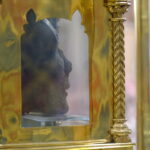
Eventually he was arrested and imprisoned on account of a malicious charge that he was involved in the so-called ‘Popish plot’.  After prolonged imprisonment in Dublin and in London, he was put through a sham trial and unjustly condemned to death.  In the end, Oliver suffered the ultimate humiliation – he was dragged through the crowded streets of London before being publicly hung, drawn and quartered at Tyburn Cross.  But he never lost hope in a heavenly homeland, and even from the gallows, Archbishop Oliver proclaimed his faith in the Risen Lord, and forgave those who had plotted against him.

We might ask ourselves, why did he do it?  Why did Saint Oliver show such determination and courage in the face of blatant bigotry and public demeaning of his character?  Why was he so serene while being dragged to such a brutal end?  It was because he lived, and died, by the principle of “no greater love”, literally laying down his life for love of God and for his people, and for his undying conviction that Hope in Christ does not disappoint.

Let me ask it another way: Why did his persecutors seek to destroy Saint Oliver Plunkett?  Could they not accept that this faithful shepherd would never leave his beleaguered flock?  The answer is: because Evil abhors Faith; Evil hates Love, and Evil especially detests Hope because, as Pope Francis once put it, “Hope keeps alive the deep conviction that good is stronger than evil, and that God, in Christ, has conquered sin and death.”

That is why on Easter Sunday morning, just hours before he died, Pope Francis added, “Evil has not disappeared from history; it will remain until the end, but it no longer has the upper hand …Christ is Risen.  Love has triumphed over hatred, light over darkness and truth over falsehood.  Forgiveness has triumphed over revenge”.

Pope Benedict XVI once asked: “On what is martyrdom founded?”  “The answer”, he said, “is simple: it is founded on the death of Jesus, on his supreme sacrifice of love in the cross; and it gets its strength from a deep and intimate union with Christ, because martyrdom and the vocation to martyrdom are not the result of human effort but the response to the call of God; they are a gift of God’s grace that enables a person, out of love, to give his (or her) life for Christ and for the Church, and hence for the world.”

Saint Oliver Plunkett was completely aware of his call to martyrdom.  No doubt he would have prayed those words of Saint Paul to the Galatians, “The only thing I can boast about is the cross of our Lord Jesus Christ, through whom the world is crucified to me, and I to the world”.  He had no hesitation, therefore, in taking up his cross every day and freely following Christ along the path of unconditional love.

And this brings to mind another of our Jubilee year anniversaries, namely, the 350th anniversary of the Sacred Heart revelations to Saint Margaret Mary Alacoque.  She described the Lord opening his heart to her, saying: “This is the heart that so loved human beings that it has spared nothing, even to emptying and consuming itself in order to show them its love”.  Saint Margaret Mary’s spiritual director – a Jesuit priest named Claude de La Colombière – defended her publicly. He helped to spread the word about her visions and to explain their meaning in the light of the Gospel.

It struck me recently that Sister Margaret Mary’s visions of the Sacred Heart at Paray-le-Monial, from 1673-1675, were happening at precisely the same time that Archbishop Oliver was spreading the Good News of Christ’s love amongst his people in Ireland.  Whether or not Archbishop Oliver ever heard of these visions of the Sacred Heart, it is clear that he too was inspired by the human and divine love of the heart of Jesus Christ, both in his life and in accepting his death; one might even say Archbishop Oliver was an anticipatory apostle of the Sacred heart.

His solitary confinement for many months under stark conditions became his personal Gethsemane.  But, like Christ, he was serene and prayerful in his suffering, surrendering himself in complete submission to God‘s will.  He cheerfully chose even more penance, by often refusing the meagre daily rations of prison food.

Archbishop Oliver meditated on the Passion of Christ with all its wounds and thorns, and he clearly wanted to unite his own imminent death at Tyburn Cross with that of our suffering Saviour on the cross at Calvary – although Oliver remarked that his suffering would be merely a “fleabite” in comparison!  Nonetheless, he asked forgiveness for his own sins, and joyfully offered up his sacrifices for an end to the persecution of his flock in Ireland and so that, by his death, the number of Catholics would once more increase.

Meanwhile, the Jesuit priest Fr Claude de La Colombière, who had been transferred to England, wrote in his diary of how shocked he was to discover that a bounty had been set on the head of the Archbishop of Armagh.  Father Claude was himself arrested and imprisoned in England on account of the Popish plot.  He escaped execution because he was a French citizen and, returning to France as an exhausted and broken man, he died in 1682, just a year after Saint Oliver.  He was canonised in 1992.
In this context, I think it is fitting to note that Saint Margaret Mary Alacoque, the visionary of the Sacred Heart, was canonised by Pope Benedict XV, on 13 May 1920, just ten days before he beatified our own Saint Oliver Plunkett.

Dear brothers and sisters, during this Jubilee Year the lives of so many saints and martyrs are encouraging us to be like them: pilgrims of hope in this troubled world.  Their message for us in clear: do not be afraid to answer God’s call to holiness, to take up your own daily crosses, to deepen your love for Christ and do all you can to build “a civilisation of love”.  In that way, peace and mercy can flow like a river, and the whole earth can cry out with joy, singing to the name of the Lord!

Through the intercession of Saint Oliver Plunkett, Saint Laurence O’Toole, Saint Columbanus and the Columban martyrs, Venerable Matt Talbot, and all the holy women and men of Ireland, may our hearts be on fire this Jubilee, so that we radiate, like them, the message of Love and Hope in Christ, Amen.

Archbishop Eamon Martin

Archbishop of Armagh, Apostolic Administrator of Dromore and Primate of All Ireland.