Sunday, December 21, 2025
Home Blog

Archbishop Eamon Martin expresses solidarity following attack on Hanukkah celebration in Bondi Beach

Archbishop Eamon Martin expresses solidarity following attack on Hanukkah celebration in Bondi Beach

“I know that many Irish families have sons and daughters living in the Sydney and Bondi Beach area, as well as countless others in other parts of Australia, and no doubt everyone is deeply impacted by the awful attack, which must have been terribly shocking and frightening for everyone present.”


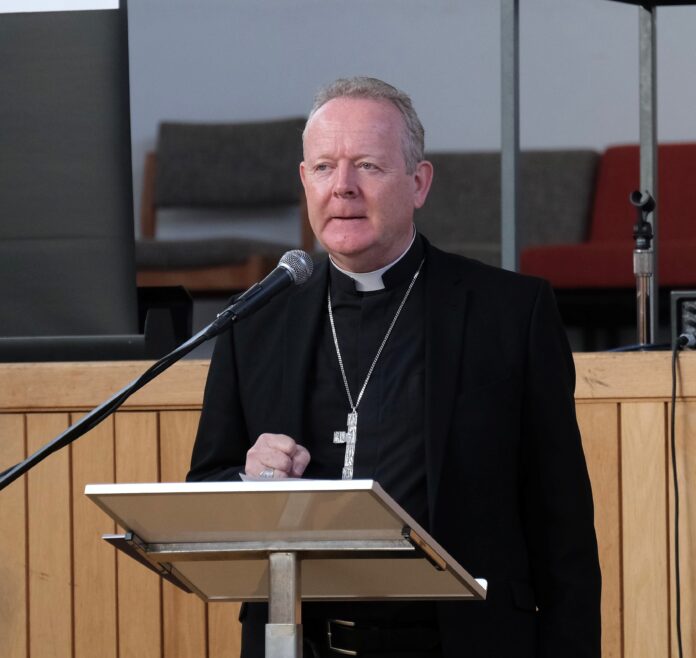
Archbishop Eamon Martin, Archbishop of Armagh and Primate of All Ireland, has expressed solidarity with the Jewish community following the horrific attack on a Hanukkah celebration at Bondi Beach in Sydney, Australia.  

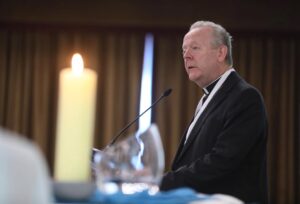
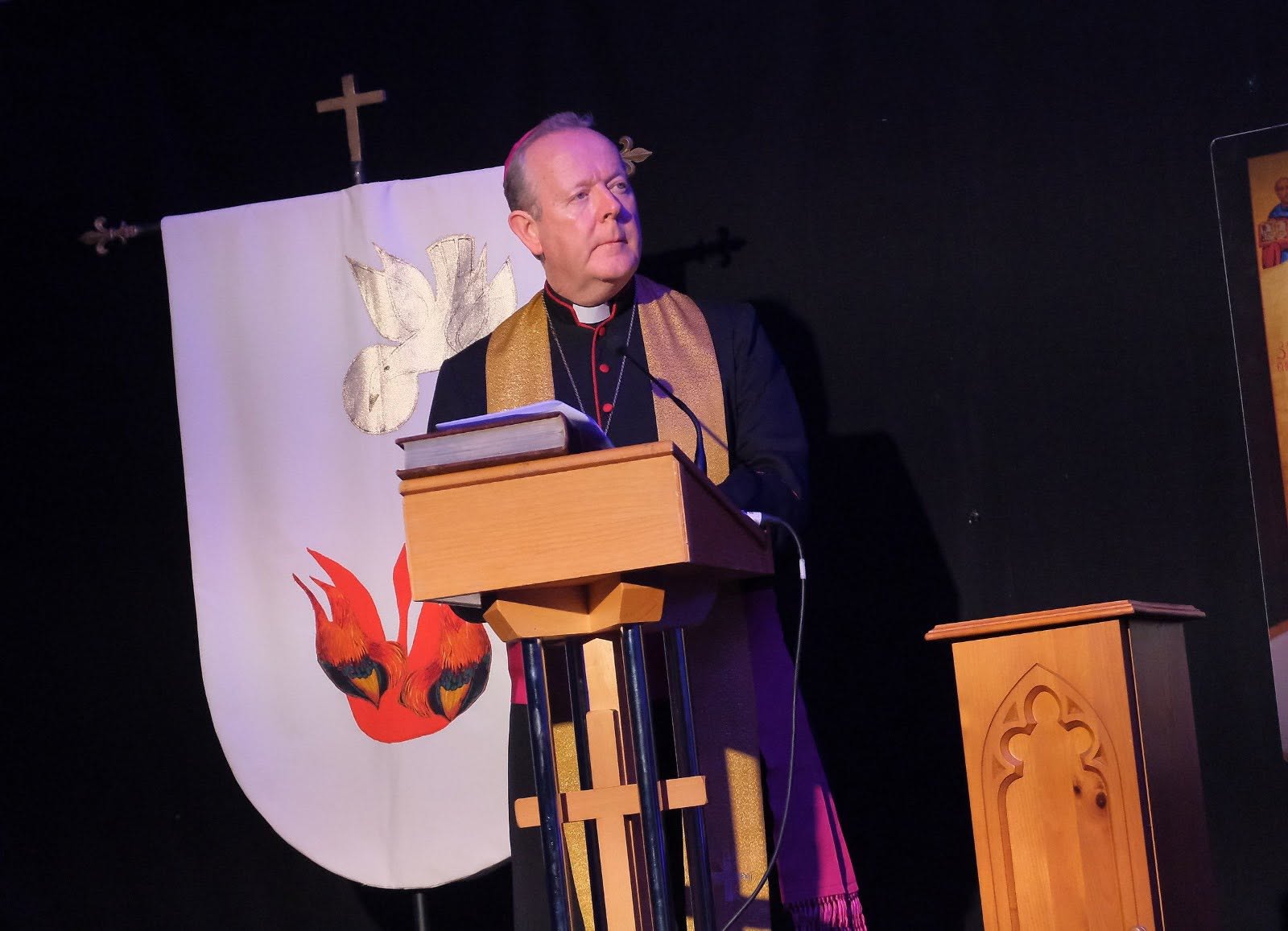
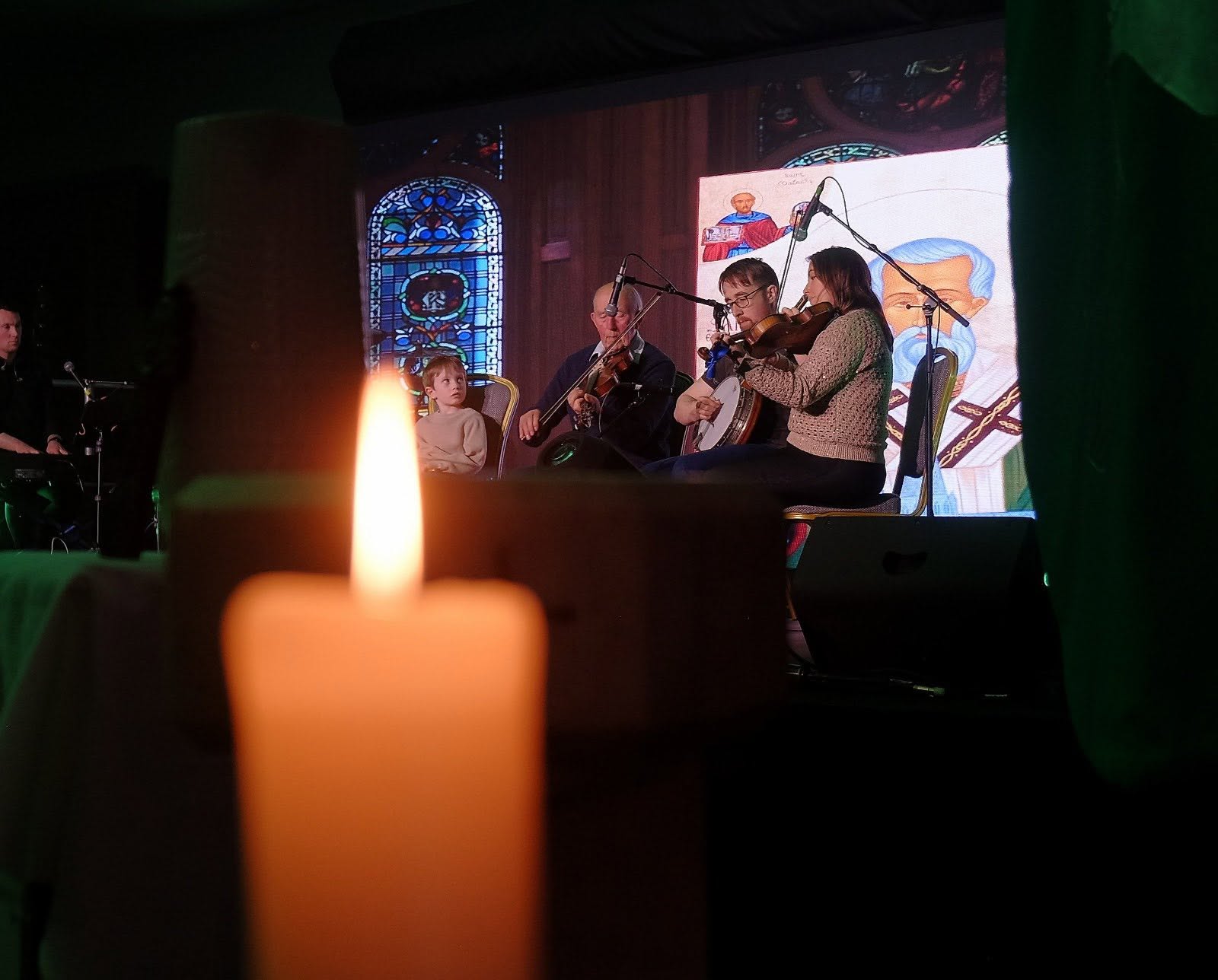
Speaking during the annual Christmas Carol Service in Saint Patrick’s Cathedral, Armagh, Archbishop Eamon shared words of prayer and compassion as the third candle of the Advent wreath was lit. He acknowledged the deep shock and grief caused by the attack, which took place as Jewish families around the world were celebrating the Festival of Light, leaving twelve people dead and many others injured.

Archbishop Eamon was particularly mindful of the many Irish families, including young people from Ireland and from within the Archdiocese, who are currently living in Sydney and the Bondi Beach area, and who may have been directly or indirectly affected by the events.

In his statement, Archbishop Eamon spoke clearly against antisemitism and all forms of prejudice, calling on Christians to actively counter hatred and discrimination towards Jewish people and towards all minorities. He reflected on the Christian belief that Jesus came as the fulfilment of Isaiah’s prophecy, bringing light into darkness and peace into a broken world and invited those gathered to pray for the families who have been bereaved, for those who have been injured, and for the first responders whose courage helped prevent further loss of life.


Archbishop Eamon Martin’s statement

“As we gather this evening for our Christmas carol service, and light the third candle on our Advent wreath, we unite with our Jewish brothers and sisters around the world who are celebrating the festival of Hanukkah today, and whose festival of light this year has been horrifically overshadowed by the darkness and evil of a terror attack on the Hanukkah celebration at Bondi Beach in Sydney, Australia, leaving twelve people dead and many, many more injured.

I know that many Irish families have sons and daughters living in the Sydney and Bondi Beach area, as well as countless others in other parts of Australia, and no doubt everyone is deeply impacted by the awful attack, which must have been terribly shocking and frightening for everyone present.

Sadly, in recent times there appears to have been a rise in antisemitism, and every one of us Christians must do everything in our power to counteract prejudice and hatred towards our Jewish brothers and sisters, or indeed towards any minorities.

Jesus came into our world fulfilling the age-old prophecy of Isaiah that the people who walk in darkness have seen a great light.

Jesus came to be the Prince of Peace, and tonight we pray for peace and comfort for all those families who have been bereaved in this awful attack, for those who have been injured, and for the courageous first responders who helped to prevent even more death and destruction.”

Archbishop Eamon Martin, Archbishop of Armagh and Primate of All Ireland.

Archbishop Eamon: the Church needs to champion & promote the dignity of women

Homily of Archbishop Eamon Martin during Mass for the ‘Abide in His love’ Women’s Conference in Bundoran, Co Donegal.

Today’s gospel reading situates the kingship of Christ on the Hill of Calvary.  He is the King of Friday; the Servant King.  An inscription above his head declares him to be ‘the King of the Jews’, but at his feet, according to John’s Gospel, a group of holy women is gathered – courageous to the last: Mary His mother; her sister Mary, the wife of Clopas; and Mary Magdalene.  Other women are named elsewhere – Matthew says many women are there; Luke relates the encounter between the suffering Jesus and the weeping ‘daughters of Jerusalem’; tradition gives us the story of Veronica, who steps forward to wipe away the sweat and blood from His gentle face.  In short: it is clear that women are leading characters in the story of Christ the King.

That wonderful hymn, Hail Redeemer, King Divine, sings of the “King of Love on Calvary” – no greater love.

For Christ is a humble King, emptying Himself completely, forgiving his persecutors, winning souls for God even as He died: “today you will be with me in paradise”.  Christ the suffering King is consoled by those faithful women who stayed.  They had already been by his side from Galilee to Jerusalem; they had consistently cared for Him with loyalty and affection, sustaining His ministry by their presence and resourcefulness; all along they had shown a deep commitment to His mission.  Now, in these final hours, they do not desert Him or run away.  They remain, ‘abiding’ in his presence, silent yet strong, these courageous “queens of love” on Calvary – faithful to the end.

Pope Saint John Paul once wrote these powerful words in appreciation for the dignity and vocation of women:

“The Church gives thanks for each and every woman: for mothers, for sisters, for wives; for women consecrated to God in virginity; for women dedicated to the many human beings who await the gratuitous love of another person; for women who watch over the human persons in the family, which is the fundamental sign of the human community; for women who work professionally, and who at times are burdened by a great social responsibility; [The Church gives thanks] for “perfect” women and for “weak” women – for all women as they have come forth from the heart of God in all the beauty and richness of their femininity; as they have been embraced by his eternal love; as, together with men, they are pilgrims on this earth, which is the temporal ‘homeland’ of all people and is transformed sometimes into a “valley of tears”.

The Gospels tell us that some of the courageous women, who were present at the death of Jesus on the Cross, went on to assist at His burial.  Women were also ‘lead characters’ on Easter morning, among the first to hear the Good News that “he is risen”, and prominent among its first proclaimers – Mary Magdalene is ‘apostola apostolorum’.  And women are there again on Pentecost Day, waiting and praying in the upper room.  Saint Paul, in turn, will point to many faithful women helping to build up the early Christian communities, and nourishing the faith of the first Christians.

This year we mark the centenary of Quas Primas, the encyclical letter by which Pope Pius XI promulgated in December 1925 – exactly one centruy ago – for today’s great Feast of Christ the King.  Those were troubled times, as Church and society emerged from the horrors of the First World War and the political turmoil that followed.  In the midst of such chaos, Pope Pius offered Christ to the world – the King of Kings – to reign in the hearts of all women and men.

Pope Pius pointed out that the many evils in the world at that time were due to the fact that the majority of people “had thrust Jesus Christ and his holy law out of their lives; (holding) that these had no place either in private affairs or in politics”.

Pope Pius added that to have any hope of a lasting peace among the nations, Christ the King must reign in our minds, our wills, our hearts and in our bodies.  For His kingdom – as today’s preface reminds us – is unlike the warring kingdoms of this world.  His is an ‘eternal and universal kingdom’, ‘a kingdom of truth and life, a kingdom of holiness and grace, a kingdom of justice, love and peace’.

Of course the task of building up this kingdom belongs to all of us – women and men – baptised members of the faithful.  Together we share in the priestly, prophetic and kingly vocation and mission of Jesus Christ and of His Church.

Pope Saint John Paul emphasised this point when he was in Limerick during his historic Apostolic visit to Ireland back in 1979.  The laity – women and men – are “a chosen race”, “a holy priesthood”, called to be “the salt of the earth” and “the light of the world”.

“It is their specific vocation and mission to express the Gospel in their lives and thereby to insert the Gospel as a leaven into the reality of the world in which they live and work.  The great forces which shape the world – politics, the mass media, science, technology, culture, education, industry and work – are precisely the areas where lay people are especially competent to exercise their mission.  If these forces are guided by people who are true disciples of Christ, and who are, at the same time, fully competent in the relevant secular knowledge and skill, then indeed will the world be transformed from within by Christ’s redeeming power”.

His words of course are reminiscent of the words of Jesus in Matthew’s gospel, when he said: “The kingdom of heaven is like leaven that a woman took and hid in three measures of flour, till it was all leavened” (Mt 13:33).

I love the way that the Irish poet, Tomás Rua Ó Súilleabháin, in his beautiful hymn A Rí an Domhnaigh, reminds us that Jesus is not just King of Sunday, but he is also Rí an Luain; Rí na Máirte; Rí na Céadaoine; Rí na Déardaoine; Rí na hAoine; Rí an tSathairn!  This task of ‘leavening’ the Kingdom of God in the world is not just for Sundays.  And it belongs to men and women.

In recent years we have become more appreciative of the indispensable contribution that women make to transforming the world “from within” and contributing to the daily life and mission of both Church and society.  Sadly we live in a world where the personal dignity of women is too often threatened by violence, abuse, inequality, commercial surrogacy, pornography, gender ideology and various forms of exploitation.

Friends, delegates to this Women’s Conference, all the more reason then for us, and for all in the Church, to champion and promote the dignity and specific charisms that you bring as women to enrich the quality of mission, governance, leadership, education, catechesis and evangelisation, as well as dialogue and decision-making in the Church. In a special way you are called to insert, as leaven in the Church and in the world, your particular insights and witness as women to key contemporary matters such the protection of human life; outreach to poor, vulnerable and marginalised people; the safeguarding of children, marriage and the family; quality education and spiritual formation in our schools and parishes; and best practice in care and support for those who are disabled, sick or dying.

I congratulate and thank God for you, the organisers speakers and delegates at this Women’s Conference, ‘Abide in His Love’.  Your woman’s voice, your specific vocation and charisms are needed more than ever today in Church and in society, for we struggle at times to navigate the complex, contradictory and misleading messages surrounding many contemporary issues which, left unchecked, risk the ‘dehumanising’ of human life and dignity.

Pope Saint John Paul, in Christifideles Laici, (his apostolic exhortation on the vocation and mission of the lay faithful) emphasised that women exercise a “special role in the Kingly mission of Christ” because, “women have the task of assuring the moral dimension of culture”.  He reminded us that God actually entrusted the human being to women, “precisely because the woman in virtue of her special experience of motherhood is seen to have a specific sensitivity towards the human person and all that constitutes the individual’s true welfare, beginning with the fundamental value of life.”

No pressure then, conference delegates!  But as Pope John Paul often said, ‘Do not be afraid’!  Millions of lay women are already doing just that – not to mention the 600,000 women religious around the world who, like you, are unashamedly “working for the kingdom”.

May the Lord give success to the work of your hands. 

Amen.

+ Archbishop Eamon Martin

Archbishop of Armagh, Apostolic Administrator of Dromore, Primate of All Ireland


Bishop Michael Router speaks at the Funeral Mass for Dylan Commins RIP

Words of Bishop Michael Router at Funeral Mass for Dylan Commins RIP

On behalf of Archbishop Eamon, and of the priests, deacons, and people of the Archdiocese of Armagh, I want to offer my deepest sympathies today to the family of Dylan Commins.  To his mother Denise and his father Thomas; to his sisters Lauren, Jessica and Sarah; to his granny Sheila; to his aunts and uncles, cousins and wide circle of relatives, neighbours, and friends who loved him so dearly.

The sudden and heartbreaking loss of Dylan, together with Chloe McGee, Chloe Hipson, Alan McCluskey and Shay Duffy, has left communities across this region, and indeed across the whole country, shocked and grieving.

Ailbet in very sad circumstances, the presence of President Catherine Connolly with us this afternoon acknowledges that fact and we are all very grateful for, and comforted by, your attendance here, a Uachtaran.

None of us can easily comprehend the scale of what has happened.  All we can do is hold Dylan and each of his young friends in the embrace of our prayers and commend them to the eternal mercy of God.

In your sorrow Denise, Thomas, Lauren, Jessica and Sarah, the Lord, who is always close to the broken-hearted, will surround you with His comfort, His strength, and His peace.  Nothing I say can take away the pain you carry.  But I can say this for certain: you are not alone.  You are held by a community of care and love.  I could see that on Wednesday night when I called to your home, how you supported each other as a family and how your friends and neighbours were giving you strength.

Christ Himself walks with you.  He knows your pain and suffering intimately.  When Jesus appeared to the disciples after his resurrection His first words to them were, “Peace be with you.”  It was His, quiet, steady, and healing presence in those days that allowed them to pick up the pieces and move forward again.  His same presence is here today.  Because of the resurrection, we believe that Dylan lives in Jesus.  Strengthened by that faith, you, his family and friends, will find the grace, day by day, to rebuild your lives.

After what you all have been through in the past week there is a need for healing.  nd so today we pray, earnestly and sincerely, that the healing spirit of Jesus may infuse your hearts and minds and bring you his peace.  Christ is with you and with this heartbroken community.  In the Mass, in our prayers, in every small act of love and support, His healing Spirit is at work.

And so, I pray Lord Jesus, risen and compassionate saviour, hold Dylan in Your embrace.  Surround Thomas, Denise, Lauren, Jessica, Sarah, Granny Sheila, and all who grieve with Your peace.  On this feast of the Presentation of Mary, and in this church of the Nativity of the Blessed Virgin, we pray that Mary will intercede for you so that you may have strength and courage for the time ahead.  We pray in hope that one day we all be reunited with those whom we love in God’s eternal Kingdom. 

Amen

Bishop Michael Router, Auxiliary Bishop of the Archdiocese of Armagh

Bishop Router: Behind every road collision statistic lies a beloved person and deep grief

Bishop Router: Behind every road collision statistic lies a beloved person and deep grief

It was with deep shock and sadness that I learned of the tragic two-vehicle road collision that claimed the lives of five young people near Dundalk, Co Louth, last night.  Such sudden and heartbreaking loss leaves us all struggling to comprehend the scale of what has happened.  May the souls of these five young people rest in the eternal embrace of God’s mercy.

At this time of deep grief, I wish to extend to the families, friends and communities of all who were killed and injured, my deepest sympathies and an assurance of prayers in the weeks and months ahead.  In your sorrow, may the Lord, who is close to the broken-hearted, surround you with His comfort, His strength, and His peace.

I also remember in prayer the priests who minister at the scene of road collisions, as well as all first responders who assist in such challenging human circumstances.  We owe them all a debt of gratitude for carrying out their demanding work in such a brave and professional manner.

This tragedy occured last evening, ahead of the ‘World Day of Remembrance for Road Traffic Victims’ today – a day when communities in Ireland and across the globe gather to remember and honour those whose lives have been lost on our roads, and to support all who mourn for their loved ones.  It is a painful reminder that behind every statistic lies a beloved relative, friend, or neighbour.

From the bottom of my heart, I urge everyone to take great care on the roads, to drive with patience, attentiveness, and at all times let our road use behaviour reflect a deep respect for the precious gift of human life.

+ Bishop Michael Router, Auxiliary Bishop of the Archdiocese of Armagh

Confirmation Schedule 2026

Click the following link to view the 2026 Confirmation dates for the Archdiocese of Armagh:

Confirmation Schedule 2026 – Publication

400th Anniversary of the Birth of St. Oliver Plunkett

St Oliver Plunkett: 400 Years of Witness to Faith, Peace, and Reconciliation

This weekend we celebrate and mark the 400th anniversary of the birth of St Oliver Plunkett  in 1625.  This weekend’s milestone invites us to reflect with fresh eyes on his remarkable life and enduring witness. This year also marks 50 years since his canonisation by Pope Paul VI in 1975, when the Church recognised him as a saint for our modern times.  St. Oliver is today a symbol of steadfast faith, courageous forgiveness and offers hope for a lasting peace, a peace that many at home and abroad desire greatly.

Archbishop Eamon Martin speaks to Mark Davenport, from BBC’s Sunday Sequence, on the life and continue legacy of St. Oliver Plunkett


From Rome to Ireland – A Shepherd for His Time

Born in Loughcrew, Co. Meath, Oliver Plunkett was ordained a priest in Rome and later appointed Archbishop of Armagh and Primate of All Ireland at a time of deep turmoil and persecution. For over two decades he had lived and studied in Rome and his return to Ireland was in many ways both a homecoming and a courageous act of service.

St. Oliver travelled across dangerous territory, often in secret, so that he could to visit and minister to his people.  St. Oliver confirmed thousands, reorganised dioceses, founded schools and encouraged clergy and laity to remain steadfast in faith. His deep commitment to education and renewal reflected his conviction that the Church must form minds as well as hearts. Even without martyrdom, St. Oliver’s life and ministry helped people understand and live the Gospel in a time of uncertainty.

A Peacemaker and Reconciler

St Oliver was renowned for the gift of reconciliation. In an Ireland divided by political and religious conflict, St. Oliver refused to be drawn into factions or violence. He worked tirelessly to unite clergy, to foster understanding between communities and to call all people to peace. Even when unjustly accused and imprisoned his words and actions breathed the essence of forgiveness. His letters from prison reveal a man of profound serenity and charity, one who “allowed no bitterness to take root in his heart.”

His Martyrdom and the Journey of His Relics

In 1681, St Oliver Plunkett was executed at Tyburn, London, the last Catholic martyr to die in England. His remains were recovered and treated with reverence by faithful friends who travelled with them first from London to Lamspringe Abbey in the Diocese of Hildesheim, Germany, where English Benedictine monks kept them safe for many years. Later, his body was transferred to Downside Abbey in England for veneration.

The relic of his head was returned to Ireland and safeguarded by Dominican nuns at the Siena Convent in Drogheda, before being solemnly enshrined in St Peter’s Church, Drogheda, where pilgrims continue to visit today. The quiet devotion of those who come to pray there, seeking peace, reconciliation and courage, is a living testimony to the power of his example.

A Saint for Today

Four centuries on, St Oliver Plunkett continues to speak directly to the heart of the Irish Church. His story calls us to integrity in leadership, courage in faith and hope in true reconciliation and healing here on the Island of Ireland. St. Oliver reminds us that faith is not merely preserved in the comfort and confines of the Church but lived out in the witness of Christian life that often comes at great cost.

As we honour St. Oliver on the 400th anniversary of his birth, we are each challenged to continue the work he began, that is to:

  • To build peace on our island through dialogue, forgiveness, and truth.

  • To nurture the faith and education of the next generation.

  • To ensure that the Church remains a credible witness to the Gospel of mercy and justice.

Continuing the Journey

St Oliver’s life and death form a bridge between the struggles of the past and the hopes of the present. His steadfastness and purity in faith invites each of us to renew our own commitment to the Gospel and live out our baptismal calling daily, to walk humbly, to forgive generously and above all else to be peacemakers in our time.

As we mark the 400th anniversary of his birth and the 50th anniversary of his canonisation, may we find in him a patron and companion for our journey towards a more reconciled and hope filled Ireland.

“May peace be ever in our hearts, on our lips, and in our land.”
St Oliver Plunkett


Prayer to St Oliver Plunkett

O God of life and hope,

Through the waters of Baptism you have called us to be your people,
anointed us with the Spirit and sent us forth as witnesses to your love.

We thank you for the faith and courage of St Oliver Plunkett,
who remained steadfast in the face of persecution, and who poured out his life in the service of your Church.

May his example awaken in us the grace of our own baptismal calling, May we each live as priest, prophet, and servant in our time.

Grant that, like St Oliver we may be builders of peace, speakers of truth and ministers of mercy sharing in the one mission of Christ.

May the flame of Baptism burn brightly in our hearts and may we renew the Church in every age through the intercession of St. Oliver, and may we be drawn together in unity as one Body in Christ.

Through Christ our Lord.

Amen.

St Oliver Plunkett, pray for us!


Bishop Michael and Members of the Diocesan Core Group Attend the Jubilee of Synodal Teams in Rome

As Parishes Reflect on Our Upcoming Diocesan Congress on Youth, Family and Faith Bishop Michael and Members of the Diocesan Synod Core Group Join Pope Leo at the Jubilee of Synodal Teams

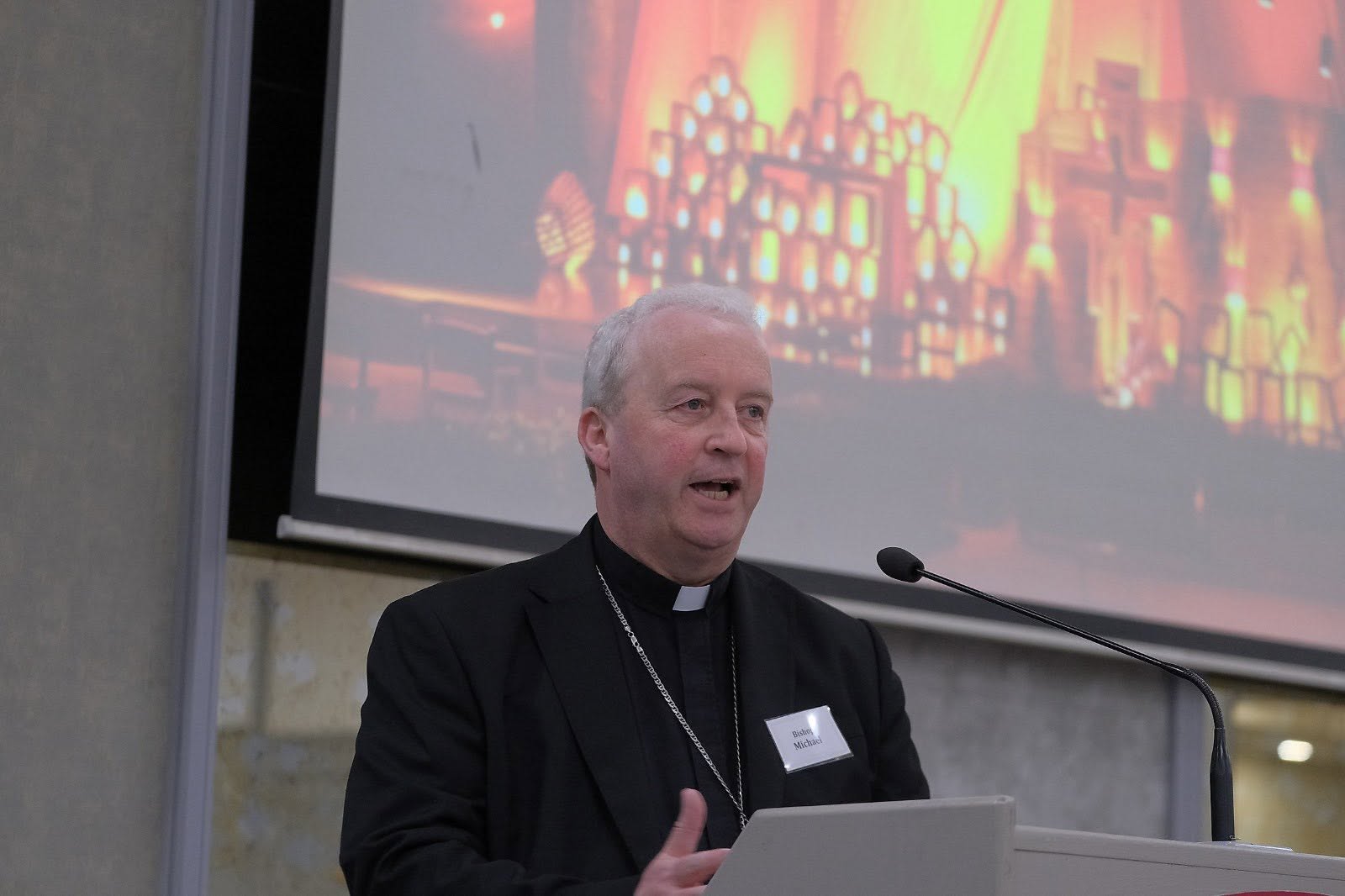
This weekend, 24th – 26th October 2025, Bishop Michael Router and members of the Diocesan Synodal Core Group are in Rome for the Jubilee of Synodal Teams and Participatory Bodies which represents a key moment in the Jubilee Year of Hope 2025.

Representatives from dioceses across the world are gathering in the Vatican for this special event, which celebrates those who serve on parish and diocesan synodal teams, pastoral councils, and other bodies that foster shared responsibility in the life and mission of the Church. The weekend will offer time for pilgrimage, prayer, reflection and renewal for all who help local Churches “walk together” in faith and service.

A Moment of Global and Local Synodality

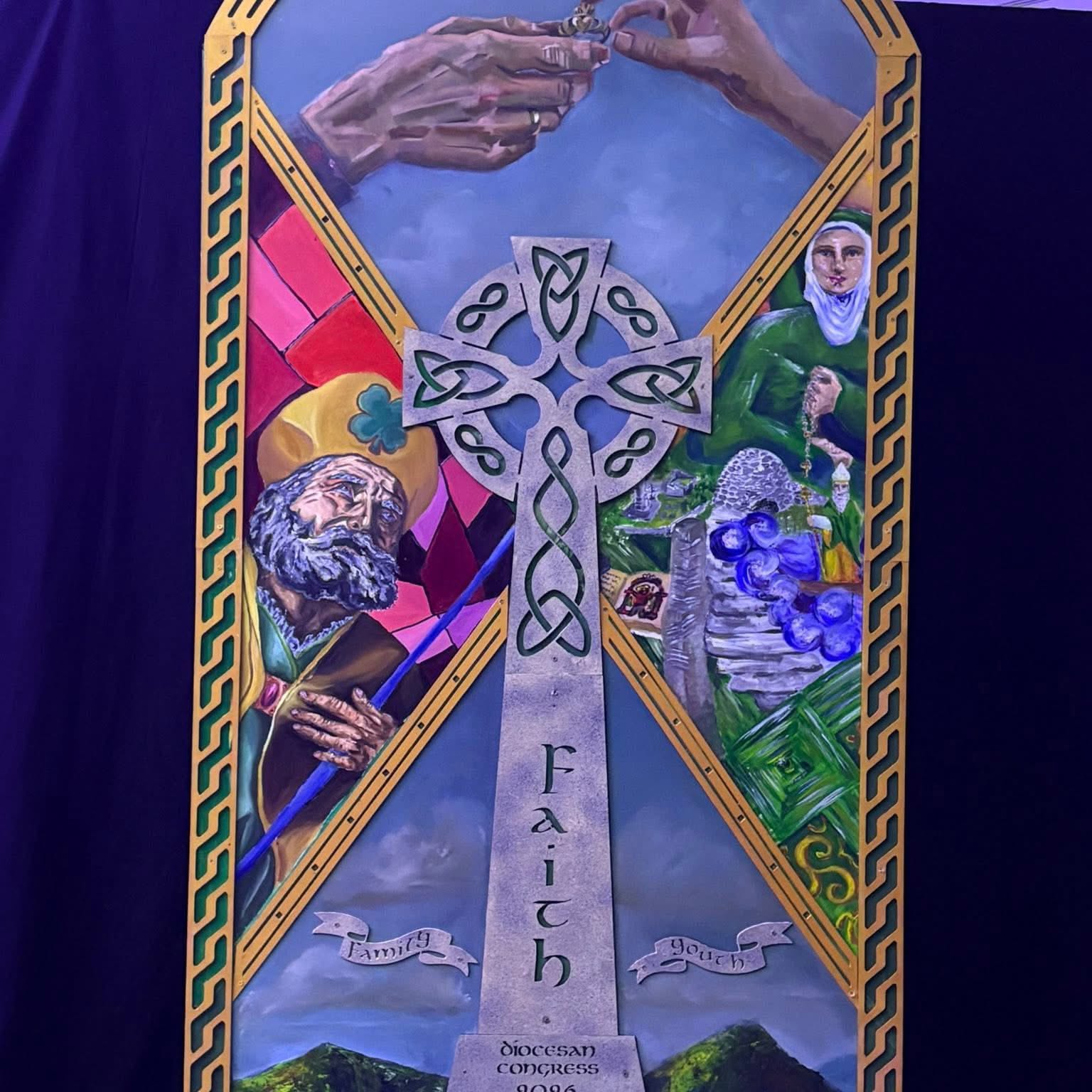
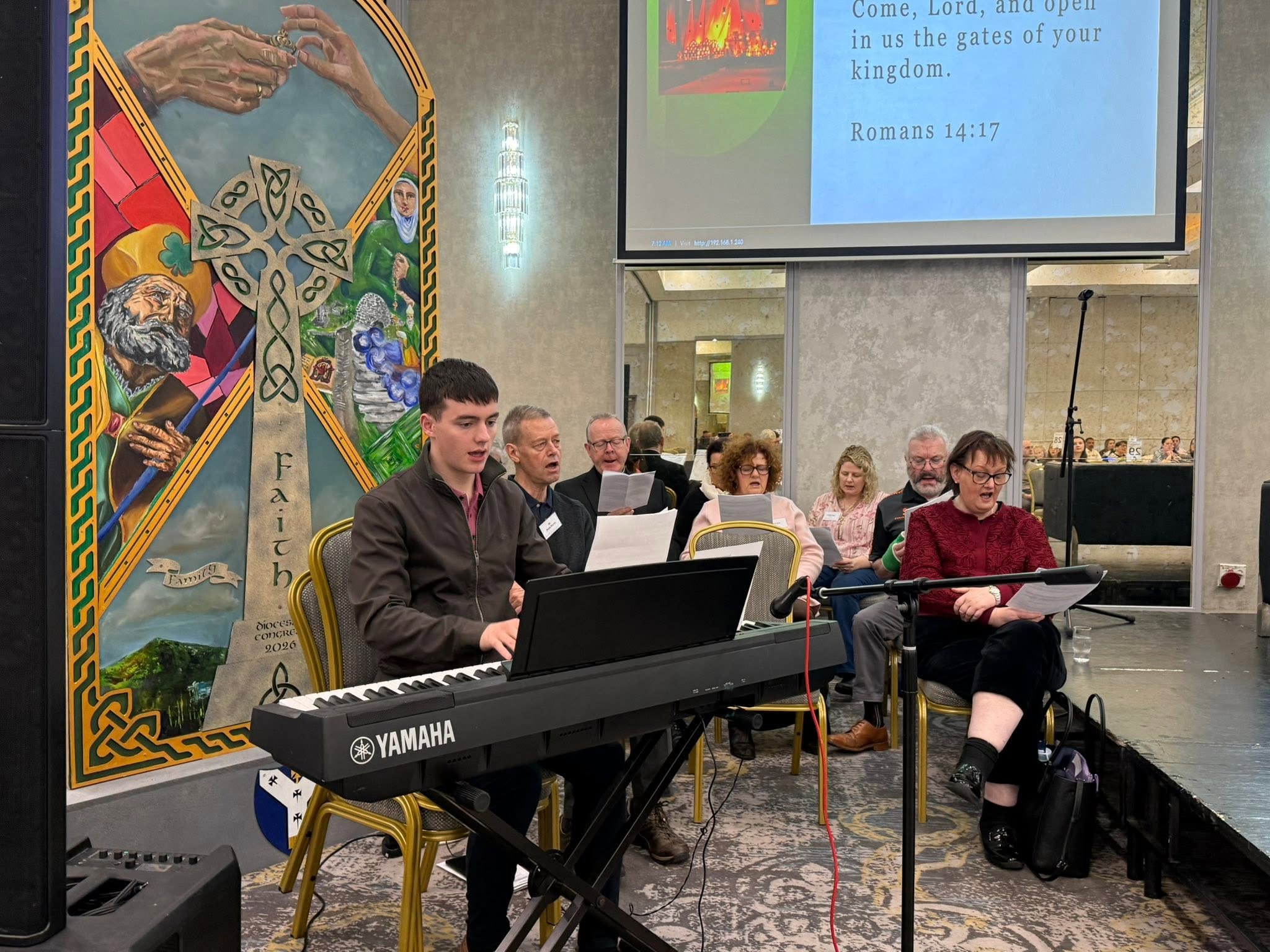
As the Archdiocese of Armagh joins this universal celebration by reflecting on our upcoming Congress on Youth, Family and Faith, participation by Bishop Michael and members of our Own Synod Core Group takes on a special significance. Back home, parishes throughout the Archdiocese are holding listening sessions during Autumn 2025 in preparation for the Diocesan Congress on Youth, Family and Faith, which will take place from 20th to 22nd March 2026 in the Armagh City Hotel.

The Congress, we hope, will be a time of renewal and reflection for our diocesan family, and will offer an opportunity to listen to the Holy Spirit and to one another as we explore the vital question:

“What can we do together, in our homes, schools, and parishes, to help young people and families grow in faith and come to know Jesus in a real and personal way?”

In Rome, Bishop Michael and our Synodal Core Group will join teams from across the world in reflecting on how local Churches can move from listening to action and more importantly from discussion to a space of renewed mission. Their pilgrimage through the Holy Door and participation in the Vatican’s “Conversation in the Spirit” sessions mirror what is happening across our own parishes in these months, where people are gathering to pray, to share hopes and challenges and to discern how God is calling us forward.

Walking Together: From the Jubilee to the Congress

The Jubilee of Synodal Teams reminds us that synodality is not just about meetings or consultation but about pilgrimage and conversion. Every listening session in our parishes, every conversation about youth and family, is part of that same pilgrimage.

As the Holy Father invites the whole Church to rediscover hope during this Jubilee Year, our Archdiocese is embracing that call through the theme of our upcoming Congress. The focus on Youth, Family, and Faith echoes priorities that have emerged from years of synodal listening in Ireland. It is the living heartbeat of our diocesan renewal.

While in Rome, Bishop Michael and our diocesan delegates will share their experiences and reflections and when they return we hope that the experience will help shape the final phase of our Congress preparation. The spirit of the Jubilee, humility, listening, encounter, and shared mission, will guide our next steps as we journey toward March 2026.

Get Involved

Parish listening gatherings are now underway across the Archdiocese, and all are welcome to take part. If you have not yet attended a session, you can share your thoughts online at:

https://forms.gle/ejKACLbCYTxNwouc8

Please also take home a copy of the Congress Prayer, or download it from the Armagh Prays website, and pray it daily for our young people, our families, and the renewal of faith in our Archdiocese.

https://www.armaghprays.com/


Bulletin Notice For Parishes

Diocesan Congress on Youth, Family and Faith
Next March, the Archdiocese of Armagh will hold a Diocesan Congress on Youth, Family and Faith in the Armagh City Hotel. All are invited to take part in preparing for this special time of renewal and reflection. Parish listening sessions are now underway to gather ideas and hopes for the future of our diocesan family. If you have not yet taken part, or are unable to attend one of these gatherings, you can participate online. Visit: https://forms.gle/ejKACLbCYTxNwouc8.
Please take home a copy of the Congress Prayer or download it from the Armagh Prays website, and pray it daily for our young people, families and for the renewal of faith in our diocese.


Prayers of the Faithful (for Masses on 25–26 October 2025)

Introduction:
Loving and ever-living God, we gather as your people of the Archdiocese of Armagh to pray for our Congress on Youth, Family and Faith in March 2026. Send your Holy Spirit upon us to inspire our reflections, guide our discussions, and renew our mission as Church.

  1. For our Bishops, Priests and Deacons:
    That, guided by the Holy Spirit, they may shepherd God’s people with wisdom, courage and compassion.
    Lord, hear us.

  2. For our Youth and Families:
    That they may discover joy and hope in the Gospel and be supported by our parishes in living as disciples of Christ.
    Lord, hear us.

  3. For our Parishes and Schools:
    That they may be places of welcome, prayer and learning, where faith is nurtured and shared with love.
    Lord, hear us.

  4. For those who feel separated from the Church:
    That they may know the embrace of Christ through our witness of hospitality and mercy.
    Lord, hear us.

  5. For the Lonely and the Sick:
    That they may find comfort and healing in God’s love.
    Lord, hear us.

  6. For our Deceased Loved Ones:
    That they may rest in the peace of Christ.
    Lord, hear us.

Closing Prayer:
Lord God, as we journey towards our Diocesan Congress, bless our youth, families, parishes and schools. Strengthen us to carry forward the mission of Christ with joy and courage, so that your Gospel may shine brightly in our Archdiocese.
Through Christ our Lord. Amen.

Statement of the Autumn 2025 General Meeting of the Irish Bishops’ Conference

Statement of the Autumn 2025 General Meeting of the Irish Bishops’ Conference

Members of the Irish Catholic Bishops’ Conference gathered this week in Saint Patrick’s College, Maynooth, for their Autumn 2025 General Meeting.  The President of the Conference is Archbishop Eamon Martin of Armagh, and the Vice-President is Archbishop Dermot Farrell of Dublin. 
 
On the first day, Archbishop Martin celebrated Mass as Gaeilge in Saint Mary’s Oratory, concelebrated by clergy, and with seminarians, staff of the National Seminary and of the Bishops’ Conference, in attendance.  Mass was offered for peace to become embedded in the Holy Land following the recent ceasefire in the Israel – Hamas war; for a cessation of the Russian war in Ukraine, and for people suffering in conflict zones throughout the world.

Bishops also prayed for members of An Garda Síochána injured during last night’s serious public disorder incident in Saggart, Co Dublin, and reiterated the call of the Gospel to all Christians to serve the common good by welcoming the stranger amongst us and living in harmony with all people.
 
Issues discussed by bishops during their Autumn General Meeting included:

  • Bishops express hope and pray for Peace in Gaza
  • Welcome of Pope Leo’s Dilexi te and impact on families of inflation
  • Mission Month theme: ‘Missionaries of Hope among the Peoples’
  • Irish Synodal Pathway
  • Vocations to the Priesthood
  • Safeguarding
  • Accord commissioned survey on marriage
  • Jubilee Year of Hope: (i) pilgrimages to Rome for young adults, and teachers (ii) Saint John Henry Newman
  • 1700th anniversary of the publication of Nicene Creed and Inter-Church meeting
  • Nostra Aetate: 60th anniversary of Vatican II document on inter-religious dialogue
  • In November we remember our dead in a special way through prayer
  • Catholic School Week 2026 theme: ‘Catholic Schools: Normal lives, Called to Holiness’
  • Trócaire: appointment of new chief executive Seán Farrell
  • 10th anniversary of Laudato Si’
  • In Memoriam

Statement:

  • Bishops express hope and pray for Peace in Gaza

Bishops said, “We share the hope of many that the recently negotiated peace agreement in Gaza, however fragile, will be the start of a comprehensive and lasting peace throughout the Holy Land.  We pray for a permanent end to war and that a period of rebuilding homes and lives.
 
“In welcoming the recent ceasefire and peace agreement, we pray that this first stage will be built upon for a lasting peace.  It is our sincere hope that much needed humanitarian aid, including food, water, medicines can reach the afflicted people of Gaza ‘without interference’ as the agreements states.  Furthermore, homes and infrastructure need to be rebuilt and families and communities need to be reunited.
 
“The international community has an obligation to maintain the momentum for a comprehensive and lasting peace.  In that respect, we note the recent statement by the leaders of churches in Jerusalem, including Cardinal Pizzaballa, voicing concerns about ‘the increasing violence against local communities in the West Bank in connection with settlement expansions there’, and hope that the international community will widen the scope of the current peace plan ‘to include an end of the Occupation of both the West Bank and Gaza, leading to the establishment of a Palestinian state living side-by-side in peace with the present State of Israel’ (Joint Statement of Leaders of Churches in Jerusalem, 15 October 2025).
 
“We note in particular the perseverance and example of the local Christian communities throughout this conflict, notably the Holy Family parish in Gaza, which have endured exceptional hardships during these past two years.
 
“This present fragile situation is only a beginning.  We ask everyone to continue to pray for the people of Gaza and the wider Holy Land, that they may experience a true and lasting peace, based on justice and tolerance and rooted in the God-given dignity of every human person.”
 
“We also pray for the over 68,000 who have lost their lives – including over 20,000 children – the displacement caused, the enormous work of rebuilding lives and infrastructure, and for those who have suffered so much.”

  • Welcome of Pope Leo’s Dilexi te and impact on families of inflation

Welcoming the publication on 9 October of Pope Leo XIV’s first Magisterial document, the Apostolic Exhortation entitled Dilexi te on love for the poor, bishops stated:
 
Dilexi te was commenced by the late Pope Francis RIP, and Pope Leo has made it his own.  This accessible document, which we encourage all to read, is a meditation on the call from Jesus, and from the Church over the centuries, to love and care for the poor.  It is an invitation to prayer and action.  It speaks of the ‘structural causes of poverty’, refers to ‘social sin’ and ‘structural sin’ and it asks us to reflect on why people are poor.  It references migration and care of creation and calls on Christians not to succumb to secular ideologies or political and economic approaches that lead to generalisations.  In essence, Pope Leo calls for a sense of mission in listening to and accompanying the poor, which includes people with all kinds of poverty – economic, cultural, social, spiritual etc.  The Holy Father declares that, ‘Serving the poor is not a gesture to be made ‘from above’, but an encounter between equals, where Christ is revealed and adored… Therefore, when the Church bends down to care for the poor, she assumes her highest posture’ (Dilexi te 79).”
 
The bishops offered a call to action: “In this respect, it is important that parishes and other communities across Ireland engage with this document as part of Catholic Social Teaching.  The issues that Pope Leo refers to are visible all around us in Ireland today.  Despite the apparent economic buoyancy of the Irish economy, it is obvious that many people and families are still struggling to make ends meet due to high energy and food costs, and the housing crisis across the island of Ireland.  RTÉ reports this week that data released by the global market research company, ‘Worldpanel by Numerator’, indicates that grocery price inflation here has increased to 6.5%, while the Central Statistics Office has measured overall inflation at 2.7%, an eighteen-month high.  The Government’s ending of one-off payments for energy in Budget 2026, amid continuing rising fuel costs, will adversely affect the discretionary spending of the majority of working families, with a disproportionate impact on low-income households, who have been forced into making difficult quality of life choices.”

  • Mission Month theme: ‘Missionaries of Hope among the Peoples’

Having celebrated World Mission Sunday on Sunday, Mission Month continues throughout October.  Bishops extended their heartfelt gratitude to all who supported the Mission Sunday appeal with such generosity.  Across the country, parishes came together in prayer and solidarity with missionaries who are serving the young Church, in some of the world’s most vulnerable communities.  Through spiritual and practical support, the faithful responded with compassion and commitment to the 2026 theme chosen by Pope Leo XIV ‘Missionaries of Hope among the Peoples’.  Reflecting on the Irish Church’s long missionary tradition, bishops stated, “The remarkable generosity shown by the people of Ireland is a powerful witness to our deep and enduring connection with the missionary Church.  For generations, Irish men and women have carried the Gospel to the farthest corners of the world – today, that same spirit lives on in the prayerful and practical support offered by missionaries who continue this vital work.”   Contributions can be made on www.missio.ie

  • Irish Synodal Pathway

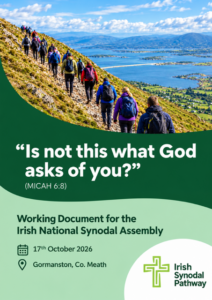
Bishops reflected with gratitude on the positivity and progress made during the Pre-Synodal Assembly held on 18 October in Kilkenny.  There was a strong sense of community, shared purpose, and collective wisdom as delegates from across the island discerned how the seven national priorities can best be approached in the year ahead.  Bishops affirmed that next steps will require resourcing and the continued embedding of synodality as a normal way of discernment in every parish and diocese.  Bishops expressed hope that local Church communities will become true ‘laboratories of synodality’ ready to come to next year’s National Assembly having undertaken, even if imperfectly, to live and learn the synodal way. The seven priorities are:
 

  1. Belonging: fostering a Church of welcome, inclusion, and safety where each person finds a home in community and in Christ.
  2. Co-responsibility and Lay Ministry: empowering all the baptised, women and men, to share responsibility for leadership and mission through new models of ministry and decision-making.
  3. Family: supporting the domestic Church as the primary place of faith transmission and belonging, and strengthening its connection with parishes and schools.
  4. Formation and Catechesis: deepening faith through lifelong formation that is Christ-centred, experiential, and equips the baptised for discipleship in today’s world, rooted not only in learning but also in liturgy and sacramental life, so that prayer and worship become living sources of faith, understanding, and mission.
  5. Healing: acknowledging wounds, especially those caused by abuse; committing to accountability, justice, and reconciliation; and ensuring safe spaces for survivors and all who carry pain.
  6. Women: recognising and including women’s gifts, leadership, and co-responsibility at every level of Church life, as a matter of justice and credibility.
  7. Youth: engaging young people with authenticity, offering them meaningful roles in leadership and mission, and listening to their hopes and challenges. 

Looking ahead, bishops agreed that an awareness campaign for Baptised and Sent – the document prepared for delegates attending the assembly – focused on priests, parishes, councils, ecclesial movements, and religious groups, will be organised to communicate these seven priorities in accessible formats.  
 
New logo unveiled for the Irish Synodal Pathway
The Irish Synodal Pathway has unveiled its new logo (see collage).  The design is theologically rich, spiritually resonant, and distinctly Irish.  Rooted in Christian and Celtic heritage, the final design centres on Saint Brigid’s Cross, within which a pathway is traced to symbolise our shared synodal journey as a Church that listens, learns, and walks together.  The flowing lines suggest openness, dialogue, and movement, while the two shades of green evoke the Irish landscape and the themes of life, renewal, and growth.  The logo invites everyone to see themselves within it.  Timeless yet contemporary, it embodies an Irish expression of communion, participation, and mission – holding together faith, tradition, and transformation in an unfolding journey guided by the Holy Spirit.

  • Vocations to the Priesthood

‘Come and See’ weekend for Vocations to the Diocesan Priesthood
Following July’s ‘Come and See’ weekend in Knock for men: contemplating a vocation; wishing to learn more about the life and ministry of a diocesan priest; and, seeking to gain insight into seminary formation, as well as the September meeting of vocations directors that was addressed Archbishop Christopher J Coyne, Archbishop of the Diocese of Hartford, who led a his vocations team from Connecticut, USA, bishops welcomed the upcoming Come and See’ retreat on 22/23 November in Maynooth, and offered prayers for its success.
 
Launch of Priesthood in Ireland Today
Bishops attended the publication of Priesthood in Ireland Today, which was launched by Senator Rónán Mullen in Saint Patrick’s College.  At the launch, the editor, Bishop Alphonsus Cullinan of Waterford & Lismore, and chair of the Bishops’ Council for Vocations, said, “This is a book about priesthood in Ireland today seen from sixteen different perspectives.  The purpose of the book is to clarify and give new heart to priests who on a daily basis spend themselves in service of their people.  In these synodal times, maybe some priests feel that they are no longer relevant, and that their role is merely a functional one which can be more or less equally undertaken by lay people.  The contributors to Priesthood in Ireland Today are mainly priests, while there are also very beautiful and valuable insights from religious and married faithful.  These contributions in no way exhaust the myriad of views on priesthood that exist today.  In leafing through these chapters, the reader will find tensions and differences of opinion but this mirrors the actual situation of lived ministry on the ground.  It is my dear hope that the book may contribute to the current discussion about priesthood, and underlines the vital role of the priest that he will always play in the Church.”

  • Safeguarding

Mr Aidan Gordon, CEO, and Dr Keith Holmes, Chair of the National Board for Safeguarding Children in the Catholic Church in Ireland, informed bishops that a third round of ‘Independent Reviews of Child Safeguarding Practice’ will begin in 2026.  NBSC staff are currently working on a methodology for the reviews which will again involve external independent safeguarding experts and which will examine all aspects of child safeguarding in dioceses and congregations.
 
Bishops thanked the National Board for its conference in Athlone, in September, on the theme, ‘Towards a Restorative and Transitional Justice Approach to Engaging with Victims and Survivors of Abuse in the Catholic Church in Ireland’, which  provided an important opportunity for Church representatives to hear directly from survivors on how healing for everyone impacted by the scandal of abuse might be helped through the use of innovative and compassionate methods of engagement.  An outcome from the conference was that, while progress has been made, more is needed in order to respond to the Gospel call for justice towards those who have been harmed.

  • Accord commissioned survey on marriage

Bishops reflected on the Sacrament of Marriage and commended the great work of priests and Accord Facilitators who provide programmes to prepare couples for marriage.  Bishops said, “Getting married in Church is a covenant for life between spouses whereby they confer the Sacrament on each other in the presence of Our Lord and the community, witnessed by the priest solemniser.  The couple’s commitment to each other is a sign to the community of God’s grace and presence in their lives.” 
 
Bishops were advised of Accord clg commissioned market research on marriage, undertaken in August 2025 by Amárach, which found that, amongst non-married Catholics:
– 60% would want to get married in Church;
– 53% were not aware that it is possible to have a marriage ceremony in Church without  Mass;
– 77% of respondents were not aware that people who are already married civilly may, at a later date, become sacramentally married in the Church, in a marriage ceremony known as convalidation. 

  • Jubilee Year of Hope: (i) pilgrimages to Rome for young adults, and teachers (ii) Saint John Henry Newman

Young adults
Bishops welcomed the very positive evaluation from Irish participants at the Youth Jubilee of Hope pilgrimage in Rome, in July, and the Irish catechesis provided for Irish pilgrims.  The Pontifical Irish College in Rome was commended for its outstanding contribution.  The main challenge identified was how to translate the experience into local parish and diocesan life.  

Bishops were informed that over 800 young people from across dioceses, movements and groups gathered in Rome for the Jubilee of Youth and engaged in the Catechetical programme, an Irish gathering in the Irish College, and events that were offered by a national team of organisers, chaired by Bishop Fintan Gavin of Cork and Ross.  This fostered a strong sense of identity among the Irish young adult pilgrims, while also connecting them to the wider reality of young adults from around the world seeking to enrich their faith.

A follow-up survey was sent to both youth participants and pilgrimage leaders.  The feedback was rich, encouraging and complimentary of the pilgrimage as a whole, and of the spiritual, liturgical, musical and catechetical offerings it gave young pilgrims.  Some quotes from the survey included:
– “I just want to say that I am so grateful for being able to have gone on this pilgrimage at this age.  Because I will really hold what was a once in a lifetime opportunity.  And it happened at the best time in my life because I find with college, work and a busy lifestyle, it was the perfect reset that I and my faith needed” (young adult).  And,
– “I felt that the Irish coming together for a programme was very important and impactful for the overall pilgrimage.  Coming together and building community is so important, often young people feel that are quite alone and isolated in their local parish setting so broadening their horizons and showing them what is beyond their bubble was important” (pilgrimage leader).

A follow-up meeting was held online with pilgrimage leaders to pray, gather additional feedback and conclude the event.  The real challenge expressed by the leaders was about how we build on this and consolidate it going forward.

Teachers
At Mass in Saint Mary’s Oratory during the Bishops’ Autumn General Meeting, Bishop Paul Connell of Ardagh & Clonmacnois and a member of the Bishops’ Council for Education, delivered the homily, during which he said, “I was forcibly struck during the Young Teachers’ Pilgrimage to Rome, in July, which was supported by bishops and comprised teachers from dioceses in Ireland, England, Scotland and Denmark, most of whom were qualified only in the last few years.  The teachers did not know each other when they began the pilgrimage.  It was a joy to watch how they jelled together and realised that they had permission to be themselves and celebrate their faith in an atmosphere that was so affirming.  The absolute pinnacle was the audience with the Holy Father, Pope Leo XIV, who met them individually.  It was transformational for each and every one of them.  In a society which no longer values Church attendance and practice of the faith, we need to find new and inspirational ways to enable – particularly our young people – to experience together the richness of God.”

Saint John Henry Newman
As part of the Jubilee of Hope for Education, on 1 November, the Feast of All Saints, Saint John Henry Newman will be made a Doctor of the Church by Pope Leo XIV in Saint Peter’s Basilica.  There will be strong Irish representation, including Bishops Breandán Leahy of Limerick, Paul Connell of Ardagh & Clonmacnois, Fintan Monahan of Killaloe, along with Rev Dr Eamonn Conway and other Irish pilgrims.

To be conferred with the title Doctor of the Church is a rare event.  There have only been 38 of them in the two millennia of the history of the Church.  They are conferred on individuals who have made an exceptional contribution to our understanding of the faith by their work and insights and such is the case with John Henry Newman.
 
Bishops reflected on the strong links with Newman in the Irish Church, as he was invited by the Irish bishops in the 1850’s to found the Catholic University in Dublin which later became University College Dublin and, as part of the great legacy, there is the beautiful Newman Church on Saint Stephen’s Green, Dublin.
 
Newman was  ahead of this time and many of his ideas became key or core themes of the Second Vatican Council and the current Synodal Pathway, the importance return to the scriptures, the development of doctrine, the primacy of conscience, consulting the faithful, a fully educated and well informed laity.

  • 1700th anniversary of the publication of Nicene Creed and Inter-Church meeting

Bishops reflected on the 1700th anniversary of the publication of Nicene Creed, whose origin, in 325 AD, arose from Emperor Constantine convening the First Council of Nicaea to settle a major dispute about the identity of Jesus Christ.  A priest and theologian named Arius taught that Jesus was not truly God but an exceptional human.  Bishops at that time clarified the matter and affirmed that Jesus is fully God and fully human—“one in being” with the Father.  To express this belief clearly, the Council composed a creed, a concise statement of Christian faith.
Early Christians preparing for baptism already used short creeds, but by the fourth century these became centred on stressing belief in the Father, the Son, and the Holy Spirit, following Matthew 28:19.  The Nicene Creed, written at Nicaea and expanded in 381 AD, remains the most important summary of Christian faith, expressing what we believe about God, Jesus, the Holy Spirit, the Church, and eternal life.  Although composed in the fourth century, it was not recited at Mass until the fifth, beginning in the Eastern Church.  This year, Christians worldwide celebrate the Creed’s 1700th  anniversary, honouring its lasting power to unite Catholics, Orthodox, and Protestants in one faith and to strengthen our shared relationship with God.
 
Irish Inter-Church Meeting
On 13 and 14 November, the annual Irish Inter-Church Meeting will take place in the Dromantine Retreat and Conference Centre, Newry, Co Down, Diocese of Dromore, on the theme ‘Nicaea 1700: Strengthening our Witness and Unity’.  A number of bishops, Catholic clergy and lay people will attend this ecumenical gathering which, this year, also celebrates one of the first Church councils, Nicaea in 325 AD, that drew together a diverse assembly from the entire Christian world to produce the Nicene Creed.  The keynote speaker in Dromantine will be Archbishop Angaelos OBE, the Coptic Orthodox Archbishop of London.

  • Nostra Aetate: 60th anniversary of Vatican II document on inter-religious dialogue

On 28 October next, the universal Church will mark the 60th anniversary of the promulgation by Pope Paul VI of Nostra Aetate, the Vatican II document on inter-religious dialogue.  Written in the first place in the light of the Shoah, and the recognition of the need for the Catholic Church to reform its relationships with the Jewish people, Nostra Aetate also went on to speak of outreach to other religions.  It marked a very significant moment in the life of the Catholic Church. 

Bishops expressed their gratitude for the many fruits of Nostra Aetate in terms of contacts established and
Dialogues, studies and initiatives.  There has been progress in the very understanding of the notion of Dialogue and of its various modes of interpretation.  Four levels of dialogue are commonly presented: the Dialogue of life; the Dialogue of co-operation; the Dialogue of religious experience; academic Dialogue.  The Dialogue of life happens in the workplace, at school and in the day-to-day relationships in local neighbourhoods.  It is made up of everyday simple experiences of contact between people of different religious traditions.  It is not to be underestimated in the context of a rise in racism.  The Dialogue of life is fostered particularly in and around Catholic schools attended by many of different traditions.  As well as providing the occasion for children and their parents to meet one another, students are introduced to elements of the main religions as part of the religious education programmes.  Aiveen Mullally of the Marino Institute of Education, Dublin, has produced a text entitled: Guidelines on the Inclusion of Students of Different Beliefs in Catholic Secondary Schools.  There is a number of inter-faith networks around Ireland promoting understanding and co-operation.  Missionary religious orders and ecclesial communities also engage in promoting inter-religious contact. 

  • In November we remember our dead in a special way through prayer

Bishops said, “November is a time for remembering and praying for our loved ones who have gone before us in the hope of Resurrection.  It is a time when we are particularly conscious of those in our parishes who are grieving and all those families who have lost loved ones in the past year.  We mark this time of year in our parishes with events like the blessing of the graves, the celebration of remembrance services as well as commemorating, on Saturday 1 November, All Saints’ Day and, on Sunday 2 November, All the Faithful Departed (All Souls’ Day).  We invite the faithful to unite in prayer throughout the month of November in remembrance of our dead.  Ní imithe uainn atá siad, ach imithe romhainn.  They are not gone from us, but gone before us.

  • Catholic School Week 2026 theme: ‘Catholic Schools: Normal lives, Called to Holiness’

Bishops had a general discussion on education, and commended the theme for Catholic School Week 2026, ‘Catholic Schools: Normal lives, Called to Holiness’, which will be celebrated in schools across the island of Ireland from 18 to 24 January 2026.  Bishops stated, “God has blessed us all with gifts to make the world a better place.  Catholics are also called to holiness, which simply means: bringing God’s love into our actions every day.  Catholic school communities nurture students to help them realise their full potential, and to put their gifts at the service of others, following the example of Jesus.  We offer our blessing to primary and secondary students, staff, parents and grandparents who planned and will participate in Catholic Schools Week 2026.”
 
The theme of Catholic Schools Week is structured to reflect a key Gospel value each day:
– Monday: Called to Holiness through Prayer
– Tuesday: Called to Holiness through Love and Friendship
– Wednesday: Called to Holiness in Family Life (Grandparents’ Day)
– Thursday: Called to Holiness through Courage and Service
– Friday: Called to Holiness through Joy and Service
 
Resources for Catholic Schools Week are available on catholiceducation.ie  #Catholic Schools Week  #CSW2026

  • Trócaire: appointment of new chief executive Seán Farrell

Bishops welcomed the appointment of Seán Farrell, on 1 October, as the new chief executive of Trócaire, the overseas development agency of the Bishops’ Conference, established in 1973.  Seán succeeds Caoimhe de Barra who, after twenty-five years with Trócaire, left in June to take a role with the Irish Human Rights and Equality Commission.  Seán’s career spans more than thirty years in development including over twenty years with Trócaire, six of those as Director of the International Division.  Most recently Seán was the Deputy Head of Mission at the Irish Embassy in Hanoi, managing development programmes across Vietnam, Cambodia and Laos.  Seán has spent nearly fifteen years living in and working on humanitarian and development programming in Asia and Africa.
 
Bishops prayed for the happy repose of the soul of Noreen Gumbo RIP, Trócaire’s former Director of Global Programmes, who died in April, for her grieving husband Mudambi Ernest and children Michael, Nyasha and Adrian, and for the entire Trócaire community who are mourning Noreen’s loss at this time.

  • 10th anniversary of Laudato Si’

On the tenth anniversary of the publication of the best selling Encyclical Letter by Pope Francis RIP, Laudato Si’ (Praised Be) on Care for Our Common Home, bishops welcomed Pope Leo XIV’s statement that Laudato Si’  is “even more relevant today”, which the Holy Father said during his address on the occasion of the tenth anniversary gathering of the Laudato Si’ Movement’s ‘Raising Hope’ Conference in Rome (1-3 Oct 2025).  Bishop Martin Hayes of Kilmore was one of the international line-up of speakers in his capacity as Coordinator of Laudato Si’ for the Irish Catholic Bishops’ Conference.

  • In Memoriam

Bishops offered prayers for the repose of the soul of Father Dermod McCarthy RIP, following the announcement of his death today.  Father McCarthy was ordained a priest for the Archdiocese of Dublin in 1966, was a former administrator of Saint Mary’s Pro Cathedral, Dublin, and had been appointed as consultor to the Pontifical Council for Social Communications of the Holy See.  Along with Father Joseph Dunn, Father Desmond Forristal and other Dublin priests, Father McCarthy was part of the pioneering religious and social documentary ‘Radharc’ team that filmed from 1961 to 1996 in Ireland, Brazil, Africa, Japan, the Philippines, Korea, Hong Kong, and many other countries.  He was a long serving Editor of Religious Programmes in RTÉ, and latterly served as chaplain to staff at the national broadcaster. 
 
Seoladh leabhar Cuimhní ar Bhreandán Ó Doibhlin, Sagart, Scríobhnóir, Fealsúnaí, Diagaire agus Scoláire aréir i gColáiste Phádraig, Má Nuad. De Forti Dulcedo an t-ainm atá ar an saothar.  Tracey Ní Mhaonaigh agus Tadhg ó Dúshláine a d’eagair.  Bhí an-óiche ag an slua mhór a bhí i láthair ag malartú scéalta agus cuimhní ar an bhfear uasal.
 
Go Ionraí solas na bhflaitheas orthu.

Hopefest – A Day of Praise and Worship

HOPEFEST

In a world often filled with uncertainty, we gather together to lift our voices in praise, listen to powerful testimonies of God’s faithfulness, and be inspired by messages of hope.

Through heartfelt worship, moving talks and real-life stories, this event invites everyone, no matter where they are in their faith journey, to experience the joy and peace that come from trusting in Jesus Christ.

Date: November 15            

Time: 3pm to 9pm

Location: Ardee Parish Centre

Click Here to Register


“The Word of God is not chained.” – Bishop Michael Router Speaks on the 50th Anniversary of St. Oliver’s Canonisation

Bishop Michael Router’s Homily on the 50th Anniversary of the Canonisation of St. Oliver Plunkett

St. Peter’s Church, Drogheda, Sunday 12th October 2025


Text of Bishop Michael’s Homily

Saint Paul tells us in today’s second reading that preaching Christ can mean imprisonment and chains for the preacher, but “the word of God is not chained.” St. Oliver Plunkett knew this truth well during his life. As archbishop he confirmed thousands, rebuilt discipline in the diocese, settled conflicts, and then, falsely accused, was dragged from Ireland to London, condemned and executed. His hands were chained but his heart and mind was not. Like Paul, he endured his suffering for the sake of the faithful, so that others might obtain “the salvation that is in Christ Jesus, with eternal glory”

After St. Olivers conviction on fabricated charges and his martyrdom at Tyburn in 1681, his name faded from public memory here in Ireland. Yet the light of his memory was kept burning in small but significant ways. Here in Drogheda’s Siena convent, in the Irish College in Rome, among Benedictine communities in England and Germany he was never forgotten until, in 1886, Pope Leo XIII declared him Venerable. This reawakened and renewed interest in him, and his story. Studies confirmed his exemplary character and his death for the faith. In 1920, in the middle of the turmoil of our War of Independence, Pope Benedict XV beatified him and his devotion blossomed among a people longing for peace. His feast day the following year was celebrated just as the Truce of July 1921 took effect. Many people took that timing as providential encouragement to keep praying and to keep hoping for a better future for Ireland.

In 1958 a sign was received that opened the door to canonisation for Oliver. Far away in Naples, an Italian mother, Giovanna Martiriggiano, whose surname incredibly is derived from the Italian word for Martyr, was at the point of death, and effectively given no hope by her doctors, after the loss of her child. Through the night her husband prayed with Sr Cabrini Quigley of the Medical Missionaries of Mary, another connection with Drogheda, invoking Blessed Oliver. Against all expectation, she revived and made a full recovery without further intervention. Panels of independent doctors examined the case and eventually the Church judged it a miracle through Oliver’s intercession. Years later, Giovanna participated in the offertory procession at the canonisation itself.

In the Holy Year of 1975, during some of the darkest days of the Troubles, Paul VI canonised Oliver Plunkett and, from the heart of the Church, spoke to Ireland asking us to let the message of peace and reconciliation be emblazoned on our hearts. That is why, ever since, we invoke St. Oliver as patron of peace and reconciliation in this land.

As the Holy Father said in his address that day: “In St. Oliver Plunkett’s pastoral activities, his exhortation had been one of pardon and peace … he would not compromise with truth or condone violence: he would not substitute another gospel for the Gospel of peace. And his witness is alive today in the Church, as he insists with the Apostle Peter: Never pay back one wrong with another … From Jesus himself he had learned to pray for his persecutors and with Jesus he could say: Father, forgive them.”

Ireland has received many gifts through Oliver’s intercession, moments of ceasefire, steps toward dialogue, an unflagging witness that forgiveness is stronger than hatred. On this anniversary we return, like the grateful Samaritan in the gospel today, to fall at Jesus’ feet and say: thank you. Thank you for providing us with such a shepherd whose blood watered the seeds of peace in our soil.

In the decades that followed his canonisation, devotion at this shrine drew pilgrims to pray for what politics alone struggled to deliver. The long path to the Good Friday Agreement was walked, however imperfectly, in the spirit the Oliver embodied himself: courage, patience, and forgiveness.

The peace that St. Oliver and so many like him have strove for over the centuries is not to be taken for granted. It has to be constantly worked at and renewed by being honest in all our dealings, respecting the dignity of others, and choosing mercy when it would be easier to strike back.

What then can we do to keep the legacy of St. Oliver alive? The Gospel today gives us two suggestions. Firstly, always keep returning to Jesus with thanks. Come to him in the Eucharist naming the ways you see God at work in your family, parish, and even in your most challenging and difficult moments. Gratitude for what is good and wholesome in our life changes the way we think, speak and act and magnifies the positive.

Secondly, accept the cost of being faithful. Our witness to God through word and example is not always welcome, particularly when we are witnessing to the sacredness of life and defending the poor and vulnerable. To repeat what St. Paul tells us today, “the word of God is not chained.” When dialogue breaks down, when suspicion and distrust rises, when old negativity returns, choose to keep talking, keep praying, and keep building. Ask Saint Oliver to help you be just and fair, especially in dealing with those you find hardest to love.

Finally, remember that God’s work is evident in ordinary people who keep saying yes to his prompting in their lives. On this fiftieth anniversary of his canonisation, we entrust Ireland again to Saint Oliver Plunkett, martyr, pastor, and servant of peace. An anniversary, like today’s, is not just about the past, about history. The Church here, and throughout western Europe faces real challenges, fatigue, confusion, and many competing voices in these difficult times. The answer is not nostalgia. It is renewed discipleship. We need new Olivers to emerge in this parish and country to work to re-kindle the faith where it has withered and died. May St. Oliver pray for us, so that we endure with Christ, and do our part to establish his kingdom on earth.

+Bishop Michael Router

Auxiliary Bishop of Armagh