Sunday, February 8, 2026
Home Blog Page 2

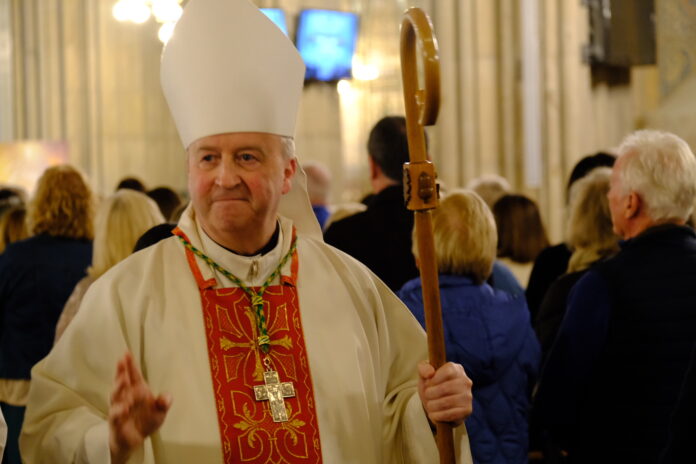
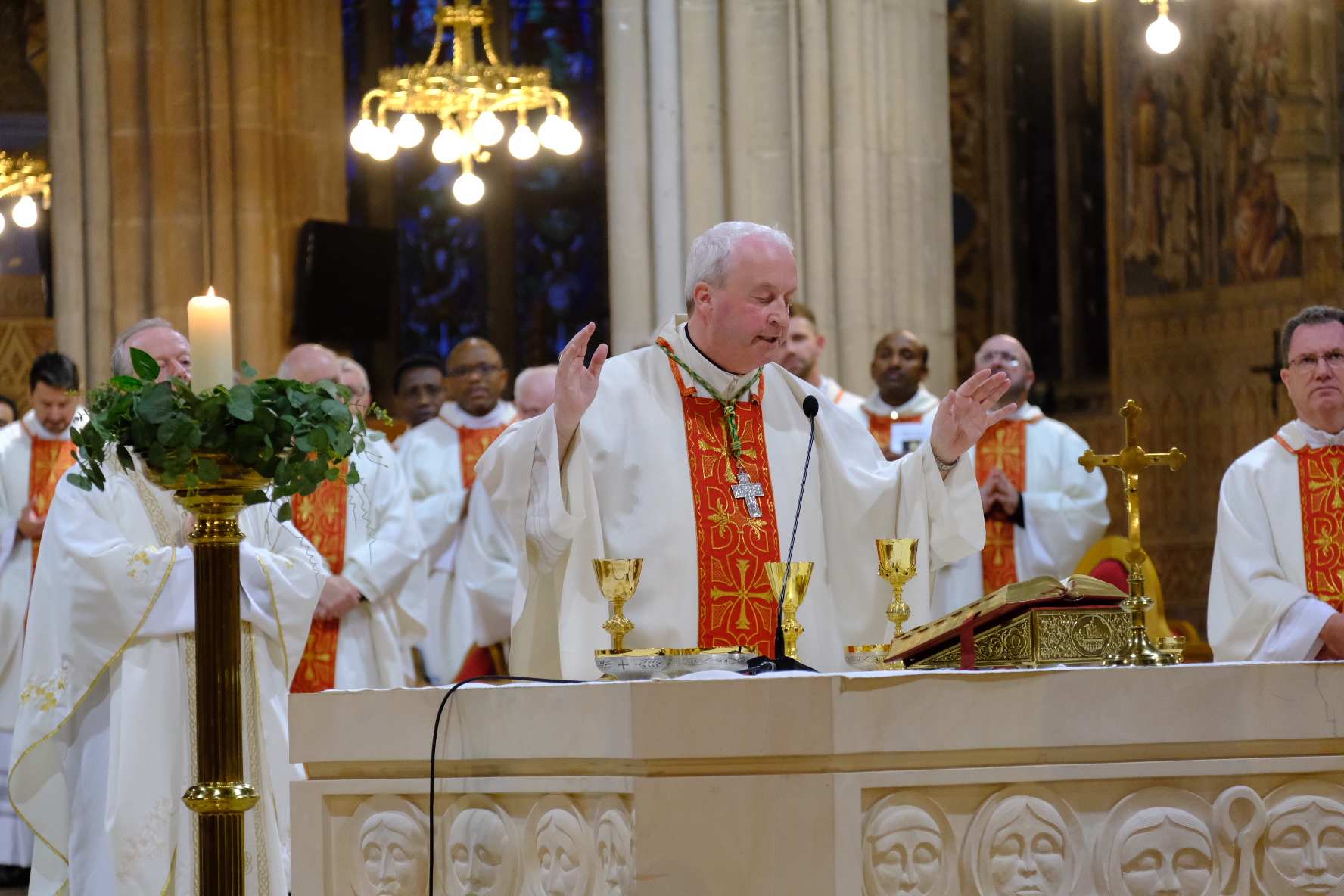
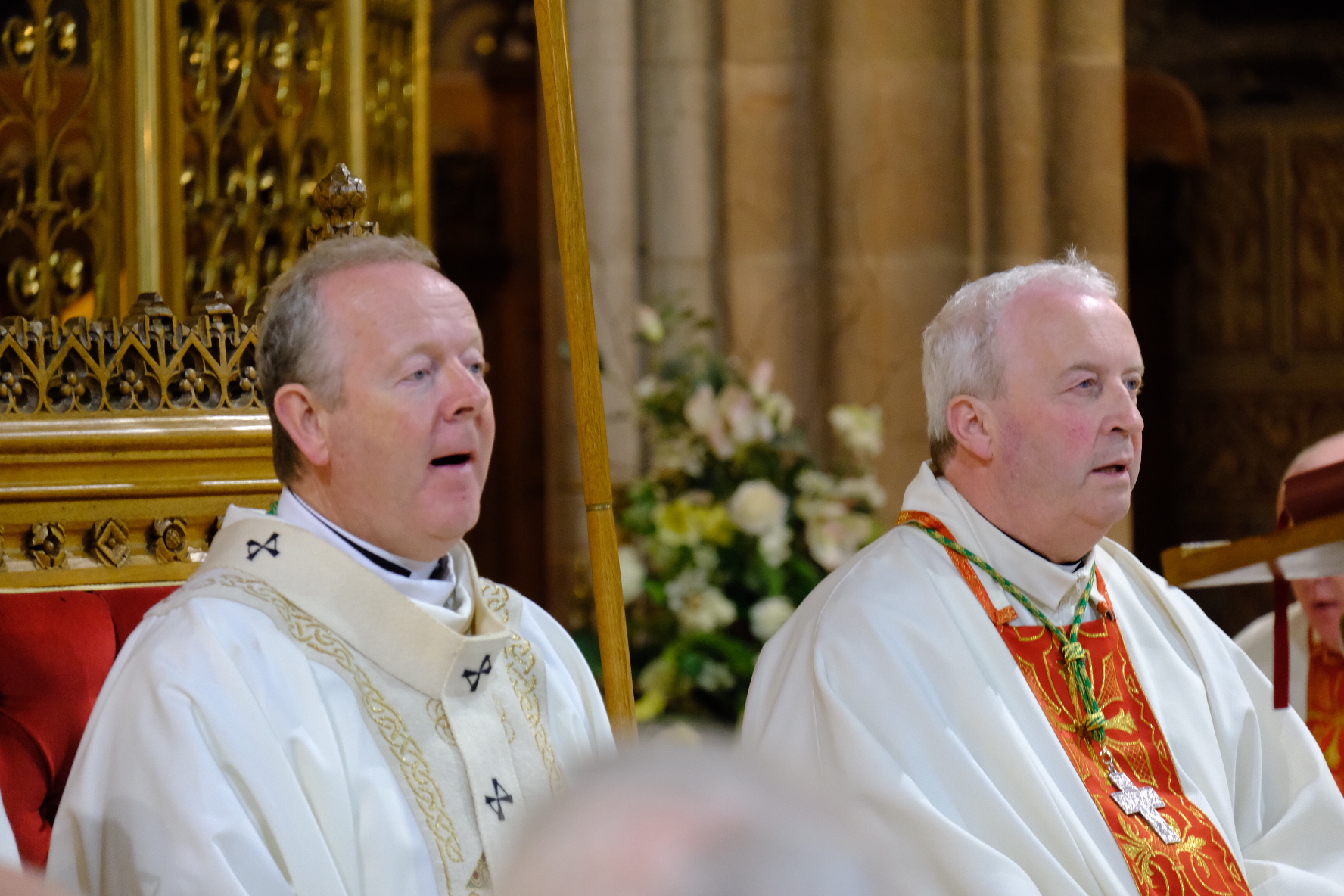
Bishop Michael’s Christmas 2025 Homily – “The Gift That Costs Everything”

“The Gift That Costs Everything”

Photo: Stained Glass Window from the Church of the Nativity Bethlehem

“The spirit of Christmas is not just for a season but a way of life – a call to sacrificial love without counting the cost.”

Bishop Michael Router


Text of Bishop Michael’s Christmas 2025 Homily

The Happy Prince written by Oscar Wilde is a short story that captures very well the spirit of Christmas. It tells the story of a magnificent golden statue of a young prince that stands high above a city. When the Prince was alive, he lived a sheltered life of luxury within the palace walls and never saw human suffering. After his death, his statue is placed on a tall column and from this vantage point he finally witnesses the poverty, misery and injustice endured by his people.

A little swallow, on his way to Egypt for the winter, stops to rest at the statue’s feet. The prince persuades the Swallow to stay and helps him to relieve the townspeople’s suffering. He asks the bird to little by little pluck the jewels and gold leaf from his body and deliver them to those in need. As the Prince gives away all he has, his statue becomes dull and bare, while all the time the swallow grows increasingly devoted to him and to the mission he has been given.

When winter arrives the swallow does not fly away or neglect his duty. He is, unfortunately, unable to survive the cold and dies at the prince’s feet. In his sorrow, the Prince’s leaden heart breaks in two. Declared ugly and useless by the city council, the statue is melted down and the broken leaden heart and the lifeless body of the swallow are thrown on the rubbish heap.

In heaven God instructs one of his angels to bring him the two most precious things in the city and the angel brings back to him the broken heart and the dead bird. “You have chosen rightly,” said God, “for in my garden of Paradise this little bird shall sing for evermore and in my city of gold the Happy Prince shall praise me”.

This story captures the essence of Christian love: sacrificial giving without counting the cost. The Good News we celebrate today is that God has modelled this sacrificial love for us. He has entered our world, not as a distant ruler cloaked in majesty, but as a newborn child lying in a manger, crying like any other infant, vulnerable and dependent on human care.

We celebrate this divine gift because it opens for us the way to eternal life. Jesus’ birth is not simply a beautiful story from long ago; it is God’s embrace of our suffering, our weakness, our brokenness. He identifies with the poor, the lowly shepherds who first heard the angels’ song, and He remains present in all who suffer and struggle today.

And yet we know that the world continues to be fractured by poverty, inequality, war, violence and indifference to the suffering of others. We see a world where a tiny minority controls an overwhelming share of wealth, while billions struggle for basic necessities. According to global wealth data, the top 5% of the world’s population own around two thirds of the global wealth, while the bottom 50% owns just about 2% of its resources.

This is not a statistic to be dismissed easily. It reflects a moral and spiritual crisis. When so few hold so much and so many have so little, we see the consequences in every aspect of life,  in families struggling to pay for food, electricity, and healthcare and in societies racked by conflict and tension fostered by injustice and exclusion.

We have also seen, in recent times, how political leaders of powerful nations dismiss the real struggles of ordinary people, telling them they are imagining the crisis of affordability while millions go without health care or the ability to pay their bills. This kind of indifference contradicts the very Gospel, the good news that we celebrate today.

Christ was born not to the wealthy or powerful, but to Mary and Joseph,  humble servants, and was first worshiped by shepherds, ordinary people on the margins. He chose poverty, identified with the weakest and taught us that true greatness in God’s kingdom is found in service, not in dominance.

This truth, the self-giving of Christ that leads us to self-giving lives, must guide us not only today, but far beyond when the Christmas decorations are put away and the last carol is sung. The spirit of Christmas is not just for a season but is a way of life. It is a call to be an instrument of God’s peace, a channel of God’s compassion and a voice for those who have none.

As we reflect on the Word made flesh, let us ask: How can we, in our families and communities, in our places of work and learning, mirror the generous heart of Christ? How can we reach out to the poor, the lonely, the oppressed? How can we, like the Happy Prince and his loyal Swallow, give of ourselves, our time, our effort and our compassion, so that others might taste the warmth of God’s love?

Christ has come. He has brought God’s light into our darkness and hope into our despair. Let the joy of this day spur us to greater generosity and deeper solidarity with all God’s children, especially those on the margins. For in giving as Christ gave, we receive the true joy of Christmas that lasts forever.

+ Bishop Michael Router

Auxiliary Bishop of Armagh

Archbishop Eamon’s Christmas 2025 Homily – “Christ Knocks at the Door of Our Hearts This Christmas”

“Christ Knocks at the Door of Our Hearts This Christmas”

“I pray that for those out there who are lonely, isolated and struggling, poor, sick or in need, that we who love God can bring Christ to them this Christmas”

Archbishop Eamon Martin


Recording of Archbishop Eamon Martin’s Christmas 2025 Homily, Christmas Midnight Mass, St. Patrick’s Cathedral, Armagh


Text of Archbishop Eamon’s Homily 

The late Pope Francis – God rest his soul – was speaking at Christmas time some years ago and he described Jesus “knocking at the door of our hearts”.

Christ comes into our lives, including at Christmas time, but often we don’t notice him because our hearts are so restless and preoccupied – especially in the run up to Christmas – and its as if we keep Christ standing outside, waiting. As Pope Francis put it: “Christ is asking for our acceptance, he’s wants us to say “yes”, as Mary did.”

It’s written in the Book of Revelation, the very last book in the Bible: “Behold, I stand at the door and knock. If anyone hears my voice and opens the door, [then] I will enter his house and dine with him, and he with me.” (Rev. 3:20)

On Christmas Eve, I think of Mary, carrying in her womb the unborn Christ child – and wandering through Bethlehem with Joseph, knocking at the doors, hoping that someone would find it in their heart to invite them in.

Sadly in many ways it’s the same today, because in these troubled times of war and violence, fear and uncertainty, it’s as if Christ is standing before the whole world this Christmas, knocking to be let in, urging our world to open its heart to Him. We continue to watch with concern the situation in Gaza, Ukraine and other parts of our world where war causes such death, devastation, displacement of people and heart break. And even here on the island of Ireland there are people still struggling to get by, to find shelter in the night, food in the day, and love always.

As John puts it in the first chapter of his Gospel:
“He was in the world
that had its being through him,
and the world did not know him.
He came to his own domain
and his own people did not accept him.”

Christ knows how much we need Him, how much the whole world needs His Good News of peace on earth, of mercy, forgiveness, generosity, compassion and kindness, and of course, His promise of hope. So even though at times we won’t answer the door, He just keeps on knocking; he really wants a ‘heart to heart’ encounter with us. He’s standing right there, with Christmas gifts, of love, mercy and healing; – gifts of hope and joy. He wants to share all this with us, so that we, in turn, can share it with others. But Christ simply can’t get to us, unless we make the effort to open the door of our hearts, and let him in.

The mystics used to say, “were Christ to be born in a thousand stables it would be to no avail, unless He is born in our hearts “.

Pope Leo, loves to quote St Augustine’s beautiful prayer:

“You have made us for yourself, O Lord, and our hearts are restless until they rest in you“.

So friends, I wish you and your loved ones a happy and restful Christmas this year, with peace in your hearts and in your home, and Christ beside you, – inside the door – seated at your table, heart to heart.

And I wish that for those out there who are lonely, isolated and struggling, poor, sick or in need, we who love God can bring Christ to them this Christmas and New Year, gently knocking at the door of their hearts to remind them, “You are loved” and I bring you News of great joy; you’re not alone, for “Today a Saviour has been born for us. He is Christ the Lord”.

God bless you all.

+ Archbishop Eamon Martin

Archbishop of Armagh, Primate of All Ireland and Apostolic Administrator of Dromore

Church Leaders: “The Christmas season is a reminder that God is always with us”

Church Leaders’ Christmas 2025 message to the people of Ireland

“The gift of hope is as precious as ever … In our own country there are many who live in fear and uncertainty, struggling to make ends meet and fearful of what the future may bring … Every life should be lived out in hope”


Christmas 2025 message

His name will be called Emmanuel, which means ‘God with us’ (Mt 1:23).

For Christians, what happened on the first Christmas night over 2,000 years ago, was much more than the birth of a baby boy.  The child who came to birth in the darkness of that night in Bethlehem was the love of God made flesh, and the sign of God’s closeness to all people.  Christ’s birth fulfilled the hope of God’s people which had gone before and brought to light the hope of all believers for the ages to come.

In our present time the gift of hope is as precious as ever.  We don’t need to look very far or very hard to see where people’s hope is in danger of being crushed.  In too many places, from Gaza to Sudan to Ukraine and beyond, people live in the shadow of war and the threat of violence.  Millions are still afflicted by the scourges of disease, poverty and famine.

There are many who are worn down by injustice and exploitation, human beings trafficked and treated as commodities or slaves, and those targeted because of their race or religion.

In our own country there are many who live in fear and uncertainty, struggling to make ends meet and fearful of what the future may bring.  From young people uncertain of their prospects in an increasingly market–driven society, to farmers becoming ever more conscious of the precariousness of making a living off the land and worried about what the next generation will inherit, to those for whom homelessness is a daily reality or a real threat, hope can be very fragile indeed.

And for all who are suffering deep hurt, pain or grief, hope may be the only comfort and lifeline they have.

When we lose hope we lose part of our humanity, and our reason for living.  Life is a precious gift from God, from its beginning to its end in this world and beyond.  Life is a gift to be cherished and respected, and always treated with dignity.  Every life should be lived out in hope.  It is not just essential for us to hold on to hope for ourselves, but also to nurture and support hope in others.

In acknowledging our own human weakness, our faults and failures, we need the assurance of sins forgiven and the hope that is found in Christ who offers new beginnings.  In the face of the many struggles and sufferings of our world, we need to proclaim constantly a message of hope.

In particular, for those who have power and influence, whether in politics, business, religious life, civic society or in any other way, there is a solemn and inescapable obligation to be messengers of hope and enemies of despair.  May none be lost or forgotten.

For Christians, the Christmas season is a reminder that God is always with us.  He shares our burdens of pain, anxiety and fear, as He did in the person of Jesus.  The Christ–child of Bethlehem is also the one who endured the agony of the Cross and the one who triumphed over death.  In Him, even in darkest times, our hope and refuge is found.  He is our Emmanuel, the loving God who is with us now and always.  We pray that all people of goodwill at this time may hold in their hearts the gift of hope for themselves and for a more peaceful, just and compassionate world.  May all of our words and actions bring that hope closer to reality.

Archbishop John McDowell
Church of Ireland Archbishop of Armagh & Primate of All Ireland
Archbishop Eamon Martin
Catholic Archbishop of Armagh & Primate of All Ireland
The Rt Revd Dr Richard Murray
Moderator of the Presbyterian Church in Ireland
The Revd Alan Wardlow
President of the Methodist Church in Ireland
The Rt Revd Sarah Groves
President of the Irish Council of Churches

Let Justice Flow Like Rivers – Creation Care Conference, Saturday 17 January 2026, Newry

Let Justice Flow Like Rivers

Creation Care Conference | Saturday 17 January 2026 | Newry

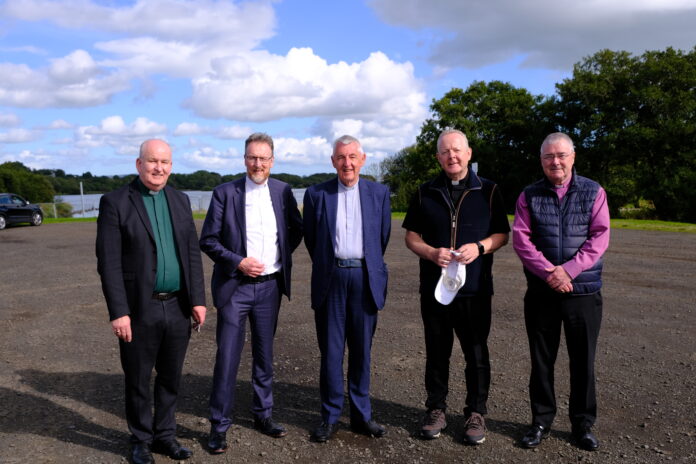
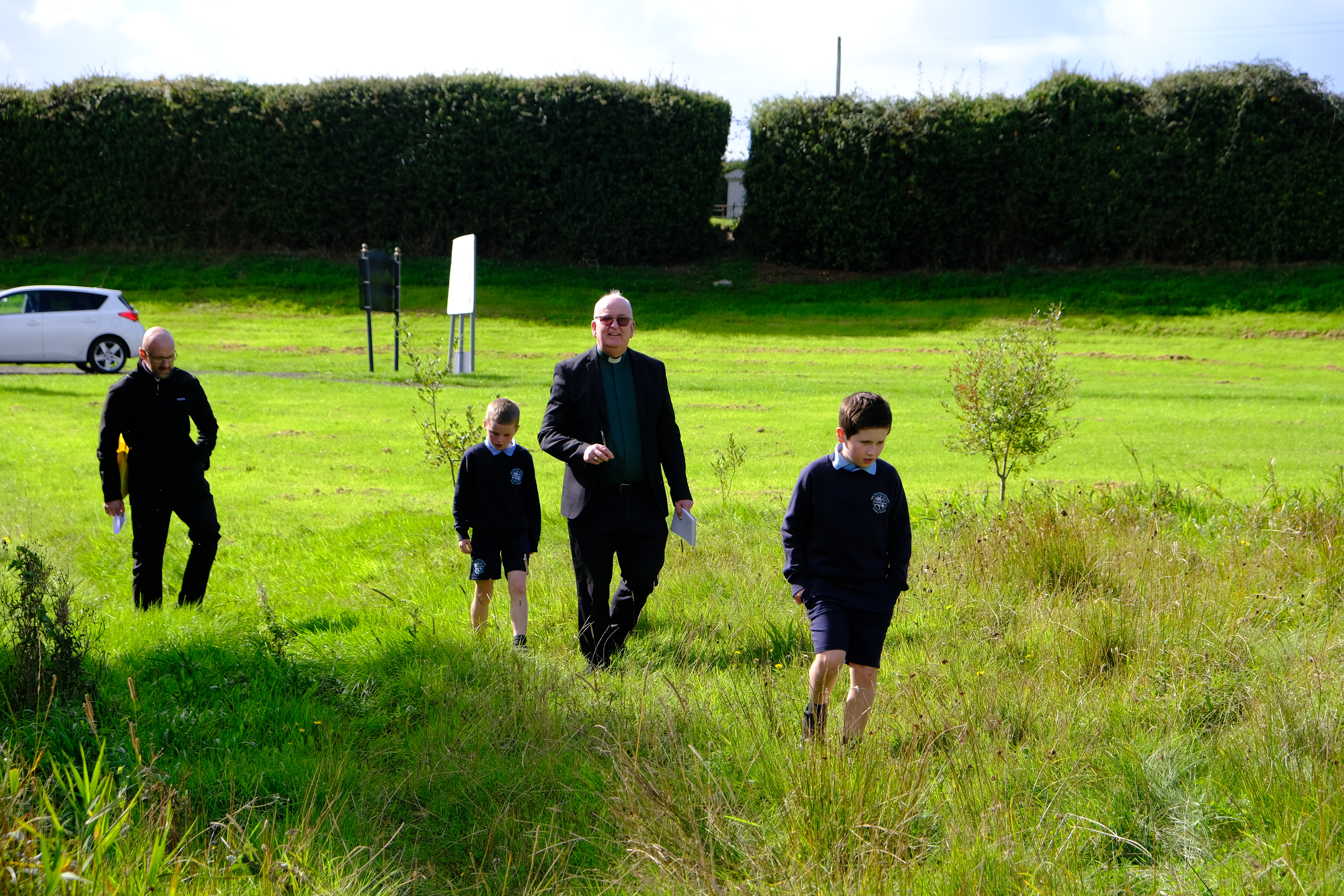
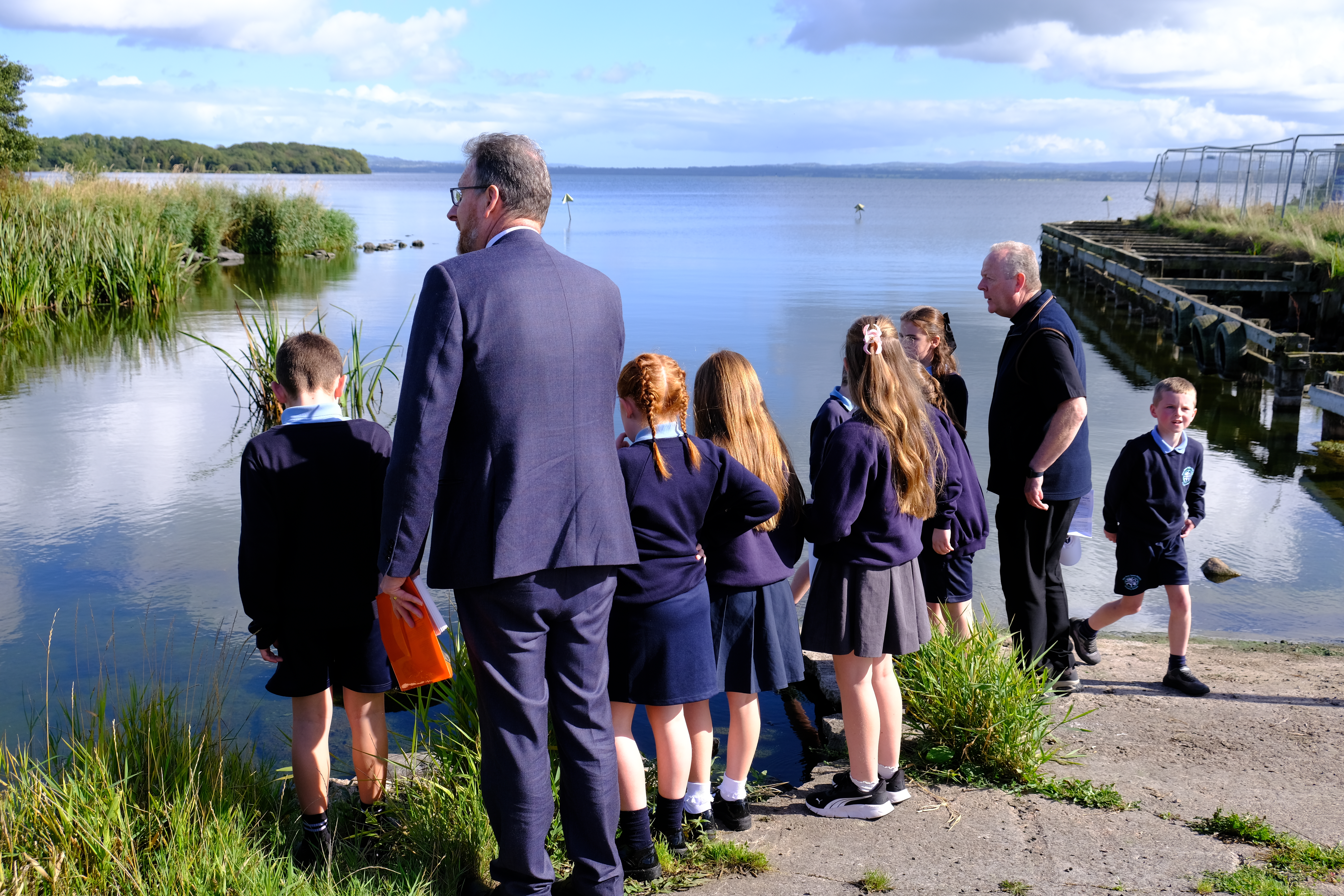
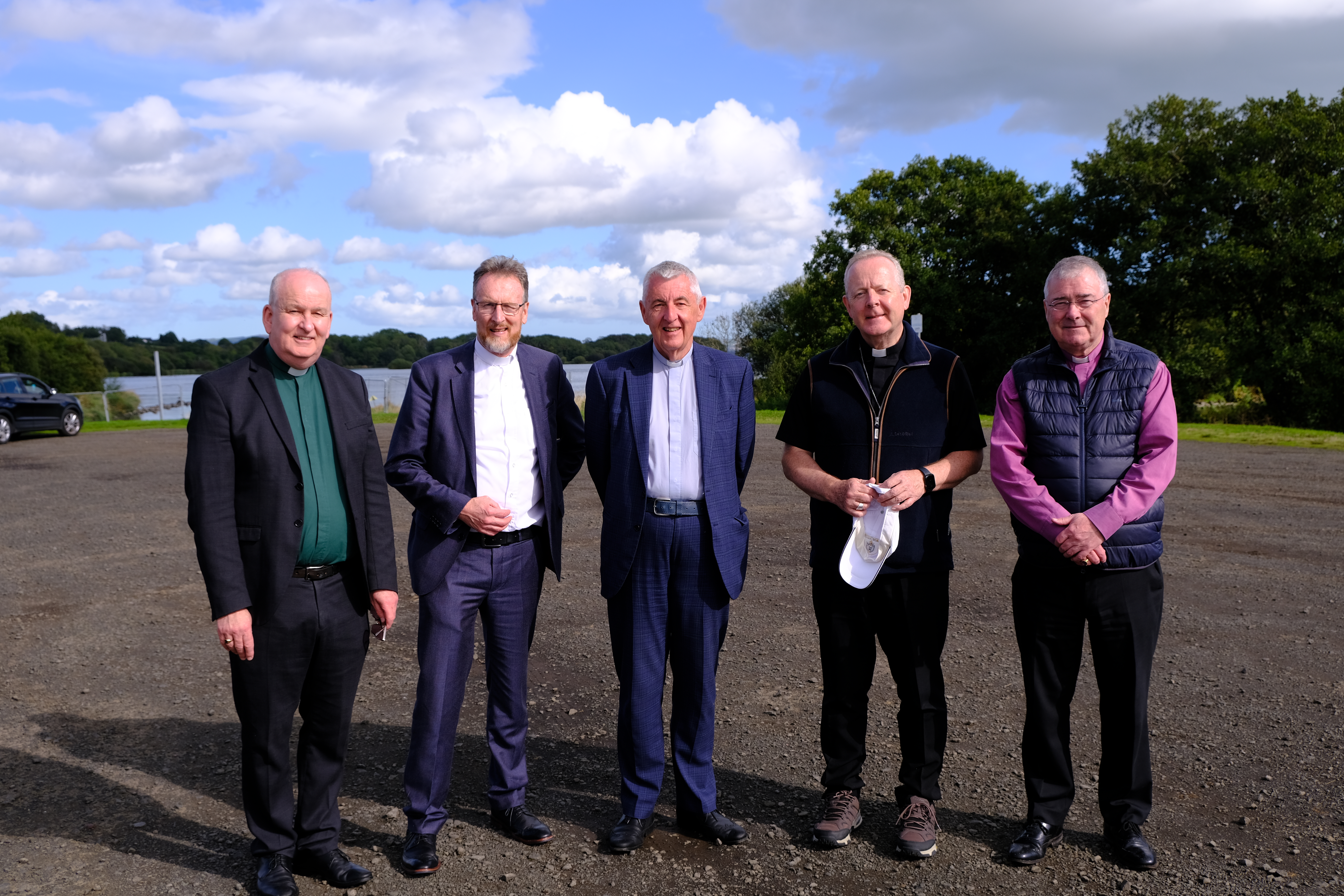
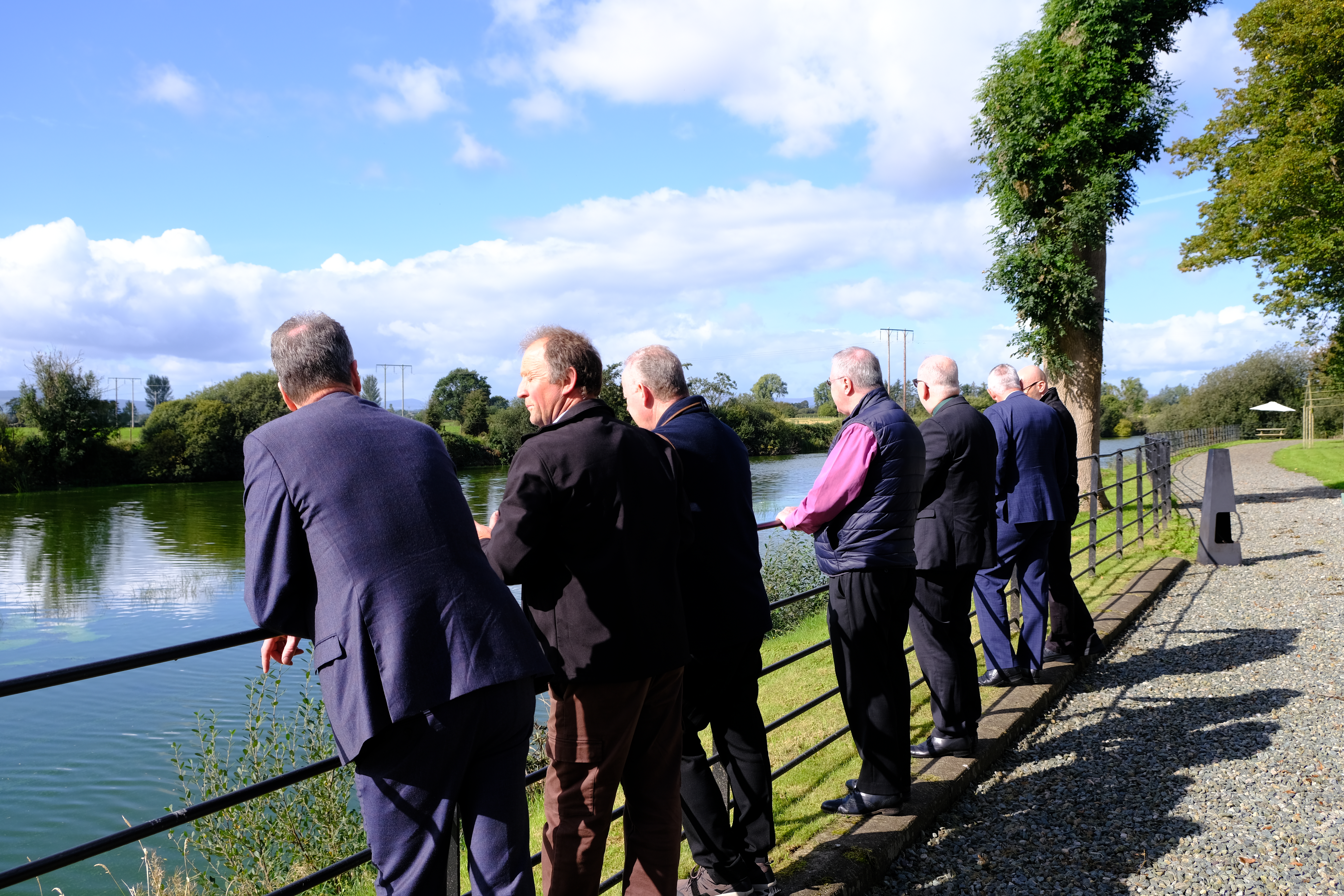
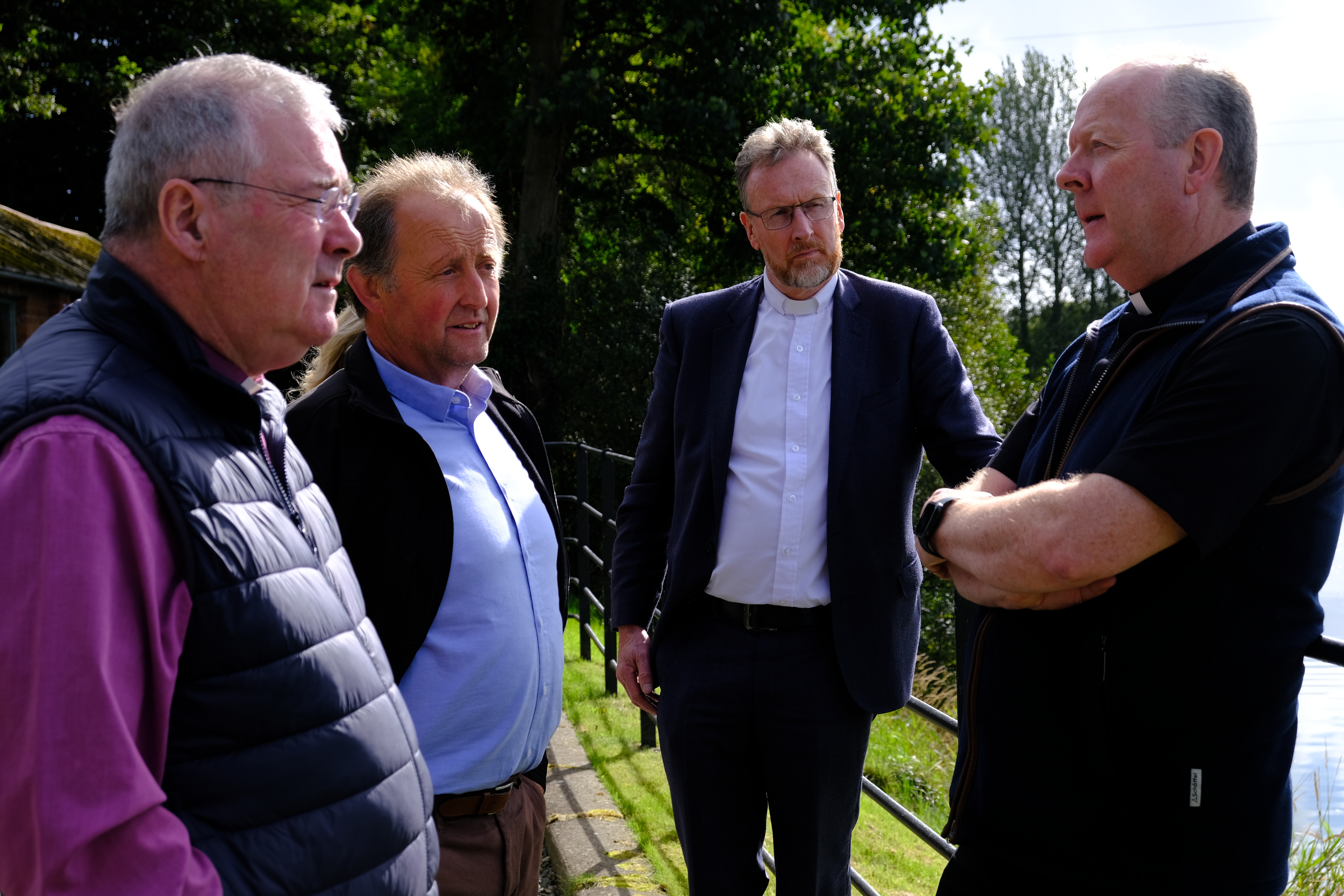
Following the visit of Church leaders Group to Lough Neagh in July 2025, the Irish Council of Churches and the Irish Inter Church Meeting invite you to Let Justice Flow Like Rivers, a one-day Creation Care Conference which will be held on Saturday 17 January 2026, from 10.00am – 3.30pm, in the Canal Court Hotel.

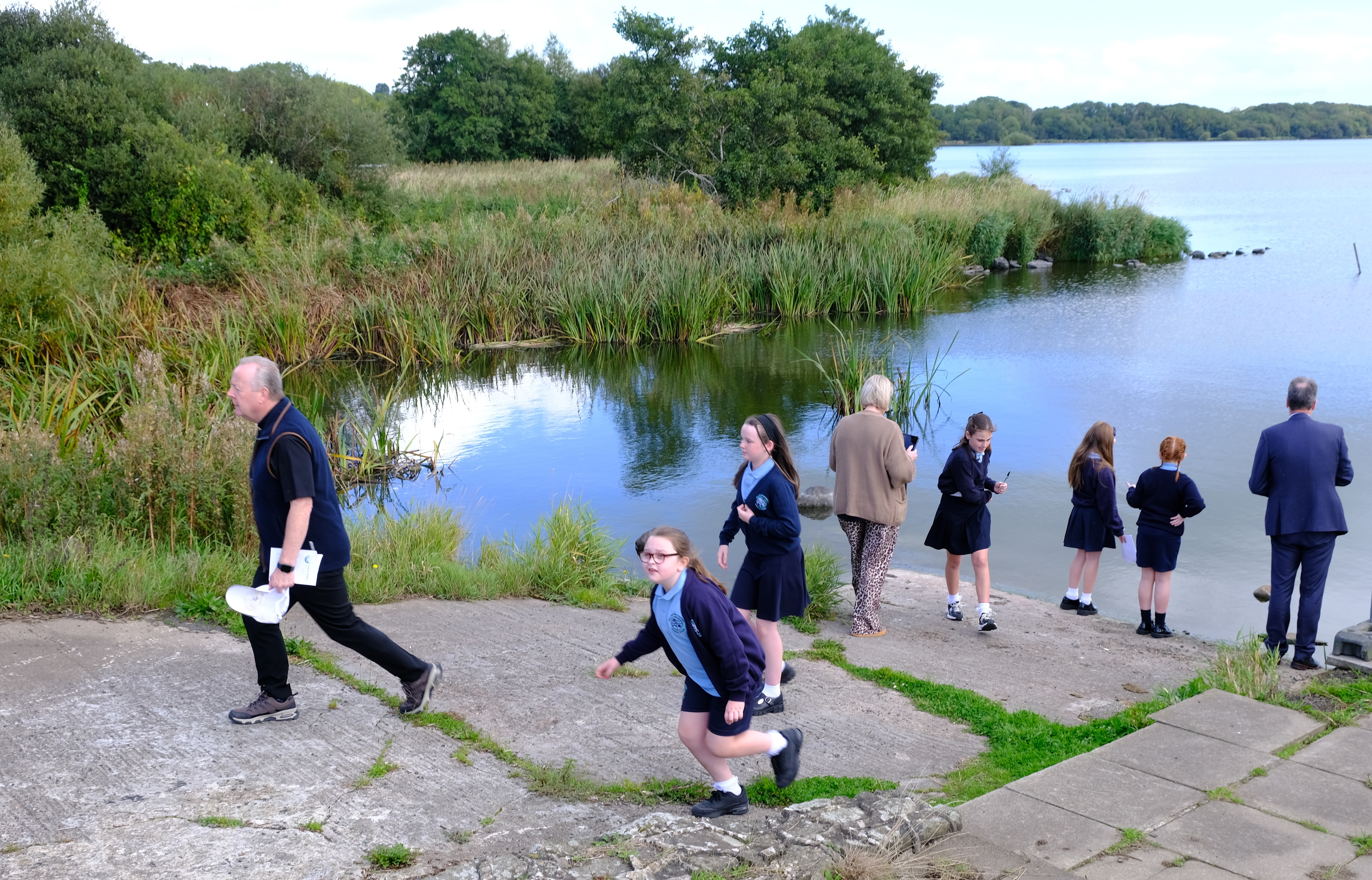
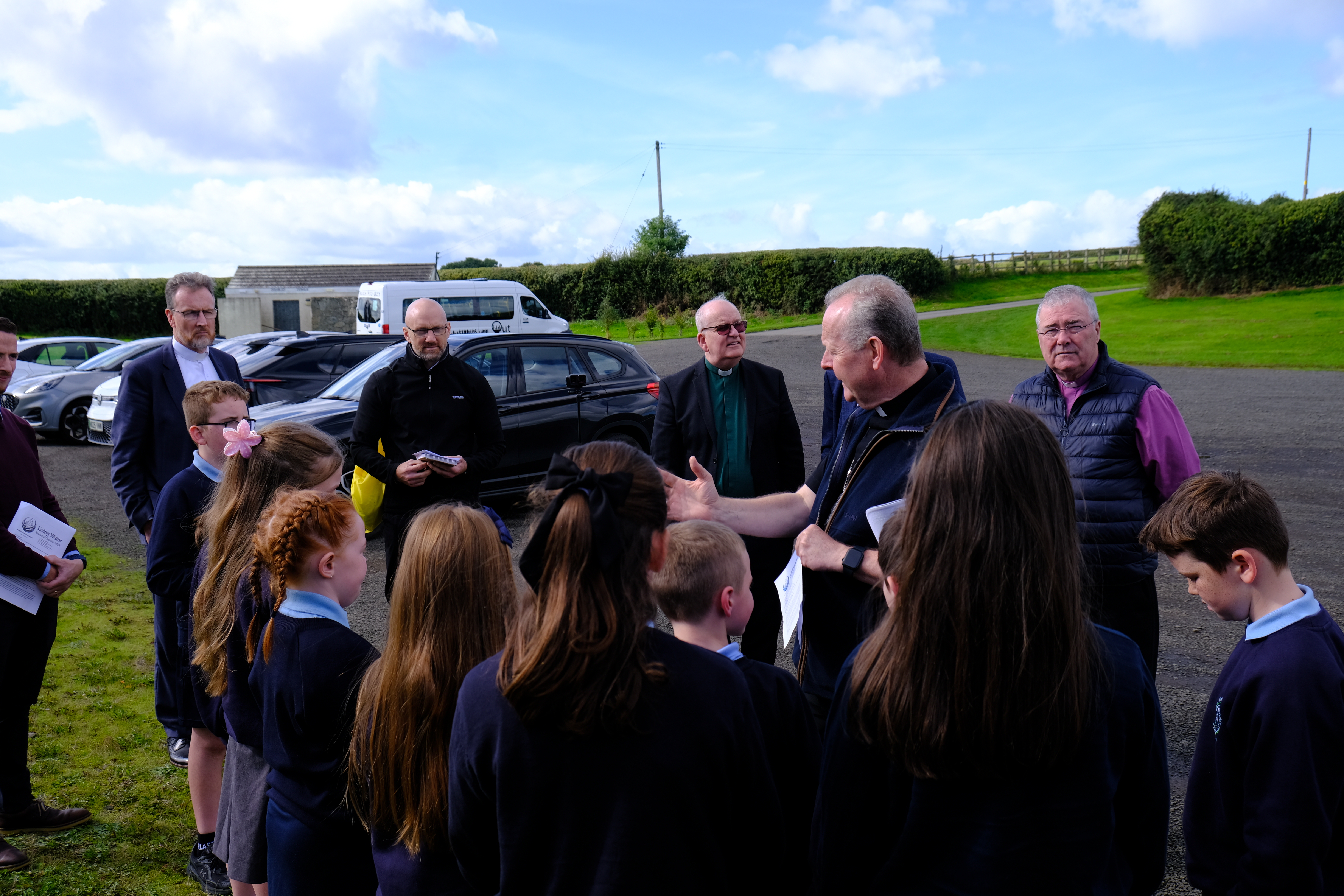
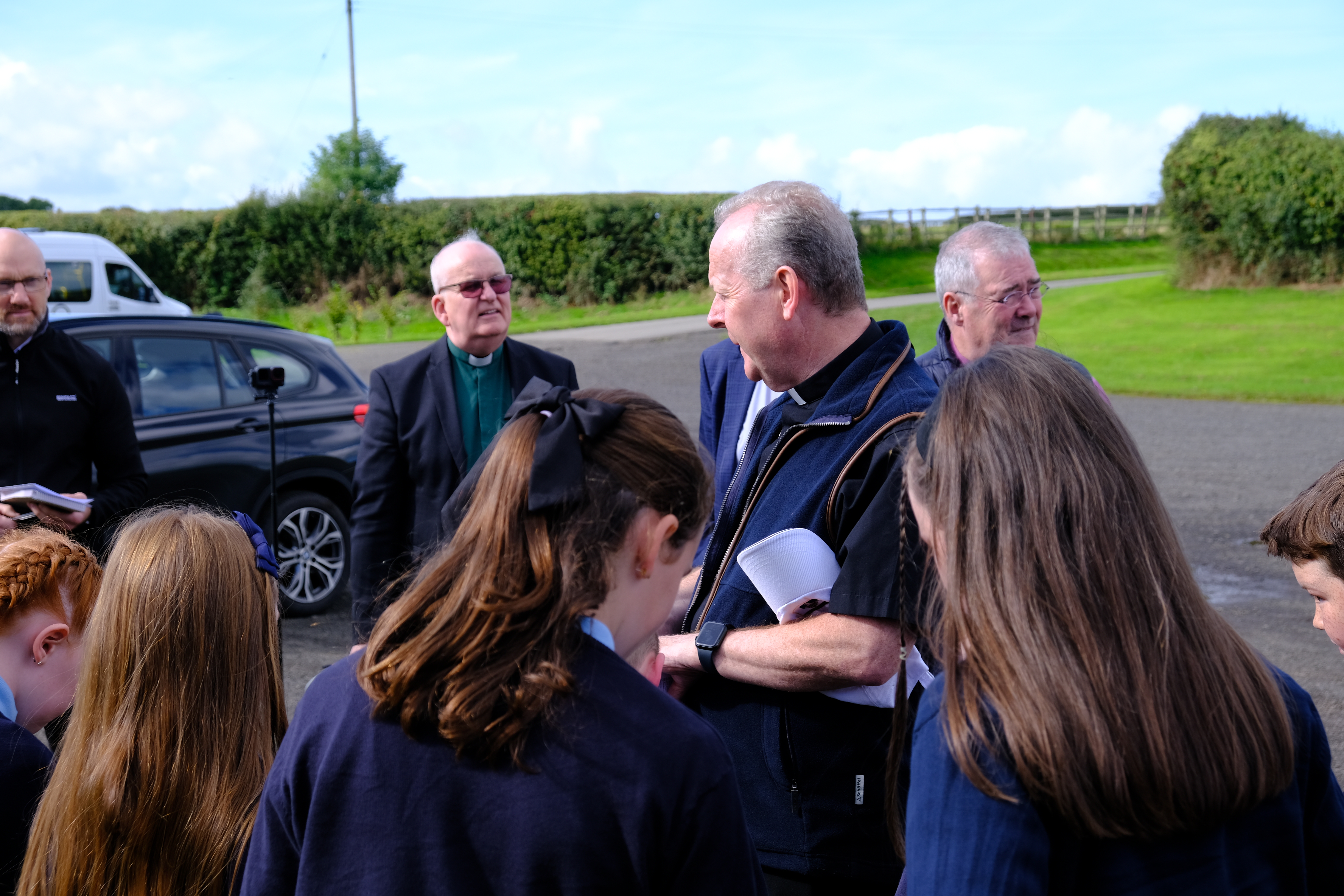
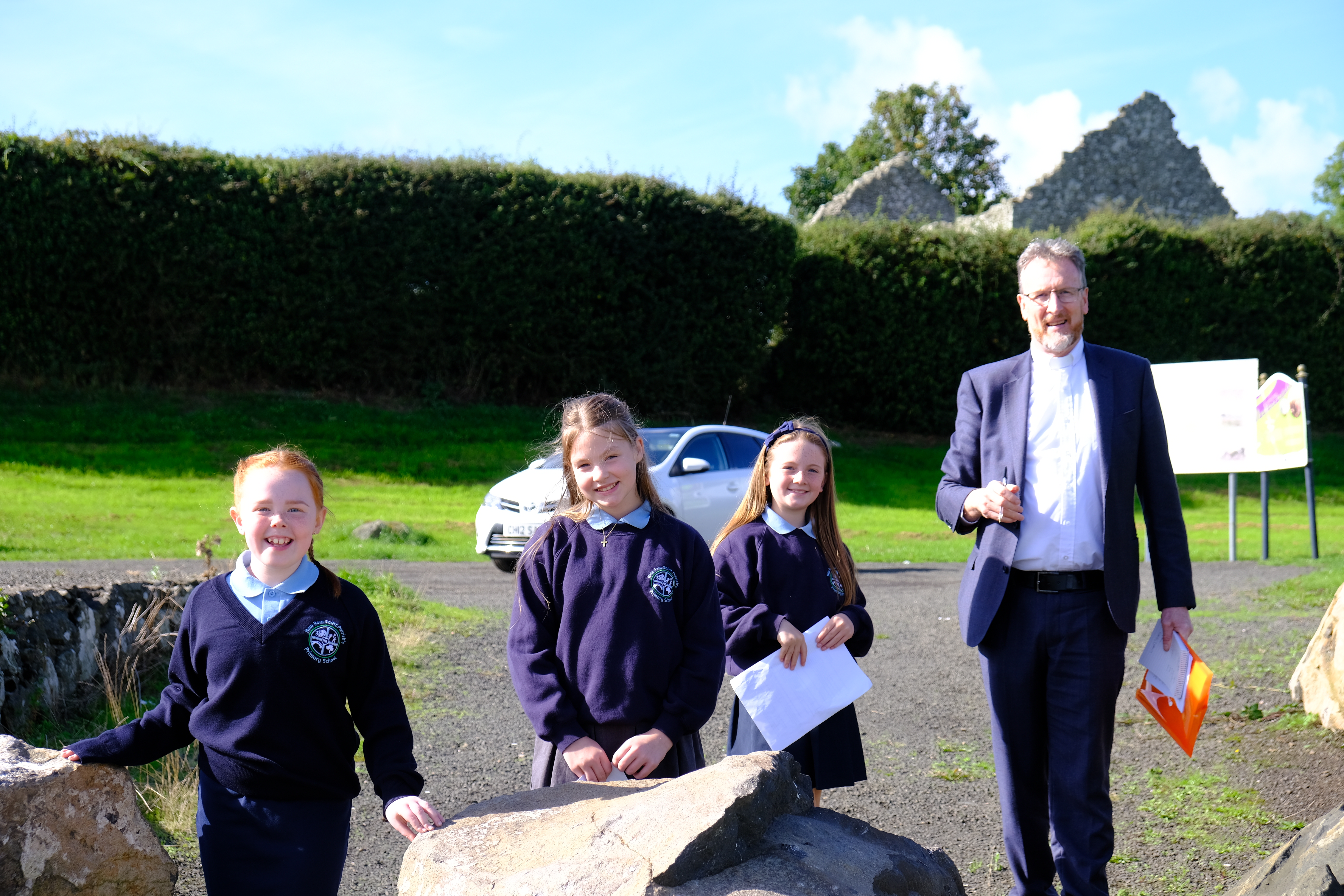
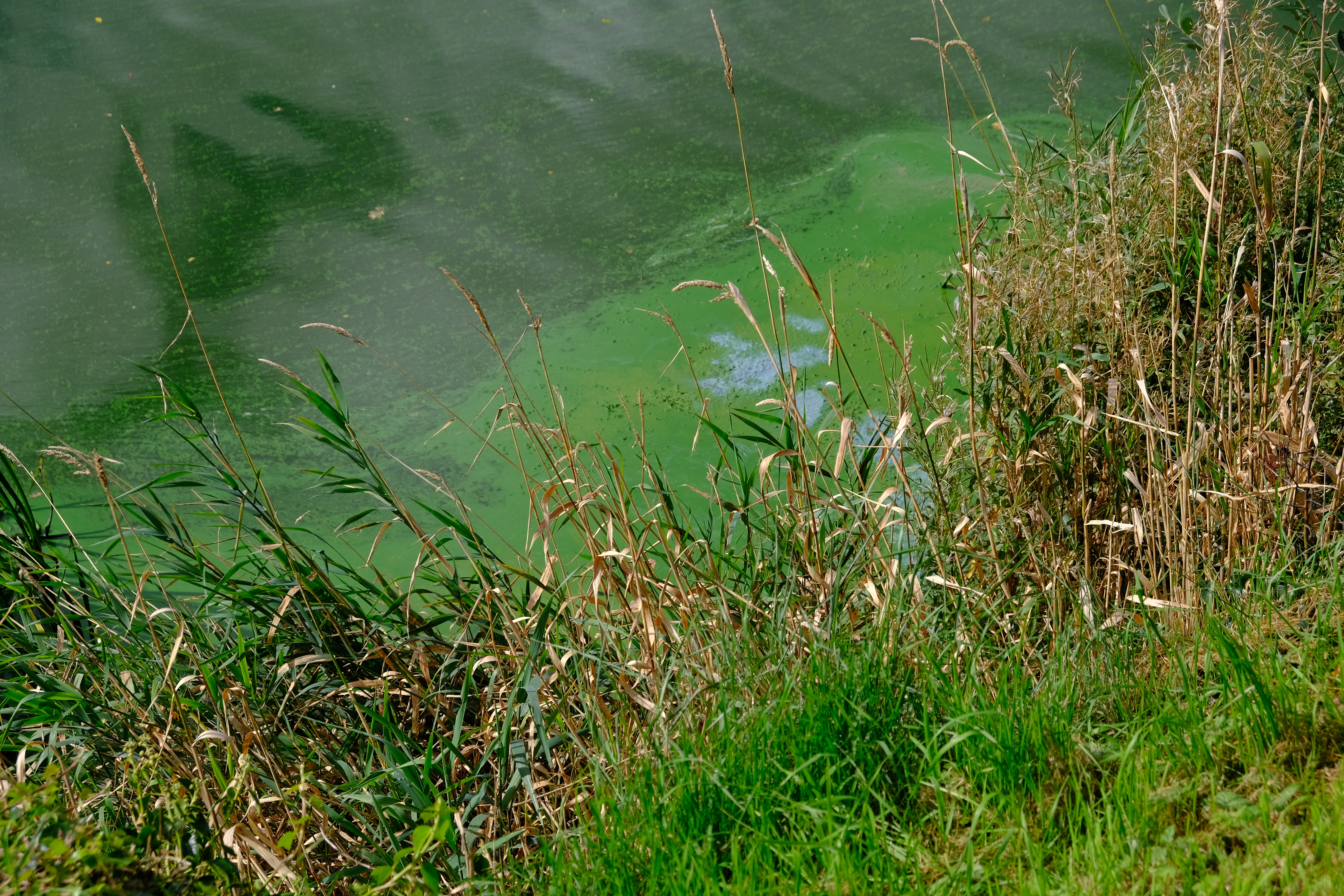
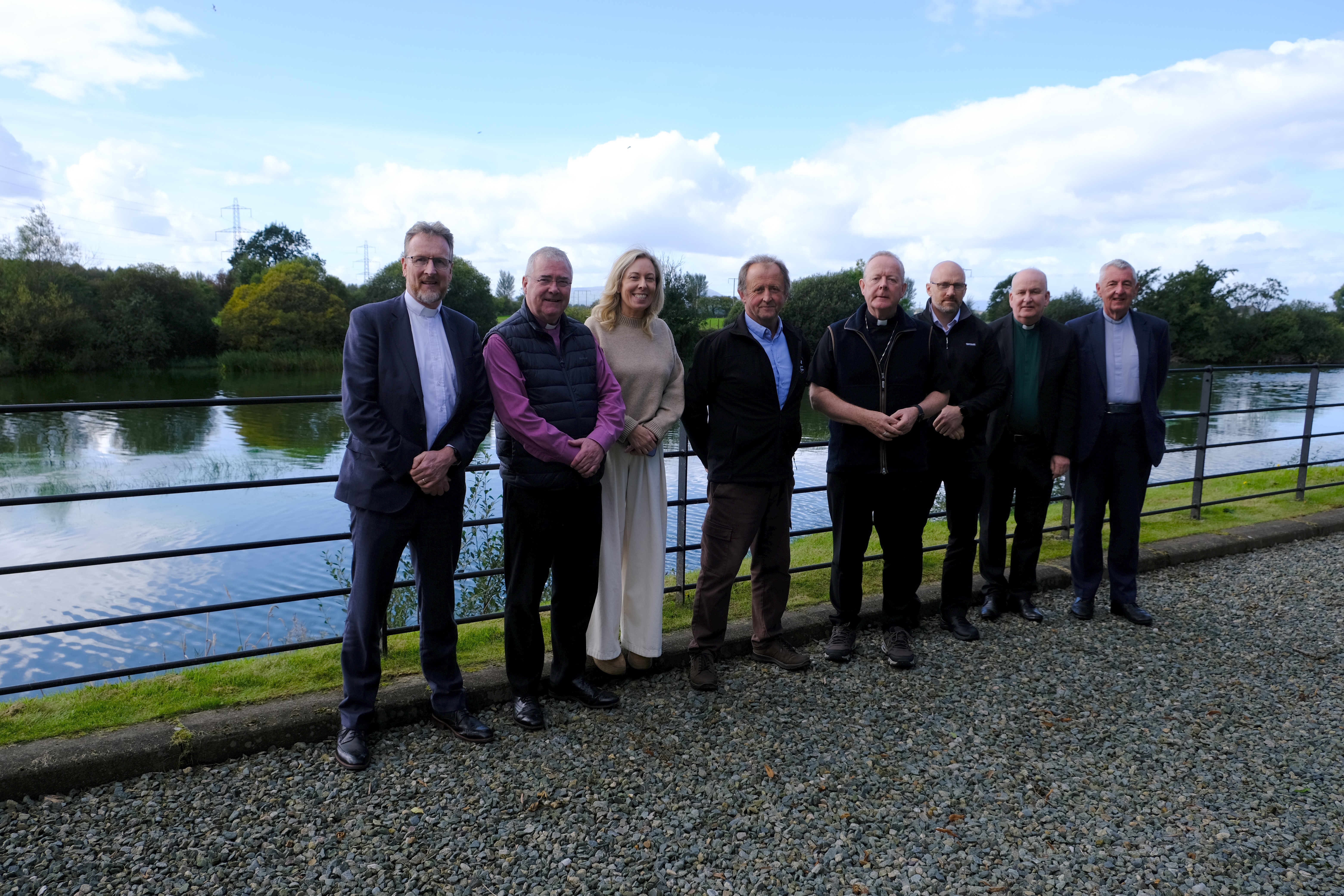
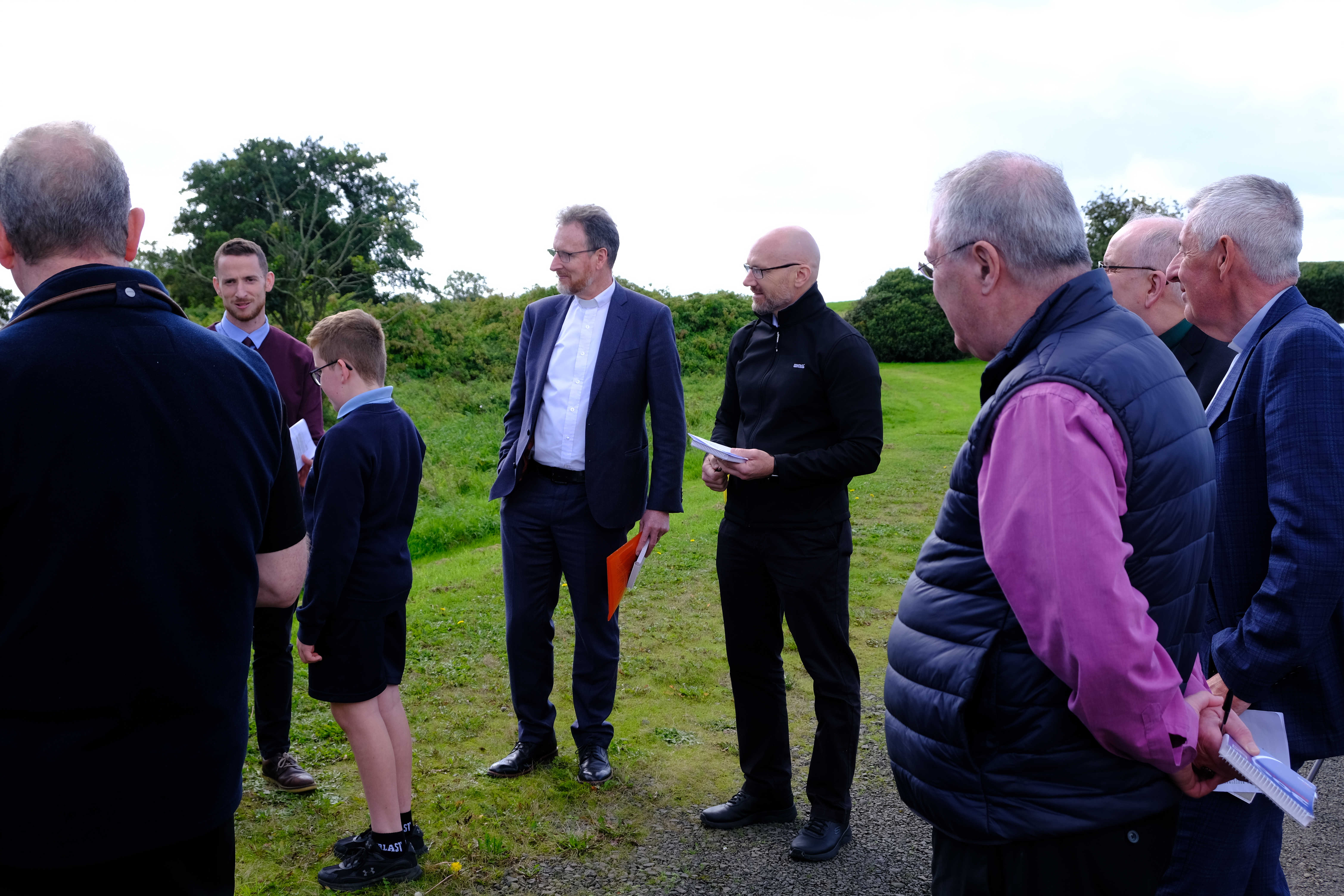
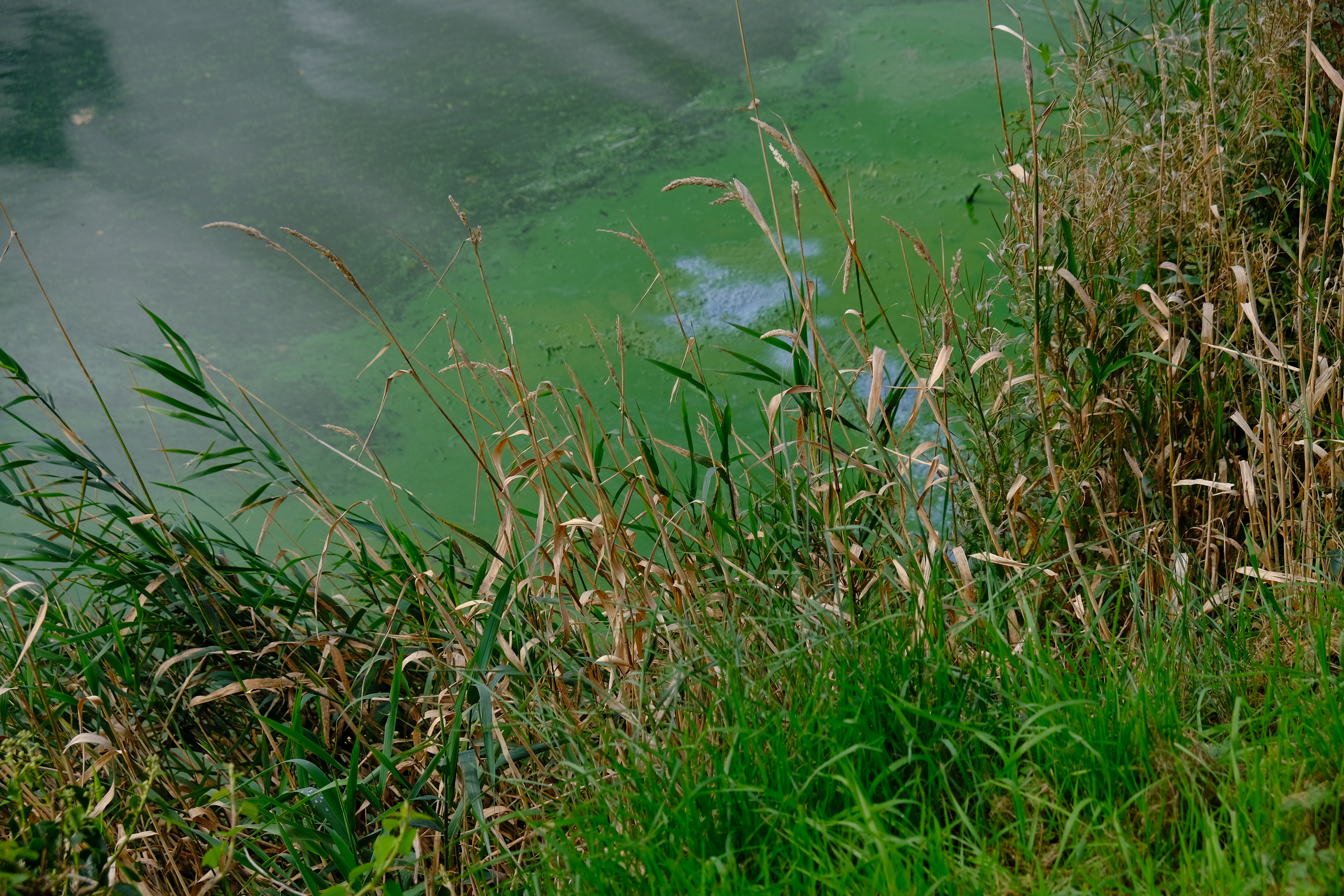
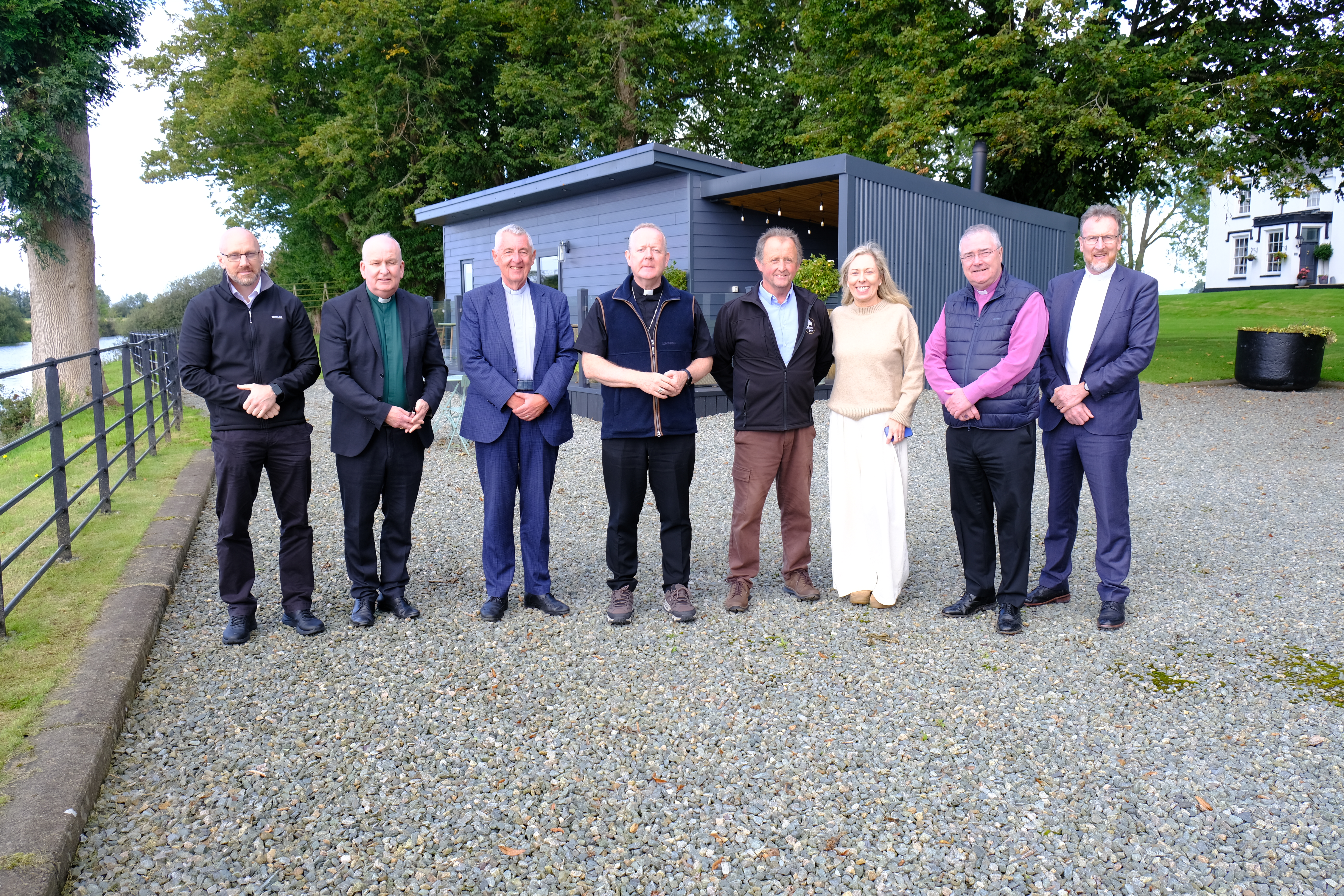
The Church Leaders’ visit to Lough Neagh represented a moment of listening, prayer and witness where the impacts of poor stewardship, pollution and climate change were experienced up close by the Church Leaders Group. The visit revealed the beauty of Lough Neagh as a shared natural treasure, but it also allowed all to talk about the serious ecological crisis it faces, from pollution and algal blooms to the loss of livelihoods and biodiversity. That visit now becomes a call to action and a wider invitation from the Church leaders to reflect, learn and act together.

Rooted in faith, justice, and responsibility for creation, the conference brings together theology, science, and lived experience. Keynote contributors include Jim McAdam, Hilary Marlow, and Gail Heffner, alongside presentations from local church and community initiatives. Minister Andrew Muir will attend, along with a representative of the Irish Government.


Reflecting on care for our common home, Archbishop Eamon Martin reminds us that God will ask whether we have cared for the world entrusted to us, and for one another. 


Tickets (£10) are available via Eventbrite.

 https://www.eventbrite.ie/e/let-justice-flow-like-rivers-tickets-1870086843089?utm-campaign=social&utm-content=attendeeshare&utm-medium=discovery&utm-term=listing&utm-source=cp&aff=ebdsshcopyurl

All are welcome, especially parish groups, youth groups and those concerned about the future of Our Common Home.


Archbishop Eamon Martin expresses solidarity following attack on Hanukkah celebration in Bondi Beach

Archbishop Eamon Martin expresses solidarity following attack on Hanukkah celebration in Bondi Beach

“I know that many Irish families have sons and daughters living in the Sydney and Bondi Beach area, as well as countless others in other parts of Australia, and no doubt everyone is deeply impacted by the awful attack, which must have been terribly shocking and frightening for everyone present.”


Archbishop Eamon Martin, Archbishop of Armagh and Primate of All Ireland, has expressed solidarity with the Jewish community following the horrific attack on a Hanukkah celebration at Bondi Beach in Sydney, Australia.  

Speaking during the annual Christmas Carol Service in Saint Patrick’s Cathedral, Armagh, Archbishop Eamon shared words of prayer and compassion as the third candle of the Advent wreath was lit. He acknowledged the deep shock and grief caused by the attack, which took place as Jewish families around the world were celebrating the Festival of Light, leaving twelve people dead and many others injured.

Archbishop Eamon was particularly mindful of the many Irish families, including young people from Ireland and from within the Archdiocese, who are currently living in Sydney and the Bondi Beach area, and who may have been directly or indirectly affected by the events.

In his statement, Archbishop Eamon spoke clearly against antisemitism and all forms of prejudice, calling on Christians to actively counter hatred and discrimination towards Jewish people and towards all minorities. He reflected on the Christian belief that Jesus came as the fulfilment of Isaiah’s prophecy, bringing light into darkness and peace into a broken world and invited those gathered to pray for the families who have been bereaved, for those who have been injured, and for the first responders whose courage helped prevent further loss of life.


Archbishop Eamon Martin’s statement

“As we gather this evening for our Christmas carol service, and light the third candle on our Advent wreath, we unite with our Jewish brothers and sisters around the world who are celebrating the festival of Hanukkah today, and whose festival of light this year has been horrifically overshadowed by the darkness and evil of a terror attack on the Hanukkah celebration at Bondi Beach in Sydney, Australia, leaving twelve people dead and many, many more injured.

I know that many Irish families have sons and daughters living in the Sydney and Bondi Beach area, as well as countless others in other parts of Australia, and no doubt everyone is deeply impacted by the awful attack, which must have been terribly shocking and frightening for everyone present.

Sadly, in recent times there appears to have been a rise in antisemitism, and every one of us Christians must do everything in our power to counteract prejudice and hatred towards our Jewish brothers and sisters, or indeed towards any minorities.

Jesus came into our world fulfilling the age-old prophecy of Isaiah that the people who walk in darkness have seen a great light.

Jesus came to be the Prince of Peace, and tonight we pray for peace and comfort for all those families who have been bereaved in this awful attack, for those who have been injured, and for the courageous first responders who helped to prevent even more death and destruction.”

Archbishop Eamon Martin, Archbishop of Armagh and Primate of All Ireland.

Archbishop Eamon: the Church needs to champion & promote the dignity of women

Homily of Archbishop Eamon Martin during Mass for the ‘Abide in His love’ Women’s Conference in Bundoran, Co Donegal.

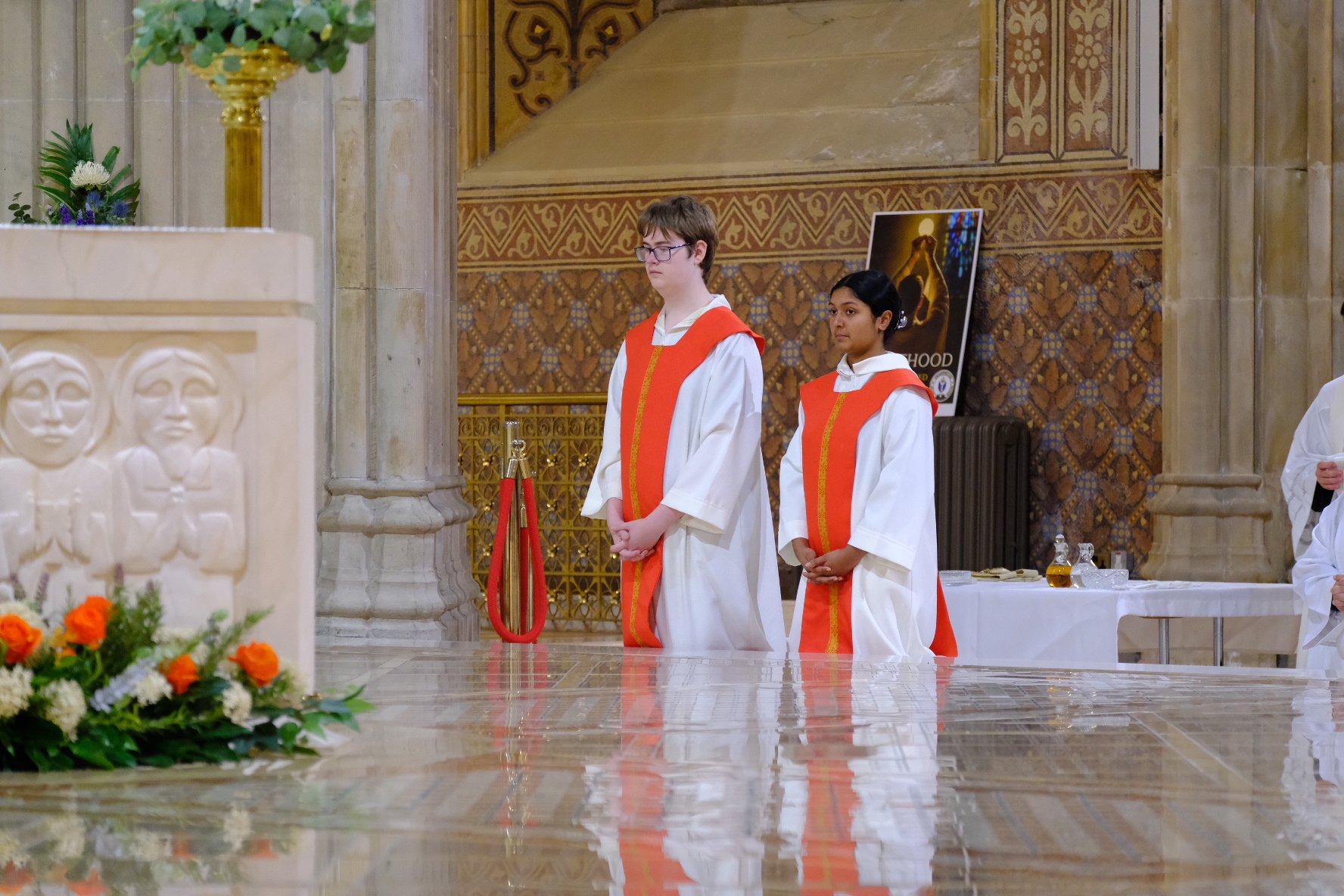
Today’s gospel reading situates the kingship of Christ on the Hill of Calvary.  He is the King of Friday; the Servant King.  An inscription above his head declares him to be ‘the King of the Jews’, but at his feet, according to John’s Gospel, a group of holy women is gathered – courageous to the last: Mary His mother; her sister Mary, the wife of Clopas; and Mary Magdalene.  Other women are named elsewhere – Matthew says many women are there; Luke relates the encounter between the suffering Jesus and the weeping ‘daughters of Jerusalem’; tradition gives us the story of Veronica, who steps forward to wipe away the sweat and blood from His gentle face.  In short: it is clear that women are leading characters in the story of Christ the King.
That wonderful hymn, Hail Redeemer, King Divine, sings of the “King of Love on Calvary” – no greater love.

For Christ is a humble King, emptying Himself completely, forgiving his persecutors, winning souls for God even as He died: “today you will be with me in paradise”.  Christ the suffering King is consoled by those faithful women who stayed.  They had already been by his side from Galilee to Jerusalem; they had consistently cared for Him with loyalty and affection, sustaining His ministry by their presence and resourcefulness; all along they had shown a deep commitment to His mission.  Now, in these final hours, they do not desert Him or run away.  They remain, ‘abiding’ in his presence, silent yet strong, these courageous “queens of love” on Calvary – faithful to the end.
Pope Saint John Paul once wrote these powerful words in appreciation for the dignity and vocation of women:

“The Church gives thanks for each and every woman: for mothers, for sisters, for wives; for women consecrated to God in virginity; for women dedicated to the many human beings who await the gratuitous love of another person; for women who watch over the human persons in the family, which is the fundamental sign of the human community; for women who work professionally, and who at times are burdened by a great social responsibility; [The Church gives thanks] for “perfect” women and for “weak” women – for all women as they have come forth from the heart of God in all the beauty and richness of their femininity; as they have been embraced by his eternal love; as, together with men, they are pilgrims on this earth, which is the temporal ‘homeland’ of all people and is transformed sometimes into a “valley of tears”.

The Gospels tell us that some of the courageous women, who were present at the death of Jesus on the Cross, went on to assist at His burial.  Women were also ‘lead characters’ on Easter morning, among the first to hear the Good News that “he is risen”, and prominent among its first proclaimers – Mary Magdalene is ‘apostola apostolorum’.  And women are there again on Pentecost Day, waiting and praying in the upper room.  Saint Paul, in turn, will point to many faithful women helping to build up the early Christian communities, and nourishing the faith of the first Christians.

This year we mark the centenary of Quas Primas, the encyclical letter by which Pope Pius XI promulgated in December 1925 – exactly one centruy ago – for today’s great Feast of Christ the King.  Those were troubled times, as Church and society emerged from the horrors of the First World War and the political turmoil that followed.  In the midst of such chaos, Pope Pius offered Christ to the world – the King of Kings – to reign in the hearts of all women and men.

Pope Pius pointed out that the many evils in the world at that time were due to the fact that the majority of people “had thrust Jesus Christ and his holy law out of their lives; (holding) that these had no place either in private affairs or in politics”.

Pope Pius added that to have any hope of a lasting peace among the nations, Christ the King must reign in our minds, our wills, our hearts and in our bodies.  For His kingdom – as today’s preface reminds us – is unlike the warring kingdoms of this world.  His is an ‘eternal and universal kingdom’, ‘a kingdom of truth and life, a kingdom of holiness and grace, a kingdom of justice, love and peace’.

Of course the task of building up this kingdom belongs to all of us – women and men – baptised members of the faithful.  Together we share in the priestly, prophetic and kingly vocation and mission of Jesus Christ and of His Church.

Pope Saint John Paul emphasised this point when he was in Limerick during his historic Apostolic visit to Ireland back in 1979.  The laity – women and men – are “a chosen race”, “a holy priesthood”, called to be “the salt of the earth” and “the light of the world”.

“It is their specific vocation and mission to express the Gospel in their lives and thereby to insert the Gospel as a leaven into the reality of the world in which they live and work.  The great forces which shape the world – politics, the mass media, science, technology, culture, education, industry and work – are precisely the areas where lay people are especially competent to exercise their mission.  If these forces are guided by people who are true disciples of Christ, and who are, at the same time, fully competent in the relevant secular knowledge and skill, then indeed will the world be transformed from within by Christ’s redeeming power”.

His words of course are reminiscent of the words of Jesus in Matthew’s gospel, when he said: “The kingdom of heaven is like leaven that a woman took and hid in three measures of flour, till it was all leavened” (Mt 13:33).

I love the way that the Irish poet, Tomás Rua Ó Súilleabháin, in his beautiful hymn A Rí an Domhnaigh, reminds us that Jesus is not just King of Sunday, but he is also Rí an Luain; Rí na Máirte; Rí na Céadaoine; Rí na Déardaoine; Rí na hAoine; Rí an tSathairn!  This task of ‘leavening’ the Kingdom of God in the world is not just for Sundays.  And it belongs to men and women.

In recent years we have become more appreciative of the indispensable contribution that women make to transforming the world “from within” and contributing to the daily life and mission of both Church and society.  Sadly we live in a world where the personal dignity of women is too often threatened by violence, abuse, inequality, commercial surrogacy, pornography, gender ideology and various forms of exploitation.

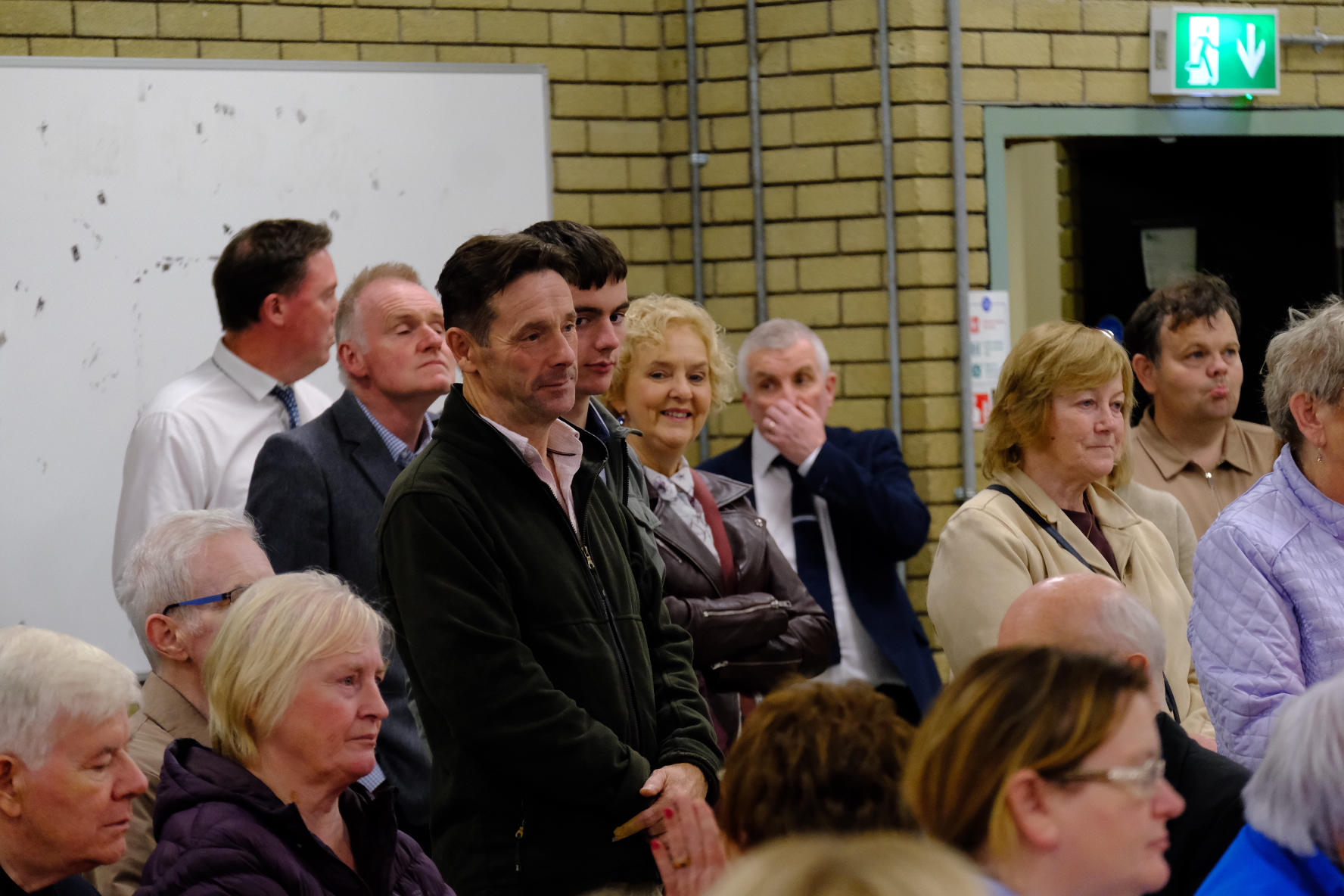
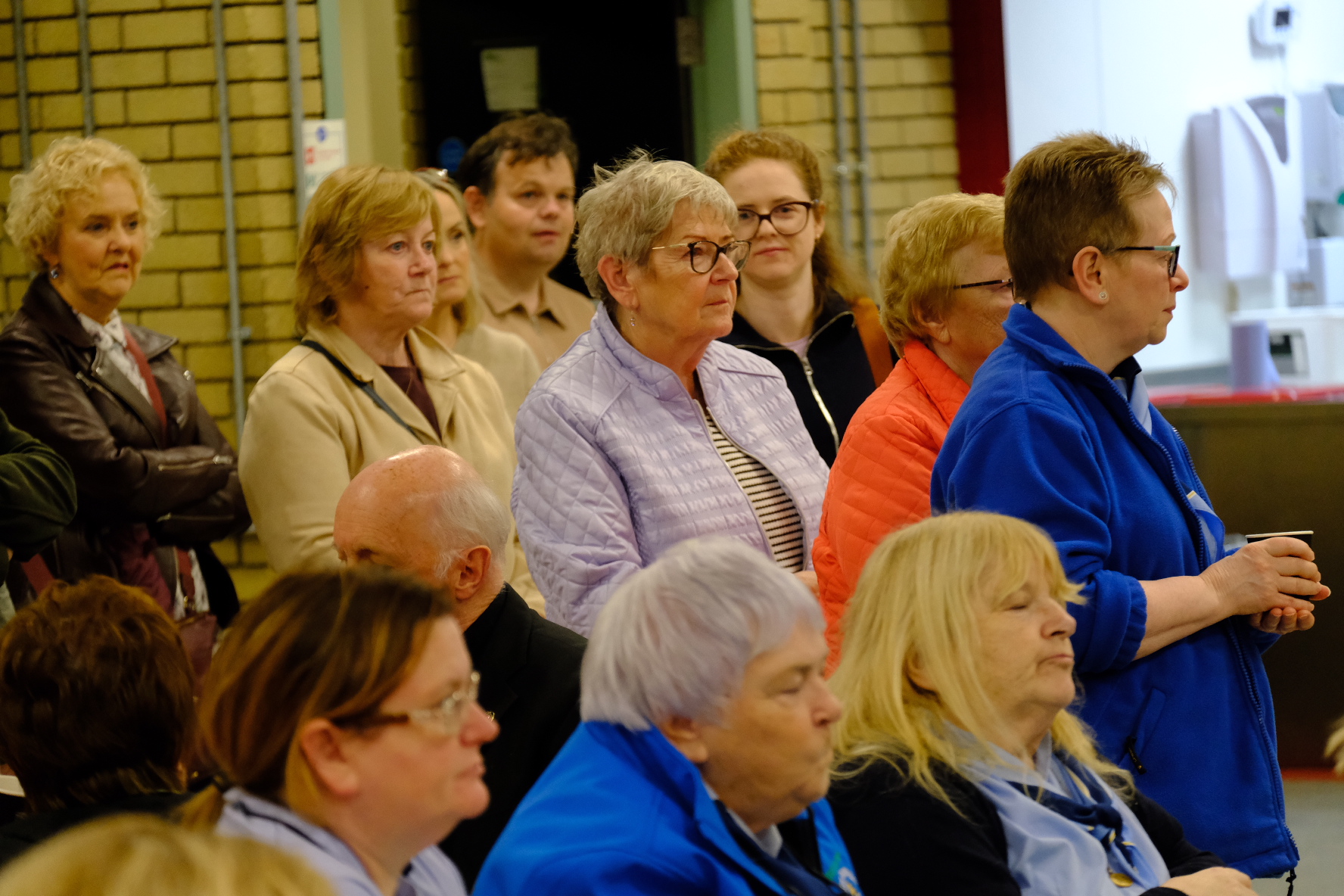
Friends, delegates to this Women’s Conference, all the more reason then for us, and for all in the Church, to champion and promote the dignity and specific charisms that you bring as women to enrich the quality of mission, governance, leadership, education, catechesis and evangelisation, as well as dialogue and decision-making in the Church. In a special way you are called to insert, as leaven in the Church and in the world, your particular insights and witness as women to key contemporary matters such the protection of human life; outreach to poor, vulnerable and marginalised people; the safeguarding of children, marriage and the family; quality education and spiritual formation in our schools and parishes; and best practice in care and support for those who are disabled, sick or dying.

I congratulate and thank God for you, the organisers speakers and delegates at this Women’s Conference, ‘Abide in His Love’.  Your woman’s voice, your specific vocation and charisms are needed more than ever today in Church and in society, for we struggle at times to navigate the complex, contradictory and misleading messages surrounding many contemporary issues which, left unchecked, risk the ‘dehumanising’ of human life and dignity.

Pope Saint John Paul, in Christifideles Laici, (his apostolic exhortation on the vocation and mission of the lay faithful) emphasised that women exercise a “special role in the Kingly mission of Christ” because, “women have the task of assuring the moral dimension of culture”.  He reminded us that God actually entrusted the human being to women, “precisely because the woman in virtue of her special experience of motherhood is seen to have a specific sensitivity towards the human person and all that constitutes the individual’s true welfare, beginning with the fundamental value of life.”

No pressure then, conference delegates!  But as Pope John Paul often said, ‘Do not be afraid’!  Millions of lay women are already doing just that – not to mention the 600,000 women religious around the world who, like you, are unashamedly “working for the kingdom”.

May the Lord give success to the work of your hands. 

Amen.

+ Archbishop Eamon Martin

Archbishop of Armagh, Apostolic Administrator of Dromore, Primate of All Ireland


Bishop Michael Router speaks at the Funeral Mass for Dylan Commins RIP

Words of Bishop Michael Router at Funeral Mass for Dylan Commins RIP

On behalf of Archbishop Eamon, and of the priests, deacons, and people of the Archdiocese of Armagh, I want to offer my deepest sympathies today to the family of Dylan Commins.  To his mother Denise and his father Thomas; to his sisters Lauren, Jessica and Sarah; to his granny Sheila; to his aunts and uncles, cousins and wide circle of relatives, neighbours, and friends who loved him so dearly.

The sudden and heartbreaking loss of Dylan, together with Chloe McGee, Chloe Hipson, Alan McCluskey and Shay Duffy, has left communities across this region, and indeed across the whole country, shocked and grieving.

Ailbet in very sad circumstances, the presence of President Catherine Connolly with us this afternoon acknowledges that fact and we are all very grateful for, and comforted by, your attendance here, a Uachtaran.

None of us can easily comprehend the scale of what has happened.  All we can do is hold Dylan and each of his young friends in the embrace of our prayers and commend them to the eternal mercy of God.

In your sorrow Denise, Thomas, Lauren, Jessica and Sarah, the Lord, who is always close to the broken-hearted, will surround you with His comfort, His strength, and His peace.  Nothing I say can take away the pain you carry.  But I can say this for certain: you are not alone.  You are held by a community of care and love.  I could see that on Wednesday night when I called to your home, how you supported each other as a family and how your friends and neighbours were giving you strength.

Christ Himself walks with you.  He knows your pain and suffering intimately.  When Jesus appeared to the disciples after his resurrection His first words to them were, “Peace be with you.”  It was His, quiet, steady, and healing presence in those days that allowed them to pick up the pieces and move forward again.  His same presence is here today.  Because of the resurrection, we believe that Dylan lives in Jesus.  Strengthened by that faith, you, his family and friends, will find the grace, day by day, to rebuild your lives.

After what you all have been through in the past week there is a need for healing.  nd so today we pray, earnestly and sincerely, that the healing spirit of Jesus may infuse your hearts and minds and bring you his peace.  Christ is with you and with this heartbroken community.  In the Mass, in our prayers, in every small act of love and support, His healing Spirit is at work.

And so, I pray Lord Jesus, risen and compassionate saviour, hold Dylan in Your embrace.  Surround Thomas, Denise, Lauren, Jessica, Sarah, Granny Sheila, and all who grieve with Your peace.  On this feast of the Presentation of Mary, and in this church of the Nativity of the Blessed Virgin, we pray that Mary will intercede for you so that you may have strength and courage for the time ahead.  We pray in hope that one day we all be reunited with those whom we love in God’s eternal Kingdom. 

Amen

Bishop Michael Router, Auxiliary Bishop of the Archdiocese of Armagh

Bishop Router: Behind every road collision statistic lies a beloved person and deep grief

Bishop Router: Behind every road collision statistic lies a beloved person and deep grief

It was with deep shock and sadness that I learned of the tragic two-vehicle road collision that claimed the lives of five young people near Dundalk, Co Louth, last night.  Such sudden and heartbreaking loss leaves us all struggling to comprehend the scale of what has happened.  May the souls of these five young people rest in the eternal embrace of God’s mercy.

At this time of deep grief, I wish to extend to the families, friends and communities of all who were killed and injured, my deepest sympathies and an assurance of prayers in the weeks and months ahead.  In your sorrow, may the Lord, who is close to the broken-hearted, surround you with His comfort, His strength, and His peace.

I also remember in prayer the priests who minister at the scene of road collisions, as well as all first responders who assist in such challenging human circumstances.  We owe them all a debt of gratitude for carrying out their demanding work in such a brave and professional manner.

This tragedy occured last evening, ahead of the ‘World Day of Remembrance for Road Traffic Victims’ today – a day when communities in Ireland and across the globe gather to remember and honour those whose lives have been lost on our roads, and to support all who mourn for their loved ones.  It is a painful reminder that behind every statistic lies a beloved relative, friend, or neighbour.

From the bottom of my heart, I urge everyone to take great care on the roads, to drive with patience, attentiveness, and at all times let our road use behaviour reflect a deep respect for the precious gift of human life.

+ Bishop Michael Router, Auxiliary Bishop of the Archdiocese of Armagh

Confirmation Schedule 2026

Click the following link to view the 2026 Confirmation dates for the Archdiocese of Armagh:

Confirmation Schedule 2026 – Publication

400th Anniversary of the Birth of St. Oliver Plunkett

St Oliver Plunkett: 400 Years of Witness to Faith, Peace, and Reconciliation

This weekend we celebrate and mark the 400th anniversary of the birth of St Oliver Plunkett  in 1625.  This weekend’s milestone invites us to reflect with fresh eyes on his remarkable life and enduring witness. This year also marks 50 years since his canonisation by Pope Paul VI in 1975, when the Church recognised him as a saint for our modern times.  St. Oliver is today a symbol of steadfast faith, courageous forgiveness and offers hope for a lasting peace, a peace that many at home and abroad desire greatly.

Archbishop Eamon Martin speaks to Mark Davenport, from BBC’s Sunday Sequence, on the life and continue legacy of St. Oliver Plunkett


From Rome to Ireland – A Shepherd for His Time

Born in Loughcrew, Co. Meath, Oliver Plunkett was ordained a priest in Rome and later appointed Archbishop of Armagh and Primate of All Ireland at a time of deep turmoil and persecution. For over two decades he had lived and studied in Rome and his return to Ireland was in many ways both a homecoming and a courageous act of service.

St. Oliver travelled across dangerous territory, often in secret, so that he could to visit and minister to his people.  St. Oliver confirmed thousands, reorganised dioceses, founded schools and encouraged clergy and laity to remain steadfast in faith. His deep commitment to education and renewal reflected his conviction that the Church must form minds as well as hearts. Even without martyrdom, St. Oliver’s life and ministry helped people understand and live the Gospel in a time of uncertainty.

A Peacemaker and Reconciler

St Oliver was renowned for the gift of reconciliation. In an Ireland divided by political and religious conflict, St. Oliver refused to be drawn into factions or violence. He worked tirelessly to unite clergy, to foster understanding between communities and to call all people to peace. Even when unjustly accused and imprisoned his words and actions breathed the essence of forgiveness. His letters from prison reveal a man of profound serenity and charity, one who “allowed no bitterness to take root in his heart.”

His Martyrdom and the Journey of His Relics

In 1681, St Oliver Plunkett was executed at Tyburn, London, the last Catholic martyr to die in England. His remains were recovered and treated with reverence by faithful friends who travelled with them first from London to Lamspringe Abbey in the Diocese of Hildesheim, Germany, where English Benedictine monks kept them safe for many years. Later, his body was transferred to Downside Abbey in England for veneration.

The relic of his head was returned to Ireland and safeguarded by Dominican nuns at the Siena Convent in Drogheda, before being solemnly enshrined in St Peter’s Church, Drogheda, where pilgrims continue to visit today. The quiet devotion of those who come to pray there, seeking peace, reconciliation and courage, is a living testimony to the power of his example.

A Saint for Today

Four centuries on, St Oliver Plunkett continues to speak directly to the heart of the Irish Church. His story calls us to integrity in leadership, courage in faith and hope in true reconciliation and healing here on the Island of Ireland. St. Oliver reminds us that faith is not merely preserved in the comfort and confines of the Church but lived out in the witness of Christian life that often comes at great cost.

As we honour St. Oliver on the 400th anniversary of his birth, we are each challenged to continue the work he began, that is to:

  • To build peace on our island through dialogue, forgiveness, and truth.

  • To nurture the faith and education of the next generation.

  • To ensure that the Church remains a credible witness to the Gospel of mercy and justice.

Continuing the Journey

St Oliver’s life and death form a bridge between the struggles of the past and the hopes of the present. His steadfastness and purity in faith invites each of us to renew our own commitment to the Gospel and live out our baptismal calling daily, to walk humbly, to forgive generously and above all else to be peacemakers in our time.

As we mark the 400th anniversary of his birth and the 50th anniversary of his canonisation, may we find in him a patron and companion for our journey towards a more reconciled and hope filled Ireland.

“May peace be ever in our hearts, on our lips, and in our land.”
St Oliver Plunkett


Prayer to St Oliver Plunkett

O God of life and hope,

Through the waters of Baptism you have called us to be your people,
anointed us with the Spirit and sent us forth as witnesses to your love.

We thank you for the faith and courage of St Oliver Plunkett,
who remained steadfast in the face of persecution, and who poured out his life in the service of your Church.

May his example awaken in us the grace of our own baptismal calling, May we each live as priest, prophet, and servant in our time.

Grant that, like St Oliver we may be builders of peace, speakers of truth and ministers of mercy sharing in the one mission of Christ.

May the flame of Baptism burn brightly in our hearts and may we renew the Church in every age through the intercession of St. Oliver, and may we be drawn together in unity as one Body in Christ.

Through Christ our Lord.

Amen.

St Oliver Plunkett, pray for us!