Sunday, December 21, 2025
Home Blog Page 180

1 Jan – Mass for World Day of Peace

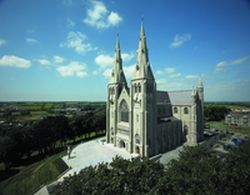
ST. MALACHY’S CHURCH, ARMAGH
MASS FOR WORLD DAY OF PEACE
1 JANUARY 1998 – 11.00 A.M.
HOMILY BY MOST REVEREND SEAN BRADY
ARCHBISHOP OF ARMAGH

Fifty years ago the United Nations produced its Declaration of Human Rights. The Second World War had just ended. During that war certain peoples had seen even their right to exist denied. The United Nations were anxious to ensure that this would never happen again. They wanted to find the basis for a just and lasting peace. They found it in the recognition of the dignity and rights of human beings.
From Bethlehem to Armagh.

Ever since the year 1957 a lighted lamp has been brought from the place of the birth of Christ in Bethlehem to all the churches in Austria. That burning flame was, and is, a symbol of their desire for world peace. This year the lamp has been brought via the European Parliament to Armagh. In a few moments it will be presented here in the Offertory Procession. We welcome it with great joy. It reminds us that what the United Nations declared fifty years ago, Jesus had already revealed almost two thousand years ago.

When he became one of us Jesus united himself in some way with every human being. He came on earth to reveal the boundless love of God. But Jesus also showed us the unique value of every human person. The Church acknowledges this value and celebrates it once again at this feast of Christmas. It proclaims the sacred value of human life from its beginning until its end. The lamp brought to us from Bethlehem reminds us of the words of Jesus to his friends: “My peace I give you”. Ever since those words were spoken they have provided tremendous inspiration for people to go out and work for justice, the kind of justice which overcomes division and provides the only solid foundation for peace.

Recently I watched a film about the work of the Irish for the street children of Calcutta. There was this marvelous voluntary worker named Edith Wilkins who looked after fifteen children single-handed. When she was asked why, “it is the kids’ right” she said, “to be fed and sheltered and clothed and educated”.

Another Irish girl, Therese Hennessey, spoke of her work for the sick and the dying in Calcutta. She and her colleagues try to ensure that these poor people die with dignity. Human dignity and human rights are at the centre of their work.

Justice Goes Hand in Hand with Peace

“Justice goes hand in hand with peace”, Pope John Paul tells us in his message for this World Day of Peace. When one is threatened justice and peace both falter. When justice is offended peace is also placed in jeopardy. For example, the majority of the world’s fifteen million refugees are victims of war. In war, lands and crops are destroyed, people are deprived of their livelihood and security. Money and skills are directed away from social uses and necessary schemes. The cost of one Trident submarine would pay for one year’s schooling for sixteen million children in developing countries. And for the cost of ten fighter aircraft all the infants of the developing world could be immunized against disease. These facts confirm the words of Pope John Paul when he says that “when either peace or justice is threatened both falter”.

Peace for all comes from the justice of each one of us
.
human rights of everybody are to be recognised and respected. They are to be protected and promoted. These rights are universal; they belong to one and all. They are also indivisible because social and economics rights are involved and are to be promoted as well as political and cultural rights which must also be recognised, protected and observed.

Peace for all comes from the justice of each one of us. “No-one is excused from the task of such importance”, Pope John Paul tells us in his message for today. “Human beings are equal in dignity. All deserve the same respect and have the same rights and duties”. It is important that we take these fundamentals as the basis for any lasting peace.

The Northern Ireland Situation
All of this is very relevant to our situation here in Northern Ireland. Despite the tragic and terrifying events of recent days, the celebration of the World Day of Peace this year takes place in a climate of somewhat greater hope than in other years. The restoration of the IRA cease-fire last July and the participation of parties representing more than eighty percent of the population in peace talks give hope of progress. There is a growing realisation of the futility of a conflict which has lasted almost thirty years, a conflict which nobody has won and which apparently nobody can lose. The terrible events of recent days are sombre reminders that there really is no alternative to discussion and dialogue. Hopefully these killings are only temporary setbacks on the road to a permanent settlement and a just and fair agreement. Hopes rise that conditions can be agreed to allow a peaceful and just co-existence. These hopes rest on the seeds of dialogue and discussions which are beginning to emerge.

Other Grounds for Hope
The Secretary of State for Northern Ireland has identified four areas which are to be given priority: marching, fair employment, policing and mechanisms for the protection of human rights. A Commission for Racial Equality has been set up. The Government has committed itself to incorporating the European Convention on Human Rights into domestic law through legislation in the form of a Bill of Rights. It has stated that it intends to implement the recommendations of the Hayes Report for an entirely independent system for the investigation of complaints against the Police. The British Government is also sponsoring a review of the effectiveness of fair employment legislation and of government policies. Unfortunately these developments are not seen by all as positive and helpful. There is much fear and apprehension in certain quarters. Every effort must be made to calm people’s fears. Those who try to increase people’s fears at this time bear a heavy responsibility. The fact that human rights issues are being addressed is seen by some as a threat. There are some people who feel that the recognition of the rights of others in some way infringes their rights. The recognition of human dignity threatens no-one. Human rights belong to everyone. The human rights agenda is not a sectarian agenda. In fact their recognition is the bulwark and defence of true peace everywhere.

The shootings of recent days are to be condemned. They have claimed three lives, injured many and raised doubts about the peace process. I urge those involved in the talks not to lose their nerve and to deny the perpetrators of these atrocities their expected prize of the disruption of the peace talks and to press on towards the far more precious prize, the achievement of a fair and lasting settlement.

Refugees
Indeed the failure to protect human rights lies at the root of another urgent problem; that of refugees. Every twenty-one seconds a refugee is created somewhere in the world. In the last ten years the number of refugees has jumped from eight to fifteen million. As a group of democracies the European Union finds its political and ethical basis in human rights. This includes internationally accepted rights to asylum and the right not to be discriminated against. Pope John Paul has called the tragedy of refugees a wound which reveals the conflicts of the modern world. We are now part of a union of fifteen European states in which there is free movement of people by right. This process is irreversible, even though at times it may give rise to hostile reactions and alarm among some. Today we stand at a cross-roads. We can choose to turn in on ourselves and turn our back on the stranger and in doing so turn our back on our own history and indeed turn our back on the Christian faith. We are now among the richest nations in the world. We could decide to share some of that wealth, resources and opportunities with foreigners, as so many societies in the past did for our people. By doing so we could set an outstanding example of respect for the dignity of people less fortunate than ourselves.

Lack of Respect
Lack of respect for the value of other people is seen in a culture and language of contempt and disparagement. Anything which rubbishes and denigrates those who are different has no part to play in any genuine peace process. A just peace threatens no-one. Talks are the only way to reach such a peace. Talks are the only way to dispel fears. People need to be reassured that their neighbour has exactly the same hopes and fears as they. They hope to live in security, to be on good terms with their neighbours and to enjoy their esteem.

Recent Developments
During these days the thoughts of many turn to those people who lost their lives through violence in 1997. The first was Stephen Restorick, shot dead in Bessbrook last February. The last was Seamus Dillon, shot dead in Dungannon last Saturday. The parents of those two men have been united in grief and heartbreak at the loss of a son. They have also been united in a firm determination to do all in their power to ensure that no-one else will ever die in political violence in Northern Ireland. Each one of us must resolve to do the same. The shootings of recent days are of course, a threat to peace and to the peace talks. Some people have taken the law into their own hands and proceeded to shoot fellow human beings, thereby depriving them of something sacred – their human life. Everyone has the right to have their gift of life respected. Every human community is founded on that right. The political community is no exception.

The hope which the birth of Christ brings us
We urgently need the hope which the birth of Christ brings to us. Jesus comes to give us hope. He comes to give us hope in the midst of sadness and disappointment. He comes to tell us never to despair of the glory to which God calls us. He comes to ensure that we never lose the courage and trust which we need.
Christian hope focuses our attention on our final destiny. We are made to share God’s life in Heaven but we are also made to live in peace and harmony with our neighbour here on earth. Peace is about right relationships. Where violent conflicts have taken place right relationships have been disrupted. The process of healing the bad memories of the past and the giving and receiving of forgiveness are gifts from God. But the task of building the society founded on truth and justice and respect for others, especially the other who is different, that task falls to each one of us. No-one is excused from a task of such importance. The challenge of changing the structures in society that provoked, promoted and sustained violence in the first place, that task belongs to us also.

The heart of the Gospel message is Jesus Christ. He is everyone’s peace and reconciliation. The Spirit of the Risen Christ, the Spirit of hope is at work in the world. Pope John Paul tells us in today’s message that “the Spirit is especially present in the generous activity of all who patiently and perseveringly continue to promote peace and reconciliation between people who were once opponents and enemies”. This time last year there wasn’t much reason to be hopeful. Nevertheless many people did continue to hope and to pray and to work for progress towards peace. Those prayers were answered, their efforts were rewarded. They were people who remained undaunted in the face of obstacles. They continued to believe that God’s greatest promises can indeed by ours. They continued to hope for what is best with a confidence rooted not in themselves but in God. The hopes and the prayers and the work for peace must continue. Let them continue then in the firm belief that peace for all of us comes from the justice of each one of us. Let each one of us try to be more just in the sight of God, more faithful in the small things and the big things of life and more loving in our service of God and of each other. Let them continue in the firm belief that it is possible to achieve what God’s love plans for each one of us. Plans to bring you prosperity and not disaster, plans to bring you the future you hope for. May 1998, the year in which we celebrate the 850th anniversary of the death of St. Malachy, bring peace and joy, happiness and prosperity, to each one of you and to our land.

AMEN

ST. MALACHY’S CHURCH, ARMAGH
MASS FOR WORLD DAY OF PEACE
1 JANUARY 1998 – 11.00 A.M.
MOST REVEREND SEAN BRADY
ARCHBISHOP OF ARMAGH

INTRODUCTION
The tragic events of recent days add urgency to our gathering to offer this Mass for peace on this World Day of Peace – the Feast of Mary the Mother of God. We ask her to pray for us that we may in fact be made worthy of the promises of Christ. We ask God to be gracious to us and to bring us His peace. “From the justice of each one comes the peace of all” Pope John Paul tells us in his message today. We are far from being just. We know we are sinners. We need God’s pardon to make us less unjust. We ask pardon for our sins.

24 Sep – Launch of Love is For Life Video – Cookstown

LAUNCH OF LOVE IS FOR LIFE VIDEO
GLENAVON HOTEL, COOKSTOWN
THURSDAY, 24 SEPTEMBER, 1998, 2.30pm
ADDRESS BY MOST REV. SEÁN BRADY, DCL
ARCHBISHOP OF ARMAGH

It was my good fortune to work in the Irish College Rome from 1980 to 1993. I was very happy there. The work involved the training of seminarians for the priesthood here in Ireland. But one other very pleasing aspect was the celebration of marriage for Irish couples who came to Rome each week to be married. Over those thirteen years I am sure I had the privilege of celebrating hundreds of weddings of couples from Ireland, England, Scotland and the United States. I say that it was a privilege. It is always a privilege to be present when two people join hands and say, “I take you as my husband, as my wife, for better for worse, for richer for poorer, in sickness and in health, all the days of my life or until death do us part”. I was always very happy to meet the couples the day before and to go through the marriage ceremony with them and to see the great desire in each one that their marriage would be for life, that it would last, that it would be fulfilled and happy. Many of those couples were very well prepared. They had obviously thought seriously about what they were doing and made their preparations. Some indeed even chose to come to Rome to avoid the hustle and bustle of a big wedding back home so that they could concentrate on what they were doing. That all came back to me last week when I was staying in a convent in Italy where there are a lot of weddings taking place. It was great to see the amount of flowers that were being carried in. Mothers coming in at 7 or 8 o’clock in the morning to decorate the altars and prie-dieux for the weddings of their sons or their daughters later on in the day. Then there were the photographers and the dresses and all the beauty, all the lovely trappings people surround an occasion like this with. People do realise that it is a very special moment when people pledge themselves to each other for life, and that is why it has to be photographed and videoed and remembered and albums stored in safe places. Of course, in my experience, there were people who came not well prepared, not ready for what they were undertaking. Inevitably that showed. I remember one big row that broke out after a wedding when the papers were being signed and for the first time the bridegroom discovered the real age of the bride. She was quite a few years older than he thought and it provoked quite a crisis. There wasn’t very good communication there I’m afraid. On another occasion I remember when the bridegroom said his words the bride proceeded to burst out laughing. It was a hysterical, nervous laughing which went on for minutes and minutes. I was at my wits end to know how she could be stopped and how she could be persuaded to say her part of the ceremony. So I am very happy that Fr John Doherty has produced these tapes. I think they are going to be very much in demand, I certainly hope they will be very much in demand. I hope that they will be bought and watched and pondered by people who realise – no matter at what stage – the importance of their love relationship with their spouse. I hope they will be watched by people who come to see that they can improve that relationship by working at it and nurturing it and fostering it.

As the song says, it is love that makes the world go round. The Italian poet Dante puts it a little more elegantly in his Divine Comedy. He spoke of the love that moves the sun and other stars. Certainly love is what keeps the world going. Every human being, each one of us, has a longing to be loved and to love. There is a natural in-built urge and need to give and to receive love. But only those who have love in themselves are fully free to give love. In God’s plan we are meant to receive love from Father and Mother. The child is meant to grow to like and love self. Self esteem is not self indulgence or selfishness. A person who has been loved loves self and is free to love. So it is true to say that all you need is love, but not any old love will do. A preacher became so fed up with people saying that all you need is love that he decided to tell this story: There was this elephant, a very loving elephant, who lived beside an ostrich. He noticed the ostrich sitting on her nest hatching her eggs. Every so often the ostrich had to leave her nest to go to the river to get a drink of water. So the elephant, this loving elephant, was worried in case that in her absence the eggs might get cold and perish. So as soon as he saw her leave the nest the elephant rumbled over and, out of pure love, sat down on the ostrich’s eggs to keep them warm. “Love”, said the preacher, “can be a fuddy duddy elephant kind of thing”. That story is quoted by the American Jesuit, Fr Walter Burchart, to say two things. First of all that love, and specifically married love, is tough, it is costly, it makes heavy demands, it is extremely difficult to cope with because love, yes love, is patient, but lovers can be very impatient and such love is possible only if the married couple are not two but three. For what makes a couples love for each other particularly precious, what lends high promise for love that never ends is the fact that it is God’s love. God is love. God loves you, God lives in you, God ties your love to his.
I congratulate Fr John Doherty on the production of Together Forever. I thank him and those who have worked with him, Liam and Dan Doherty from Derry, Frank and Aileen Dulaghan from Newry, on this important work. I thank them for the support which they are giving to married couples who want to deepen their relationship. I wish the Love is for Life Trust continued success in their work. This programme is the fruit of the efforts of people who have worked with married couples for the past twenty years. It is a support for married couples who want to deepen their relationship. The programme consists of five videos. Each video lasts about 30 minutes. A guide has been produced which gives good detail. It is meant to help leaders who will be directly involved in discussions and asking questions of the groups who will watch this video. This is an important support for the sacrament of marriage. The risen Lord has promised to be with us always to the end of time. People sometimes ask: How can we get in touch today with Jesus Christ? He no longer walks the earth in the same way as he once did. We believe that his presence is made visible through the sacraments. The sacrament of marriage for example is an effective sign, the same as every sacrament is an effective sign. It is a way in which the risen Lord makes his presence effective in our midst and because the Lord is present and at work in them, the sacraments, and especially the sacrament of marriage, brings into the lives of the married couples the life giving action and even the self giving of Christ himself. That self giving of Christ himself is very important in a relationship where self giving is all important.

The sacrament of marriage is an outward sign. It is a visible sign of something that is invisible, but very real. That in reality the invisible reality is God’s grace. It is God’s grace and favour given to a couple to help them in their married life. Grace builds on nature. God’s grace builds on human nature. The grace of marriage builds on the nurtured love, the wholesome human love which a couple getting married have for each other. People love only what they know. They love only what they know to be good, so it is important that knowing each other well is important in a marriage relationship. We only love and respect what we know to be good, for respect means seeing again the beauty which first attracted one to the other. Then there is the importance in married life of what is dealt with in that first video, spending time together. The art of communication is emphasised and studied because it is by communicating we tell people who we are and what we like and what we are like. The second tape deals with respect for each other, respect for each other’s rights and each other’s needs, but again we need to look and see what our own needs and our own rights and therefore our neighbour’s rights and needs are.

In a marriage ceremony those getting married say: “I take you Mary/John for better for worse, in sickness and in health, until death do us part”. I am taking you, not your beauty, not your wealth, but you the person and if I am taking somebody for life it is important that I have affection for that person, that I show that affection in word and action and in a sexual relationship.

Fr John Doherty and those couples who help him have done a great service to marriage but they need more help. We all need to commit ourselves to the care of marriage, to its preparation and enrichment, both are important. The pressures on marriage are tremendous but they can be resisted. That is what the sacrament of marriage is all about. A sacrament that brings Christ’s self-giving love into the lives of the people who are committed and have committed themselves to self-giving.

It is said that the greatest form of love is self-sacrifice. Marriage calls, within reason, for great self-sacrifice. A spouse will frequently put the interests of his partner before his own, while feeling enriched by this self-giving. Selfishness and self-seeking are the very antithesis of the true meaning of marriage and are very destructive of the marriage bond.

The marriage breakdown rate in the Western world is unacceptably high. While undoubtedly some marriages will break down since some individuals are simply incapable of a lifelong commitment of this kind or because the preservation of the union due to the conduct of one spouse becomes essentially impossible for the other single-handedly to maintain, the marriage breakdown rate in the Western world should simply not be as high as it is. It seems that modern Western society has lost a sense of what marriage is about. Marriage is not about feeling good all the time or enjoying a relationship that makes no demands or fails to challenge. Demands and challenges are part and parcel of life. Through them we grow and become more mature. In them we learn to accept legitimate duty and responsibility by which we and others are enriched. We all must learn not to uncritically follow our feelings and emotions but rather to be guided by a higher code of conduct and set of values within which the institution of marriage lies.

The divorce culture fails to accept the awful effects which separation and divorce can have on children. Children are a great gift from God, the fruit of the love of their parents. Just as children are given in trust by God, so the responsibilities of guardianship may not lightly be divested by their parents. It seems that if parents were to more seriously take into account the needs and rights of their children, the marriage breakdown rate in the world would be considerably lower.

Like all things in life marriage must be worked at. Allowing love grow and develop and indeed change through the vicissitudes and various stages and situations of life is a lifelong task. It is one, however, to which the marriage bond commits its partners. I am convinced that these videos are a very helpful aid to helping all understand the true nature of marriage and to assisting couples in growing and working through the inevitable difficulties.

13 Oct – Pope John Paul II – Twenty Years of Pontificate

POPE JOHN PAUL II
MESSAGE FOR THE IRISH CATHOLIC
FROM THE MOST REVEREND SEÁN BRADY
ARCHBISHOP OF ARMAGH

Pope John Paul II repeats often the words of Christ: “Be not afraid”. He sees them as an inspirational call not to fear the truth about ourselves or about God, but to believe.

His courage in accepting and preaching the truth comes from his faith in Jesus Christ, the true light that enlightens everyone.

I have seen the Pope many times at prayer. I am convinced that his strong faith is constantly nourished by the hours he spends in conversation with God.

Pope John Paul II has suffered immensely during his life, losing his mother at the age of eight, his sister soon after birth and his brother in his 20s. He sees suffering as a test of physical and spiritual strength and as an incentive to pray with and for those who suffer.

Pope John Paul speaks directly and with passion to all people about the existence of God, about human dignity and about pain, about hope and about the civilization of love which we are called to create.

– His love of his native Poland – and of Ireland – which he visited so early in his pontificate is remarkable.
– His readiness to forgive his would-be assassin.
– His devotion to Mary, Mother of God and Mother of Mercy.
– The list of what inspires me about Pope John Paul could go on and on.

October 13, 1998.

16 Oct – Nobel Peace Prize to John Hume and David Trimble

ANNOUNCEMENT OF AWARD OF NOBEL PEACE PRIZE TO
JOHN HUME AND DAVID TRIMBLE
STATEMENT BY MOST REV. SEÁN BRADY
ARCHBISHOP OF ARMAGH
16 OCTOBER, 1998

I am delighted to hear the news that John Hume and David Trimble have been awarded the Nobel Peace Prize for 1998 and I congratulate them.

It is a well-deserved recognition of their outstanding work for the cause of peace and of their part in bringing about the Good Friday Agreement. Their belief that an honourable and fair peace is possible has inspired them and many others to work tirelessly to achieve that goal.

The award is also a tribute to countless other people who have taken risks for peace and who continue to build the trust that is essential to any lasting settlement.

On of the aims of the Prize is to encourage others to follow the example of the winners. I hope this will help to convince those who have still to be convinced that the Good Friday Agreement is the best way forward.

That Agreement lit the light of hope in many hearts. It challenges us all to walk together the road to greater understanding and to help each other and to rely on each other to build a better future for ourselves and for those who come after us. David Trimble and John Hume have signalled the way. Let none be afraid to follow.

13 Nov – Launch of Tackling Drugs Problems Together

LAUNCH OF TACKLING DRUG PROBLEMS TOGETHER
THE IRISH BISHOP’S POLICY STATEMENT ON DRUGS
ADDRESS BY CARDINAL SEÁN BRADY
SLIGO, FRIDAY 13th NOVEMBER 1998

The misuse of drugs is one of the gravest problems confronting the world today. It has destroyed, debased and diminished many lives. A sense of helplessness is often manifest among its victims, their family and the communities in which they live. Our Holy Father has rightly called it “an insidious social plague”.

In Ireland, the problem of drug abuse has reached serious proportions in many of our communities, both urban and rural. Many families suffer grievously because one of their member’s abuse of drugs.

I need hardly labour the point: the misuse of drugs can be very bad for the abuser, for his or her family, for their communities, for society and for the future of our young people.

The policy document I launch today on behalf of the Irish Bishops’ Conference is another step in a process, which we initiated in the summer of 1996. We began by recognising that the Church, the people of God, has a responsibility to play its part in trying to tackle the problem of drug abuse.

To try to discover how the Church could most effectively make that contribution, we consulted widely. Views were sought from many agencies and groups with practical and professional experience in the treatment of substance abuse. As a result, it became clear that the key concept that should underscore the Church’s contribution is “partnership”. Partnership, especially, with those in the voluntary and statutory sector who have been engaged in the arduous work of healing and rehabilitation for many years. They have cared generously for the broken. Their work has not always received the public acknowledgement it deserves.

When we issued our pastoral statement, Breaking the Silence in the spring of 1997, we saw it as a call to the Christian community to play its full part in confronting the drug crisis. Jesus himself said that he had come “that you may have life and have it to the full”. As Christians we believe that there is a meaning to life which is stronger than any of the things which frighten us.

We outlined three practical ways in which the Christian community could give expression to that belief in the context of drug abuse. The key words of our policy continue to be inform, support, and act.

Firstly, to inform ourselves about the nature of substance abuse, its effects on those who abuse and on their families and communities. The Church, through its network of parishes, is ideally placed to spread the word on this. By making information about the nature and effects of drugs easily accessible through parishes, the Church has tried to help people come to a better understanding. Knowledge is the first step in prevention.

Secondly, in our parishes and communities we should support and make better known the services that are available for people who need help. Our policy on drugs is not to replace what is already being done by others, but to support their efforts.

Thirdly, we must reach out to those hurt by drugs and addiction. We must remember who these people are. Some we have gone to school with, some we have worked with, and some are our friends. All are our brothers and sisters in Jesus Christ. If we don’t welcome them, who will?

Our policy document, Tackling Drug Problems Together, confirms and consolidates the strategy of informing, supporting and acting which we outlined in Breaking the Silence. By setting down the guidelines detailed in this policy document, we are reaffirming our commitment, and that of the Church, to playing our part in helping to tackle problem drug-use in our society.

By the term ‘drugs’ we include any substance, legal or illegal, which alters a person’s physiology, perception, mood or feelings. We do this advisedly. Alcohol, for example, is often thought of as a benign substance and, for most drinkers it is. Yet, it is a striking fact that alcohol causes more problems for young people and for families than any other drug available in Ireland.

That is why our policy emphasises the importance of preparing young people in school for a world in which many of them will drink alcohol. We would also want, for example, to encourage alcohol-free options for young people.

Our policy statement emphasises prevention, because this, in the practical sense, is the responsibility of us all. We want to encourage schools, through educational and prevention programmes, to focus on what can be done to avert problems in the first place.

Our policy recognises that the phenomenon of drug use is a rapidly changing one and any policies will have to be reviewed and updated at least every two years. It is our intention to identify each year a priority issue regarding drugs.

For the coming year we have chosen to focus on education and prevention. The Church has considerable influence in the education sphere and we particularly ask that it uses that influence at Board of Management level to encourage educational programmes in schools. We also want to encourage the development of supports for parents in how they can develop skills in promoting prevention at home.

Finally, I want to thank the Network for the Prevention of Drug Problems. which is established in all dioceses for helping us to formulate the proposals in this policy statement. The people involved in the Network are knowledgeable and committed and many are professionally involved in various aspects of drugs awareness, treatment and prevention.

The Network will continue in existence until at least the end of next year and the fact that the bishops will continue to provide funding for secretarial service and for co-ordination of the Network until then, affirms our commitment to supporting the Network.

I am happy and privileged to launch this initiative. I do so in a hopeful and confident spirit. The hope is that it will empower people to find their own solutions by availig of all the resources already there and, where necessary, by devising new strategies. People in the grip of addiction need to be awakened to hope. The Christian community is the instrument of God in this awakening and in bringing what help they can to their sister or brother in need.

15 Nov – Installation of Bishop O’Reilly as Bishop of Kilmore

INSTALLATION OF BISHOP LEO O’REILLY
AS BISHOP OF KILMORE
SUNDAY NOVEMBER 15, 1998
ADDRESS BY CARDINAL SEÁN BRADY

Your Eminence, brother bishops, priests, religious, representatives of the other churches, representatives of the civil authorities and of the parishes of the diocese of Kilmore, my dear brothers and sisters in Jesus Christ.

This is an historic day for the Church in Kilmore. It is right therefore that we celebrate this joyful occasion. with solemnity and dignity, with music, song and prayer and thanksgiving. Bishop MacKiernan, after twenty-six years as Bishop of the diocese of Kilmore steps aside and welcomes Bishop Leo O’Reilly, his successor in the see of St Felim, to take over the helm and guide this beloved diocese through the celebration of the Great Jubilee of the birth of Jesus Christ and into the new millennium.

Today Bishop Leo is being solemnly installed in his Cathedral Church surrounded by his family and his friends, by the priests religious and fellow bishops, by representatives of the other churches and of the civil authorities and by representatives of each of the thirty-six parishes.

This is a happy day, not just for the O’Reilly family, but for the O’Reilly clan, traditional chieftains of East Breffini as they continue their record of providing a Bishop to this diocese in each of the last seven centuries. There was Richard in the 14th, John in the 15th, Dermot in the 16th, Primate Hugh in the 17th, Charles in the 18th, Farrell in the 19th, and now Leo in the 20th. Granted they left it late enough this time but it was a similar story two hundred years ago when Dr. Charles O’Reilly was made Bishop in 1798.

This is also a proud day for the parish of Kilsheridany where Bishop Leo was born as it continues its tradition of providing leadership in the Church. Bishop Charles O’Reilly’s mother was from Kill. At the beginning of this century Bishop Edward Maginnis was Bishop of Kilmore, native of Tullyvin, Co Cavan and the parents of William Cardinal O’Connell of Boston were natives of this parish. Earlier this year Father Eugene King, native of Corick, Tullyvin (Kill parish), was elected Vicar General of the Order of the Oblates of Mary Immaculate, the renowned missionary order in the Church. No wonder that Father Vincent Hannigan, a native of Lappan, next townland to Corgreagh was very happy as he headed back to Nigeria in recent weeks. Father Hannigan is eighty-two years young and is now in his fifty-fifth year as a missionary of St. Patrick’s Missionary Society, Kiltegan. He was noting, with a certain pride and joy, that a neighbour’s son was soon to take over as Bishop of Kilmore and his comment was: “There was always a bit of faith in this part of the country”.

Today we are all here to do two things; to once again show our respect and appreciation, our affection and esteem for Bishop MacKiernan. We thank God for all that he has been over these many years. Today he steps aside from the frontline of leadership but I know that he will continue his ministry of prayer for all who are in need and his great concern for the sick. I would be immensely surprised if he doesn’t find time to drop into the library and the archives to continue his historical research in the records of the life of the Church in Ireland and Kilmore.

Secondly we come today, to this Cathedral of St. Patrick and Felim, to welcome the new Bishop to wish him God’s choicest blessings and to assure him of our help and support. At the beginning of this Mass he was accompanied to the Chair. With the help of God’s Holy Spirit he will preach eloquently from that Chair. He will teach the faith so as to make people holy in the truth and give them spiritual nourishment. And I am sure that he can count on the help of everyone here present, clergy, religious and laymen and women, to help him in that formidable task.

Last Tuesday we celebrated the feast of St. Leo the Great, the patron saint of our new bishop. He was a Pope in Rome in the time of St. Patrick. It was a time of great upheaval as various hordes of Barbarians, like the Huns and the Vandals, swept down on the Holy City and threatened to destroy it. We are told that Pope Leo was a rock-like figure. He worked tirelessly for the people and strengthened their faith and I am sure that Bishop Leo will do likewise and that he will be supported, not only by his great patron, St. Leo the Great, but also by the saints of this diocese:

St Felim of Kilmore
St Mogue/St. Aiden of Templeport
St Dallan of Kildallan
St Cillian of Mullagh
St Laighne of Killinagh
St Laisir of Killesher
St Osnat of Killasnet
St Mochanna of Annagh
St Fincheall of Kilsheridany

9 Nov – Centenary of PTAA – Message for the Pioneer Magazine

CENTENARY OF
THE PIONEER TOTAL ABSTINENCE ASSOCIATION OF THE SACRED HEART
MESSAGE OF CONGRATULATIONS FOR PIONEER MAGAZINE
FROM CARDINAL SEÁN BRADY, ARCHBISHOP OF ARMAGH
9 November 1998

I gladly congratulate the Pioneer Association on reaching the centenary of its foundation on 28 December 1898. Within twenty years the Association had more than a quarter of a million members. Today it has half a million throughout the world. That growth tells its own story.

The founder, Father Cullen, wisely concentrated on commitment rather than numbers. He emphasised prayer and fasting as means of reparation to the heart of Christ for sins of intemperance. He believed that the ‘demon’ of intemperance could only be driven out in this way.

The Association has inspired amazing loyalty and enthusiasm. The witness of the Pioneer is silent and humble, gentle and kind, devoid of all superiority, arrogance, or pharisaism. It makes other people reflect on their own attitudes and actions. It calls for honesty, integrity and dependability. That integrity, one of its great strengths, explains its success over the last 100 years. No-one can calculate the immense contribution of the Pioneer Association to the stability of family life in Ireland during this century.

I am convinced that the Association will continue to play a very significant role in Irish society. Intemperance is still a large problem. There is need for a counter sign, another way. The Pioneers provide that sign splendidly. With initiatives like RAY and Young Pioneers they have proved their adaptability and capacity to survive.

The many Centenary events will demonstrate once again the transforming power and vibrancy of the Association. They will not only dispel the doubts of the faint-hearted but instil new heart and new courage. May they inspire a new commitment to the self-sacrificing prayer and abstinence of Father Cullen. Those ideals have served the Association outstandingly during the century that is ending. There are many good reasons to believe that they will do the same in the Millennium that is about to begin.

25 Dec – Christmas Midnight Mass

HOMILY BY CARDINAL SEÁN BRADY
AT MIDNIGHT MASS
December 25, 1998
IN
ST. PATRICK’S CATHEDRAL, ARMAGH

Recently I read of a survey which found that Christmas is a very stressful time for many people. What a pity! I am sure Jesus never intended his birthday to be like that. But that is the way it is. Can anything be done about it? Yes, we can remember that really only one thing is needed for a happy Christmas. That is, a grateful heart. A heart filled with praise and thanks to God. Thanks for the sending of His son into the world. There is just one main reason for Christmas really and that is to remind us constantly of the great love which God has for each one of us. A love so great that He sent His son. Now Jesus is ready to come to us again, at any minute. He comes to make his home spiritually within us. All we have to do is remove the barriers and open the gates and let him in.

Christmas is a great time for remembering. And of course one of its loveliest features is the giving of gifts. A gift is a sign of love and affection. We give gifts and send cards to let people know of our love for them. But it is most important to remember the gift God gave to us at the birth of Christ – His beloved Son.

It was news of great joy. A Saviour has been born. Christmas also reveals the full meaning of every human birth – the birth of every child is an occasion for great joy and something to celebrate. For every human person has a sacred dignity and an intrinsic worth and value. So, at Christmas we celebrate and remember the dignity of everyone: the dignity of the rich and the poor, the old and the young, the weak and the strong, the useful and the useless, the loved and the despised, the ugly and the beautiful. For each and every one is made equal in the image and likeness of God. That likeness may have been deformed and defiled by crime or by sin, but remember Christ came to reform and renew and restore with His love and forgiveness. He came to call, not the just but sinners. Christmas reveals the full meaning of every human birth – the worth and dignity of every human person.

You see God has this wonderful plan; to unite everything in Christ, things in Heaven and things on Earth. Sure it is almost too fantastic, too good to be true but that is how it is. Jesus came to call us into the Family of the Father. It is a family that is essentially one, united in a unity that allows for human difference. Jesus is the centre of that unity. He is the universal reconciler – the breaker of barriers, the dismantler of divisions. No wonder the angels sang at his birth – ‘Glory to God in the highest and peace on Earth to all who are pleasing to God’. That peace is at once a gift of God and a task to be accomplished. The work of peace is a building of bridges and the healing of broken relationships and friendships.

Christmas is a time for reconnecting. Reconnecting with each other and with our Father in Heaven. We do this reconnecting in many different ways – through letters and Christmas cards, phone calls and presents, through Email and Internet, through homecomings.

But how do we reconnect with God our Father? Well, in much the same way. Jesus came to make it easy. He told the story of the prodigal son. He is saying to us that his Father is like that – rich in mercy and slow to anger. 1999 is going to be the Year of the Father in our programme of preparation for the Millennium. It will be reminding us that the whole of life is in fact a coming home to the House of the Father.

These dark December nights give added grandeur to the words of Isaiah. “The people that walked in darkness have seen a great light”. Light and heat are essential at all times but especially at this time of year. Remember the panic the power failures caused this time last year. Jesus came to bring the light of God’s wisdom and the warmth of God’s love into our lives.

We have walked through some dark and dismal days during the past year. Now the light of fresh hope and new possibilities emerge with the Good Friday Agreement and the subsequent developments. As we celebrate the birthday of the Prince of Peace we give thanks for the peace that has been achieved and for the peacemakers who have achieved it. We pledge ourselves to play our part in consolidating the peace and pray for the strength and courage to do so.

We remember how the shepherds on that first Christmas night were terribly afraid. They had to be reassured and told not to fear. For the news was almost too good, they couldn’t believe their eyes, they couldn’t trust their ears. It is hardly surprising that we, who live in a world weighed down by unbelief should sometimes be afraid even to believe and to hope. We need to renew our faith that the promise contained in the Good Friday Agreement will be fulfilled.

Jesus Christ came to calm fears and to strengthen faith in the midst of uncertainty and doubt. We need help to dispel our doubts about whether the troubles are really over and about whether people are really prepared to move and to change. We know that God has plans for us, plans to bring prosperity and not disaster. We need to be convinced that without reconciliation the world cannot be at peace. We need to increase our understanding of the difficulties that have to be overcome on all sides. There is need for patience, great patience to deal with the problems which are encountered on the road. There is need for courage to transform the peace process into a reconciliation process. That transformation will involve overcoming the fear and the lack of trust and the bitterness and the desire for revenge.

Christ came into the world to overcome hatred with love. We know that He is present with us and close to us when we struggle to overcome bitterness and fear. We must not underestimate the difficulties that lie ahead nor, at the same time, be overawed by them.

Great things have been done, great things remain to be done. There are solid grounds for hoping that they will be done. May the coming of Christ help us all to pray:

“O come, desire of nations, bind
In One the hearts of humankind.
Bid now our sad divisions cease.
And be yourself, our King of Peace”

Tonight then we pray for the ability to dispel the fears that exist: the fears of change and of lost position, the fear of betrayal, the fear of defeat. We pray for trust; that our divided community will begin to trust in its own ability to deal with the wrongs of the past by working together.

“The people that walked in darkness have seen a great light”. The word made flesh was the source of life. This life brought light to the world. The light shines in the darkness and the darkness did not overcome it. The light calls each one of us to be a light for our neighbours, to be a sign and instrument of God’s love in the world. By lighting our own series of lights, we give hope and courage and strength to those around us.

May your Christmas be happy in the knowledge that in our union with Christ, God has blessed us by giving us every spiritual blessing in the heavenly world. God has chosen us to be His through Our Lord Jesus Christ so that we will be one day holy and without fault before Him. That is the basis of our Christmas joy
AMEN

1 Jan – World Peace Day

WORLD DAY OF PEACE
HOMILY BY CARDINAL SEÁN BRADY
1 JANUARY 1997

The celebration of the World Day of Peace takes place this year in a context of great uncertainty in Northern Ireland. Many are asking what has or has not been achieved in the search for peace.

There is at once a great yearning for peace, horror at the prospect of a return to violence, and the earnest hope that the peacemakers may not lose heart but continue to do all they can to resolve the tragic situation.

The yearning for peace becomes more intense at this time of year when we celebrate the birthday of the Prince of Peace. The desire for peace is one of the most powerful desires of the human heart. People everywhere long for that peace which the angels promised to the shepherds on the first Christmas night.

The longing for peace was made all the more intense by the experience of the cease-fires that were in operation one year ago. People realised then what they had been missing over the previous twenty-five years. It was hoped that the return to normal living would have become enduring. Hope turned to frustration as the opportunities for negotiation were let slip and the hope was almost totally shattered by the bombing at Canary Wharf last February.

There is also great fear at the prospect of a return to violence. Now is the time to stop and assess what that would involve. New Year is traditionally a time for heart-searching and self-examination. Let all of us ask ourselves what we can do to prevent a return to a situation which is a recipe for misery and disaster. Let those who are tempted to go back to the use of physical force realise that a just and lasting peace could never be produced by such means.

Now is the time for all to reflect and see that there is another way which can bring about a resolution of the problem. It is the way of dialogue and negotiation. Once again I appeal to the IRA to restore their cease-fire and open the door to negotiations.

There is still hope. Despite all the obstacles and difficulties, a great number of people work away courageously and ceaselessly in the cause of peace. The events of 1996 have dealt a huge blow to their morale.

There is still hope that those contemplating a return to violence to achieve their ends will see the futility of that approach and reject the temptation to inflict further suffering and disaster. There is still hope of a restoration of the IRA cease-fire. There is hope that the loyalist paramilitaries will maintain their cease-fire and ensure that they continue to make their very commendable contribution to the search for peace.

There is hope that people will abandon intimidation and economic boycotts, harassment and attacks on Churches, which are so destructive of community harmony and so favourable to the creation of suspicion and distrust. This cannot be the road to enduring peace.

There is still hope that those who have the responsibility of protecting and promoting the common good, namely those in government, will refuse to sacrifice that good in the service of their own personal interest or in the service of the short-term interest of their party and will take some positive steps to prevent the drift towards chaos.

There is hope that people, especially people with power to influence the situation, will recognise that there is much that could be said or done to bring about significant change and that they will renew their commitment to do all they can to help.

There is hope that it will be clear that there can be no peace dividend without a prior peace investment.

Peace is a victory. Any peace that is going to last will not necessarily be the victory of the strongest over the weakest. Neither will it be the victory of evil over good. Rather it will be the victory of justice over injustice, it will be a victory of truth over falsehood. It will be a victory of freedom over tyranny, and over every form of domination and oppression. It will be a victory of solidarity and development over hunger, poverty and humiliation.

It will not be an easy victory but it is possible. Hope strives for the achievement of some future good that is difficult but possible to achieve. Patience is part of hope.

The achievement of the victory of this lasting peace will require a lot of patient effort. It is important that we support the patient efforts of the peacemakers with our prayers and sacrifice.

For there are great difficulties to be overcome – difficulties that have roots in the different identities, cultures and religious beliefs. These differences do not arise solely from our present circumstances. Our history carries a heavy load of violence and conflict. That load cannot easily be set aside. The destructive effects of past suffering live on, fuelling fear and suspicion. hatred and distrust.

We cannot remain prisoners of our past as Pope John Paul II reminds us in his message today. A sort of “healing of memories” is needed so that past evils will not come back again. This does not mean that we forget the past. It means looking at the past with a new attitude. It means learning from the past the important lesson: “only love can build up”. Hatred produces nothing but destruction and ruin. We must learn to read history without bias. A correct reading of history will make it easier to accept the differences that exist between the communities here. It will show that mistakes are not all on one side. Respect for difference is a necessary condition for genuine and harmonious relationships.

How can that peace be achieved?

Firstly by dialogue and negotiation which will inspire confidence and generate trust. Only dialogue can drive out fear and hatred and create the climate for peace, a climate where trust and mutual respect can begin to grow.

Secondly, by offering and accepting forgiveness as Pope John Paul II has stated. No process of peace can ever begin unless an attitude of sincere forgiveness takes root in human hearts.

There have been some marvellous examples of forgiveness – one thinks of the late Gordon Wilson and his magnanimous forgiving of those responsible for the death of his daughter.

One of the most moving statements of 1996 was that of Mr. McGoldrick father of Michael McGoldrick killed in Lurgan in July – when he urged those in conflict to bury their differences with his son Michael.

Pope John Paul appeals to everyone to seek peace along the paths of forgiveness. Of course forgiveness can seem contrary to human logic but forgiveness is inspired by the logic of that love which God has for every man and woman, for every people and nation.

The Church continues to proclaim what from a human standpoint appears to be folly. It does so confident in the infinite love of God. God’s forgiveness becomes in our hearts an inexhaustible source of forgiveness in our relationships with one another.

Lasting peace is built on mutual acceptance and the capacity to forgive from the heart. We all need to be forgiven by others. So we must all be ready to forgive. Asking and granting forgiveness is something profoundly worthy of the human person. It is the only way out of situations like our own that are marked by age-old and violent hatred.

Forgiveness does not come spontaneously or naturally to people. Forgiving from the heart can be heroic. The encounter with forgiveness is liberating and can be experienced by wounded hearts, thanks to the healing power of love which has its first source in God who is love.

Ultimately the only peace that will last among Christians will be the peace of Christ. That peace comes to the hearts of those who go out of themselves and meet the love of God which is given in Jesus Christ, secure in the love of God the heart finds a fullness of life and becomes capable of forgiveness and goodness, of patience and meekness.

These are the sentiments which ultimately build up unity and peace in any community. Peace is a victory over the lusts of the heart for power and the greed to possess things.

Peace is a victory of good over evil. It is the gift of the Prince of Peace – Our Crucified and Risen Lord.
Our faith gives powerful reasons for hope despite all the setbacks. The love of God for each one was revealed in the coming of Christ. We celebrate that coming at Christmas. That love has brought and continues to bring, new life and mighty power to change the world. This truth drives out of the temptation to despair.

“I know the plans I have for you. Plans for good and not for evil to give you a future and a hope”
This marvellous promise was given in the darkest moment of Judah’s history. God has plans – they are plans which are good. He needs our help to carry them out.

All through His life Jesus promised God’s forgiveness. God plans to forgive us but he needs our mutual forgiveness as the condition for obtaining it. “Forgive us our trespasses as we forgive those who trespass against us”. We hold in our own hands the measure by which we will be judged by God. Those who are not willing to forgive cut themselves off by that very fact from the forgiveness of God and frustrate God’s plans.

May Christ who is our Peace and who has made us one bring just and lasting peace to our troubled land.

16 Mar – Corrymeela Sunday – Mass in St John’s Portsmouth

CORRYMEELA SUNDAY
MASS IN ST. JOHN’S CATHEDRAL, PORTSMOUTH
Sunday, 16 March, 1997, 10.30 am
HOMILY BY CARDINAL SEÁN BRADY

I want to begin by thanking your Bishop, Bishop Crispian, for his invitation to preach at this Mass in your Cathedral this morning.

His interest and support for us in Ireland in these troubled times is greatly valued. Indeed the support and understanding and patience of you all in our present difficulties is immensely important. I bring you greetings and good wishes from the Primatial City of Armagh and from the people of the Archdiocese of Armagh.

I am here in Portsmouth today, Corrymeela Sunday, to preach on the work of reconciliation in Northern Ireland.

Corrymeela is a centre of reconciliation in Co. Antrim on the Northern coastline. The Corrymeela Community has been in existence for over thirty years since its foundation in 1964 by Reverend Ray Davey, a Presbyterian Minister. Over these thirty years it has succeeded in bringing together people from both sides of the divide, people who might not be prepared to be seen to meet in public. They come to discuss, to talk, to listen, to analyse.

The Vision of the Corrymeela Community is to heal the social, religious and political divisions that exist in Northern Ireland and throughout the world. In our dangerously divided world the Gospel of Jesus Christ speaks of the need to be reconciled firstly with God and then to be reconciled with one another. The Gospel challenges all that keeps us apart and threatens our life as persons and as communities.

The Corrymeela Community is committed to Reconciliation. Its experience in Northern Ireland over the past thirty years is that, despite all the difficulties, reconciliation is possible.

It is entirely appropriate that Corrymeela Sunday should be held on this Sunday, the Sunday nearest to St. Patrick’s Day. Tomorrow is St. Patrick’s Day, the feast of the Apostle of the Irish. Patrick was, at once, a Model of Reconciliation and an Apostle of Reconciliation. Patrick was a Briton, born probably somewhere near Carlisle, although there is no certainty about this. The high probability is that Patrick’s home was somewhere in the western parts of Britain, open to Irish raids. He was born probably around 415. When he was sixteen, raiders from Ireland descended on the district around his father’s farm. Patrick along with many others was carried off into slavery in Ireland. This was a great disaster. He was separated from his family, his education was interrupted with life-long effects. Patrick had to suffer great hardship.

Yes to the eyes of the world it appeared a great scandal, a great injustice. In later years Patrick came to see it as a blessing, a punishment, yes, but a well-deserved one. Let us listen to his own words:

“I was then barely sixteen. I had neglected the true God, and when I was carried off to captivity in Ireland, along with a great number of people, it was well-deserved. For we cut ourselves off from God and did not keep His commandments…….. Then the Lord made me aware of my unbelief, so that ……. however late, I might recollect my offences and turn with all my heart to the Lord, my God.”

Cut off from his family and his homeland Patrick now saw that he had earlier been cut off from his God. His Exile from his Creator was much more serious than his Exile from his homeland.

Like the Prodigal Son, Patrick found himself feeding pigs. Like the Prodigal Son Patrick came to his senses:

“More and more the love and fear of God came to me and faith grew and my spirit was exercised until I was praying up to a hundred times a day”.

“I, Patrick, a sinner”. That is how Patrick begins the two letters written by him which have survived. Patrick realises that he has sinned, that he had cut himself off from God by not keeping his commandments. Once he became aware of his offences, Patrick turned with all his heart to the Lord and was restored to God’s friendship.

Then, secure in the knowledge that he was loved by God, Patrick was set free of the bitterness and the hatred in his heart, which, I am sure, that he felt towards the Irish, his captors and his oppressors. Patrick was not only set free from anger and fear. He was set free for greater things. When God called Patrick to return to Ireland and bring the faith there, Patrick was free for this call, free for this service of love and labour towards the Irish, some of whom had been his oppressors and his captors.

Patrick quite rightly decided that only a few of the Irish had oppressed him. He had seen the goodness of the vast majority of the people. He saw that the vast majority were open to hearing the Good News and would be receptive to it. So Patrick takes up the challenge. Today we give thanks to God for sending us Patrick and to Britain for providing such a noble and inspiring apostle of the Good News.

So what has gone wrong? Foreign journalists and visitors from abroad often ask: “Why this scandal of such bitter conflict among people who profess to follow Christ? Why do Irish Church leaders not come together and settle it all up? Why a religious war at the end of the 20th Century?” To this we reply, yes, we do meet. There are probably few countries, if any, in Europe where the official Church leaders meet as frequently as they do in Ireland. We agree and state the right things. “Well then?”, is the next question, “if that is so, why do the troubles not end?”

It is difficult for someone outside our problem to fully understand the situation. The question is often asked, “Is it a religious conflict or a political conflict?” Most of our problems are political but they are also social and economic. There is also a religious dimension to them. Any war is a religious war if it is marked by a failure to live up to the standards set by Christ. However, a too simplistic division of people into two divisions, Catholic and Protestant, may be unhelpful. Each community can be sub-divided into at least three sub-groups.

On the Catholic side there is an apolitical group, not particularly identified with the traditional political view of the Catholic Community. There would also be the Republican or Nationalist group and there would be a Militant Republican group. On the Protestant side there would be the same sort of division, an apolitical grouping; there would also be Unionists and there would be the Militant Unionists, otherwise known as the Militant Loyalists.

Tensions are, for the most part, caused by Militant Republicans and Militant Loyalists. Those are the groups that need to be in some way made more aware of each other’s vision and problems. It is possible that ecumenism could make for an improvement here but only if the Militants are to be affected by it. There are little signs of that happening. Most of the Militants are not even influenced by their own Churches. So they are not particularly interested in what another Church will say.

However, all is not doom or gloom. There is still hope. Despite all the obstacles and immense difficulties a great number of valiant people struggle on courageously and ceaselessly in the cause of peace, people like the Corrymeela Community for instance. As a result of such efforts some people are now talking to each other who never spoke to each other before. Last year the refusal of the peacemakers to give up or to lose heart bore fruit in the City of Derry. There is hope that similar processes of negotiation and dialogue at local level will produce similar successful outcomes in other political flash-points this year. Nobody should fear entering negotiations. Nobody should have to negotiate out of fear. True parity of esteem ensures civil and religious liberty for all. It guarantees that the right to express one’s identity and culture is respected as well as the rights of other sections of the Community.

There is hope that those who persist in using violence to achieve political ends will see the folly of their ways and the futility of that approach. There is still hope of a restoration of the IRA cease-fire if a place at the negotiating table could be assured. Despite provocation, the Loyalist cease-fire remains in place and their place at the talks is assured. There is hope that a similar solution can be worked out for the Militant Republicans.

What is needed is a total cessation of violence. No-one can really claim to be for peace in Northern Ireland who rationalises or justifies the use of force to pursue political ends. There must be an end to the killing and bombings, to the punishment beatings, to every type of intimidation and boycott, to the harassment and attack on churches and church-goers.

The current impasse in the peace process does not justify a return to violence. Neither does it justify the maintenance of the Status Quo. Political leaders in Northern Ireland, as well as the British and Irish Governments, must be urged persistently to move forward to serious and substantive political talks.

There is hope that through dialogue and understanding the two communities will begin to appreciate and take account of each other’s fears, resentments and suspicions. Some feel isolated, betrayed and insecure. Others feel hurt, powerless and ignored.

All of this calls for a renewal of hearts as well as a renewal of society. The Churches have indeed a particular role here. Only the message of Christ can reconcile our two communities. The Churches must tirelessly and fearlessly proclaim that Message.

“See the days are coming, it is the Lord who speaks, and I will make a new covenant with the House of Israel and the House of Judah, but not a covenant like the one I made with their ancestors on the day I took them by the hand to bring them out of the land of Egypt.” These words of today’s reading from the prophet Jeremiah foretell the new alliance, the new covenant which Jesus is going to establish once and for all with his people by the shedding of his blood.

We are busy preparing for a new Millennium. The idea of newness is found frequently in the Bible. There, people and the earth grow old like a garment. We talk about things being “old hat”, but in God nothing is old, all is new. All creation belongs to God. So in the Bible things which have not been profaned by use, are sacred. The first fruits of the harvest and the new-born are reserved for God. The prophets were waiting for a new David, a new Temple, a new Holy Land, a new Jerusalem. All these things will be characterised by the eternal unchanging love of God. Yahweh and Israel, his Chosen People, will resume their relationships of love. This covenant, this pact, this agreement, will be everlasting, but at the same time it will be a new covenant, a new agreement.

Such a new agreement will be possible because God will give His people a new heart and a new spirit. It is the divine wisdom which effects the renewal of all things.

Six years ago precisely, when the Talks Process began in March 1991, all the participants, the British Government together with the four Northern Ireland parties, and the Irish government agreed that their aim was a new beginning for relationships within Northern Ireland, within the island of Ireland and between the people of these isles. That Talks Process led to the announcements of cease-fires made by the Irish Republican Army on the 31st August 1994 and by the Combined Loyalist Military Command on 13th October the same year.

We are too painfully aware that the journey is still unfinished. However, a good portion of the road has already been travelled. God has placed our two communities, Protestant and Catholic, Nationalist and Unionist, Republican and .Loyalist, together as neighbours on the island. God has placed our two communities side by side in this part of Europe, not that we should be warring but peaceful and respectful of each other.

Person to person reconciliation is not enough. There must also be community to community reconciliation. It is not only hearts that need to be renewed but also structures. But as Pope John Paul II has said, it is the human heart that must be renewed in order to renew systems, institutions and methods.
“Grant to us, O Lord, a heart renewed. Recreate in us Your own Spirit Lord”.