Thursday, December 25, 2025
Home Blog Page 42

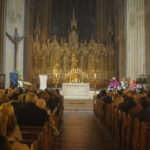
Episcopal Ordination Mass of Father Michael Router as Auxiliary Bishop of Armagh

Episcopal Ordination Mass
of Father Michael Router as Auxiliary Bishop of Armagh
21 July 2019 at 3.00 pm
in
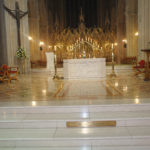
St Patrick’s Cathedral, Armagh.

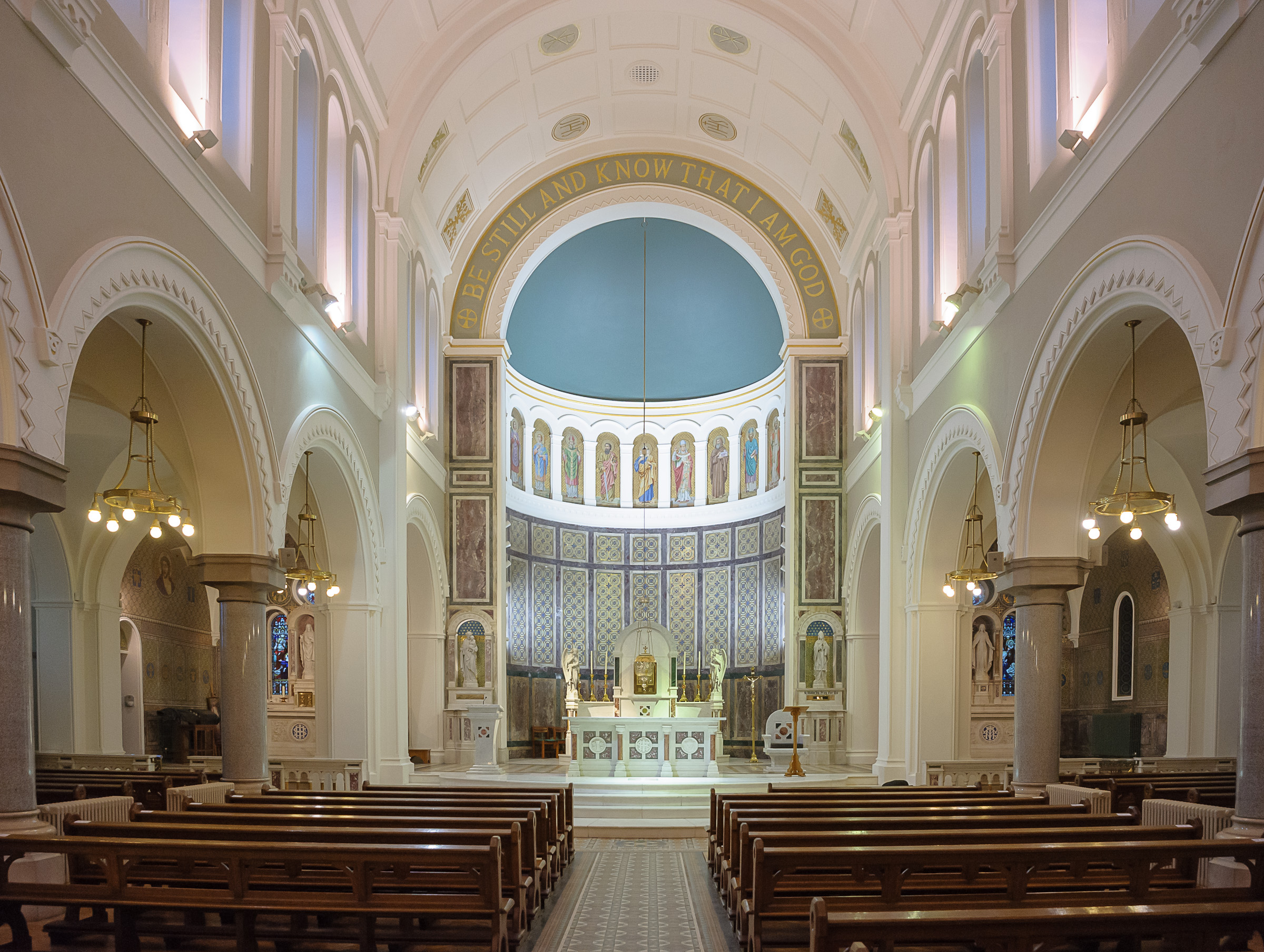
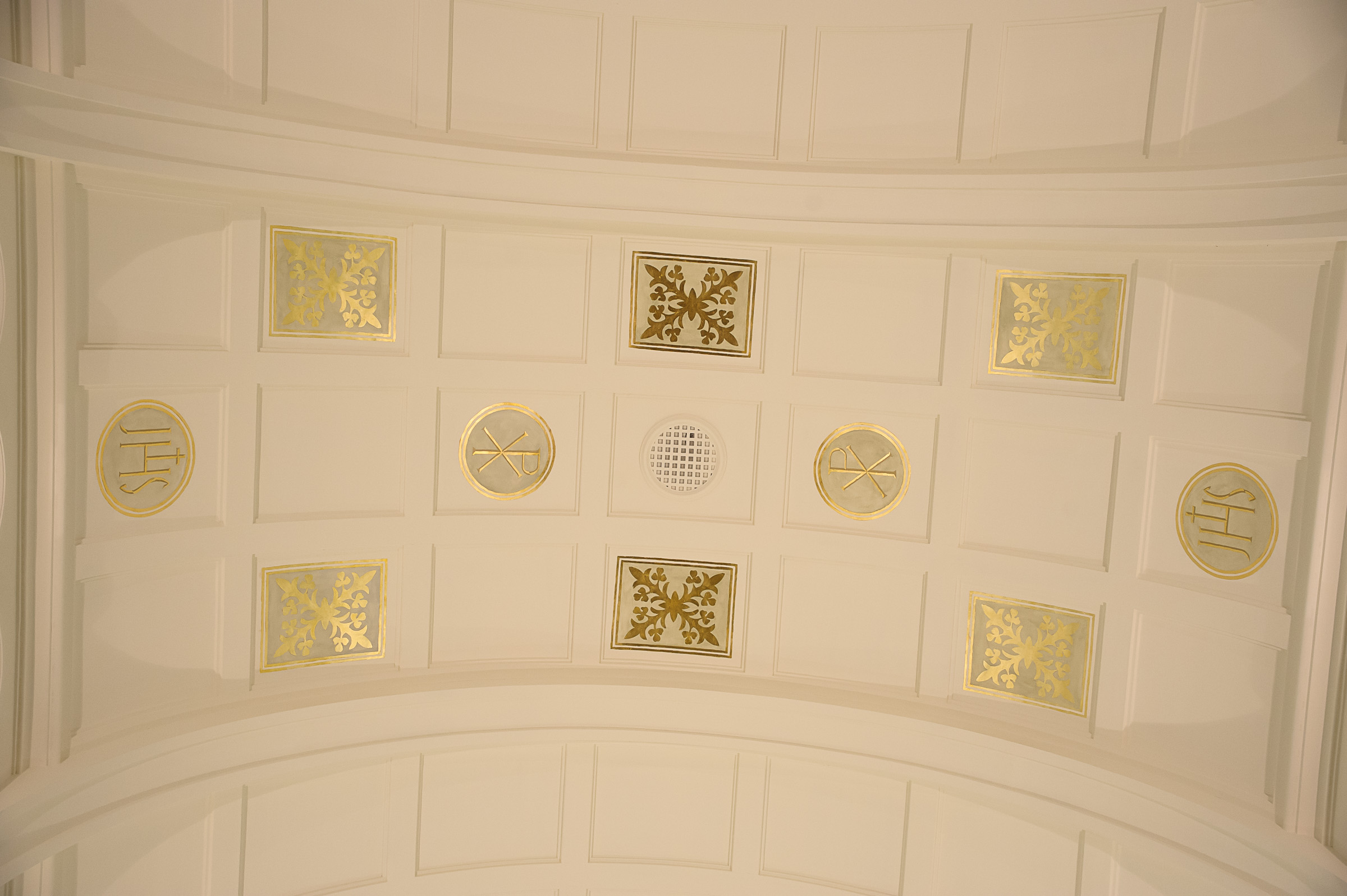
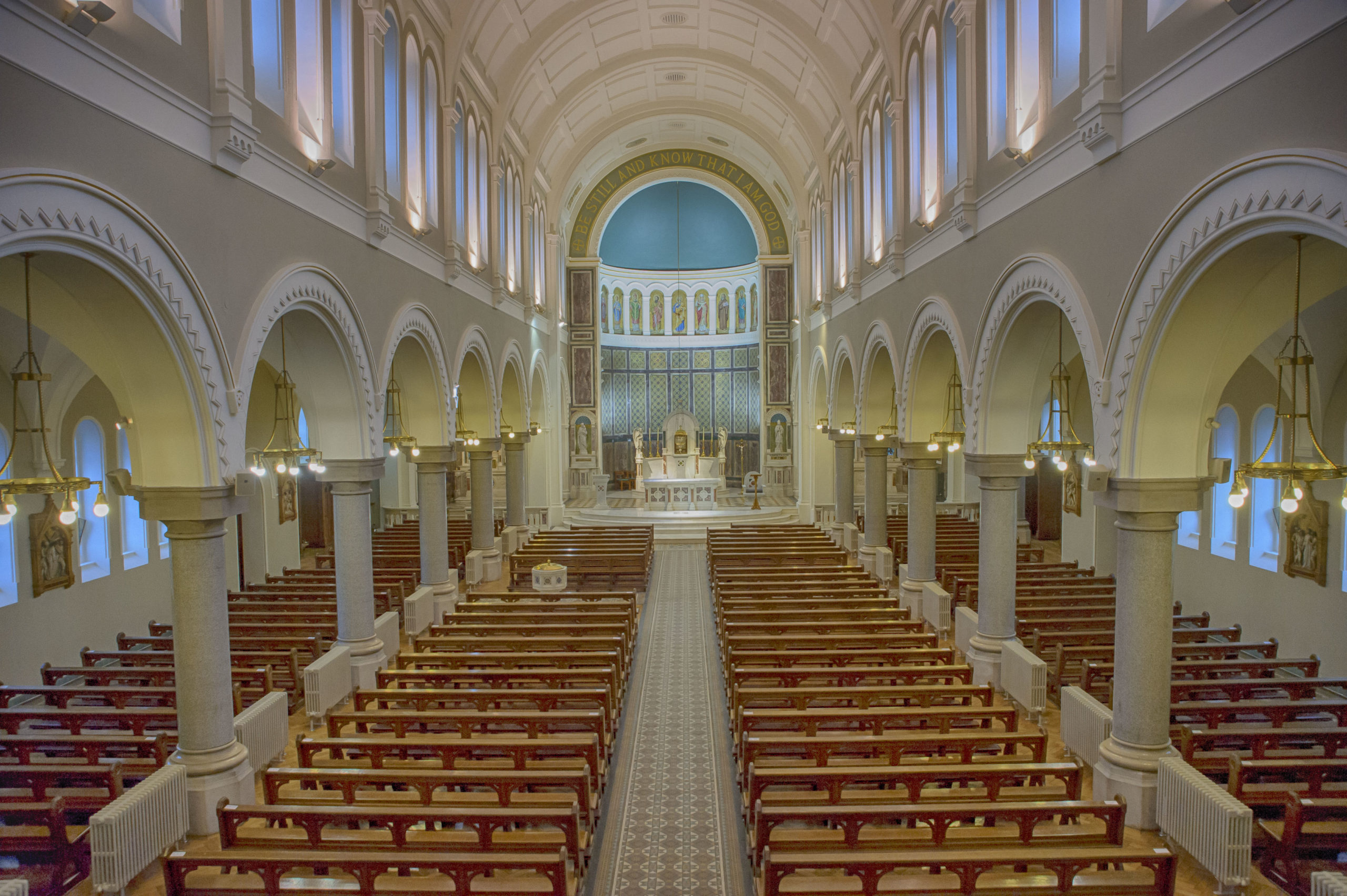
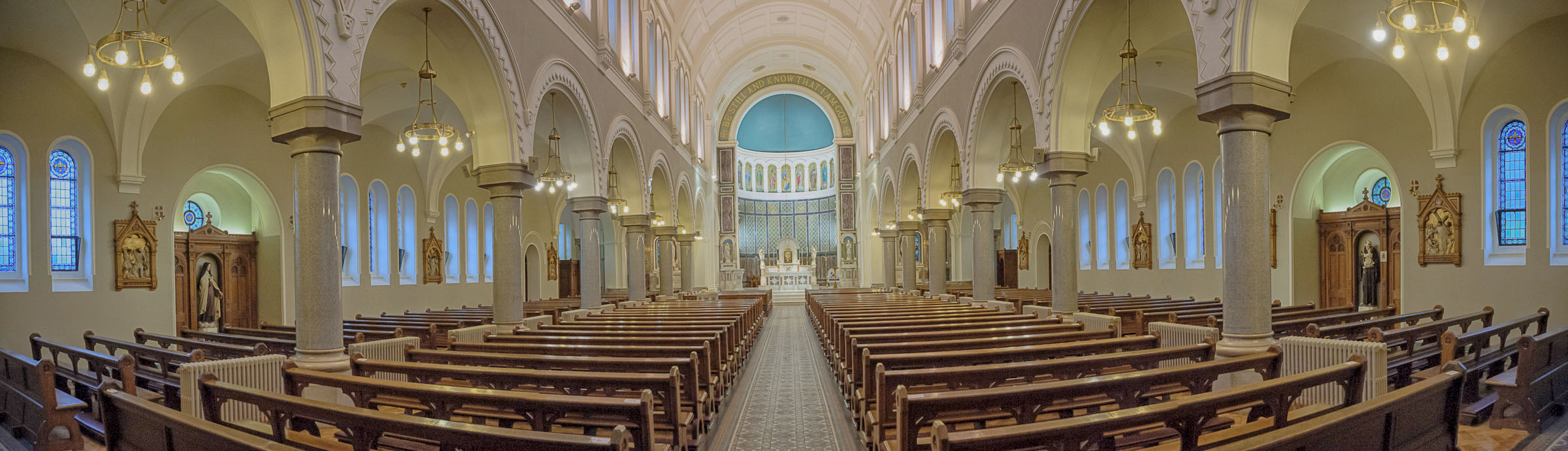
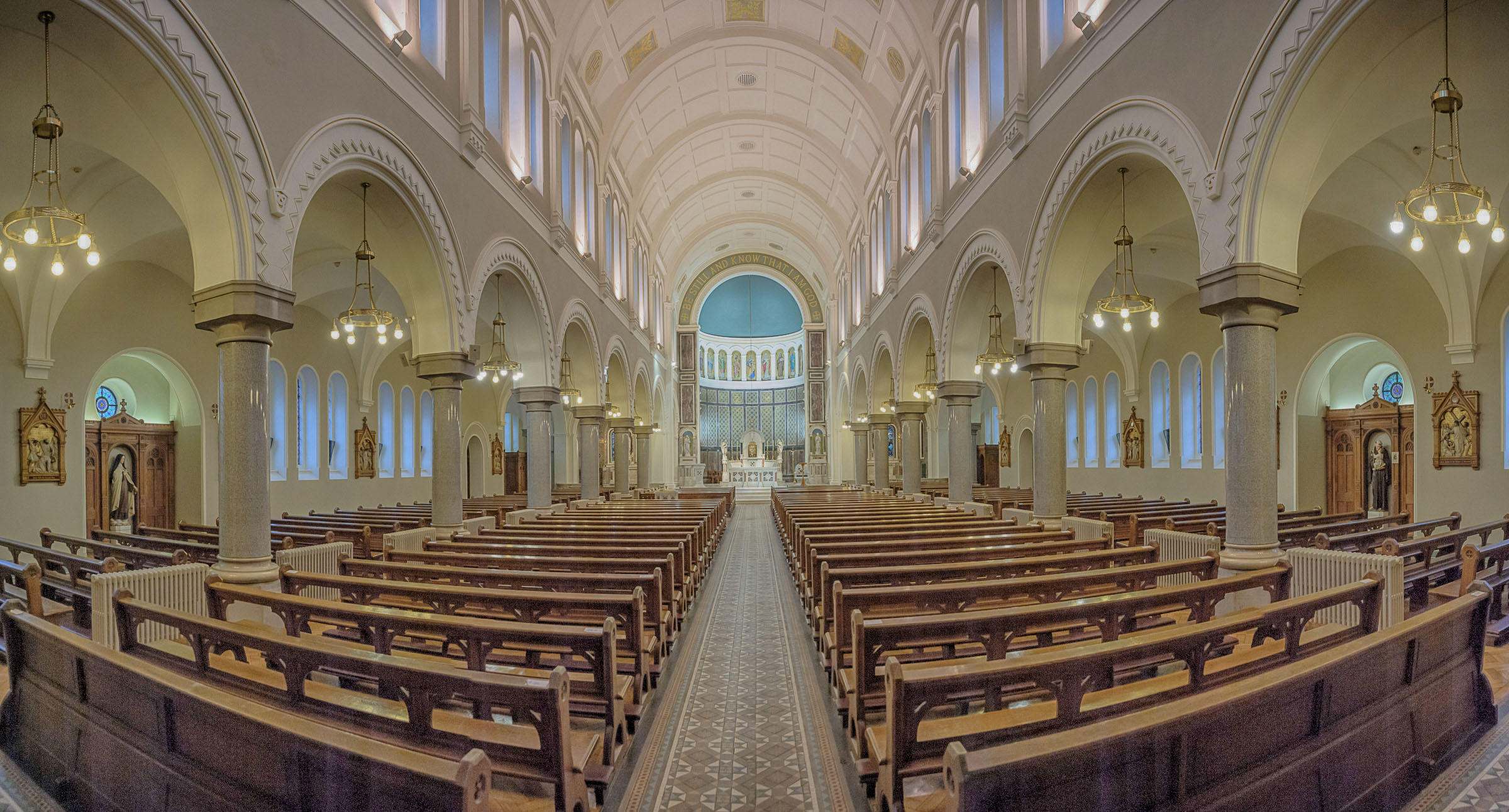
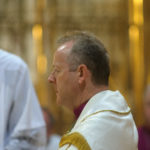
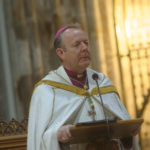
On Sunday 21 July at 3pm Father Michael Router will be ordained Auxiliary Bishop of Armagh in St Patrick’s Cathedral, Armagh.

Below are details for attendees and for those who wish to watch the Ordination Mass live on the Internet.

For Invitees

All admission cards have been allocated and should be brought with you on the day to ensure admittance.

Please be seated by 2.30p.m.

Car parking details are included on the reverse of your admission card.

Click here to view a map which outlines car parks.

For Clergy

Please bring a valid Celebret Card in order to concelebrate the Mass of Ordination.

Please be vested by 2.25 pm. Vesting is in the Cardinal Tómas O’Fiaich Memorial Library. Please bring an Alb. A Chasuble and Stole will be provided.

Watch live on the Internet

St Patrick’s Cathedral web cam will have a live stream of the Ordination Ceremony. It will be possible to watch the Ceremony live on the following sites:

www.armaghparish.net/live

https://www.churchservices.tv/armaghcathedral

We hope that this will help you feel connected with those gathered at the Ordination Mass.

General Information

Bishop Michael Router will greet people on the steps of St Patrick’s Cathedral after the Ordination Ceremony.

Vigil Mass on Saturday 20 April at 7.00 pm. During the Mass, the blessing of the Pontifical Insignia will take place. As we gather on the Feast of the Dedication of St Patrick’s Cathedral, Archbishop Eamon will bless Bishop Michael’s Pastoral Ring, Staff and Mitre. After Mass, there will be Adoration of the Blessed Sacrament, concluding with Benediction at 8.30pm, during which time we will pray for Fr Michael as he begins his new ministry. Everyone welcome.

On Monday 22 July at 7.30 pm in St Malachy’s Church, Armagh Fr Michael will celebrate his first Mass of Thanksgiving, to give thanks to God for his calling as Bishop and to pray God’s blessing on his work and ministry in the years to come. After the Mass, he will impart his blessing to all present. Everyone welcome. St Malachy’s web cam will have a live stream of the Mass of Thanksgiving. It will be possible to watch the Mass live on the following site:

St Malachy’s Church Webcam

Invitation to Prayer

O God, eternal Shepherd,
you care for your flock with tender love,
and chose
your servant and priest,
Michael Router
to the ministry of Bishop
in the Archdiocese of Armagh.

Grant, we pray,
that by his holiness of life
he may everywhere prove
to be a faithful witness to Christ.
Amen.

80 years of Apostolic Work in Armagh!

To celebrate the 80th year of the work of Apostolic Workers in the Archdiocese of Armagh, Archbishop Eamon Martin will celebrate a special Mass of Thanksgiving in St Patrick’s Cathedral on Saturday 12th October at 1pm. Many missionary priests will join for the celebration in the Extraordinary Month of Mission.

The organisation was started by Miss Margaret Colgan in 1939 and has provided wonderful support, both financially and materially for the last 80 years. The needs of the Missions are still great and they range from water, food, medicines, education, transport, Churches, Sacred Items, Altar Linens, Vestments etc.

All are invited to join as we celebrate this special occasion.

Children of St Oliver Plunkett’s Primary School, Ballyhegan, make donation to St Oliver Plunkett Appeal

Mr Ronan Gallagher and children of St Oliver Plunkett’s Primary School, Ballyhegan, present a cheque to Canon B Fee, Secretary of the Organising Committee for the statue of Saint Oliver Plunkett to be unveiled in Armagh Cathedral on July 9th following the Mass of Martyrs at 7.30pm.  The statue will mark the 350th Anniversary of the Appointment of St Oliver Plunkett to the See of Armagh and also honouring the Martyrs of Yesterday, Today and Tomorrow.

Ordination of Fr Michael Router as Auxiliary Bishop of Armagh

Saturday 20 July
7.00pm Vigil Mass in St Patrick’s Cathedral.
During the Mass, the blessing of the Pontifical Insignia will take place. As we gather on the Feast of the Dedication of St Patrick’s Cathedral, Archbishop Eamon will bless Bishop Michael’s Pastoral Ring, Staff and Mitre. After Mass, there will be Adoration of the Blessed Sacrament, concluding with Benediction at 8.30pm, during which time we will pray for Fr Michael as he begins his new ministry. Everyone welcome.

Sunday 21 July
3.00pm Ordination Ceremony in St Patrick’s Cathedral.

Monday 22 July
7.30pm Mass of Thanksgiving in St Malachy’s Church, Armagh. Fr Michael will celebrate his first Mass of Thanksgiving, to give thanks to God for his calling as Bishop and to pray God’s blessing on his work and ministry in the years to come. After the Mass, he will impart his blessing to all present. Everyone welcome.

Joint statement by Archbishop Eamon Martin and Archbishop Richard Clarke on ‘Thy Kingdom Come’ prayer initiative

A few years ago, Archbishop Justin Welby of Canterbury initiated what he believed would be a relatively small-scale project, asking members of his own Christian tradition to pray “Thy Kingdom Come” with real effort and focus in the days between the Ascension and Pentecost. These days between Ascension and Pentecost mark a spiritual interlude between Jesus Christ leaving the earth in his physical body at Ascension, and the day when the Holy Spirit came in power on his disciples at Pentecost. And we are told in the Scriptures that the disciples spent these days in Jerusalem in constant prayer.

Praying “The Kingdom Come” can be a familiar phrase that trips off the tongue a little too easily, but it should never be such. “The Kingdom of God” can best be understood as being the realm of God, that place where God is in full control, where God is completely supreme in the hearts and minds of his people. Praying for God’s Kingdom to come is therefore not simply a prayer for the world (although it is that), but it is also a prayer for our own spiritual renewal and a prayer for the Holy Spirit of God to enter the lives of those we know and love in a new and powerful way.

We are asked in these days to make a specific effort within this prayer to “pray for five”. This means praying intentionally for five people, but not necessarily those we instinctively pray for on a regular basis. This “prayer for five” should be that God will bless the people for whom they have prayed and give them a deeper awareness of his infinite love for them. It is not a condescending or judgmental prayer, but a simple act of truly Christian love and friendship. We sometimes wonder what prayer is able to do. There was a lovely reflection on the matter by Archbishop William Temple, “When I pray, coincidences happen; when I don’t, they don’t!”.

By God’s grace, what began as a simple local call for prayer has spread across almost all the Christian traditions and across the world. Pope Francis and Archbishop Welby with other church leaders have asked Christian disciples throughout the world to be part of this focussed wave of prayer. We now join in this call to prayer, coupling it with our own shared prayer to God, “Thy Kingdom Come”.

+Eamon, Roman Catholic Archbishop of Armagh and Apostolic Administrator of the Diocese of Dromore.
+Richard, Church of Ireland Archbishop of Armagh

Opening address on faith in the digital world by Archbishop Eamon Martin to mark World Communications Day 2019

The screen time facility on my mobile phone and tablet offers me a detailed analysis of the time I’ve spent on my favourite apps, on social media, browsing the internet, and working on speeches like this one. It tells me whether my total screen time is up, or down, on last week – which invariably leads to feelings of either guilt or self-congratulation. For Lent I tried to go off all screens between nine at night and nine in the morning – but failed miserably!

Out at the Synod of Bishops on Youth in Rome last October we considered the massive impact of ‘screen culture’ – including not only mobiles and tablets, but also cinema, mini-series and video gaming. We spoke about the exploitation of young people online, about the harvesting of their data, identity theft and scams. However the young people present pleaded with us that the Church should not just stand outside the digital world, looking in with disapproval. The Church should also recognise that Digital Technology, and especially Social Media, is now a permanent part of the life and identity of the majority of young people, and increasingly so, of all of us. The distinction between the “online” and “offline” world is becoming more and more nebulous.

Nearly sixty years ago in 1963, the decree Inter Mirifica (Amongst the Wonderful) on the media of social communications, was published by the Second Vatican Council to set a positive tone for the Church’s interaction with new media – here are its opening paragraphs:

“1. Among the wonderful technological discoveries … made with God’s help, the Church welcomes and promotes with special interest those which …. have uncovered new avenues of communicating most readily news, views and teachings of every sort. The most important of these inventions … can, of their very nature, reach and influence, not only individuals, but the very masses and the whole of human society, and thus can rightly be called the media of social communication.

2. The Church recognizes that these media, if properly utilized, can be of great service to mankind, since they greatly contribute to entertainment and instruction as well as to the spread and support of the Kingdom of God. The Church recognizes, too, that people can employ these media contrary to the plan of the Creator and to their own loss. Indeed, the Church experiences maternal grief at the harm all too often done to society by their evil use.”

Today’s seminar takes place in that positive, yet inquiring spirit. We are here to mark the message of Pope Francis for the 53rd World Communications Day which takes place this weekend on Ascension Sunday. I begin by losing our key question, “Can we be believers in the digital world?” – “Believers”, firstly in the sense that we recognise the positive and powerful possibilities of digital media for education, exchange of information, ideals, and interests. But “believers” also in another sense, as “believers” in God, for whom the digital world presents a vast “new continent” for meeting people, entering into dialogue with them, and opening up for them an encounter with Jesus Christ, and the challenges and the Joy of His Gospel.

Pope Francis sets out the context of his message clearly in the opening section:

“Ever since the internet first became available, the Church has always sought to promote its use in the service of the encounter between persons, and of solidarity among all. With this Message I would like to invite you once again to reflect on the foundation and importance of our being-in-relation and to rediscover, in the vast array of challenges of the current communications context, the desire of the human person who does not want to be left isolated and alone”.

Pope Francis continues,

“Today’s media environment is so pervasive as to be indistinguishable from the sphere of everyday life. The Net is a resource of our time. It is a source of knowledge and relationships that were once unthinkable. … If the Internet represents an extraordinary possibility of access to knowledge, it is also true that it has proven to be one of the areas most exposed to disinformation and to the conscious and targeted distortion of facts and interpersonal relationships, which are often used to discredit”

We will have an opportunity this morning to explore four particular perspectives:

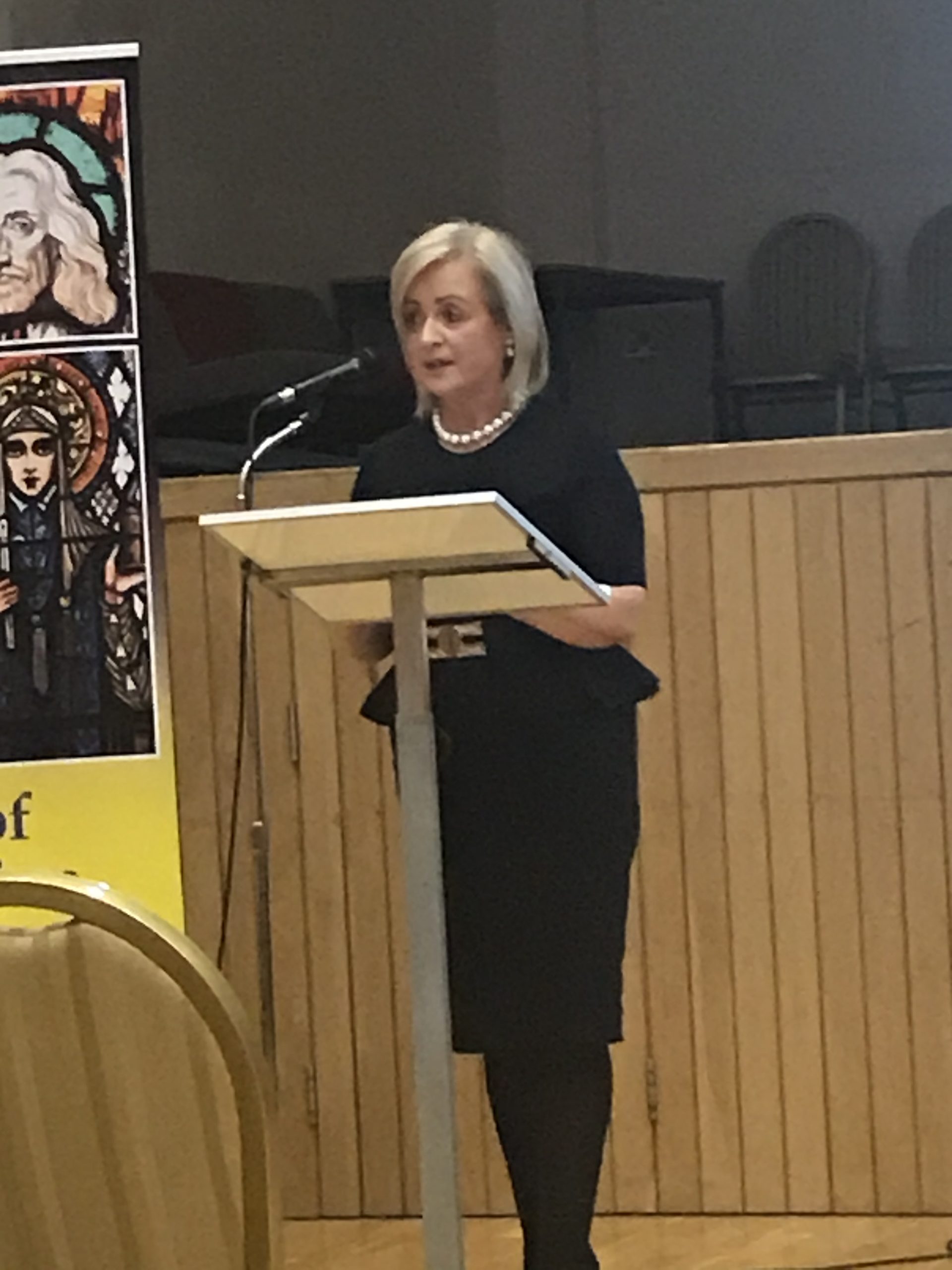
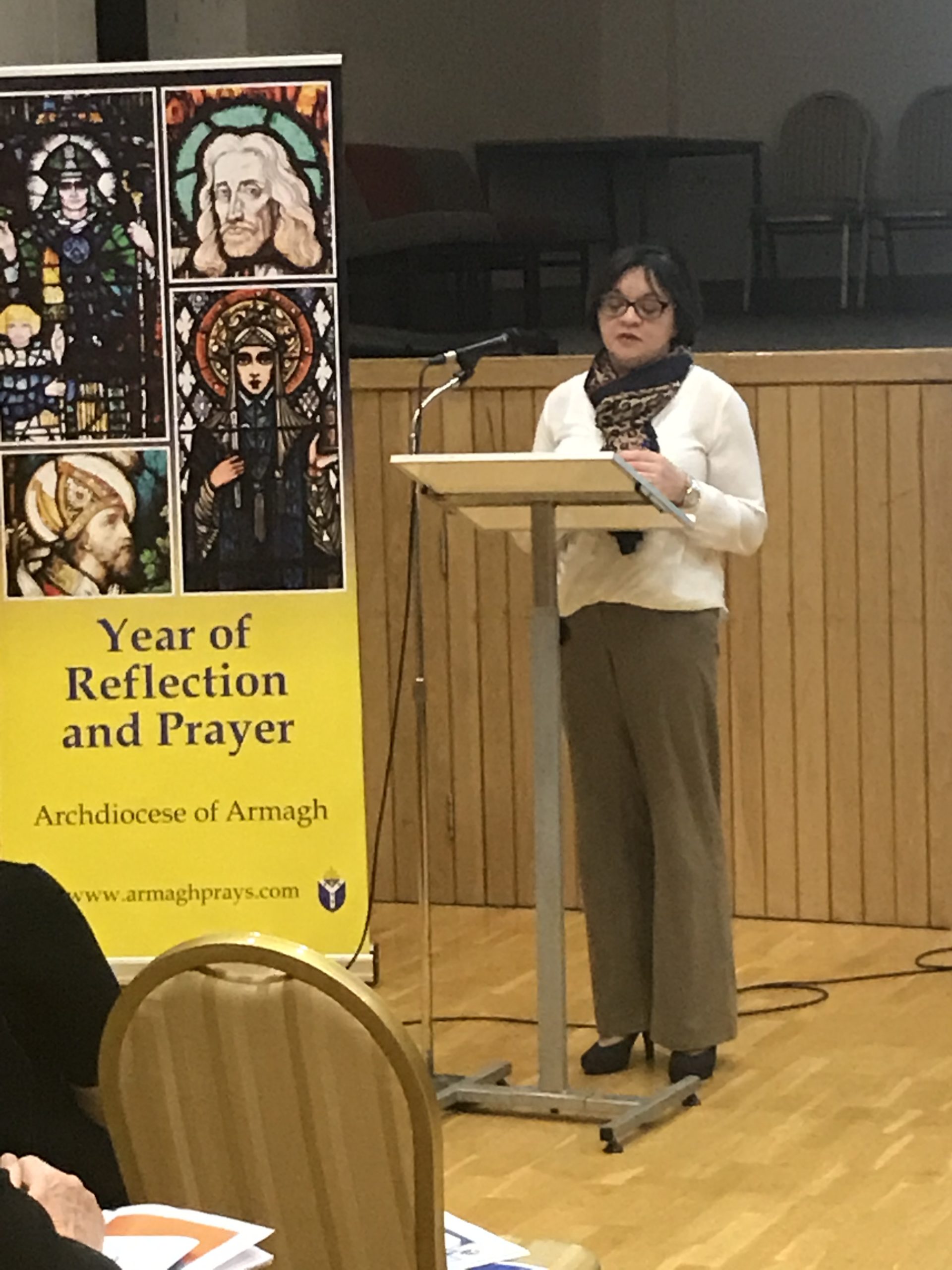
Two young people, Emma Tobin and Oisín Walsh, will describe their peer group’s experience of the digital environment; Brenda Drumm of the Catholic Communications Office will reflect on faith and evangelisation in the digital space. To help us consider some of the more difficult social media challenges, Detective Sergeant Mary McCormack will look at the challenge to society of online abuse and Darren Butler, of the Bishops’ Pastoral Response to Substance Misuse, will ask how parishes might addressing internet addiction.

Five years ago, I offered ten principles to guide the presence of believers on the “digital highways”.

1. Be positive, communicating the ‘joy of the Gospel’.
2. Strictly avoid aggression and ‘preachiness’ online; try not to be judgemental or polemical.
3. Never bear false witness on the internet.
4. Fill the internet with charity and love, continually seeking to include a sense of charity and solidarity with the suffering in the world.
5. Have a “broad back” when criticisms and insults are made – when possible, gently correct.
6. Pray in the digital world! Establish sacred spaces, opportunities for stillness, reflection and meditation online.
7. Establish connections, relationships and build communion, including an ecumenical presence online.
8. Educate young people to keep themselves safe and responsible online, particularly in light of cyberbullying and the prevalence and accessibility of pornography and online gambling.
9. “Give a soul to the internet”, as Pope Benedict XVI once said – at all times witness to human dignity online.
10. Be missionary, remembering that, with the help of the internet, a message has the potential to reach the ends of the earth in seconds!

With these principles in mind, I invite you to consider how we CAN be “believers” in the digital world, and, conversely, reflect on the impact which the digital world is having on Church, society, on family, on interpersonal relationships and on each of us as individual persons.

Clearly a screen culture which massively prioritises “image” over listening and reading, will influence the missionary endeavours of all the great world faiths whose members have been traditionally known as “People of the Book”.

The digital world also has obvious implications for our contemporary understanding and use of key concepts like love, friendship, community, gathering, solidarity with others, especially the vulnerable.

Some speak of the “ME” or “selfie” generation, which needs instant gratification and is nurtured by the narcissism and voyeurism of social networking – the extremes of this are seen in young people constantly checking their phones for likes and friends, obsessing for hours over their profile picture, or the macabre filming and instant sharing of tragic incidents like road accidents or the aftermath of terrorist attacks. What can believers say into this space? How might we understand more fully the driving forces within cyberspace and witness by our example to a Christian, healthy, and wholesome presence online?

Pope Francis refers to the danger of creating “closed circuits” on the Net, with people all thinking alike and easily manipulable by powerful outside interests which can “facilitate the spread of fake news and false information, fomenting prejudice and hate”. He cautions on the other hand against the isolation and loneliness which can pervade our internet use, and “the dangerous phenomenon of young people becoming “social hermits” who risk alienating themselves completely from society”. How can Christians build bridges across the divides online, be reconcilers, peacemakers, comforters, instilling hope, love, faith?

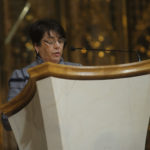
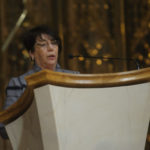
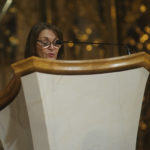
I suggest that Church and society has much to evaluate and reflect on in these areas. However the sheer exponential speed of development of the World Wide Web, the immensity of questions raised about our identity and relationships and belonging, not to mention the huge ethical and moral questions it poses, can sometimes frighten us from even going there. Our distinguished chairperson, Senator Joan Freeman, will share with us the work which she, Dr Mary Aiken and others have been doing to encourage dialogue and legislation to better safeguard our children and young people online.

Before handing over to the chair to introduce our Working Groups I leave the final words again to Pope Francis from his Message for this Sunday:

“… If a family uses the Net to be more connected, to then meet at table and look into each other’s eyes, then it is a resource. If a Church community coordinates its activity through the network, and then celebrates the Eucharist together, then it is a resource. If the Net becomes an opportunity to share stories and experiences of beauty or suffering that are physically distant from us, in order to pray together and together seek out the good to rediscover what unites us, then it is a resource.

We can, in this way, move from diagnosis to treatment: opening the way for dialogue, for encounter, for “smiles” and expressions of tenderness … This is the network we want, a network created not to entrap, but to liberate, to protect a communion of people who are free. The Church herself is a network woven together by Eucharistic communion, where unity is based not on “likes”, but on the truth, on the “Amen”, by which each one clings to the Body of Christ, and welcomes others”.

Thank you for your participation this morning and I hope that you enjoy and benefit from today’s opportunity for interaction and dialogue.

Speaking notes of Archbishop Eamon Martin at Mass for the ‘Thy Kingdom Come’ prayer initiative – National Marian Shrine, Knock, Co Mayo

Speaking notes of Archbishop Eamon Martin at Mass for the ‘Thy Kingdom Come’ prayer initiative
National Marian Shrine, Knock, Co Mayo

“I ask you to think of five people and pray that their lives may be touched by the power of the Holy Spirit and that the love of Christ may really take root in their hearts” – Archbishop Martin

In today’s Gospel Reading for the sixth Sunday of Easter, Jesus promises His disciples that, after He has gone and returned to the Father, He will send them a gift, so that they do not feel like orphans and so that their hearts will not be troubled or afraid. That gift will be the Holy Spirit, which the Father will send to teach his people and to remind them of all that Jesus said and did when He was on earth.

At the final Mass of the World Meeting of Families in Dublin last August, Pope Francis remarked that it is “the Spirit of God, who constantly breathes new life into our world, into our hearts, into our families, into our homes and parishes.” He said that “each new day in the life of our families, and each new generation, brings the promise of a new Pentecost, a domestic Pentecost, a fresh outpouring of the Spirit, the Paraclete, whom Jesus sends as our Advocate, our Consoler and indeed our Encourager.”

The promise of the Holy Spirit remains with us today. That is why, especially during these final days of the Easter season, and as we approach the feasts of the Ascension and Pentecost, we can pray earnestly and with all our hearts: “Come Holy Spirit”!

The beautiful prayer to the Holy Spirit is perfect for these days: “Come Holy Spirit, fill the hearts of your faithful and kindle in them the fire of your love. Send forth your Spirit and they shall be created. And You shall renew the face of the earth”.

Friends, reflect with me on the sheer joy and confidence of that prayer! We call on the Holy Spirit because we believe the Spirit can change us and change the world. The Spirit can renew the face of the earth. The Spirit can bring us new life, the Spirit can recreate in us what God wanted us to be in the first place! The Spirit can “rejuvenate” us – make us young again!

Out at the Synod for Youth which was held by Pope Francis in Rome of last October, I suggested that we do not speak enough in the Church about the power of the Holy Spirit. After all, it is Holy Spirit who “rejuvenates” the Church.

I said at the Synod that I’d like to hear more of the joyful language of the ‘new springtime’, the ‘new Pentecost’ which every Pope since the Second Vatican Council has called for. As Pope Saint Paul VI famously said, “The Church needs her eternal Pentecost; she needs fire in her hearts, words on her lips, a glance that is prophetic (General Audience 291172)”.

I am convinced that the Spirit is already actively at work preparing us for a new springtime of growth and abundance in faith.

How can we encourage people to be more alert and open to the Holy Spirit, calling us and “gifting” us for the service of the Gospel? Every day I pray for vocations to the priesthood and to the consecrated life. But I also pray that all our lay faithful, especially our young people, will find “new life in the Spirit” and realise more and more that we are all called personally by Baptism and Confirmation to be part of the “new springtime” for the faith. It is the Holy Spirit who can enable us to embrace our own unique role in the new evangelisation.

In encouraging you, then, to pray “Come Holy Spirit” in these days before Pentecost, might I also suggest – as other Christian Church leaders around the world are doing during these days – that you might pray another three-word prayer, namely: Thy Kingdom Come.

Of course we pray those words many times every day in the Our Father, ‘Thy Kingdom Come’, and afterwards as we continue, ‘Thy will be done on earth as it is in heaven’.

When we pray ‘Thy Kingdom Come’, we imply that we want God’s will to be the motivation for everything we think, and say, and do, every day of our lives. The two prayers ‘Come Holy Spirit’, and ‘Thy Kingdom Come’, work perfectly together, because it is the Holy Spirit, working within us, who helps to establish God’s Kingdom here on earth – a Kingdom of Love, of Justice, of Peace – a Kingdom where patience, kindness, generosity and charity are alive and well, and where selfishness, anger, oppression and violence are shunned.

How I long for the New Pentecost, for a fresh outpouring of the Holy Spirit to transform and renew the faith in Ireland and rejuvenate our Church!

Remember the Kingdom of God is present whenever Jesus Christ is present. Jesus Christ is “God-with-us” and if we accept Jesus in our hearts, then, with the power of the Holy Spirit, we can truly become witnesses and workers for the Kingdom of God!

I join with Pope Francis and the Anglican Archbishop Justin Welby of Canterbury and with my friend and brother Archbishop Richard Clarke – the Church of Ireland Archbishop of Armagh – in encouraging you to pray ‘Thy Kingdom Come’ in the coming days around Ascension Sunday and Pentecost Sunday.

In particular, we encourage you to choose five particular individuals and pray that they might make the best decision that anyone can ever make in their lives – to become followers of Jesus Christ. I ask you to think of five people – not necessarily five family members – five different people, and pray that their lives may be touched by the power of the Holy Spirit and that the love of Christ may really take root in their hearts.

People sometimes ask me what is the proper way to greet an archbishop. Well, the other day a little boy surprised me by holding up his hand and saying “High Five, Bishop”! The Holy Bible often speaks of believers ‘lifting up hands’ in prayer. So, in the final days leading to Pentecost, why not consider a different kind of ‘High five’? Why not lift up your hand in prayer to the Holy Spirit, praying for those five individuals to become true followers of Jesus Christ. Pray for them: ‘Come Holy Spirit’, ‘Thy Kingdom Come’.

ENDS
For media contact: Catholic Communications Office Maynooth: Martin Long +353 (0) 86 172 7678
Notes for Editors

• Archbishop Eamon Martin is Archbishop of Armagh and Apostolic Administrator of the Diocese of Dromore, and Primate of All Ireland. This homily was delivered at 3.00pm Mass today at the Basilica of Our Lady of Knock.

• Thy Kingdom Come is a global prayer movement that invites Christians around the world to pray for more people to come to know Jesus. What started in 2016 as an invitation from the Anglican Archbishops of Canterbury and York to the Church of England has grown into an international and ecumenical call to prayer.

• The story of Knock began on the 21 August 1879 when Our Lady, Saint Joseph and Saint John the Evangelist appeared at the south gable of Knock Parish Church. This miraculous apparition was witnessed by fifteen people, young and old. Knock is an internationally recognised Marian Shrine and was visited by Saint Pope John Paul II in 1979 as part of his apostolic pilgrimage to Ireland, and by Pope Francis in 2018 as part of the celebration for the IX World Meeting of Families. Archbishop Michael Neary, Archbishop of Tuam, is the custodian of the Marian Shrine and Father Richard Gibbons is parish priest of Knock and rector of the shrine. Please see: www.knockshrine.ie for more information.

Archbishop Eamon Martin welcomes the appointment of Father Michael Router as Auxiliary Bishop of Armagh

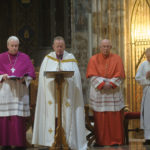
Pope Francis appoints Fr Michael Router, as auxiliary bishop of Armagh, to assist Archbishop Eamon Martin, Primate of All Ireland. St Patrick's Cathedral, Armagh, 7 May 2019 LiamMcArdle.com
I am very pleased that Pope Francis has appointed Father Michael Router from the Diocese of Kilmore to be the next Auxiliary Bishop of Armagh.
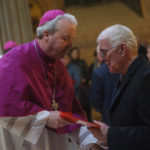
Around this time last year, five years after the retirement of the late Bishop Gerard Clifford as Auxiliary Bishop, I asked Pope Francis to consider appointing a new Auxiliary Bishop to assist me. This morning I thank God for the appointment of Father Michael Router and I am very grateful to the Holy Father Pope Francis and to His Excellency Archbishop Okolo, Apostolic Nuncio to Ireland, for facilitating my request. Father Router’s appointment is particularly welcome given the Holy Father’s recent request that I would take on additional responsibility as Apostolic Administrator to the Diocese of Dromore.
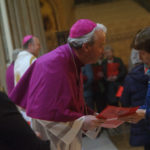
I am thankful to Father Michael for generously accepting this new call from God to leadership responsibility in the Church. I am grateful to his parents and family and to Monsignor Liam Kelly and the Diocese of Kilmore for giving us such a talented and devoted pastor. Father Michael has already gained considerable experience in leading pastoral development and adult faith formation and I look forward to his assisting me by contributing to these pastoral issues as well as others within both the Archdiocese of Armagh and the Diocese of Dromore. These are challenging times for all of us in the Church in Ireland but I have no doubt that, if we are open to the promptings of the Holy Spirit, there will be new life and hope in our parishes – may the Holy Spirit therefore guide and inspire Father Michael in his mission among us.

Over the past sixty years, the Auxiliary Bishops of Armagh have made a significant contribution to the life of the diocese – from Bishop William Conway who came to us as Auxiliary Bishop in 1958 from County Antrim and who went on to become Cardinal Archbishop of Armagh – to Bishop Clifford from Louth who gave more than twenty years devoted service to the people of the diocese. Today as we welcome another Cavan man (following Cardinal Seán Brady) to the Archdiocese, I have no doubt he will bring new gifts, ideas and motivation to our mission of spreading the joy of the Gospel in this time and place.

I am confident that Father Michael will receive a warm welcome from the people, priests and religious in both the Archdiocese of Armagh and the Diocese of Dromore. I remember after my own ordination as archbishop six years ago and feeling hugely supported by assurances of prayer and support all around me from the people of the Archdiocese and from my family and friends.

Please pray for Father Michael as he prepares for his episcopal ordination in the summer months. May God bless his mission and ministry and may he have the gifts of wisdom and courage in abundance.

Statement of Father Michael Router on his appointment as Auxiliary Bishop of the Archdiocese of Armagh

On Monday morning of Holy Week, I was sitting at my desk writing a funeral sermon for an elderly man of great faith. I was contemplating using, as the theme of the sermon ‘Into your hands, O Lord I commend my Spirit’, the final words of Jesus on the Cross proclaimed in the gospel at the Passion Sunday Mass the previous day. As I began to write I received a phone call from Archbishop Okolo, the Papal Nuncio, informing me that he would like to have a chat with me at my convenience. As the funeral was taking place in Dublin the following Wednesday, I arranged to meet him that day. At the meeting the Archbishop gently told me that Pope Francis wished to appoint me as Auxiliary Bishop of the Archdiocese of Armagh. My reaction was one of shock, surprise and no little dismay. The theme running through Holy Week for me had suddenly become more personal, and indeed alarming: ‘Into your hands O Lord, I commend my Spirit’. Until that moment I had been happily serving as parish priest in Bailieborough and reasonably expecting, that God willing, I would be there for several more years; perhaps even until retirement. I never saw myself as someone worthy of this office and, as I stand before you today, I am very conscious of my limitations and weaknesses. I am very grateful to Pope Francis for the trust he has placed in me and I pray that the Holy Spirit will provide what is otherwise lacking.

Despite the surprise and shock that his message brought to me I wish to thank Archbishop Jude Thaddeus Okolo for his kindness and for his gentle reassurance in my meeting with him and indeed in the weeks since then.

It is truly an honour for me to join the clergy and people of the Archdiocese of Armagh, founded by our patron, Saint Patrick and also to assist the Archbishop in his roles as Archbishop of Armagh and as Apostolic Administrator of Dromore Diocese. Archbishop Martin has been most welcoming and helpful to me since he heard of my impending appointment. He has certainly done everything possible to make this transition and upheaval as painless as possible for me. Archbishop Eamon I thank you for your kindness and I look forward to supporting you in whatever way I can in the years ahead.

I wish to thank also Bishop Leo O’Reilly, Bishop Emeritus of my native diocese of Kilmore, who has been a tremendous example and inspiration to me over the past 22 years. His retirement in January of this year has deprived us of his leadership but I pray that his wisdom, guidance, and encouragement will be available to me and to many others in the years ahead. We are fortunate to have in Kilmore, during the interregnum, a very able administrator in Monsignor Liam Kelly and I wish to thank him as well for his encouragement and support.

The most supportive and loving people in my life are, of course, my parents Tony and Nora and my sisters Breda and Martina my brothers in law, Derek and Ollie, my nieces and nephews and all my family circle. I thank them today for all they have contributed to my life thus far and for the support they have given me throughout my thirty years of priestly ministry.

I am in many ways a complete stranger to this area but I suppose I do have some spiritual connections. From my home place in Virginia, Co Cavan, there is a beautiful view across Lough Ramor to the Loughcrew hills, near Oldcastle, the birthplace of Saint Oliver Plunkett who served this Archdiocese in very difficult times and was obedient unto death. We are going through testing times today as a Church but those tribulations pale in comparison to what Saint Oliver and his contemporaries endured. I pray that I will have some of his courage and strength in my calling.

Another spiritual connection which comes to mind this morning relates to Saint Benan, known in Latin as Saint Benignus. Three years ago, when we reorganised the Pastoral Areas in the Diocese of Kilmore, we were searching for a name for the grouping of parishes centred around Bailieborough. One of our Pastoral Area Council members suggested the name of Saint Benan, who as a boy was one of the first converts of Saint Patrick. Legend has it that Benan, on one of his missionary excursions with Saint Patrick into Breffni, established a Church in Drumbannon, on the outskirts of the present-day town of Bailieborough. He later became the first assistant bishop to Saint Patrick here in Armagh and was also his cantor or psalm singer. I hope I am able to assist Archbishop Eamon in many ways but I’m afraid my singing voice is such that I won’t be able to assist him as a cantor. Thankfully the Archbishop has abundant talent of his own in that area. Like Saint Benan I move from Bailieborough to the Archdiocese of Armagh and, as I do so, I pray for his intercession and help[i].

As I grew up in County Cavan from the 1960’s to the 1980’s the work, influence and example of lay people, clergy and religious in the Church community, both locally and nationally, were a hugely positive influence in my upbringing. My parents were always closely involved in parish life and their experience was positive and rewarding – a source of blessing and fulfilment for them and for our family to this day. The commitment, the spirit and the faith of the local clergy in my native parish of Lurgan, Co Cavan, and the dedication and kindness of the religious who taught me, laid the foundations of my personal faith and nurtured my vocation to the priesthood. As a priest I have been very fortunate to have the inspiration, the support and true Christian example of the people, priests and religious in the diocese of Kilmore over the past thirty years, particularly in Saint Patrick’s College, Bailieborough Community School and in the Diocesan Pastoral Centre and also in the parishes of Killinkere, Kilmainhamwood and Moybolgue, Castletara, Cavan and in my present position in Bailieborough in the parish of Killann.

I am sharply aware that many people do not share the same positive experience of Church that I do. For various historical and cultural reasons, the Church in this country became, for many years, too comfortable in its position of temporal as well as spiritual authority. The present time, however, is a period of unprecedented change for the Church in this country and the pace of change will only continue to increase in the years ahead. But as people of faith we must anticipate and embrace that change. We must never hanker for the certainties of the past but work towards creating a new expression of what it means to be Church in this time and this place. Even though I take on this role with fear and trepidation in my heart I do so also with a sense of excitement that we are at a crossroads where we can shape a new existence for our faith communities. As a Church we move more and more from the centre to the margins and even though that is painful for many it will be, I believe, a positive thing in the long term. From the margins the Church can give full reign to its prophetic voice and challenge, head on, the injustice, the economic inequality, the violence, the despair and the sense of alienation that exists in society today. Now is the time for us, while we still have reasonable numbers and a little energy, to shape the future that we want to see and to continue to bring ourselves and our communities into a deeper relationship with Jesus Christ who will bring us freedom and take on all our burdens and our anxieties if we trust in Him.

Even though I am very conscious of my own weakness and limitations, and I very reluctantly take on this role today, I abandon myself to God’s will and I call on the power of his Holy Spirit to guide and inspire me. I know that His help, support and encouragement will come to me through the people and priests of this great archdiocese; people and priests that I will be greatly honoured to work with, to learn from and to serve in the future.

Saint Patrick, pray for us, Saint Bridget, pray for us, Saint Malachy, pray for us, Saint Oliver Plunkett, pray for us, Saint Benan, pray for us.

ENDS

ENDS

• Archbishop Eamon Martin is Archbishop of Armagh and Apostolic Administrator of the Diocese of Dromore.

For media contact: Catholic Communications Office Maynooth: Martin Long +353 (0) 86 172 7678 and +353 (0) 1 505 3017.

Fatima Young Adults booking Form

To confirm the place, a deposit of £150 is required as soon as possible. Electronic payment to; Sort code: 90-20-47 Account number: 23801038. Please use your full name followed by Fatima as your payment reference. Other payment methods are as follows: Cheque, Banker’s Draft or postal order. Cheques should be made payable to ‘ADYC’ and posted to ADYC, Archdiocese of Armagh, Cathedral Road, Armagh, BT61 7QY. All deposits are non refundable.

Complete the form below and forward deposit:


Create your own user feedback survey