Saturday, December 27, 2025
Home Blog Page 67

Graduation Day

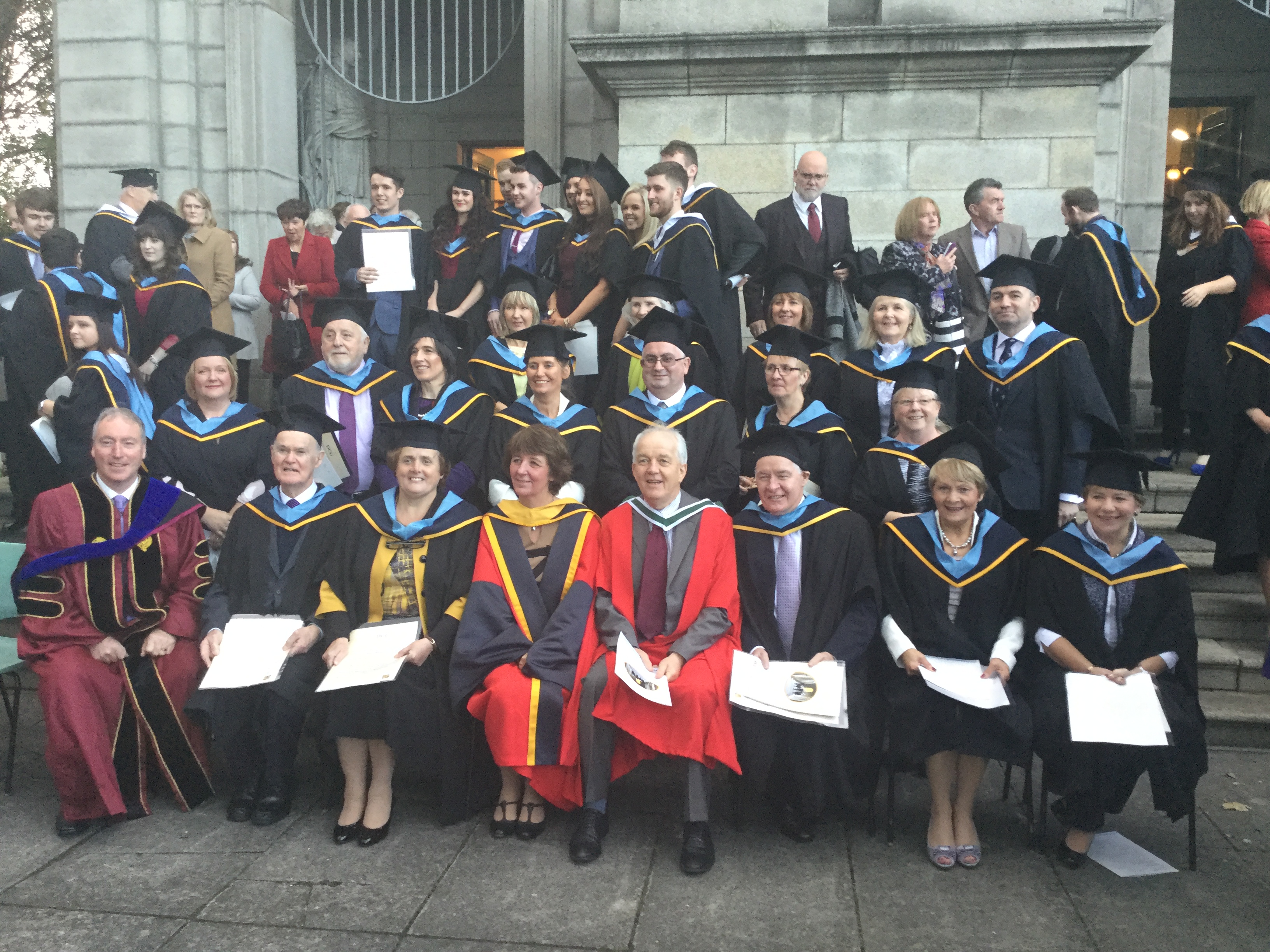
Last Friday twenty four parishioners from the Archdiocese of Armagh graduated with Honours Degrees in Theology and Lifelong Education at a lovely ceremony in Clonliffe Church, Dublin.

It was the culmination of six years of study and the men and women who received their Degree parchments from Prof. Brian MacCraith, President of Dublin City University, were worthy recipients of their awards. They were warmly congratulated by Dr. Diarmuid Martin, Archbishop of Dublin, who celebrated mass prior to the Award Ceremony and by Dr Martin McAleese, Chancellor of DCU, who was the keynote speaker at the event.

Many of our graduates are already using their skills and expertise in a variety of church settings such as schools, Pastoral Councils and Commissions.

Under the auspices of the Adult Faith Commission, each of them has been invited to participate in the implementation of the Pastoral Plan and over the next few months, a range of short programmes and initiatives will be presented in local parishes by many of the new graduates. We congratulate them and their families and wish them every blessing for the future!

Pastoral letter from Archbishop Eamon on current Refugee Crisis

A Pastoral Letter from

Archbishop Eamon Martin

Sunday, 25 October 2015

Some of the most moving contributions at the Synod on the Family have been about the plight of migrant and refugee families in many parts of the world. I found myself deeply moved on several occasions as we listened to accounts of families separated, grieving and oppressed because of war and persecution in their homelands. An African bishop told us that massive numbers of refugees have poured into Ethiopia, Kenya, Uganda, Zambia and Malawi. Some of the poorest countries in the world such as Malawi have been inundated with people fleeing war and destruction.  Malawi has been dealing with over 400,000 refugees. So far, we have been asked to take only a small fraction of that number into Ireland as a whole.

Church

Like the blind beggar Bartimaeus in today’s Gospel, sitting on the side of the road, members of these unfortunate families cry out to us: ‘Have pity on me’. The Church has been playing its part in responding. Great work has already been done by a host of individuals, groups and parishes across the diocese such as Trócaire and St Vincent de Paul, Parish Pastoral Councils, schools and other agencies.  I thank all of you for your generosity and solidarity with the plight of these tragic people.  Many of you have contributed financially to support the work of charities dedicated to relieve the sufferings of the refugees and you can continue to do so by donating to their work at
http://www.trocaire.org/refugee-crisis.

Government

Although the resettlement of refugees is a complex issue, the governments in both parts of Ireland must do more to protect the human rights of refugees. We are being confronted with a human tragedy that requires a generous political and church partnership to help meet the needs of these vulnerable people. We have not always handled refugees with the respect that they deserve and lessons need to be learned from the mistakes we have made in the past. There is a pressing need for prompt strategic action that weds together a cohesive plan for welcome, integration and provision of sustainable resources for the refugees. I ask you to stress this to all political figures local, national and international.

What next?

In today’s First reading the prophet Jeremiah speaks about the way that God comforts his people by reaching out to them in their need:

‘See, I will gather them from the far ends of earth…

They had left in tears,

I will comfort them as I lead them back;

I will guide them to streams of water,

by a smooth path where they will not stumble.

For I am a father to Israel…’

As we look to the future and make initial preparations for the arrival of the first cohort of refugees into our diocese, I encourage Parish Pastoral Councils to continue to liaise with other agencies and to coordinate our resources and our response.  Many of you are looking at this issue as a response to the call of Pope Francis to reach out to the poor and disadvantaged and of course it is a key objective of our diocesan plan.  We can garner the rich array of talents and gifts that are readily present in our communities and use them to meet the human, practical and spiritual needs of the brothers and sisters who will come to us.

Finally, as Christians, I ask that we commit ourselves to pray for those who have been caught up in all these terrible conflicts and I ask you to pray with me the prayer for refugee and migrant families everywhere.


+ Eamon

A Prayer for Refugees

Almighty and merciful God,

Whose Son became a refugee

And had no place to call his own;

Look with mercy on those who today

Are fleeing from danger,

Homeless and hungry.

Bless those who work to bring them relief;

Inspire generosity and compassion in all our hearts;

And guide the nations of Europe towards that day

When all will rejoice in your Kingdom of justice and peace.

We make our prayer through Christ our Lord, Amen.

Inspiring Stories told in Armagh

At the recent “Great People, Great Stories, Come and Listen” event in the Synod Hall, Armagh, the guest speakers were Brother Philip Mulryne, former Manchester United and Norwich City footballer, currently in formation for the priesthood with the Dominican Order; and Sister Rhoda Curran, Sister of Mercy, Director of the Armagh Diocesan Pastoral Centre, Dundalk, well known also for her involvement with the Beginning Experience and Rainbows. Uplifting music and song was provided by Paschal McAnenly with proceedings chaired by Sr Carmel Flynn.

Brother Philip’s testimony was truly inspiring as he took his audience through his childhood days in Belfast, his experiences as a professional footballer to his current life. Philip attributes his arrival at his true vocation to the prayers of his older sister, who knowing that priesthood was his destination, prayed for 15 years that he would finally recognise his call.

In recalling his childhood days in Belfast in the 80s, he said: “I had a natural relationship with God, God was very real to me, but I did not consider myself to be overly religious.” In moving to Manchester at 16 he felt that he was fulfilling his sole objective and passion in life to play football professionally. He realised that he did not take a “living faith” with him and was, therefore, easily subsumed into the alluring lifestyle. Yet he also appreciates that here a definite thread to his present life was established in the discipline of training, and in the values gained from the influence of people such as Alex Ferguson, Roy Keane etc.; particularly highlighting humility. His move to Norwich in 1999 witnessed a further thread in the person of Delia Smith whose strong faith he found admirable.

He recognised that at this time he continued to live and love the glamorous lifestyle as: “that was where I was at this time. I had lots of money, didn’t know what to do with it so was constantly searching. Life was an endless search through things.” However, a defining moment came for him when he invited his older sister and her family to share Christmas with him in his recently acquired mansion. His pride “took a knock” when she was totally unimpressed and simply asked: “Are you happy, Philip? This question haunted him and led him to reflect on the meaning of life resulting in him returning to his “physical” home in Belfast and his “spiritual” home the Church through his involvement in the Legion of Mary and in his work in a homeless shelter. Here the “powerful image of grown men on their knees praying the Rosary” resulted in him realising the presence of God in all men….. “turning everything upside down for me”. Priesthood not football now became his passion and the realisation that if he did not answer this call he would spend the rest of his life regretting it.

He concluded by stating that the decision has brought him “tremendous joy” and the wonderful consolation that in times of darkness, which do happen for us all, “God is there for me”. Certainly an awe-inspiring story!

Sr Rhoda began by stating that “Yes, I am a Sister of Mercy, but I am more than this. Once I was a girl with dreams, an older sister, (in a family of 11) a daughter …….” In recalling memories of her early years where her vocation was established she recalled beautiful memories of her mother singing the children to sleep to “The Bells of the Angelus” and the simplicity of a non-technological lifestyle in which following her faith in church attendance, family prayer, the St. Gerard Majella Novena, Mission attendance, the example of her parents, were influential factors.

However, her teenage years presented her with the dichotomy of living the expected life, and the struggle within to face and answer God’s call to her. She now acknowledges that not sharing this was a mistake, and with hindsight would do it differently, which probably would have meant avoidance of several setbacks encountered. Eventually in 1960 she entered the Sisters of Mercy in Dundalk and in 1964 fulfilled her dream to serve on the Missions in Alabama, a segregated state, where she was involved in educating the people for life. The call home to Ireland years later was difficult for her but she has come to terms with this and leads a fulfilling life in her present roles.

Sr Rhoda went on to outline the wonderful ongoing work of her order throughout the world, especially in terms of the prevention of human trafficking and child prostitution, encouraging the audience to support the work of MECPATH.  Sr Rhoda, in an aside, encouraged all to have a memory/blessings cup or box. She concluded by highlighting the life and work of the founder of her order Catherine McCauley, relating this to the forthcoming Year of Mercy, giving everyone food for thought as to how they can respond to this.

The evening concluded with a lively question time, followed by prayer, then refreshments, allowing more time for those present to discuss the issues raised.

The Diocesan Vocations Commission has once again challenged people to respond to the Baptismal call to everyone to follow God’s personal call to them.

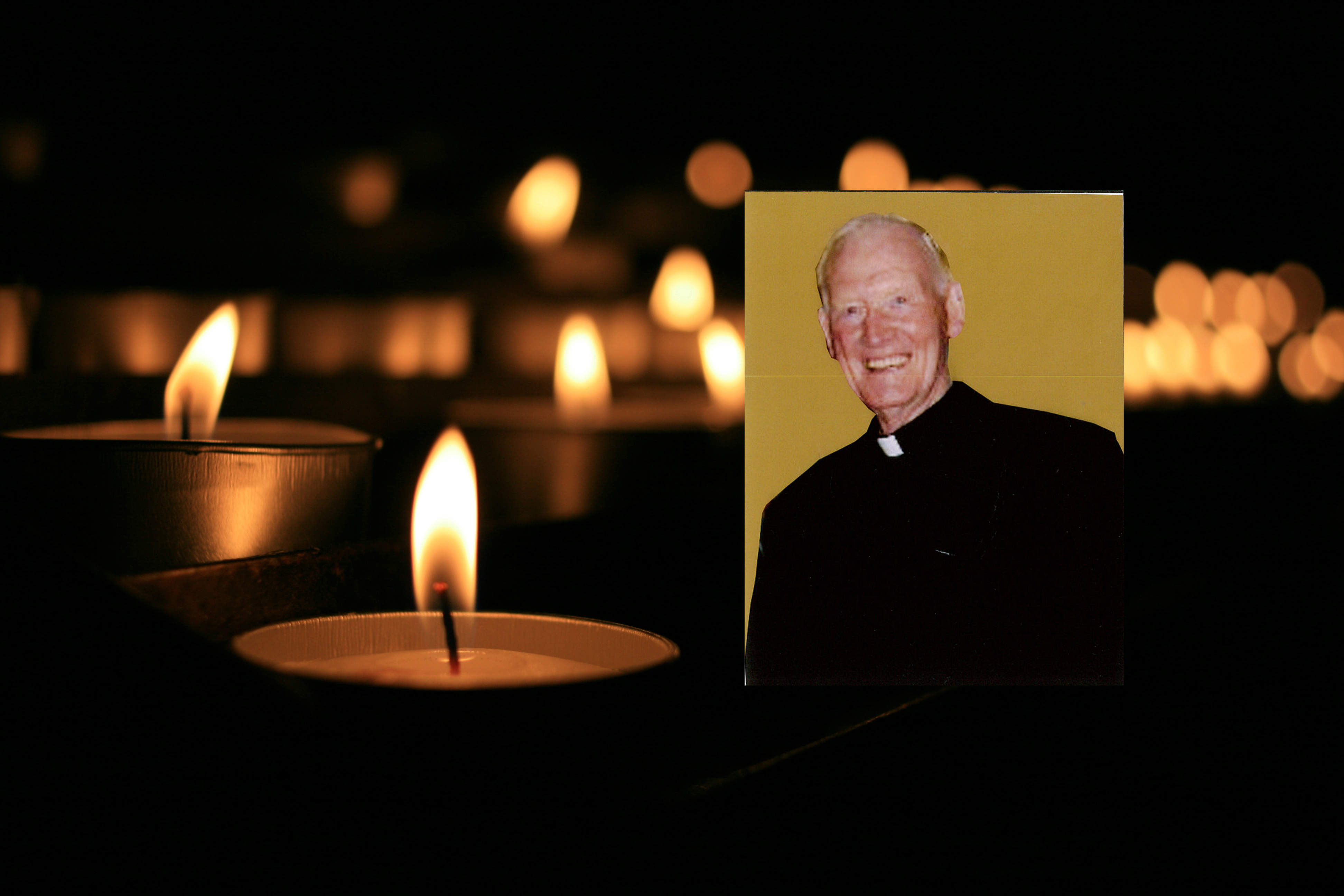
Death of Msgr Francis Donnelly PE

The Archdiocese of Armagh is sad to announce the death on Tuesday, 13 October 2015  of Msgr Frank PE, peacefully, at Our Lady of Lourdes Hospital, Drogheda, Co Louth.  Following are the funeral arrangements:

Reposing of Remains at 64 Meadow Grove, Dundalk, Co. Louth4.00pm – 9.00pm today, Wednesday, and tomorrow, Thursday, from 4.00pm.

Removal of Remains tomorrow evening, Thursday, 15 October at 6.45pm, arriving at the Church of St Patrick, Dundalk, Co Louth for Mass at 7.00 pm;

Requiem Mass on Friday, 16 October at 12 noon, followed by burial in St Patrick’s Cemetery, Dowdallshill, Dundalk, Co Louth.


Biographical Details

Rt Rev Archdeacon Francis Donnelly, PE

Born 7 August 1930, Parish of Moneymore

Studied           St Patrick’s College, Armagh             1942 – 1948

St Patrick’s College, Maynooth          1948 – 1958


Ordained 19 June 1955 in St Patrick’s College, Maynooth


Appointments

DCL, Maynooth                                                                     1955 – 1958

Curate, St Patrick’s, Dundalk                                                 1958 – 1978

Administrator, St Patrick’s, Dundalk                                     1978 – 1985

Parish Priest, Kilsaran                                                             1985 – 1989

Parish Priest, St Peter’s, Drogheda                                         1989 – 2005

Pastor Emeritus (residing in Dundalk and Ardee)                  2005 – until death


Appointed Archdeacon  of the Metropolitan Chapter           1989

Appointed a Prelate of Honour (Monsignor)                          1990

Towards Peace: a joint initiative of the Irish Episcopal Conference, the Conference of Religious of Ireland and the Irish Missionary Union

logo

Towards Peace is a new spiritual support service designed for those who have experienced sexual, physical, emotional or spiritual abuse by Catholic Church personnel in Ireland.  Support is also available for family members of abuse survivors.  The vision of Towards Peace is to provide a safe supportive space, where people who have been affected by abuse in a Church context can be accompanied as they seek their own experience of spiritual peace, one step at a time.  Towards Peace provides spiritual support through one-to-one spiritual direction sessions, with a qualified spiritual companion.  Up to nine sessions are offered and there is no cost.  For more information, please visit www.towardspeace.ie, phone 01 505 3028 or email [email protected].


Towards Peace Newsletter_September2015

Towards-Peace-Leaflet-Sept-2015

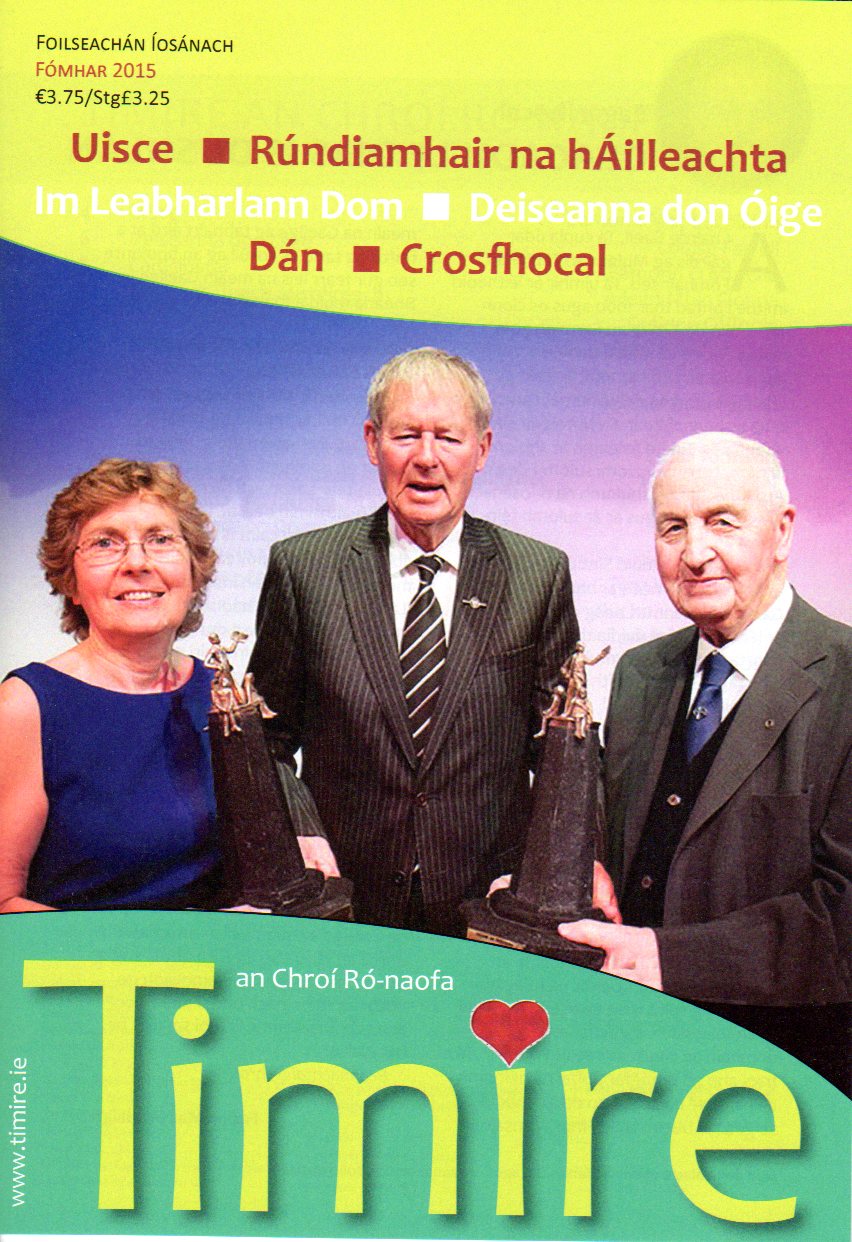
An Timire

Timire-clúdach-Fómhar 15068An Timire

Timire an Chroí Ró-Naofa or an Timire as it is better known is the longest running  Irish Language magazine in the world, in print since 1911 and now available through the web. It comes out 4 times per year, Spring Summer Autumn and Winter. The anchor articles offer reflections on the intentions of Pope Francis for the coming 3 months. Each issue contains a variety of other articles in social, cultural and spirituality areas that would be of interest to our Catholic Christian readers.

From the Pope’s Intention October’15 :

Sclábhaíocht an lae Inniú

Thart timpeall an domhain inniu, tá thart fá 21 milliún duine ina n-íospartaigh de dheasca oibre éigeantais  – 11.4 milliún ban is cailíní agus 9.5 milliún fear is buachaillí.   Tarlaíonn obair éigeantais go mór mór sa tionscal talmhaíochta, in obair tí, sa tionscal miondíola, i gcúrsaí loingseoireachta agus sa tionscal siamsaíochta. Tá oibrithe imirceacha go mór i mbaol. Brabús a dhéanamh an phríomhchúis leis an tionscal seo agus gintear US$ 150 billiún go mí-dhleathach ar an mbealach seo in aghaidh na bliana. …. 

An Comhthéacs Éireannach

In Éirinn tá diandlíthe ann chun obair éigeantais a ionchúiseamh ach tá ag teip orainn íospartaigh den choireacht ghráinniúil seo a aithint is a chosaint.

What’s happening in our World

There are 21 million people today who suffer a modern form of slavery; 11.4 million women and girls and 9.5 million men and boys. Slavery and forced labour happens in the agriculture industry, in the retail sector, in the domestic sector in the seafaring and entertainment industries. Migrants are especially vulnerable. Profit is the main incentive for this exploitation which is estimated to earn US$ 150 Million each year for those who exploit vulnerable others. Léigh leat / read more…

Link: www.timire.ie


Sclábhaíocht an lae inniu.

Grainne O’ Toole

Thart timpeall an domhain inniu, tá thart fá 21 milliún duine ina n-íospartaigh de dheasca oibre éigeantais  – 11.4 milliún ban is cailíní agus 9.5 milliún fear is buachaillí.   Tarlaíonn obair éigeantais go mór mór sa tionscal talmhaíochta, in obair tí, sa tionscal miondíola, i gcúrsaí loingseoireachta agus sa tionscal siamsaíochta. Tá oibrithe imirceacha go mór i mbaol. Brabús a dhéanamh an phríomhchúis leis an tionscal seo agus gintear US$ 150 billiún go mí-dhleathach ar an mbealach seo in aghaidh na bliana. (Foinse: International Labour Organisation).

In Éirinn tá diandlíthe ann chun obair éigeantais a ionchúiseamh ach tá ag teip orainn íospartaigh den choireacht ghráinniúil seo a aithint is a chosaint. Sa bhliain 2006 d’aithin Lárionad um Chearta Imirceach Éire (MRCI – Migrant Rights Centre Ireland) fadhb na hoibre éigeantais nó sclábhaíocht i gcúrsaí obair tí, tógála, miondíola, cúraim, talmhaíochta, iascaigh agus bialainne.  Tharla go raibh oibrithe coinnithe san ionad oibre ag maireachtáil faoi choinníollacha uafásacha, pá dóibh diúltaithe, an ceart dá gcuid doiciméad aitheantais bainte díobh agus bagairtí orthu. Bhí eagla an domhain ar go leor acu roimh a bhfostóirí. D’inis bean amháin do MRCI gurbh fhearr léi an bás ná lá eile a chaitheamh in dteach a fostóra. Chabhraigh MCRI le 220  imirceach a d’fhulaing tríd an obair éigeantais le seacht mbliana anuas, éalú óna bhfulaingt agus bogadh ar aghaidh lena saol. Is turas fada dian do na híospartaigh seo a mbealach a bhaint amach arís sa saol.

Cé go bhfuil ag éirí leis an MRCI go pointe áirithe faire amach do na hinimircigh atá in Éirinn faoi láthair, tá bóthar sách fada le taisteal fós chun a chinntiú go bhfuil éifeacht ag dul leis na bearta i gcoinne na hoibre éigeantais. Níl aon scéim éifeachtach ann a bhfuil sé mar bhua aici coimirce shásúil a chur ar fáil do na híospartaigh sa gcomhthéacs seo. Go fíormhinic, níl na Gardaí in ann a rá cé hiad na daoine atá thíos leis an obair éigeantais agus dá bharr seo níl na hoibrithe iad féin in ann rochtain a fháil ar na seirbhísí cuí, ar nós tithíochta, stádas inimircigh agus cúnamh ó chomhairleoirí profisiúnta.Tá chuile rud níos measa toisc go bhfuil cor nua sa scéal, is é sin an gáinneáil atá á déanamh ag buíonta coiriúla. Tá an MRCI théis a fháil amach go bhfuil obair éigeantais ann maidir le táirgeadh an channabais in Éirinn. Déantar inimircigh a earcú chun plandaí cannabais a fhás. Cuid acu tá siad faoi ghlas i staid suarach taobh istigh de thithe speisialta a bhfuil sé mar aidhm acu na plandaí a fhás. Nuair a théann na Gardaí isteach sna tithe seo, déantar na hoibrithe ann a ghabháil agus cuirtear coireanna ina leith agus go minic gabhtar téarmaí príosúnachta orthu. Chun a dhul i ngleic leis an gcor nua seo, tá an MRCI ag tabhairt cúnamh do na híospartaigh sa gcaoi gur féidir leo an obair éigeantais a lua mar chosaint, ina trialacha coiriúla. Sa gcomthéacs seo i mí an Mhárta, 2015 éigiontaíodh beirt fhear a luaigh an obair éigeantais mar chosaint ina dtrialacha.

I mí Aibreáin, 2015, rinne Ardchúirt na hÉireann breithiúnas an-tábhachtach go deo nuair a rialaigh sé go raibh teipthe ag an stát bearta a chur i gcrích chun daoine a bhí thíos leis an obair éigeantais a chaomhnú, go háirithe i gcásanna go raibh gáinneáil choiriúil i gceist. Ba é an ní a rialaíodh ná go raibh rialtas na hÉireann ag sárú dlíthe na hEorpa. Ní mór dul i ngleic leis an bhfadhb seo láithreach bonn agus ba chóir córas a chur ar an bhfód chun cabhrú le daoine ar mian leo éalú ó phríosún na hoibre éigeantais. Sa gcaoi seo is féidir leis na daoine seo a gcearta daonna agus a ndínit a fháil ar ais. Amach anseo beidh an MRCI ag stocaireacht le daoine atá buailte síos ag an obair éigeantais chun a chinntiú go mbeidh córas cuimsitheach ann chun coimirce a chur ar fáil do gach éinne a bhfuil sé ag teastáil uaidh. Ina theannta seo, beidh an rialtas ag obair ar Phlean Náisiúnta Gníomhaíochta chun a dhul i ngleic leis an ngáinneáil. Is deis fíor-thábhachtach í seo chun na hathruithe is gá a dhéanamh. Má tá tuilleadh eolais ag teastáil uait ar an ábhar seo, déan teagmháil le do thoil le Gráinne O, Toole, MRCI; ríomhphost: [email protected]

Is oibrí í an t-údar le Lárionad um Chearta Imirceach Éire (MRCI – Migrant Rights Centre Ireland)

INTINN UILECHOITEANN DO MHÍ DHEIREADH FÓMHAIR 2015

Gáinneáil ar dhaoine: Go gcuirtear deireadh le gáinneáil ar dhaoine, sclábhaíocht an lae inniu.

Universal: Human trafficking 

That human trafficking, the modern form of slavery, may be eradicated. 

Mission Sunday

English poster

Magazine

World Mission Sunday takes place on the second last Sunday of October each year. Since 1926, the Church has traditionally remembered its universal mission during the month of October. This year Mission Sunday will be celebrated globally on the 18th October 2015.

Throughout the world the faithful will reflect on the universal call to Mission of all the baptized. They will be invited to contribute what they can to support the development and growth of young churches internationally. Mission Sunday is celebrated by every Church worldwide, including the poorest. This special Sunday in October provides Catholics with the opportunity to unite with their missionary sisters and brothers overseas, and to recommit themselves to bringing the Joy of the Gospel to everyone they meet in their daily lives at home and at work.

In October and especially on Mission Sunday Catholics are invited to be specifically conscious of the Church’s missionary activity abroad (ad gentes) through prayer, sacrifice and financial contributions. The funds collected in all Churches throughout the world on Mission Sunday, is coordinated by the Society for the Propagation of the Faith, founded by Pauline Jaricot 190 years ago. The funds are used to assist Churches who need financial support and directed towards communities in need, both spiritually and materially.

In October 2014, Irish Catholics contributed more than €1.78 million on Mission Sunday. The Mission Sunday collection is made available to be distributed to as many as 1,100 young Churches who are supported by the generosity of Churches that have been blessed with a greater quantity of financial and material gifts. Our Mission Sunday figures for October 2014 are available to view in the Mission Sunday magazine.

Contributions will be used to build simple mission churches, to educate seminarians as well as female religious novices. Your support also assists in the formation of catechists and lay leaders. The Mission Sunday gift may also be used for building health facilities for children and adults as well as for providing emergency aid in times of war or natural disaster or to assist missionaries in their efforts to care for refugees.

The theme for Mission Sunday 2015 is ‘Abundant Life’.

On Mission Sunday, in a special way, we celebrate the work circa 1,300 Irish born missionaries and all missionaries throughout the world. We thank God for them, for all who support them in our own country and during mission month we unite ourselves in prayer with them and with the communities with whom they work.

A Week for Life in The Archdiocese of Armagh from September 27th to October 4th

Day for Life 2015: Cherishing Life, Accepting Death

Day for Life is celebrated annually by the Catholic Church in Ireland, Scotland and England and Wales. It is a day dedicated to celebrating and upholding the dignity of human life from conception to natural death. This year’s Day for Life will be celebrated in Ireland on Sunday 4 October on the theme ‘Cherishing Life, Accepting Death’.

Day for Life 2015 pastoral message: ‘Cherishing Life, Accepting Death’

‘How great a lie … to make people think that lives affected by grave illness are not worth living!’ – Pope Francis

Kathleen, a much-loved grandmother, collapsed at home one Saturday morning and was rushed to hospital. Early signs pointed towards a stroke. The doctors talked about the next twenty-four hours being critical; it seemed like Kathleen might not even survive. The priest was called and Kathleen received the anointing of the sick. Doctors were talking about brain damage and whether interventions might be possible. Suddenly the family was faced with big questions. What would Kathleen have wanted and how could the Church help guide any decisions? How do we accept death when it comes and cherish life while we can?

There have been remarkable medical and technological advances so that the chronically ill can receive life-saving treatments. We can be truly thankful for such advances. And yet at some time or other we will all die. These same advances have led to more complex decision-making about appropriate treatment for those who are gravely ill.

At the end of life, there are two thoughts that can help guide us all.

The first is that we love life. Every person is loved by God and every life is a precious gift never to be destroyed or neglected. It is wrong to hasten or bring about death. God will call us in his own good time.

The second is that we accept death. This means there is no obligation to pursue medical treatment when it no longer serves its purpose – that is when treatment is having no effect or indeed harming the patient.

We need to prepare to face life-threatening crises. Ideally these difficult and important decisions need to be faced with others – our spouse, our siblings, our extended family members. The family, after all, should be the privileged place where mutual support and understanding occurs.

Sometimes difficult decisions need to be made and the views of family and experts should be taken into account. In such situations these two basic questions can guide our decisions:

  • is this decision loving life?
  • is this decision accepting the inevitability of death?

Depending on the situation we should seek ways to answer yes to both, as life itself is a gift from God, and death but the gateway to new life with him.

Ends

Click here to read an article by Bishop Brendan Leahy on Day for Life 2015 from this month’s Intercom magazine.


Click here to download this year’s Day for Life message in postcard format Day for Life 2015 postcard

  • Day for Life 2015 Prayers

Prayer for a good death, the intercession of St Joseph:

O blessed Joseph,
who breathed your last in the arms of Jesus and Mary,
obtain for me this grace:
that I may breathe forth my soul in praise,
saying in spirit, if I am unable to do so in words:
‘Jesus, Mary and Joseph, I give Thee my heart and my soul.’

Amen.

Day for Life Prayer 

Holy Mary, Mother of Love,
holding in your arms, the fruit of your womb,
graciously look upon our earth and remove from it
all that hardens our hearts and dims our eyes
to the preciousness of human life,
from the moment of conception to natural death.

Through the example of your tenderness
teach us the ways of compassion and love
that we may build up the civilisation of love among us
and a society that is truly worthy of the human person.

Help us to reject all that contributes to a culture of death,
and to work with others of goodwill
in promoting the culture of life.

Bring us ever closer to your Son,
so that we may know the fullness of life that he offers us
and come to know that life more perfectly,
with you, and all the angels and saints,
in the eternal life of Heaven.

Amen

  • Prayer of the Faithful

The psalmist sings praise for the providence of God who gives us food in due season and who grants our desires. Confident that he hears our prayers, let us turn to him for our needs and the needs of all of us created in his image and likeness:

For the Churchthe Body of Christ. That through our words and deeds, and by a ‘preferential love for the sick’ (i) , we may proclaim the compassion of God, who is always close to those who suffer. Lord in your mercy…

For those who are exiled by conflict or by poverty. That they may be restored to a homeland and that we, who ourselves have no abiding city, may recognise them as our brothers and sisters. (ii) Lord in your mercy…

For the healing of those who are sick in mind or in body. That they might be restored to health and give God thanks in the midst of his people. (iii) Lord in your mercy…

For those who care for our brothers and sisters who are dying. That they may alleviate their pain and strengthen them in hope, and so enable them to both cherish life and to accept death. Lord in your mercy…

For the faithful departed. That, having laid down their burdens and washed clean in the blood of the lamb, they may be led by Christ the Good Shepherd into pastures eternal. Lord in your mercy… Lord God, whose days are without end and whose mercies beyond counting, keep us mindful that life is short and the hour of death unknown. Let your Spirit guide our days on earth in the ways of holiness and justice, that we may serve you in union with the whole Church, sure in faith, strong in hope, perfected in love. And when our earthly journey is ended, lead us rejoicing into your kingdom, where you live for ever and ever. (iv)

(References: i CC1503 ii cf Mass for Refugees and Exiles, RM1364 iii cf. Collect, Mass for the Sick, RM1378 iv Concluding Prayer for Committal at a Crematorium, Order of Christian Funerals)

  • A reflection on Cherishing Life, Accepting Death

Throughout his life Dave was an active member of his local church, their caravan club and the Scouts. Supported by his family and by his friends he died last year after a long and disfiguring struggle with mouth cancer. He was one of those remarkable people who, through their lives, teach us about the power and depth of God’s love. He was not afraid of death: he had a gift of faith such that he saw clearly that God had loved and chosen him and had prepared a place for him in heaven. As much as he desired to be with the Lord, he loved and cherished every day that was given to him to be with his family and friends and to continue to help others through his voluntary work in the church and the Scouts.

Dave and his family showed remarkable courage in the way he faced his illness. He reminds me that to be a disciple is called to accept the paradox of loving life and accepting death. During his illness he had to face difficult decisions about whether or not to accept various treatments and finally, when they could sustain him no longer to prepare for his death. His example reminds me that Jesus walks with us in illness and that whatever the circumstances we are called to pray and place our trust in God. Sometimes this is difficult and God seems very distant. Faith is about holding on in the darkness. Although the journey may be stormy, we can hope in the promise of God that he waits to welcome us into the joy of heaven.

Those people who cherish life and accept death in their final weeks or months on earth have a special place in God’s plan and in communicating his love to us. As our brothers and sisters in need they call us to a ministry of compassion and friendship in their suffering. Through our presence the compassionate God is revealed to them and our faith and hope are strengthened by their witness. Through their presence among us, through their faith and hope, God draws our attention to the great blessing of the life to come. Their example offers us hope as they look forward to the resurrection whilst living through the cross.

Fr Jonathan How, Director of Studies, St John’s Seminary, Wonersh. 

  • Video: Maria’s story 

Maria was born with a very rare non-genetic condition called Dandy-Walker Syndrome. Despite the challenges, she lived a full life in a loving family, with her parents and four siblings, until the very end. She died peacefully at home when she was just 14 years old. In this film, her mother Bernadette Pattie tells her story.

Click here to watch her story.

Archbishop Eamon launches the new Diocesan Pastoral Plan

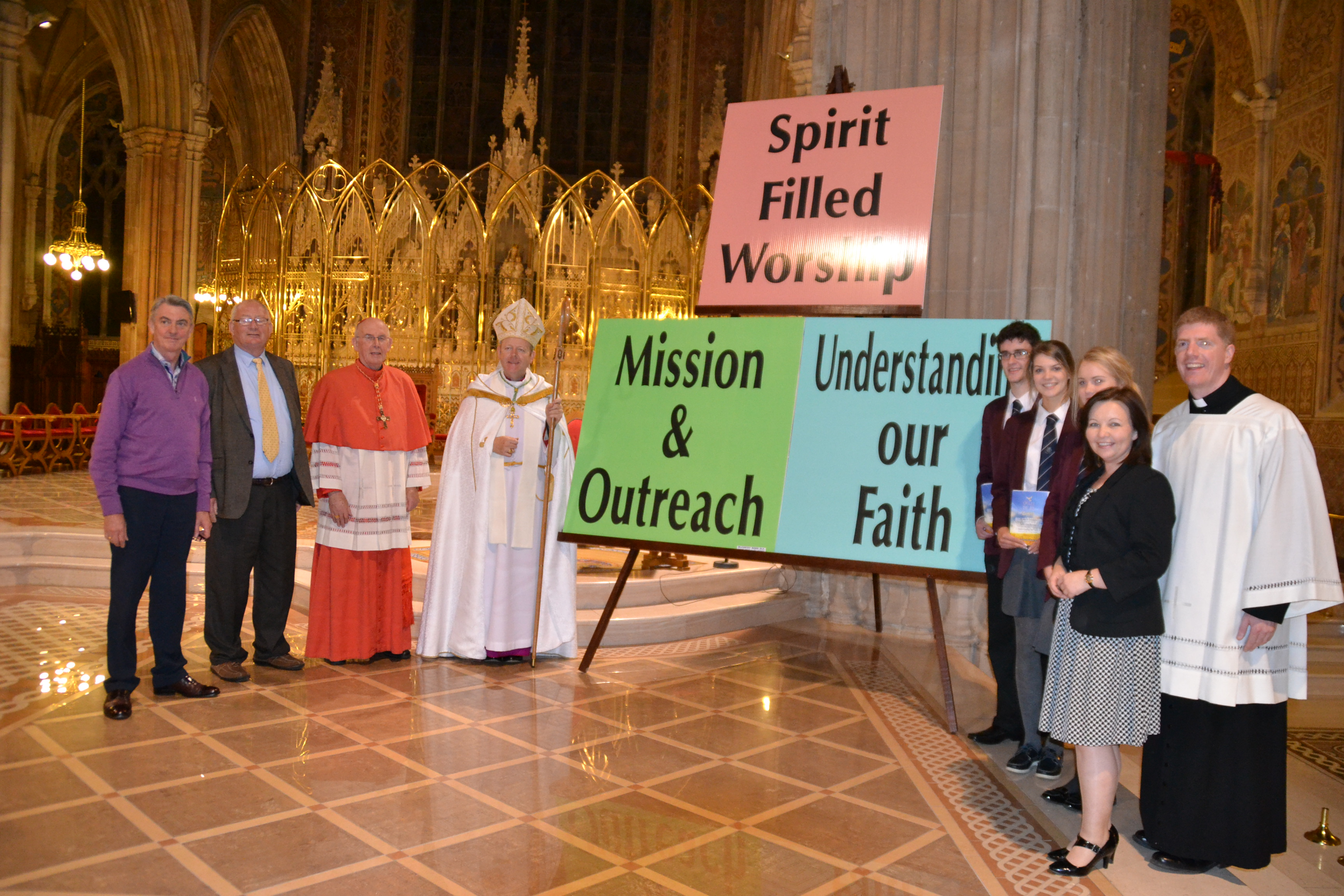
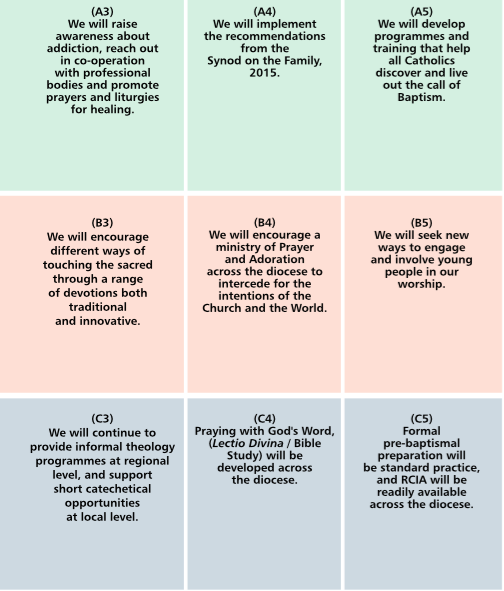
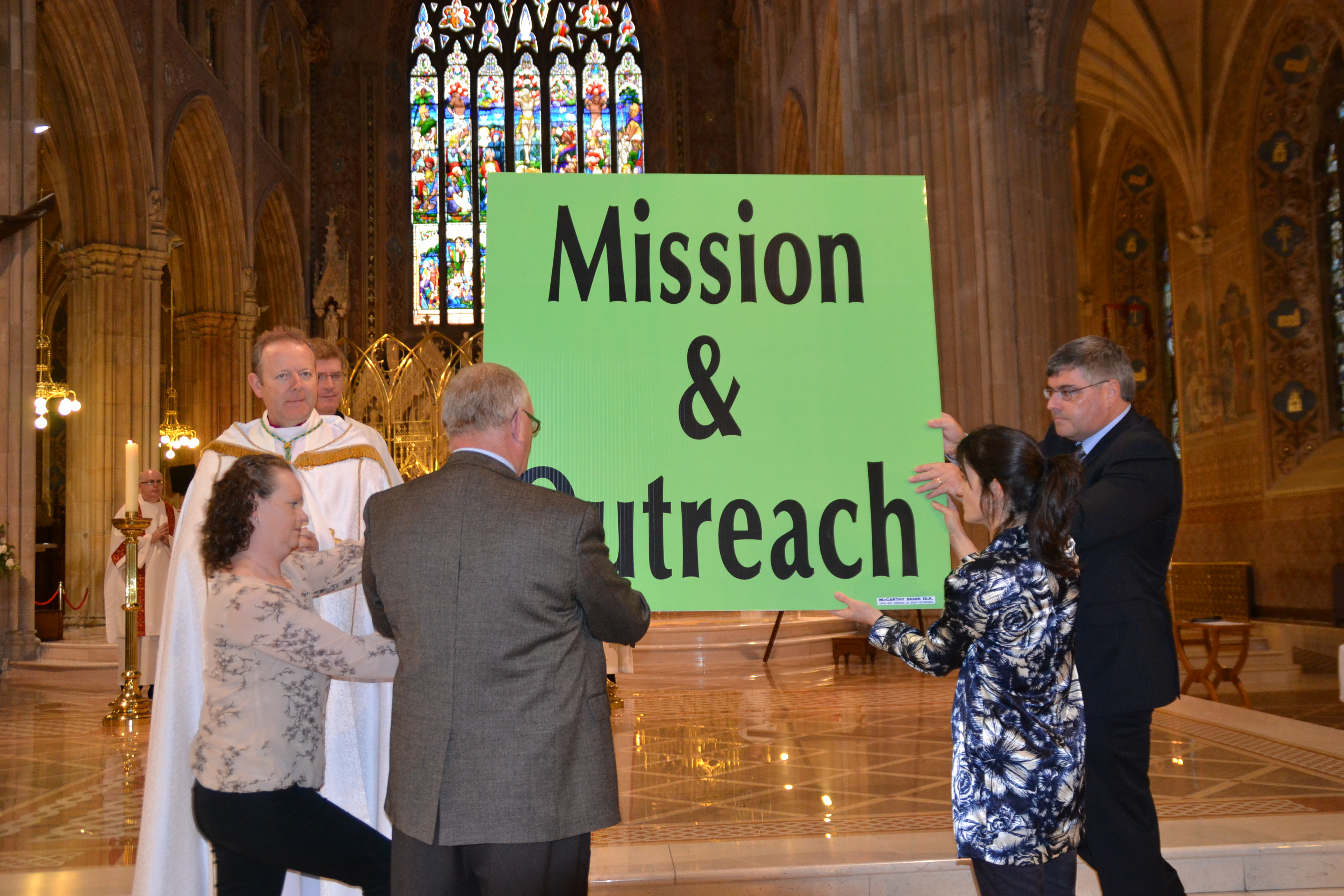
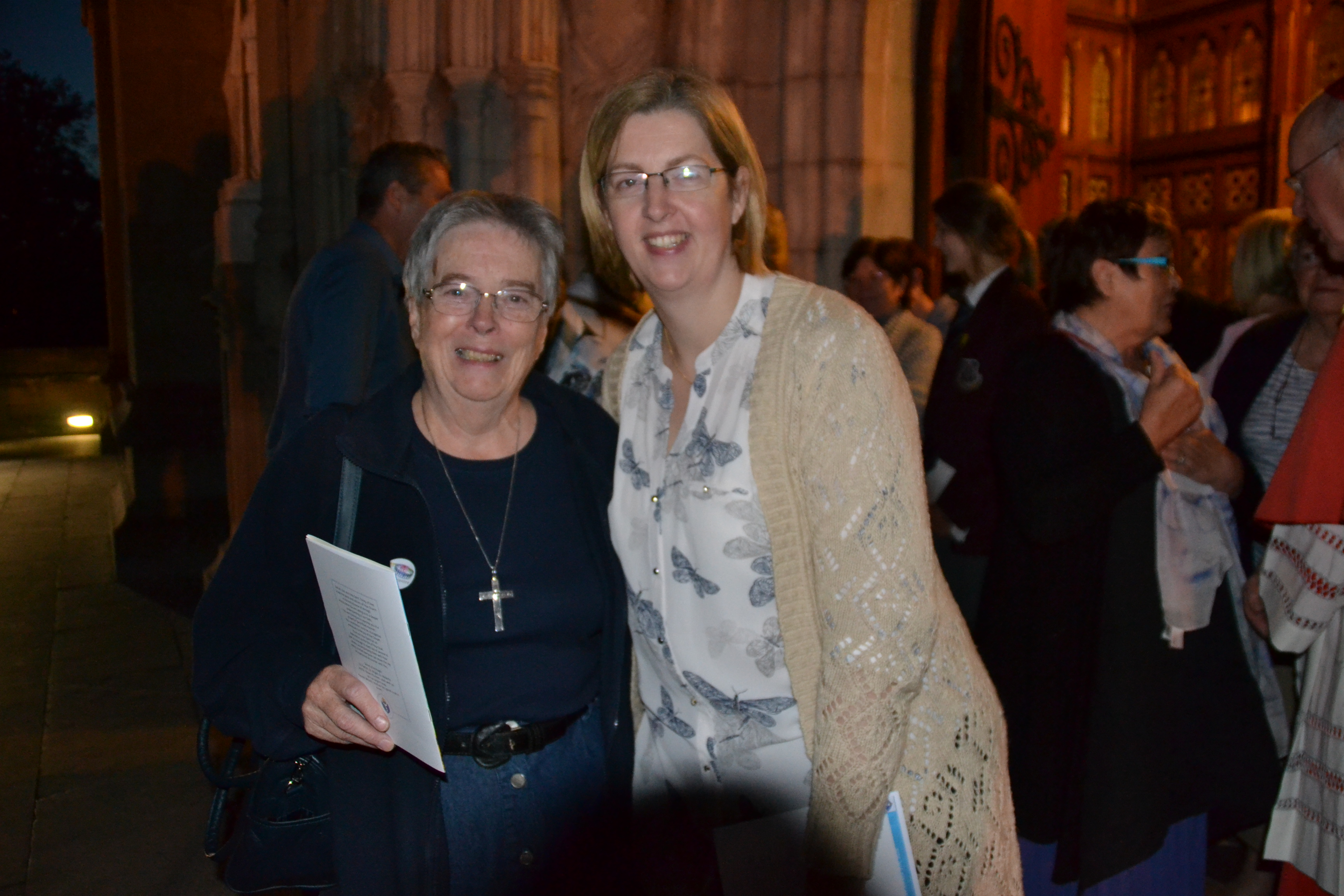
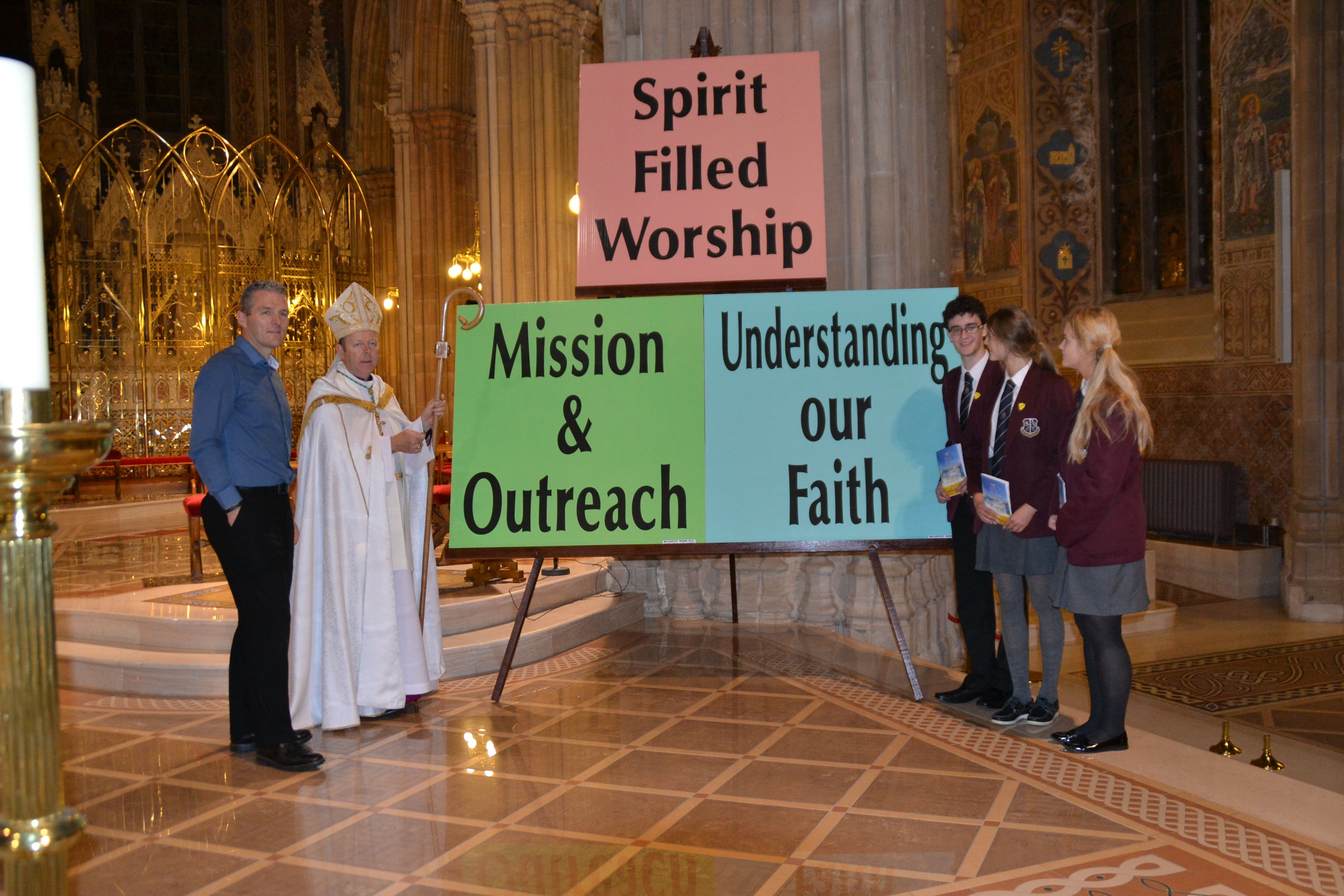
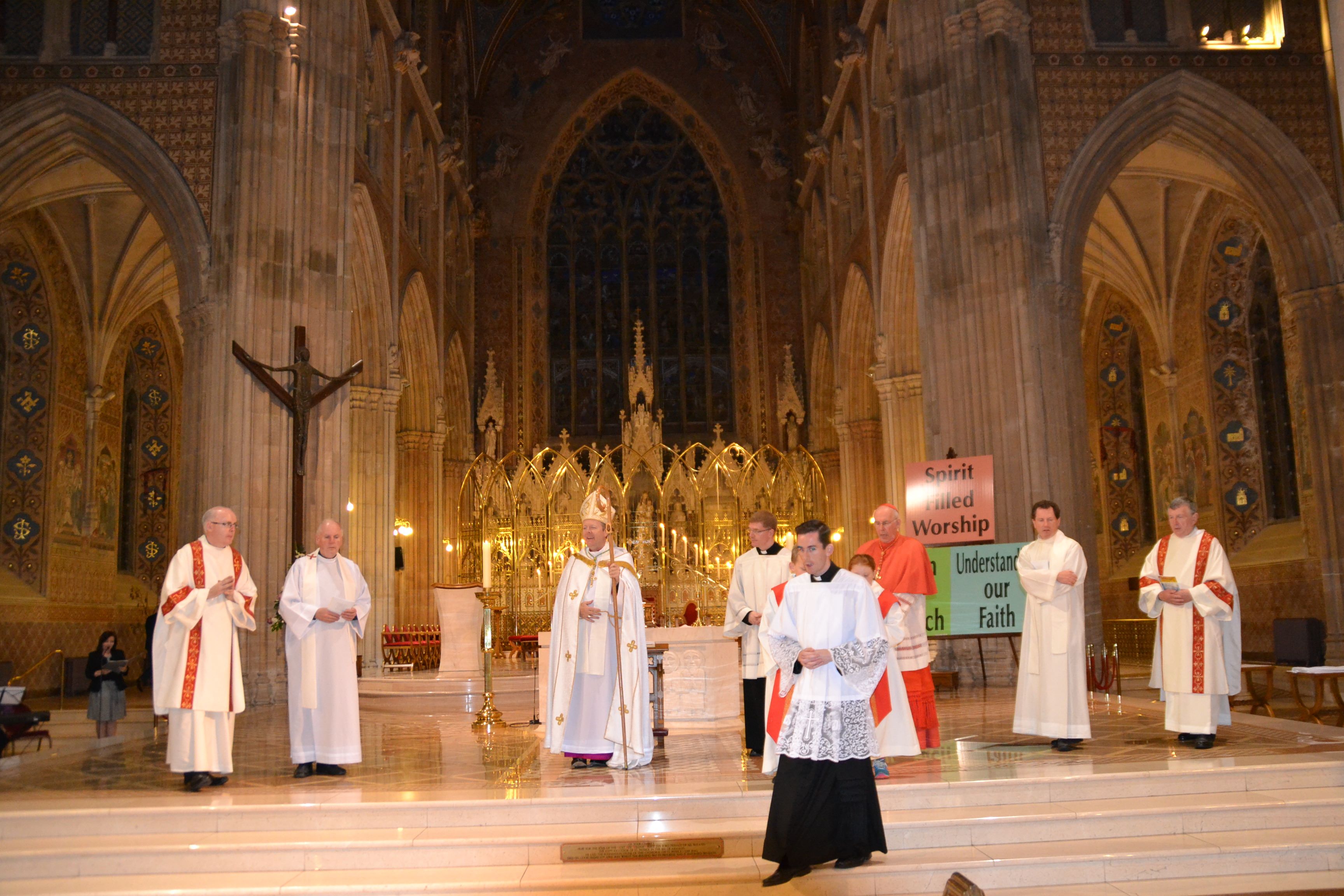
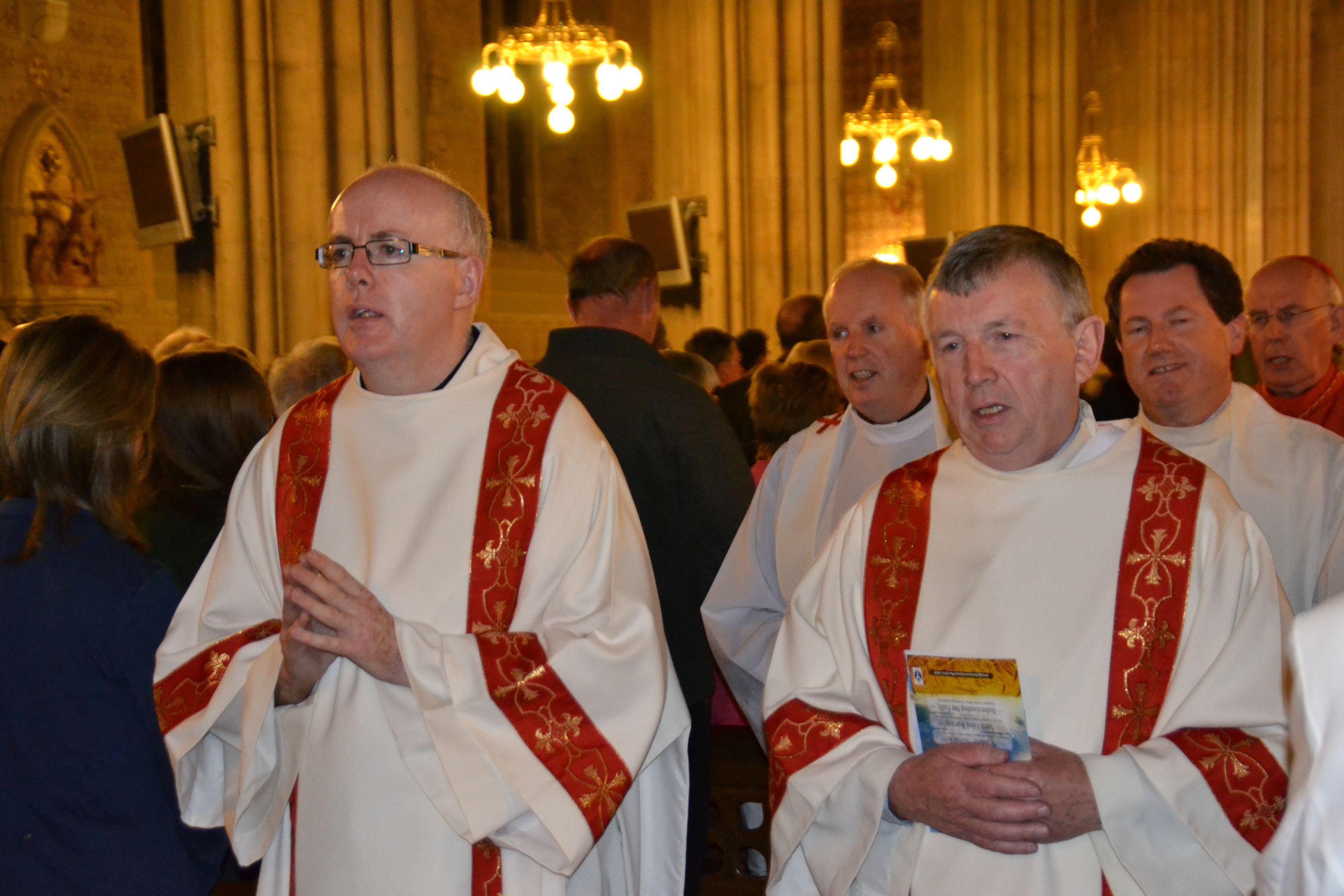
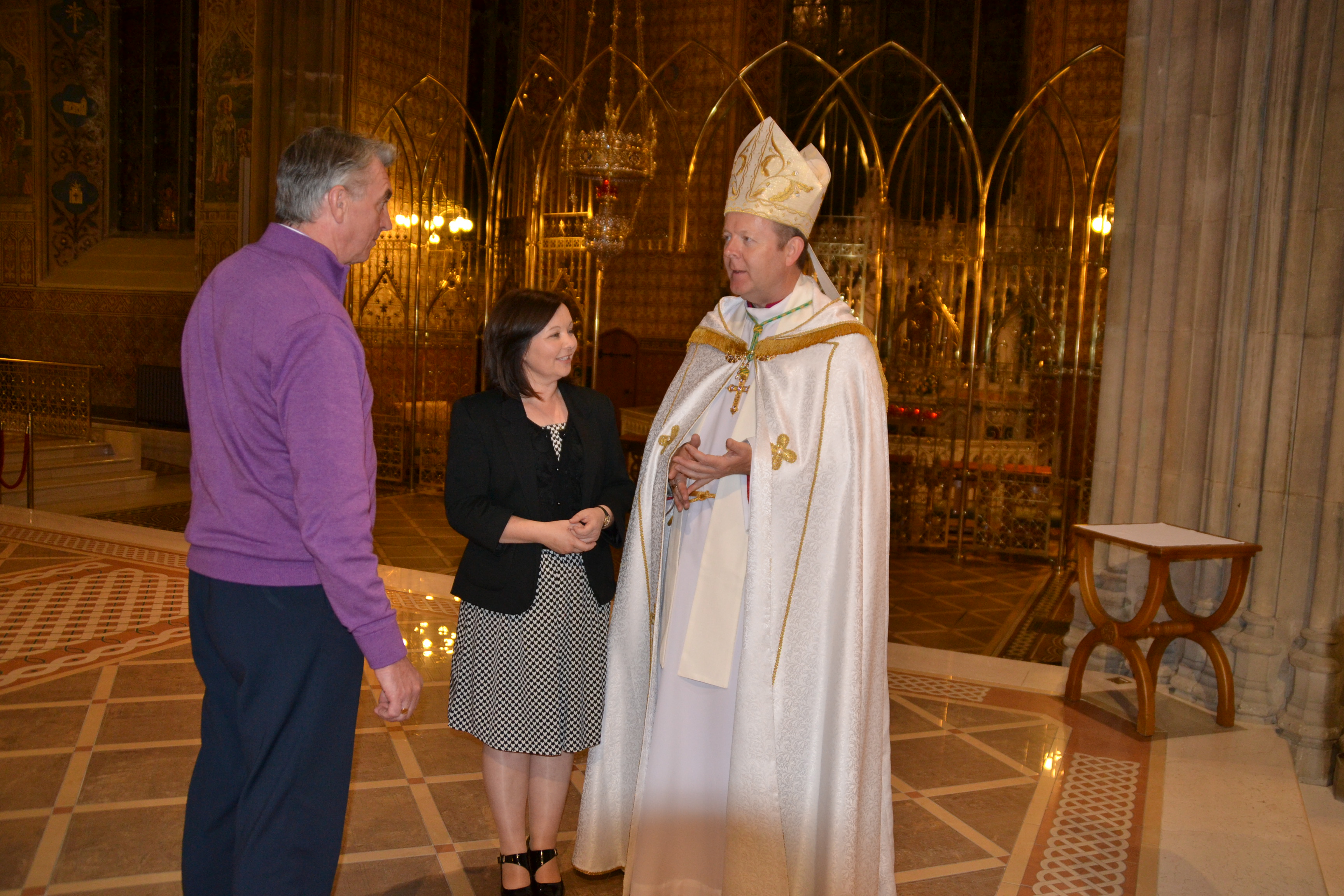
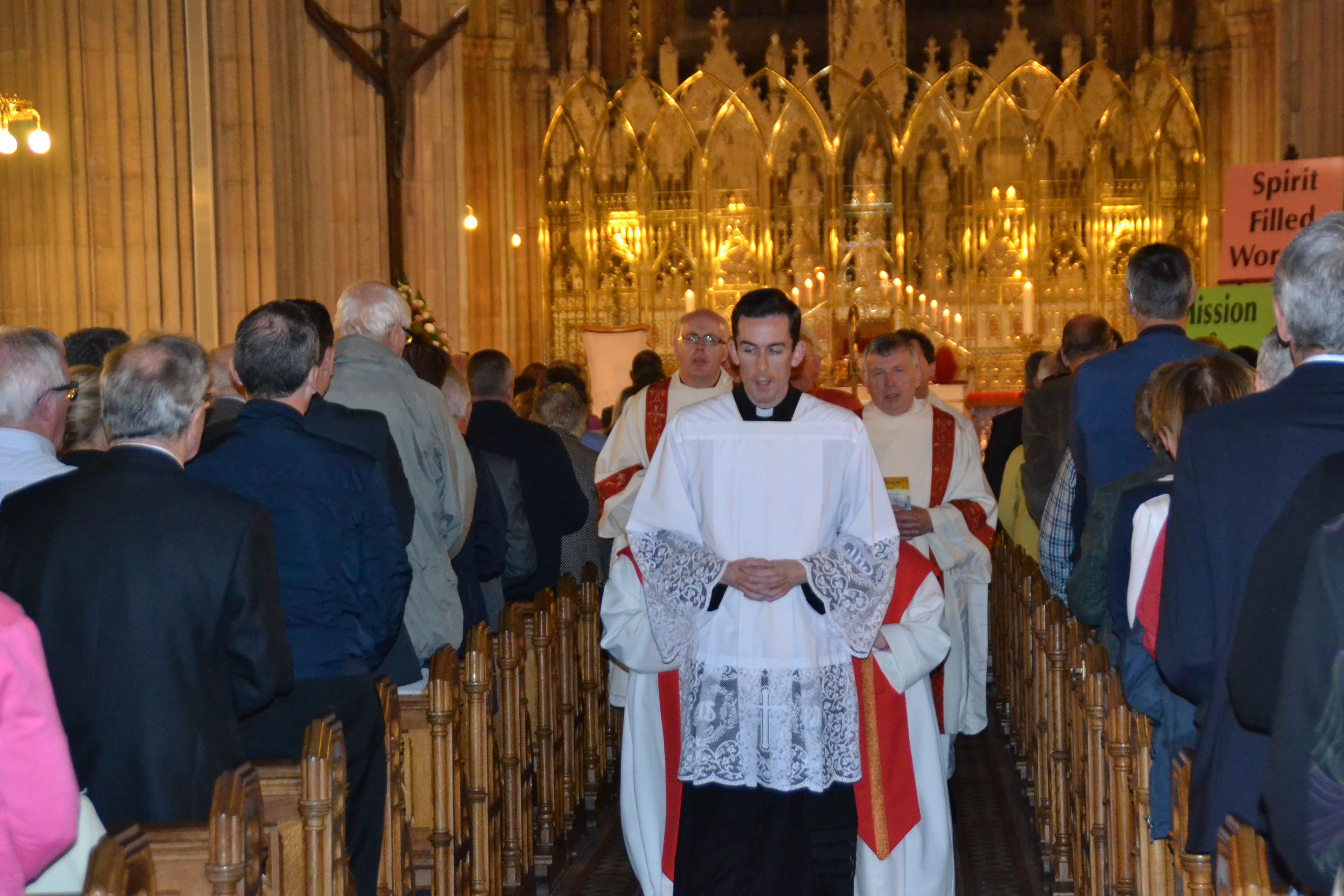
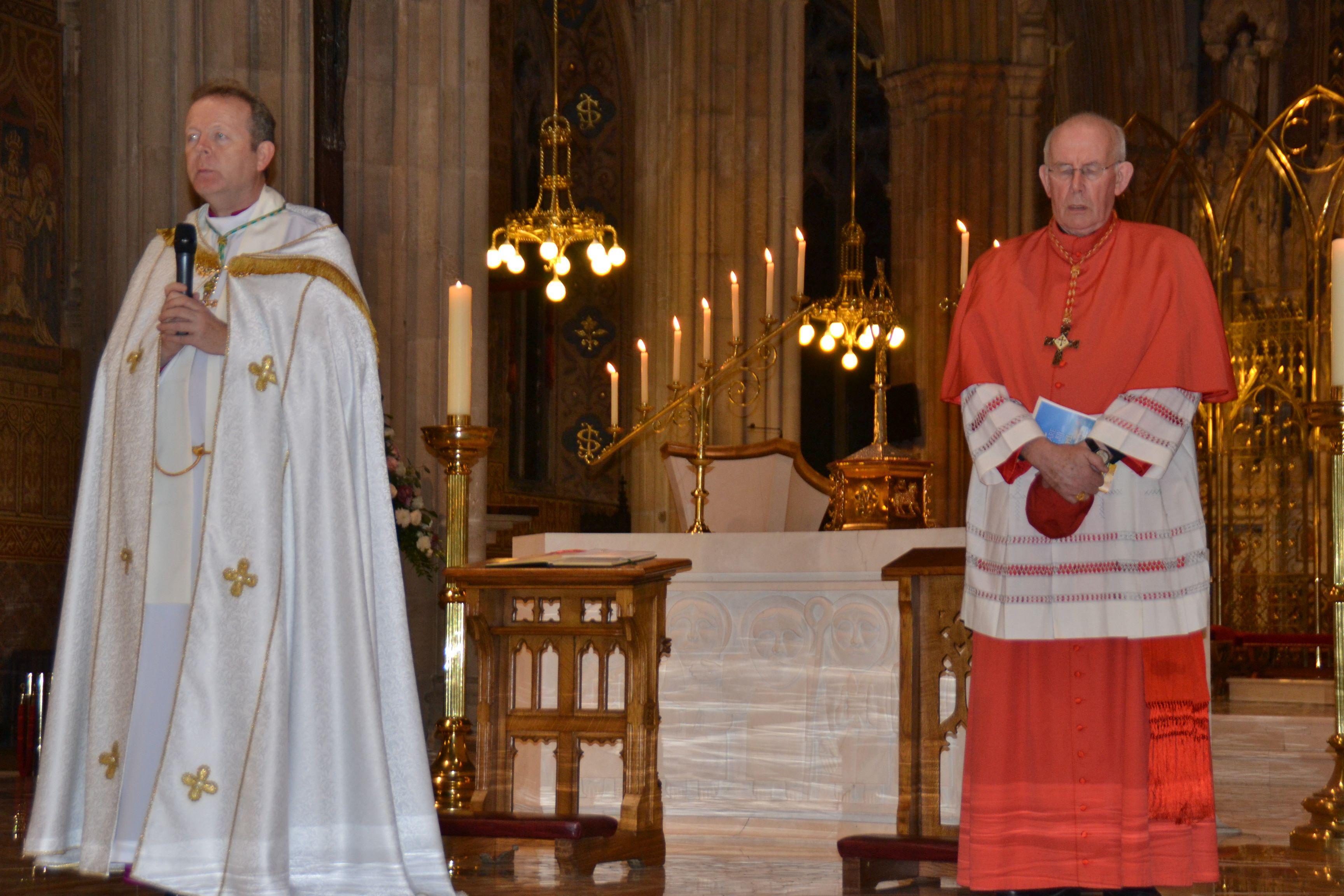
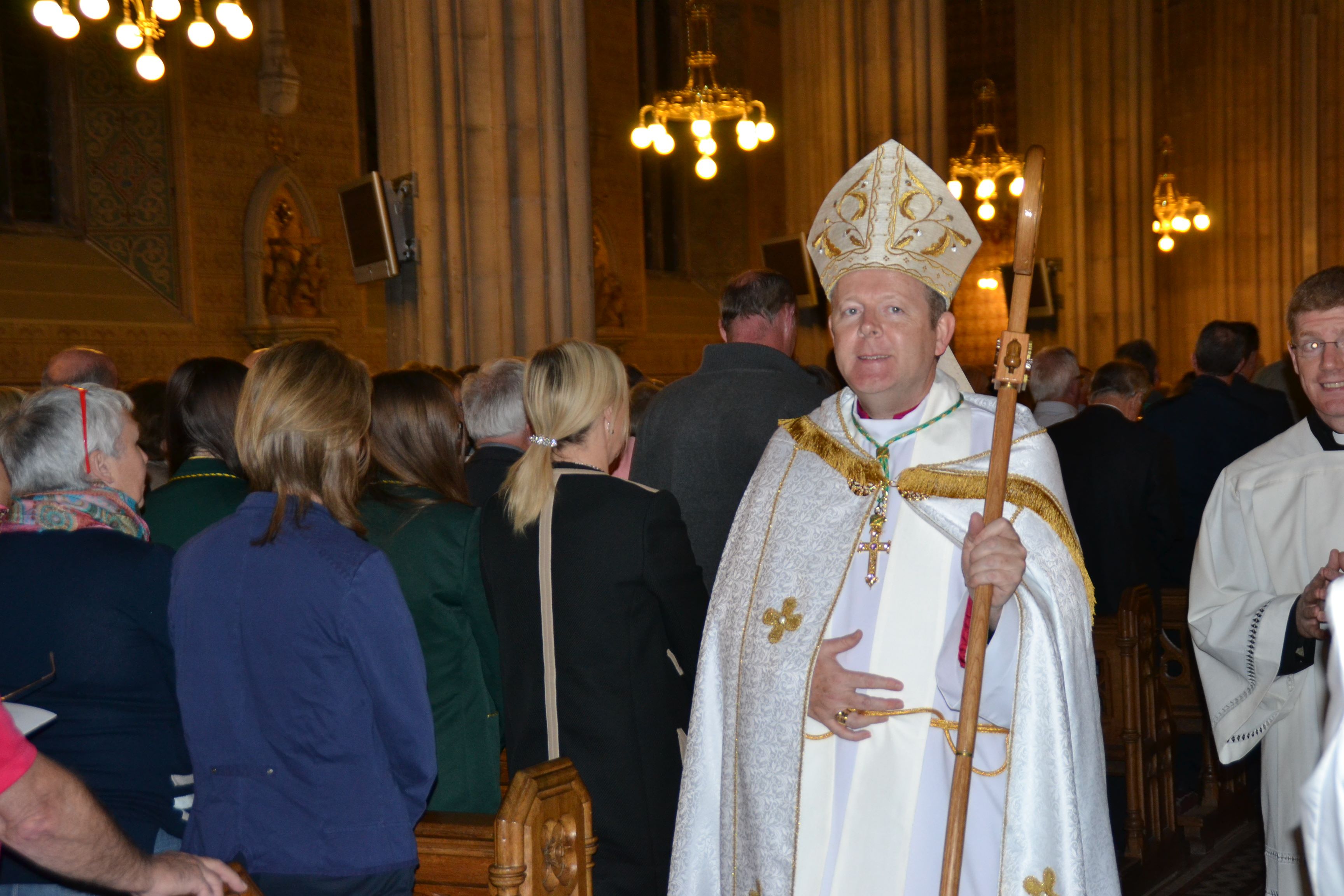
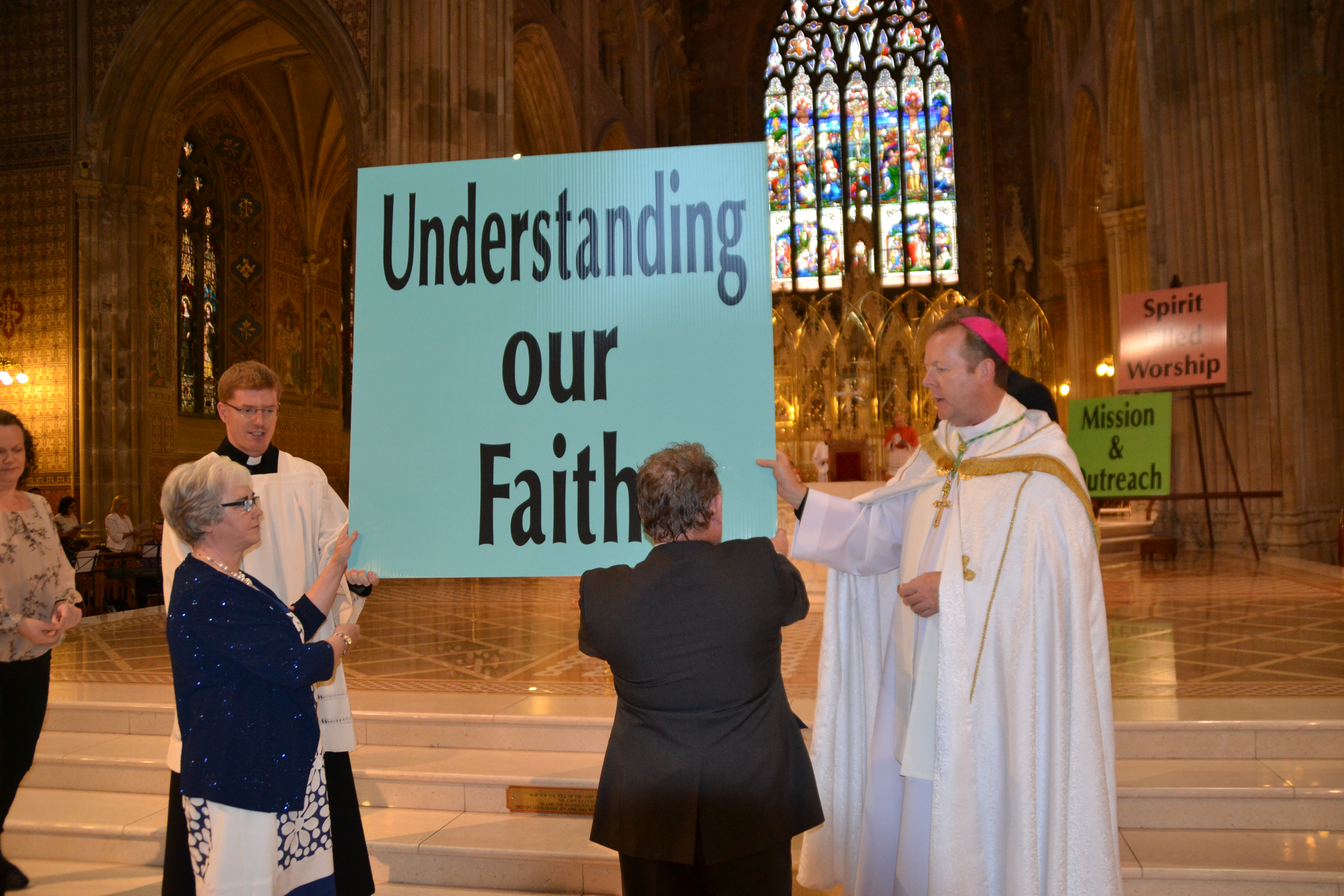
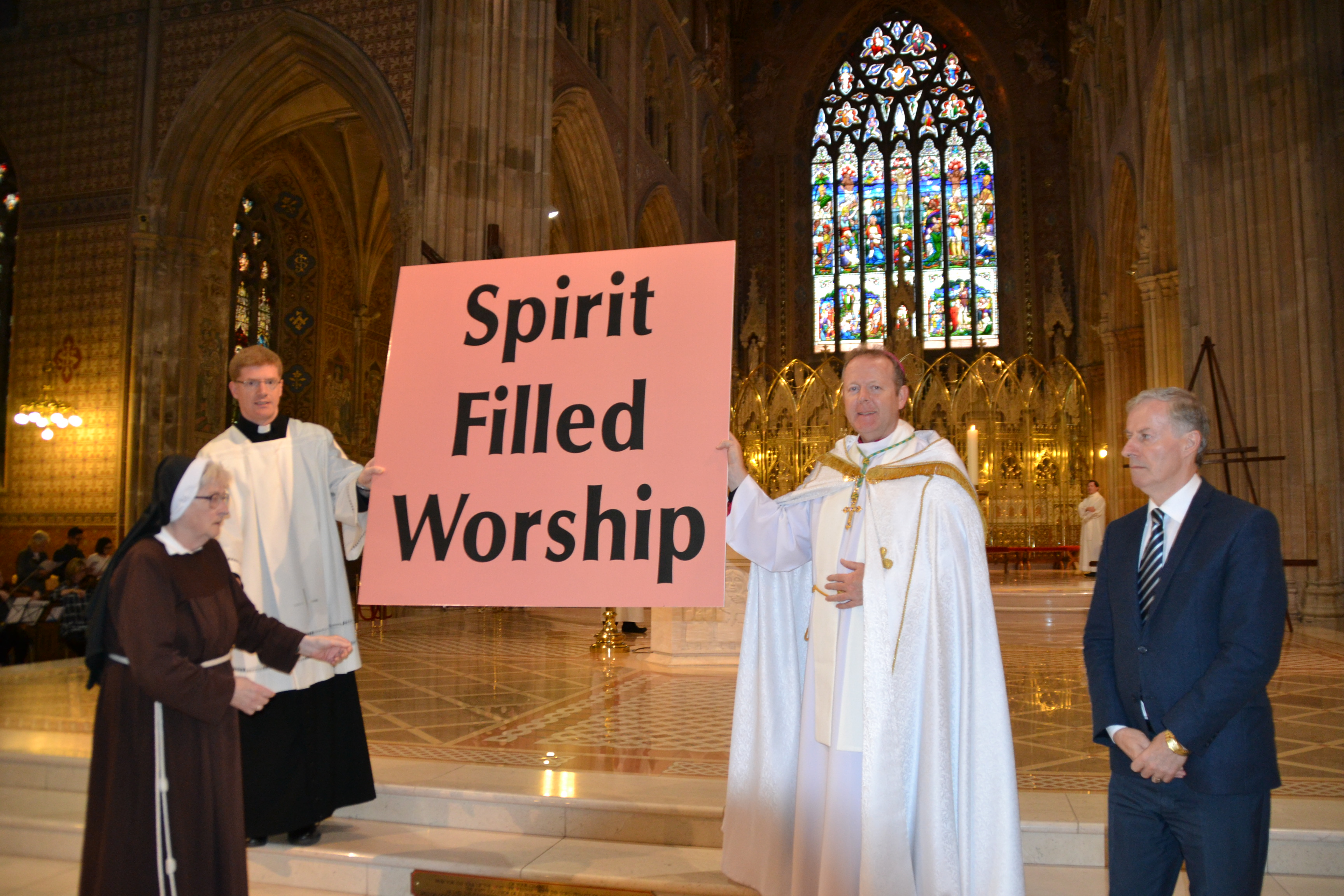
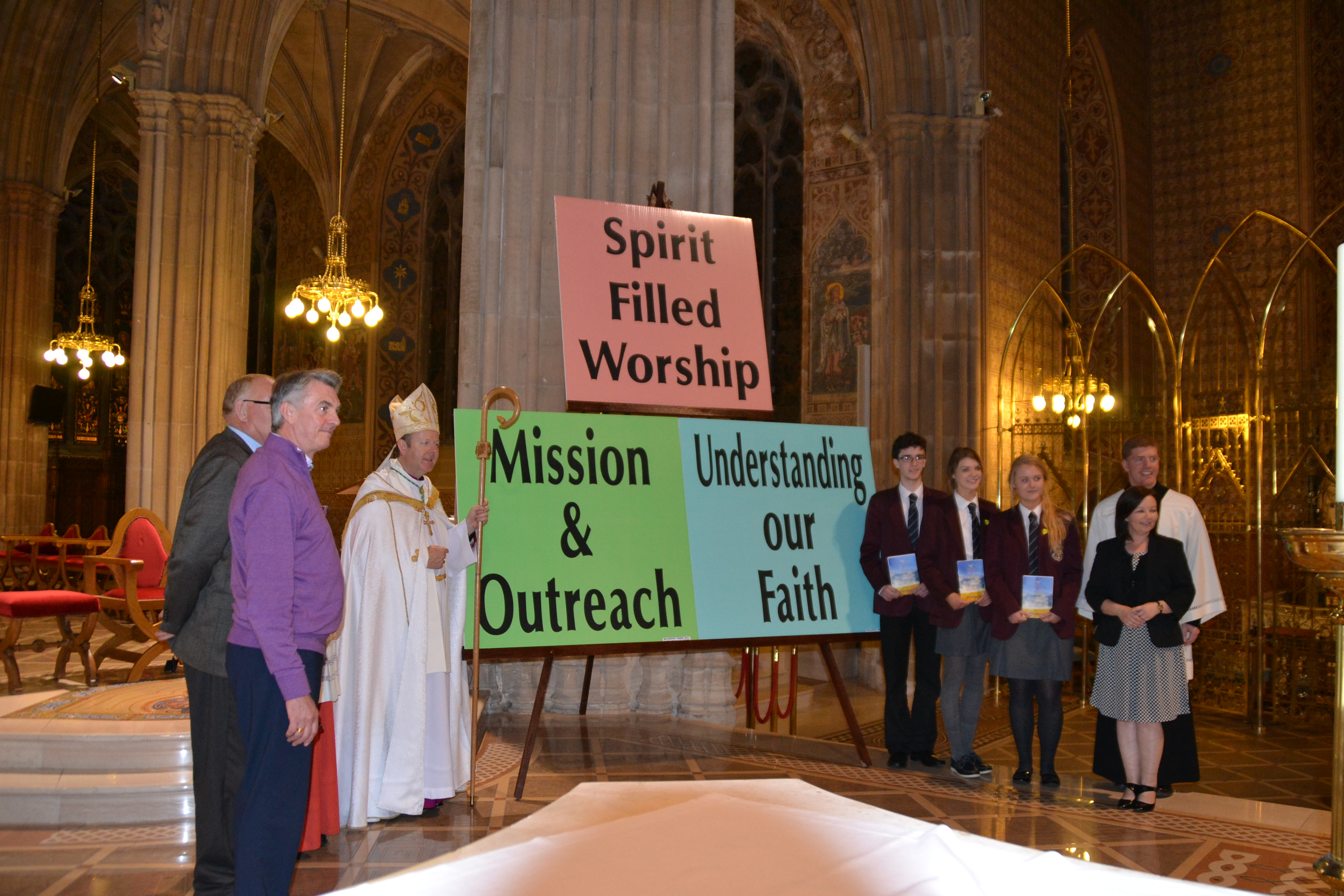
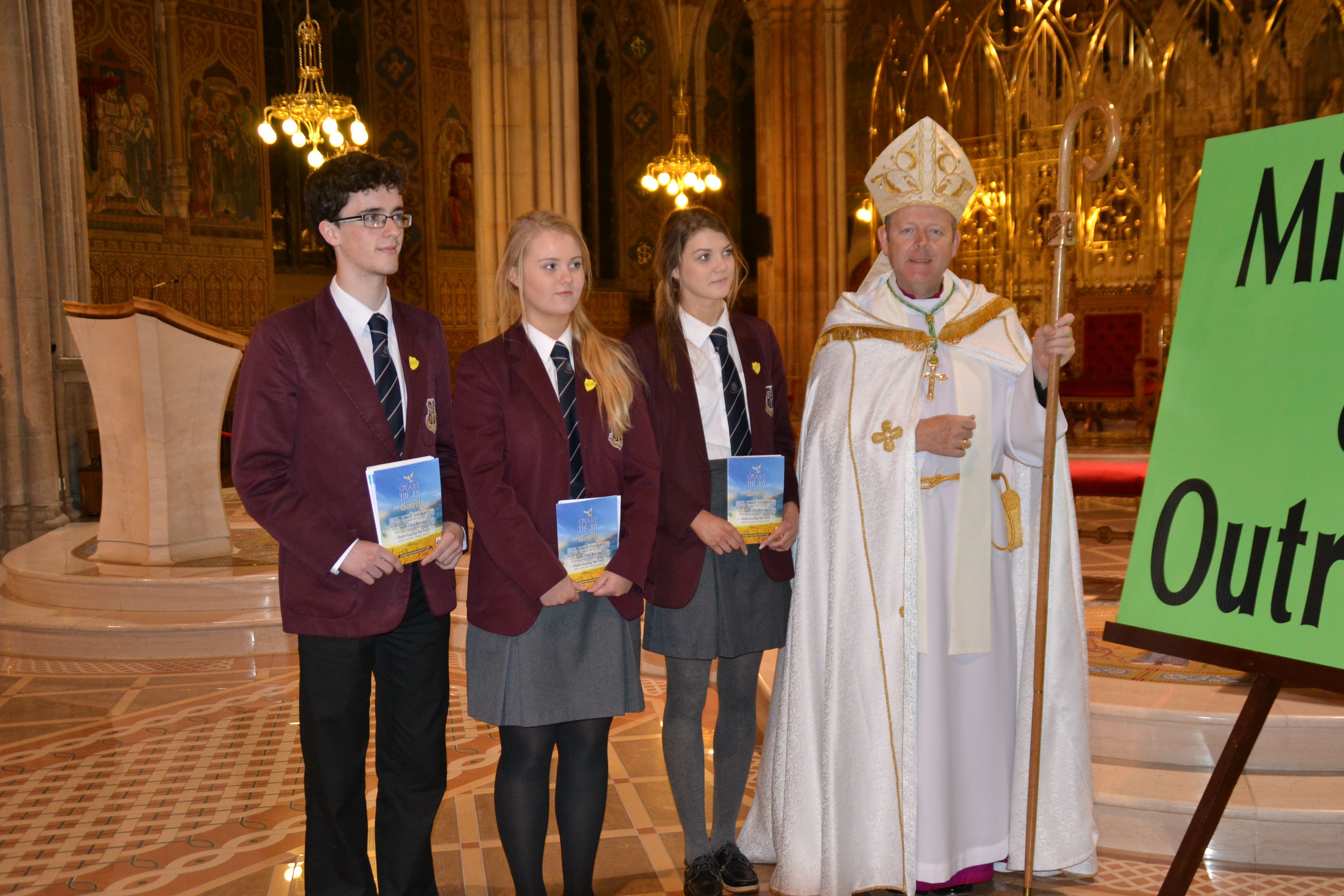
BookmarkOn Tuesday 8th September 2015, the birthday of our Lady, Archbishop Eamon launched our new five year Diocesan Pastoral Plan (2015-2020) in St Patrick’s Cathedral, Armagh. It is the fruit of eighteen months of consultation and feedback from all around the diocese, including lay people, priests and religious.  The Diocesan Pastoral Plan(2015-2020) is a major diocesan initiative which will unfold over the next five years.

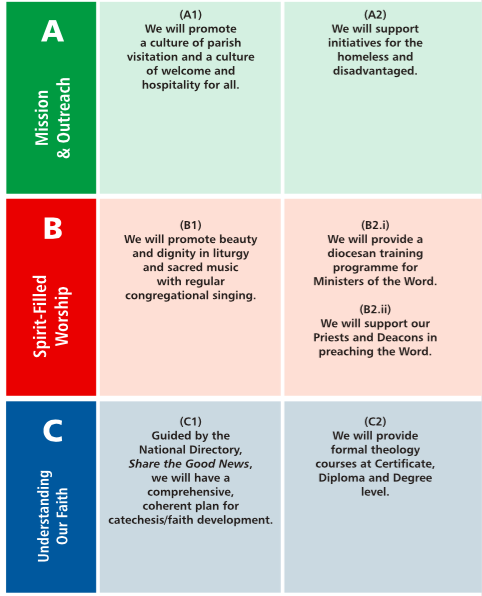
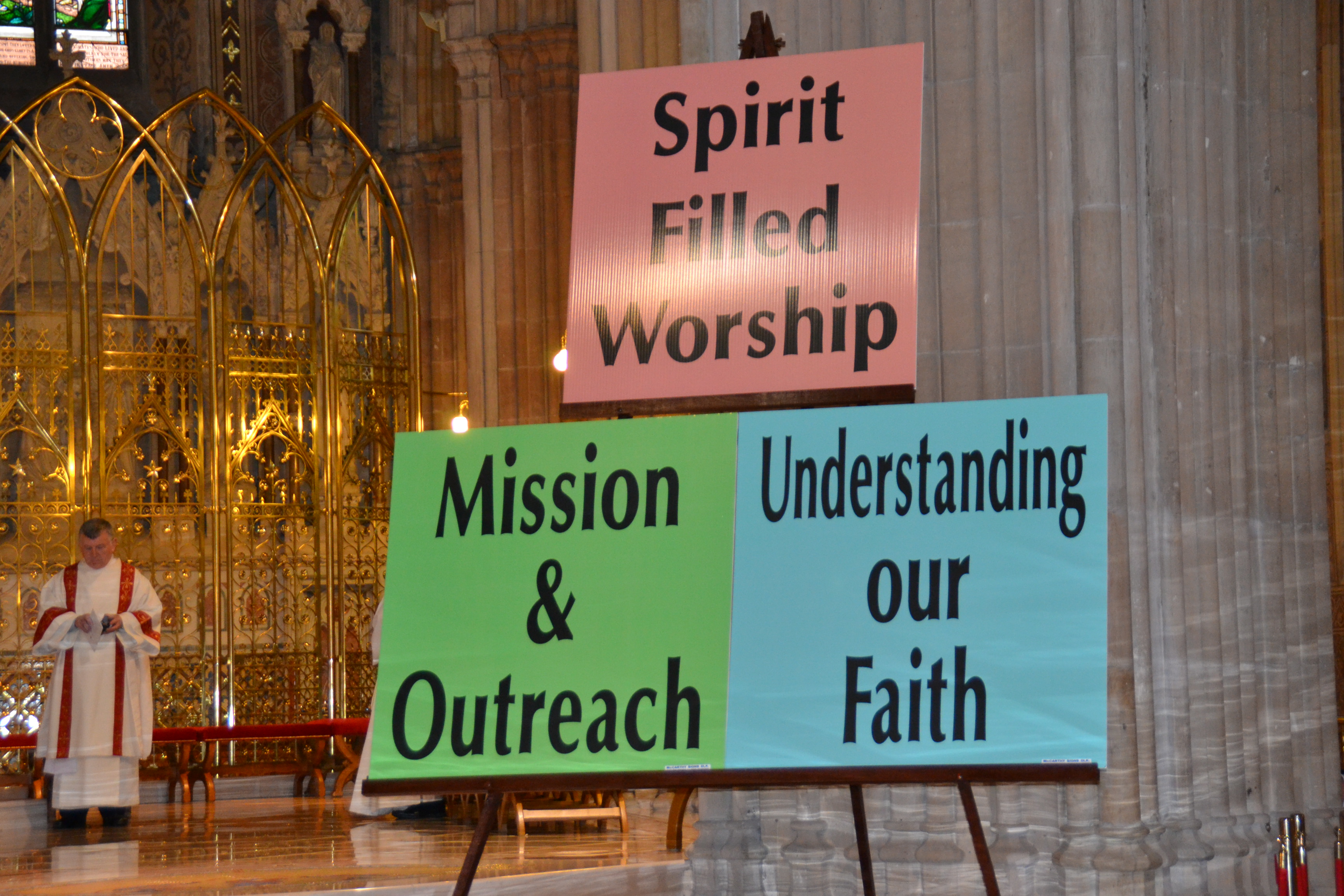
The Plan is divided into three main areas of focus:

A) Mission and Outreach

B) Spirit-Filled Worship

C) Understanding of our Faith

In each of these areas, the Plan will offer five objectives to guide us in our pastoral ministry over the next five years.


Find below the full Pastoral Plan document:

Armagh Diocese Pastoral Plan

Liturgy for the Launch


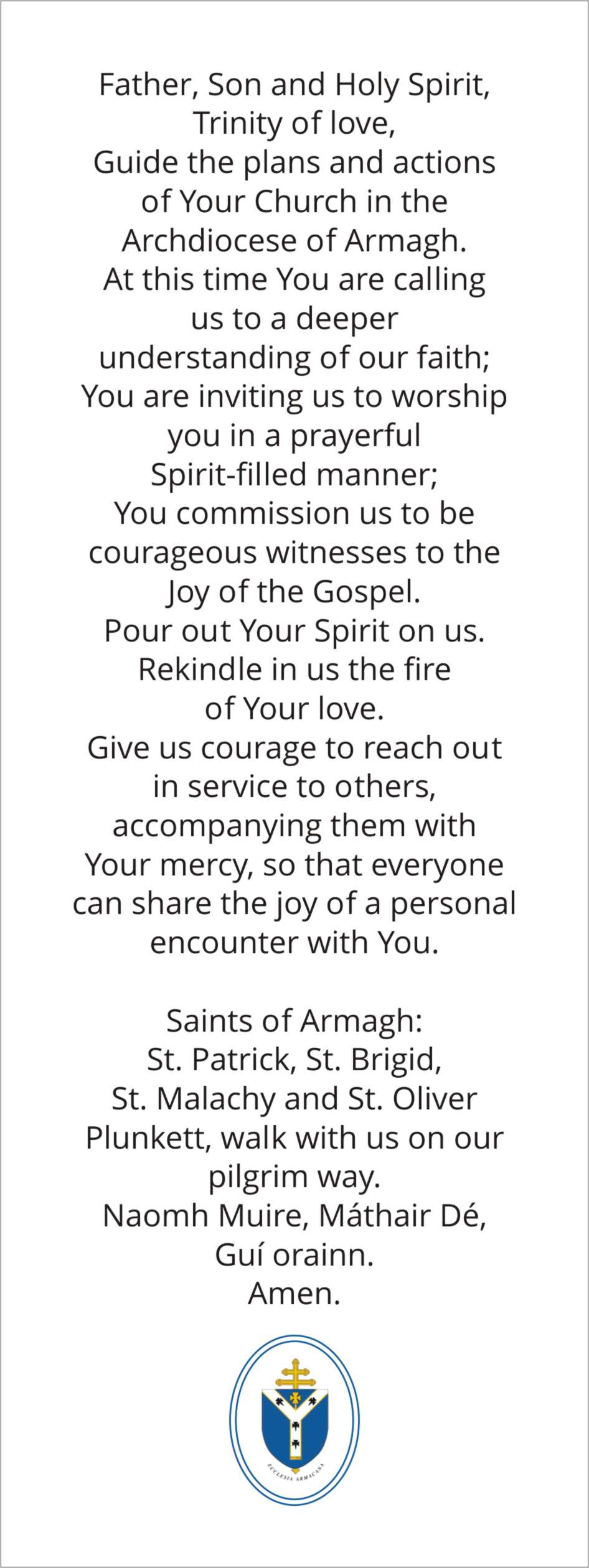
‘I ask for your support and your prayers as we bring the Joy of the Gospel to all whom we encounter. I encourage everyone in the diocese to pray the diocesan prayer for the success of our efforts.’  Archbishop Eamon

Screen Shot 2015-09-08 at 15.24.12 Screen Shot 2015-09-08 at 15.24.31