Friday, December 26, 2025
Home Blog Page 60

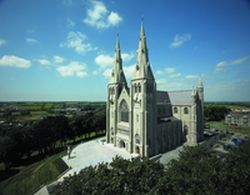
Order of Acolyte in St Patrick’s Cathedral

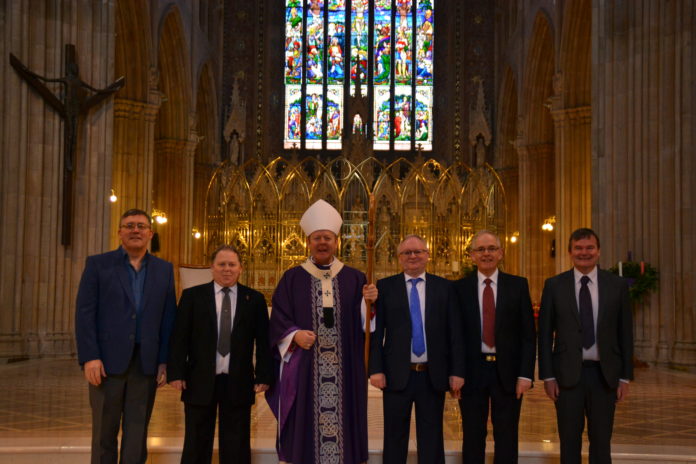
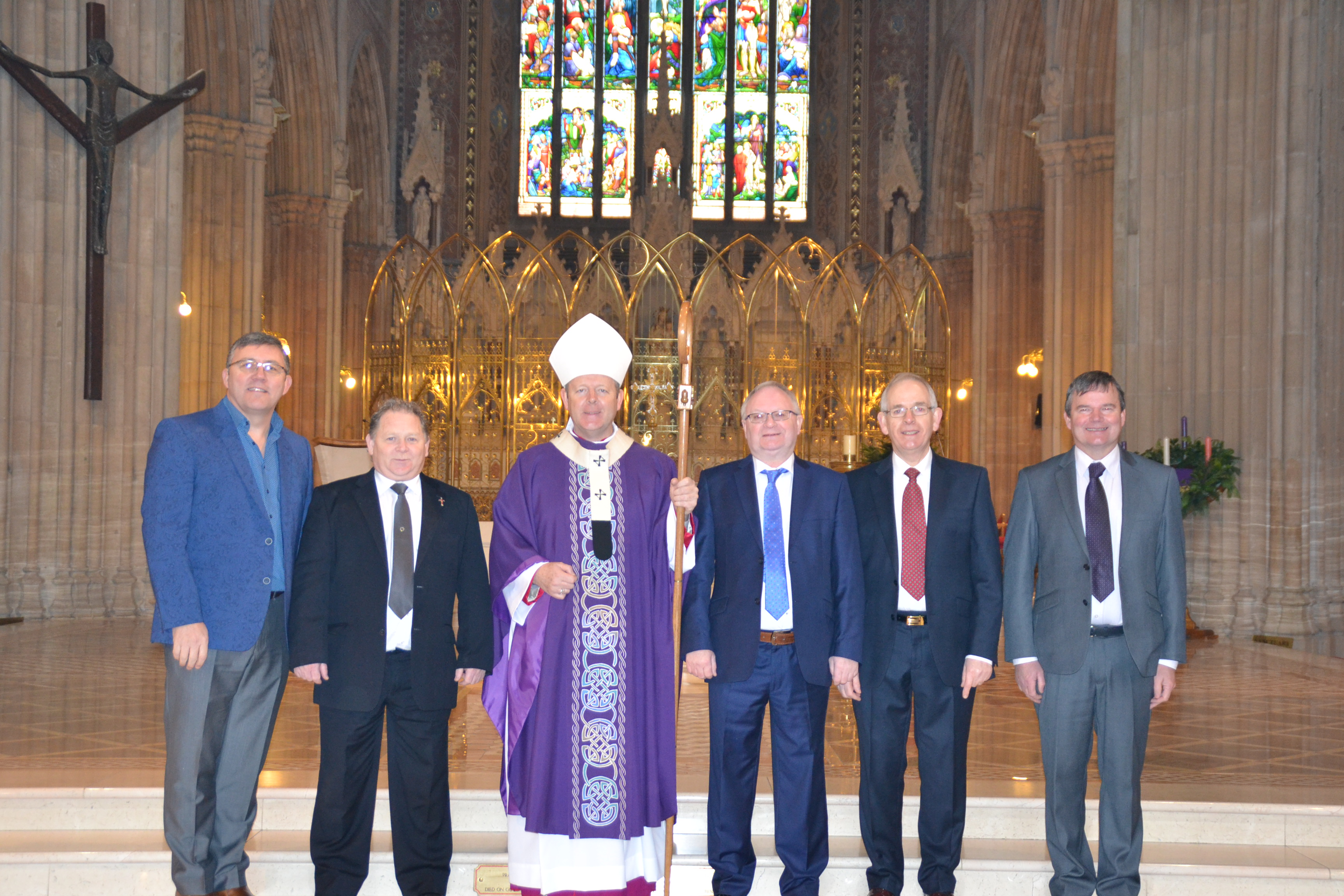
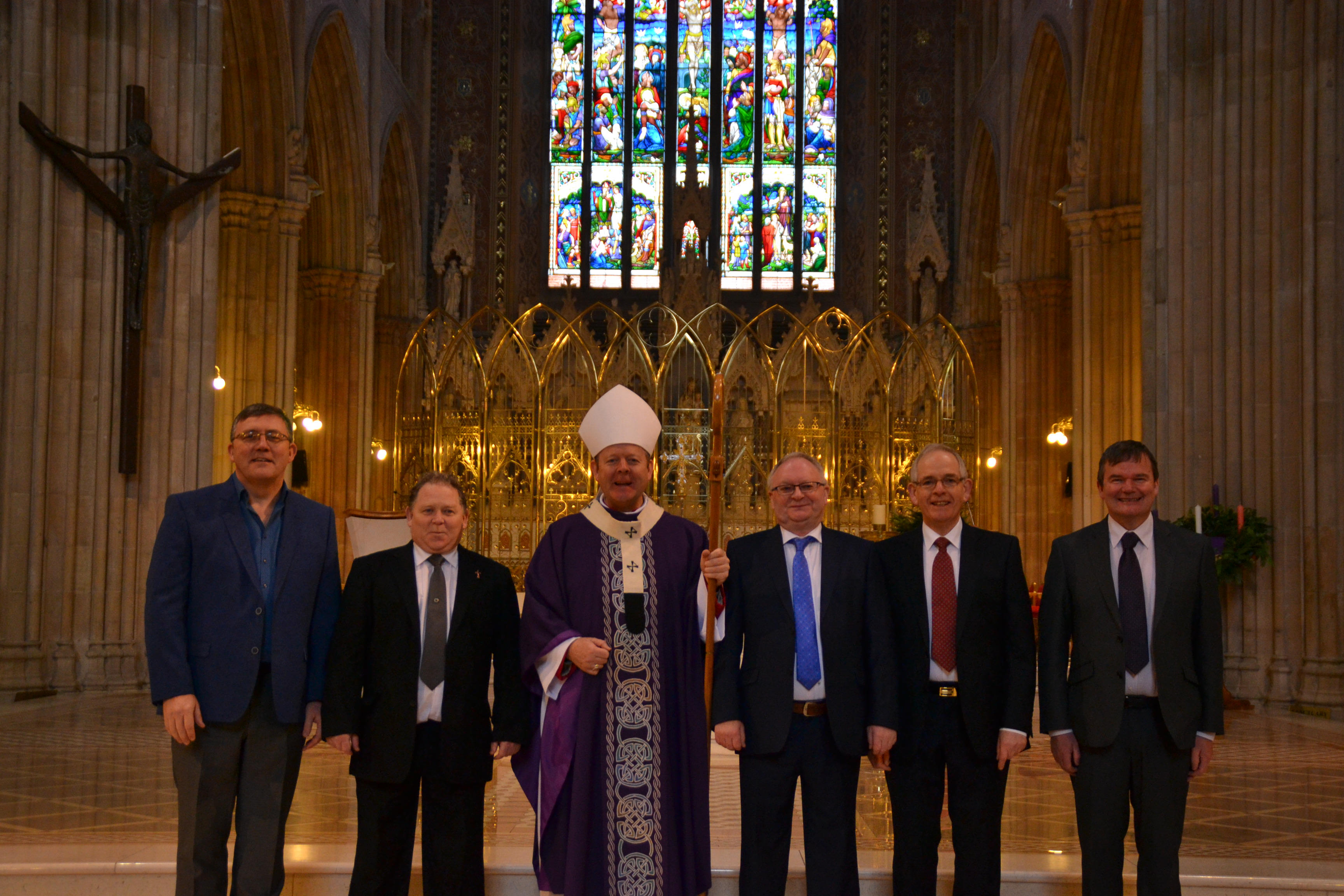
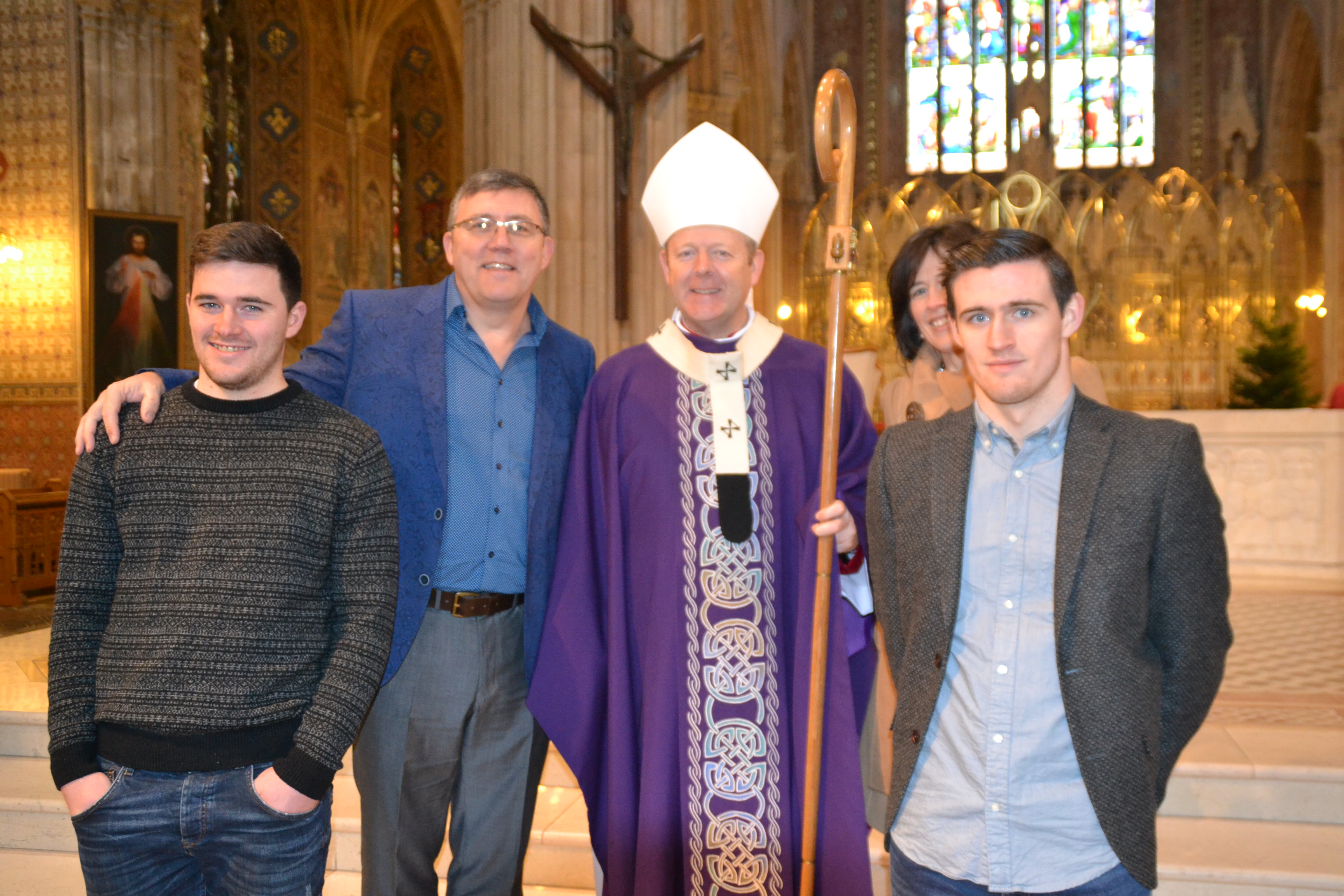
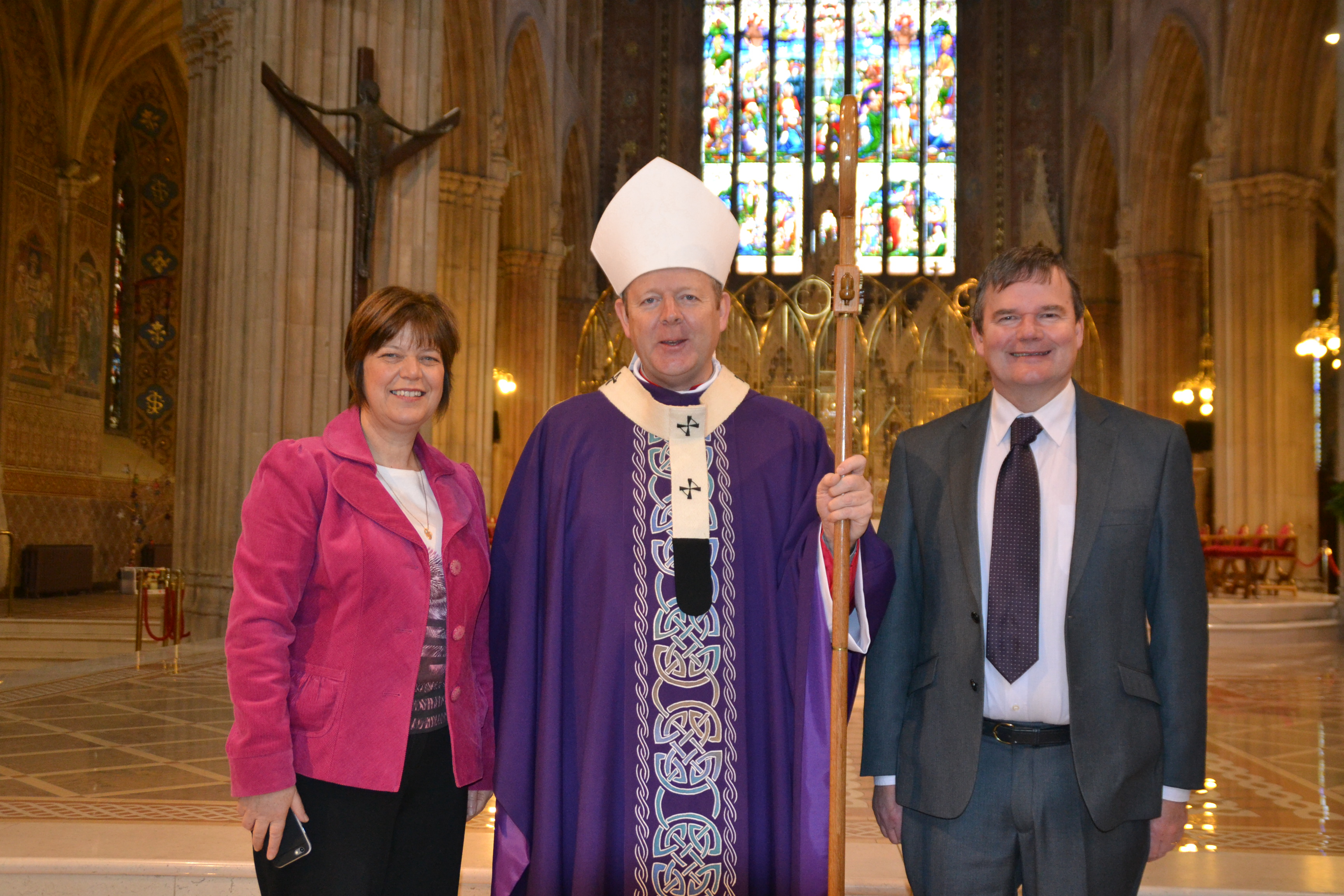
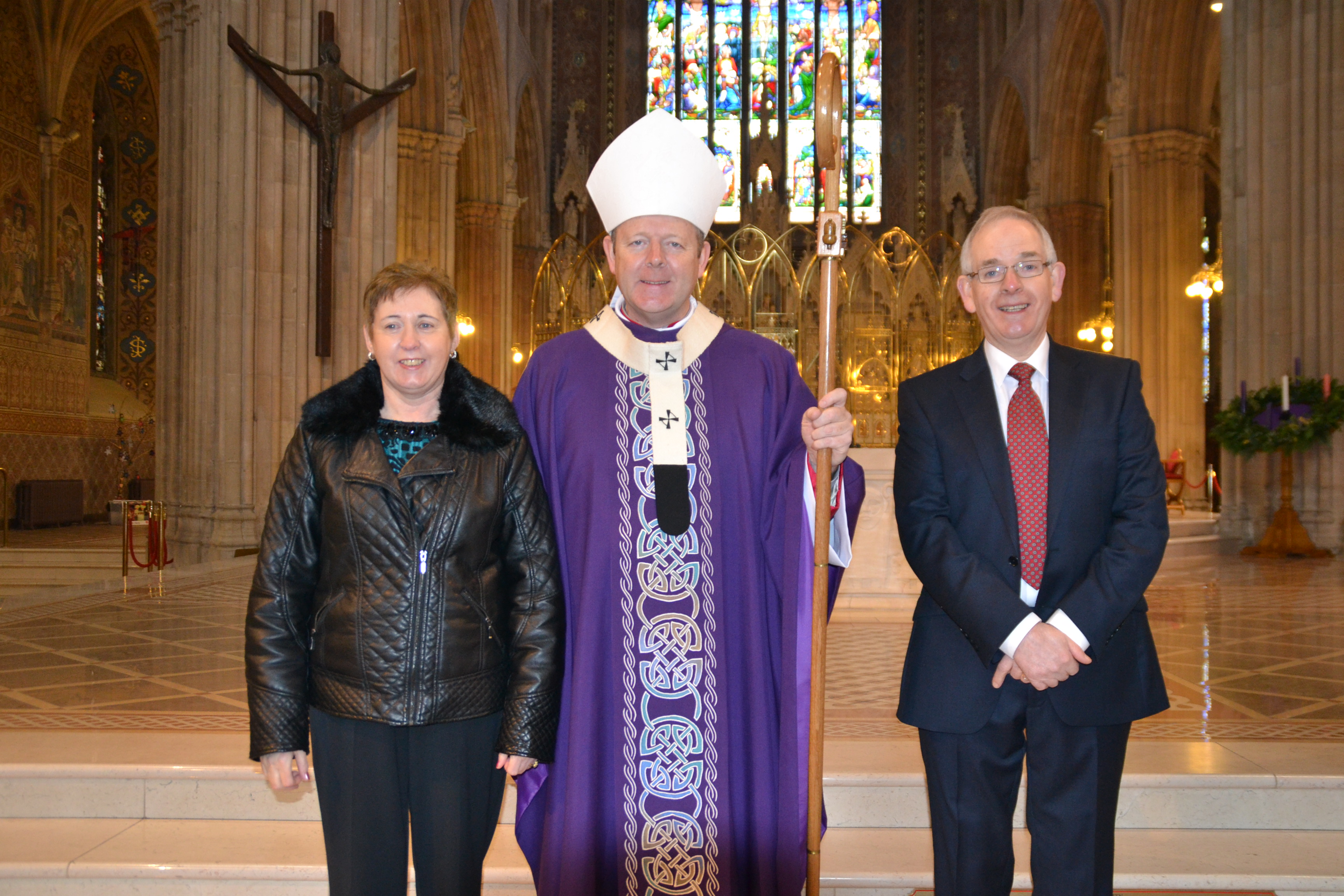
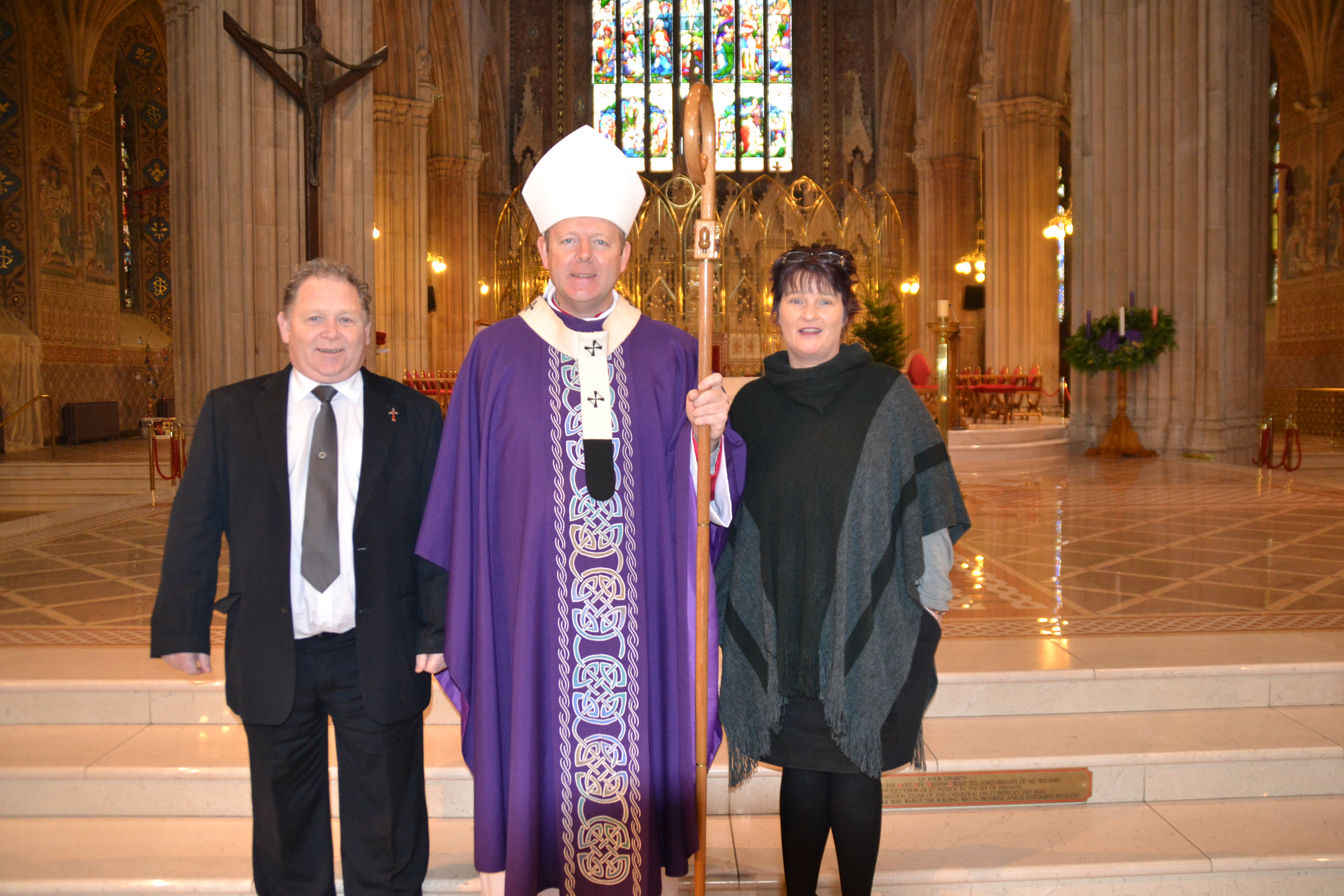
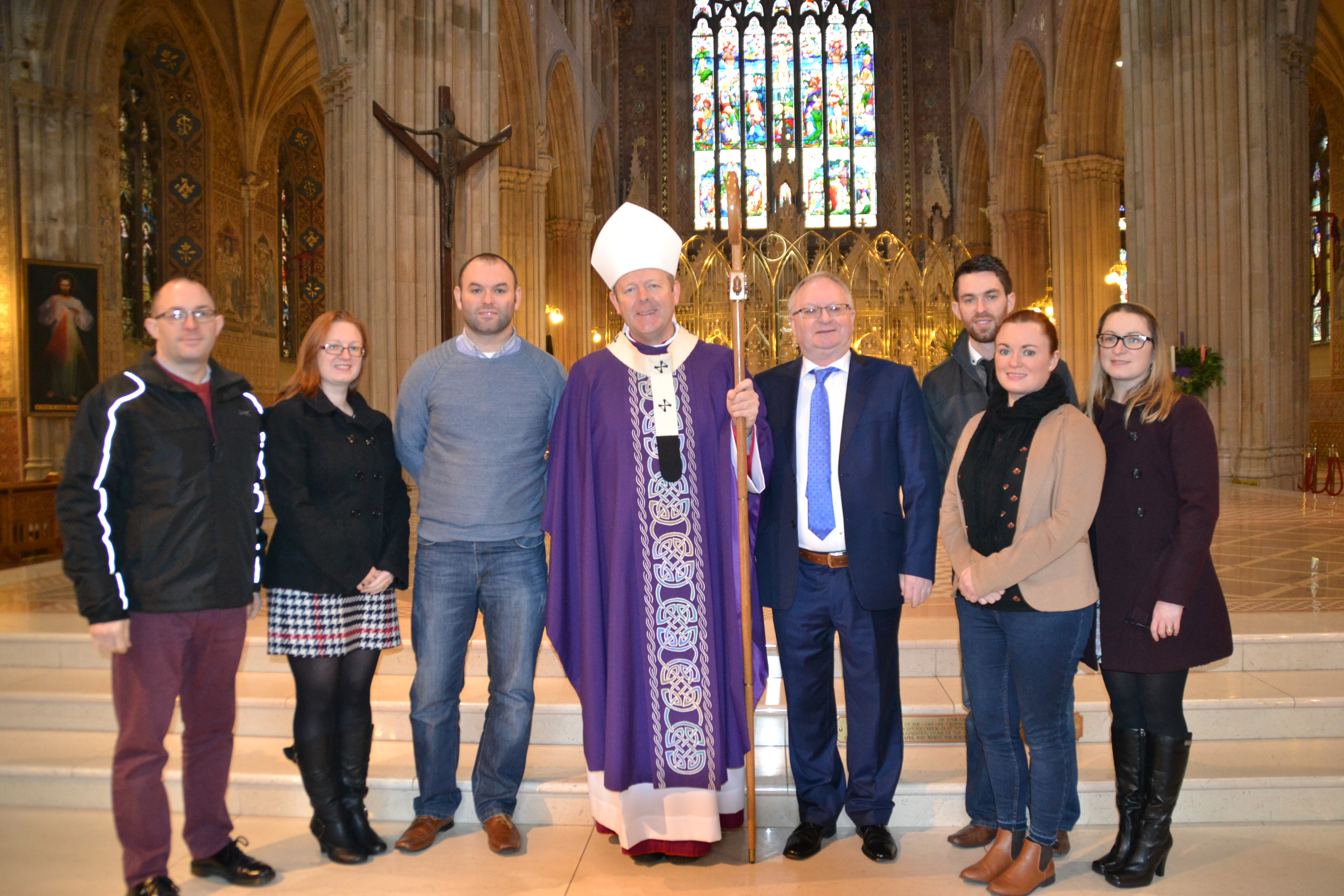
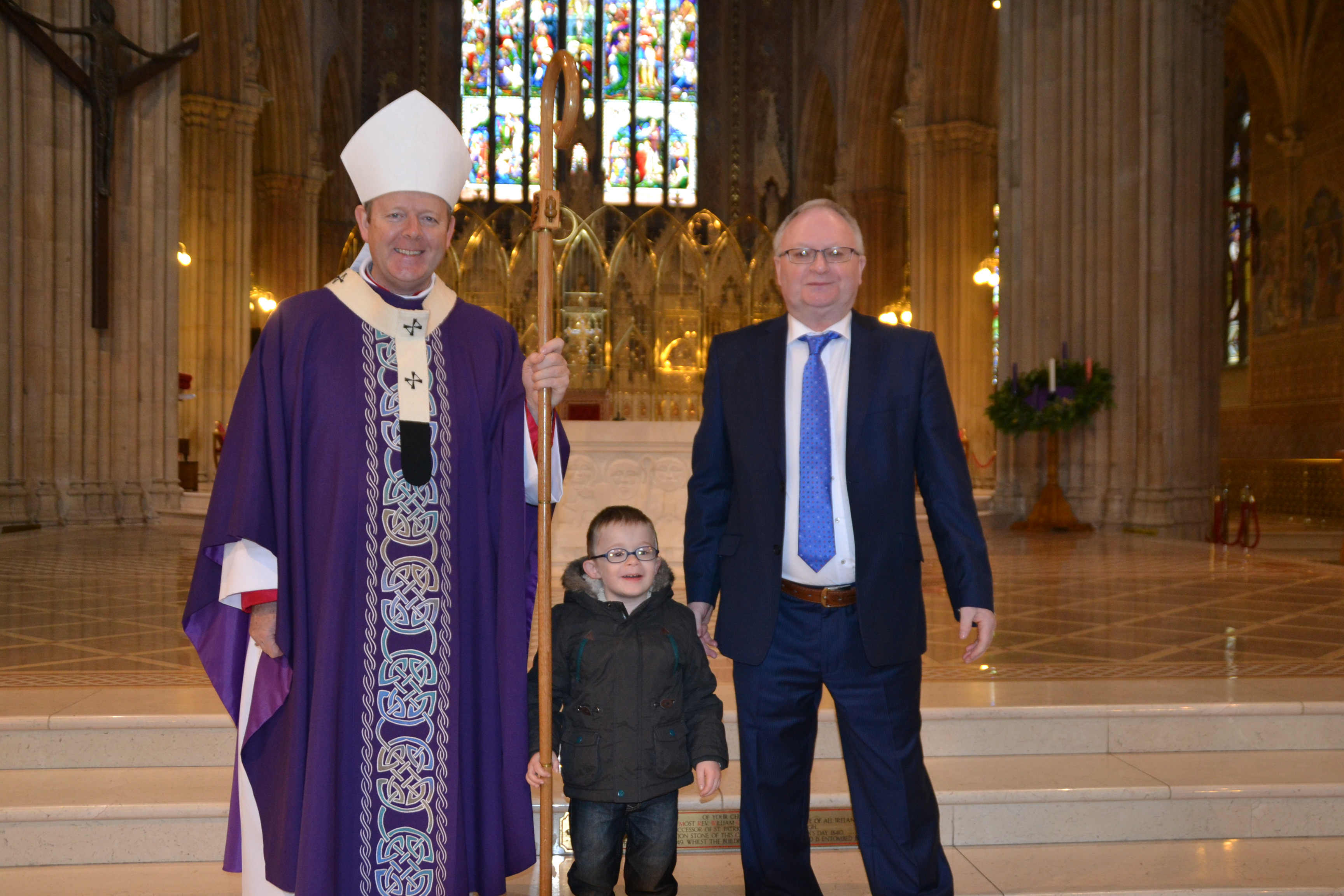
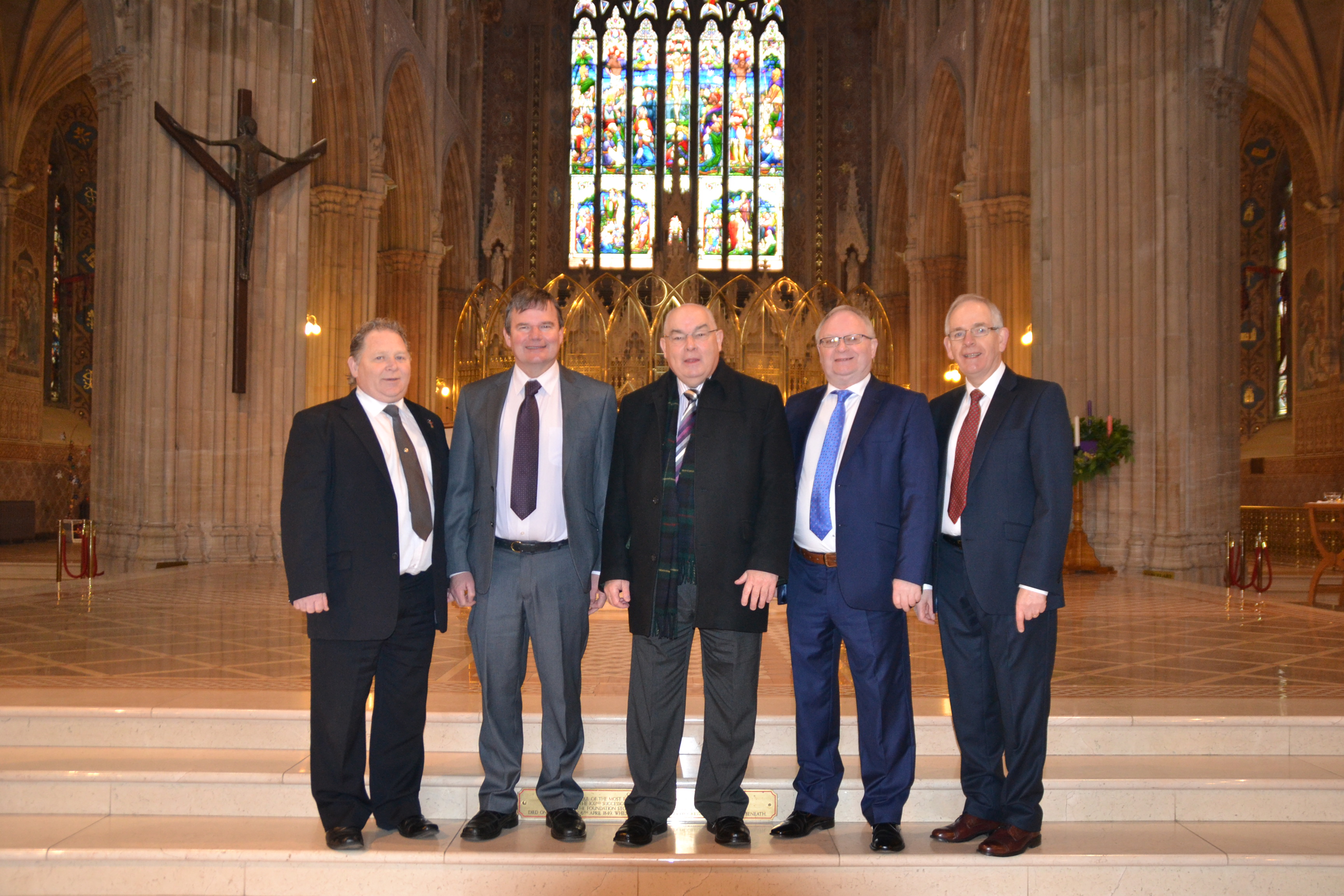
Congratulations to the five men who are currently studying to become permanent deacons and who received the Order of Acolyte at the 11am Mass in St Patrick’s Cathedral on Sunday 4th December. The men are Eamon Quinn (Donaghmore), Tony Hughes (Keady), Martin Cunningham (Ardee), Martin Brennan (Armagh) and Paul Mallon (Dungannon). We wish all of them well and we continue to keep them in prayer as they continue their formation programme.

Archbishop Eamon Martin officially opens new Irish missionary seminary

Archbishop Eamon Martin, Archbishop of Armagh and Primate of All Ireland, has opened a new Irish missionary seminary, the Redemptoris Mater Seminary in Dundalk, Co Louth, in the Archdiocese of Armagh.

There are currently sixteen seminarians studying for the priesthood in the seminary and the young men come from eight countries: Croatia, England, Ireland, Italy, Poland, Scotland, Spain and the USA.  The seminarians receive their formation in Dundalk and travel to Maynooth for their philosophical and theological studies.

At the blessing of the newly renovated first phase of the seminary Archbishop Eamon Martin said, “Today I pray God’s blessing and I give thanks for everyone who has helped in some way has made this possible.  I am convinced that the Lord is with this, because already we can see it bearing fruit and I hope and pray that it will continue and that we will all be faithful to what the Lord wants of us.

“As we mark the feast day of Saint Columbanus, let us reflect on this saint who was a great Irish missionary, and who was one of a whole body of Irish men and women who left this country and went out into Europe and brought the Gospel at a time when it was difficult and dark and alien to the faith but, with the help of God, these pioneering faith-filled missionaries succeeded and began a new chapter in the life of the Christian faith in Europe.”

Archbishop Martin concluded, “Now we are beginning something similar for Ireland and for Europe, the New Evangelisation, under the protection of the holy Saints Columbanus and Patrick and, of course, Mary, the Star of the New Evangelisation.”

Present at the ceremony was Father Maciej Zacharek, originally from Poland, who was the first seminarian to be ordained to the priesthood from the local seminary in 2014.  Now he is serving in Our Lady of Lourdes parish, Drogheda.

The seminarians from Redemptoris Mater, when ordained, will be incardinated into the Archdiocese of Armagh and serve in the parishes of the Archdiocese, they may also be available to serve as missionaries for the New Evangelisation in other parts of Ireland and internationally.

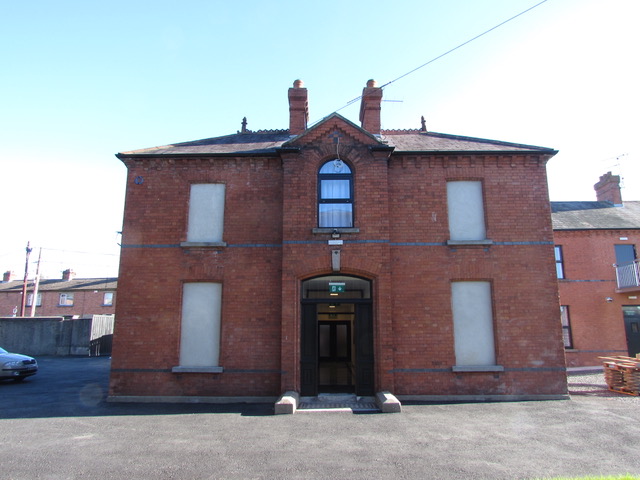
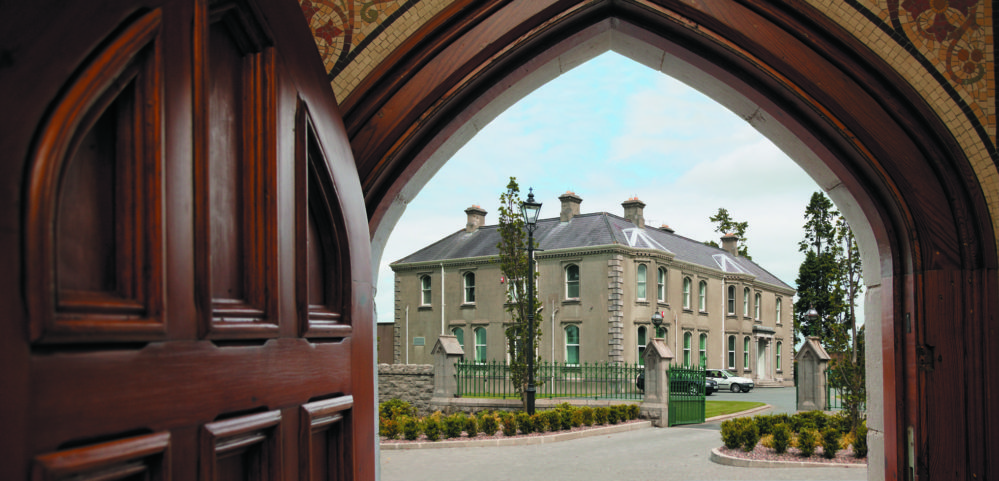
The seminary is located in the former De la Salle brothers’ residence in De la Salle Terrace, Dundalk.  It functions largely due to donations from individuals, those wishing to donate can find details on their website www.redmatarmagh.org/help-us

ENDS

Notes for Editors

  • This official opening took place on 23 November 2016.
  • Redemptoris Mater Archdiocesan Missionary Seminary is an institution of the Archdiocese of Armagh, located in Dundalk.  It is reliant on voluntary donations and legacies to continue its work.  The Seminary was founded in 2012 by Cardinal Séan Brady, Archbishop Emeritus of Armagh, to form priests for the New Evangelisation who are both diocesan and missionary.  These vocations come from the Neocatechumenal Way and will be ordained as priests of the Archdiocese of Armagh.

Archbishop Eamon Martin launches online Advent Calendar for 2016

“As Advent is the season of preparation for the coming of our Lord, I encourage the faithful, notwithstanding our hectic schedule over the coming weeks, to make time to pray – alone and with loved ones – and by so doing to draw nearer to Christ.” – Archbishop Eamon Martin


Archbishop Eamon Martin, Archbishop of Armagh and Chair of the Council for Communications of the Irish Catholic Bishops’ Conference, has launched a specially commissioned 2016 Advent Calendar on the homepage of the Irish Catholic Bishops’ website www.catholicbishops.ie to coincide with the beginning of Advent on Sunday next 27 November. 


Launching the calendar, Archbishop Eamon said, “The season of Advent marks the beginning of the Catholic year and the time of spiritual preparation for the Lord’s coming at Christmas.  It is a time of waiting, conversion and hope.  Advent also prepares us for the second coming of Christ at the end of time.  As Christians, we must always be prepared for the coming of the Lord – ‘You must stand ready because the Son of Man is coming at an hour you do no not expect’ [Mt 24:37-44].   Preparation does not happen at once but over time and so each day of Advent amounts to a period of time which allows us to journey and reflect on the joy of the Gospel. Our online calendar is a helpful resource in this journey.”


Archbishop Eamon continued, “This year, the beginning of our Catholic new year coincides with the conclusion of the Jubilee Year of Mercy which we celebrated as a universal Church at the invitation of our Holy Father Pope Francis. Across Ireland, in parishes, schools, religious communities and places of pilgrimage, hundreds of special gatherings and events took place to mark the Jubilee Year and to emphasise its key message – that the name of God is mercy; that God’s mercy is available to all, and we are, in turn, called to be merciful as our Heavenly Father is merciful.

As Pope Francis prayed at the closing of the Jubilee Year in Rome, I pray that the graces of this special year will continue to work in the Church and that people will feel more and more welcome in their Church.  The door to God’s mercy never closes.  There is always a second chance to turn back, to say sorry, to ask forgiveness and to make amends. Advent offers us a perfect opportunity to reflect on mercy, forgiveness, and conversion. As Pope Francis puts it: God never tires of casting open the doors of his heart and of repeating that he loves us and wants to share his love with us … From the heart of the Trinity, from the depths of the mystery of God, the great river of mercy wells up and overflows unceasingly. It is a spring that will never run dry, no matter how many people draw from it. Every time someone is in need, he or she can approach it, because the mercy of God never ends (Misericordiae Vultus n25).


I welcome the inclusion of content from Pope Francis’ Amoris Laetitia (The Joy of Love) and his new Apostolic Letter Mercy and Peace in this year’s Advent Calendar. I invite everyone during the Advent season to visit and to reflect on the information provided on our online calendar, especially the themes of love in the family as well as mercy and peace.”


Archbishop Eamon concluded, “As Advent is the season of preparation for the coming of our Lord, I encourage the faithful, notwithstanding our hectic schedule over the coming weeks, to make time to pray – alone and with loved ones – and by so doing to draw nearer to Christ.”

Address by Archbishop Eamon Martin at the launch of preparations for the World Meeting of Families 2018

DCU Saint Patrick’s Drumcondra Campus, Dublin

· “One of my hopes is that we will develop Catholic family support groups at diocesan and parish level which might not only assist with marriage preparation, but also with supporting couples in the years immediately following marriage”
· “A challenge for our preparation and celebration of the World Meeting of the Families is how we are going to connect with those who, for whatever reason, perceive that the Church has little or nothing to say to their particular family situation”
· “We have the joy, and challenge, of presenting the Church’s clear and positive vision of marriage and family: the Good News that human life is sacred, that each human being comes from God, who created us, male and female”

This weekend last year I was preparing to head home from the Family Synod in Rome. I knew I had been part of something very special and historic in the life of the Church. We came from every corner of the world – it was a truly global event – but we belonged together. We were ‘connected’ – as brothers and sisters in the great universal family that is the Catholic Church. The theme of the Synod was ‘the vocation and mission of the family in the Church and contemporary world’. During those three weeks we shared our concerns and hopes for family life from the perspective of our different countries and contexts. And all the while Pope Francis listened attentively, concentrating deeply on every word. We were Cum Petro et sub Petro (with Peter, under Peter).

At the end of the Synod we offered Pope Francis reflections in the form of a final report, inviting him to write an ‘exhortation’ for the whole world. The result was his powerful and challenging document: Amoris Laetitia, (The Joy of Love On Love in the Family). The Synod and Amoris Laetitia provide both the foundation and the mission for the next great global Catholic event – the World Meeting of Families here in Dublin in 2018.

Countdown
The countdown has begun and here today, from every corner of Ireland, we have gathered to begin our reflection on the theme chosen by Pope Francis for the World Meeting: ‘The Gospel of the Family – Joy for the World’. Today I have that same sense of belonging and ‘connection’ as I had at the Synod. Once more I am reminded that the Catholic Church in Ireland, and throughout the world, is ‘a family of families’ – a network of believers, homes, communities, parishes and dioceses. In choosing to come here today we are affirming that we believe in Family. We are committed to the Family as the ‘school of humanity’, as fundamental to society and the common good. We recognise the importance of Family in the life of the Church; we believe the family is the ‘domestic Church’, the ‘little Church’; the family is the essential agent of the Good News. Amoris Laetitia puts it well: ‘The Church is good for the family and the family is good for the Church (AL87)’.

Our personal experience of Family
When I look back on the Synod, my most vivid memories are of bishops and others sharing their experiences of growing up in a family. From Ireland to Fiji, from Myanmar to Nigeria – each of us had our personal stories of the joys and struggles in our own home and family situations- most had happy memories of their childhood and youth, but many also had painful recollections, perhaps because of a breakdown in relationships, illness, bereavement or economic hardship. It brought home to me the truth that no family is perfect, and yet every family is precious in the eyes of God. Pope Francis puts it like this at the end of Amoris Laetitia: ‘No family drops down from heaven perfectly formed; families need constantly to grow and mature in the ability to love. This is a never-ending vocation born of the full communion of the Trinity, the profound unity between Christ and his Church, the loving community which is the Holy Family of Nazareth, and the pure fraternity existing among the saints of heaven (AL325)’.

I invite you to reflect on your own family story today, to ‘connect’ in thought and prayer with your parents, siblings, grandparents, and extended family network. Consider what the forthcoming World Meeting of Families in Dublin might have to say to your family. What are your hopes for this great global gathering in August 2018? More importantly, what might we do as Church before, during and after the World Meeting, to ensure that our proclamation of ‘The Gospel of the Family: Joy for the World’ is heard and shared by as many people as possible?

It would be so easy for the World Meeting of Families to end up as a once-off event, an extravaganza which will come and go like a big pop concert or sports final. What might we do together as Church, as ‘a family of families’ to harness the grace and opportunity of this time to ‘re-connect’ families with their fundamental calling and to send a clear and lasting message of hope that Family is Good News for today and for the future?

Connections
In choosing Ireland to host World Meeting of the Families, Pope Francis has given a gift to our Church and our country which we have accepted with humility and openness to the graces that it can bring. My hopes for the World Meeting keep coming back to that word ‘connection’.

Family is all about ‘connection’. Family connects us to a home, to ‘ar muintir fein’, the people who are our flesh and blood. It links us to a community, a parish, a county and an ever-expanding network of people and places. Family also connects us to a history and culture, a language and tradition, to our ‘DNA’, our roots, to our past, present and future. Family connects us to faith and values, to baptism and the community of believers. I pray that Ireland’s hosting of the World Meeting of Families will enable families to ‘connect’ and ‘re-connect’ at a whole variety of levels, both with each other and with the wider ‘family of families’ that is their Church.

The connections within family life are sometimes broken by distance, by disagreement or breakdown, or simply by the pace and distractions of fast-moving everyday life in the twenty-first century. Sometimes we are so busy that families lose touch or drift apart for want of quality time spent together. Simple things like eating together, making the effort to be in each other’s company, sharing memories and news of what’s happening in each other’s lives, and of course praying together even for a few moments – these are the links that connect and re-connect families with each other.

Connecting with Family Prayer
During the Synod, Pope Francis led us every day in prayer for the family, connecting us spiritually to the needs of families throughout the world, especially those who experience violence, rejection and division. He offered the Holy Family of Nazareth and the Holy Trinity as ‘icons’ of family love, prayer and communion. Might the World Meeting of Families encourage us to revive the importance of prayer in and for the family? Many Irish homes have crucifixes, images of the Sacred Heart or of Blessed Mother Mary as reminders of God’s presence among them. Many parents still teach their children to pray Morning and Night Prayers, the Rosary, Grace before meals and the Angelus. Schools create spaces and opportunities to teach our children to pray using the Word of God or Adoration of the Blessed Sacrament. Still, many families today need prayer guidance and support and this is an area where Family Associations and Movements like those here today can connect in with families to offer help.

Connecting with those Preparing for Marriage
With the World Meeting of Families comes an opportunity for us to connect with young people who are thinking about marriage. Many of them have picked up a distrust of commitment and institutions, and even fear that marriage and family may damage their social and economic independence. There is a tendency to delay or avoid life-long commitments especially when employers expect young people to be flexible and available to work long, unsociable hours. Meanwhile social media demands so much attention and time and can put serious pressure on relationships.

Into a seemingly ‘soul-less world’ we have the joy and challenge of presenting the Church’s clear and positive vision of marriage and family: the Good News that human life is sacred, that each human being comes from God, who created us, male and female; that God loves each and every one of us; that chastity is achievable, healthy and good for our young people; that self-giving love and commitment in marriage is not only possible, but is a beautiful and fulfilling vocation which can grow and develop with the power of God’s grace.

Pope Francis put it powerfully when he said last January: “The Church, with a renewed sense of responsibility, continues to propose marriage in its essentials – offspring, good of the couple, unity, indissolubility, sacramentality – not as ideal only for a few – …but as a reality that, in the grace of Christ, can be experienced by all the baptized faithful (to Roman Rota Tribunal, 22 January 2016)”.

To present this challenging vision of marriage and family we need a network of support for those young people who are preparing to marry. Of course remote preparation for marriage begins in the family home with parents as the first witnesses and teachers of the meaning of marriage and the family. It continues in Catholic schools through sound Relationships and Sexuality Education programmes that are in accordance with the Catholic ethos. With regard to the immediate preparation that takes place in pre-marriage courses, The World Meeting provides us with a timely opportunity to evaluate marriage preparation this with the help of our committed ACCORD facilitators and others. Bishops at the Synod spoke about the importance of marriage preparation being more directly connected with parish, with the worshiping community and with supportive couples and families within the parish.

The pre-catechetical programme that will be launched next Spring for the World Meeting of the Families will be a valuable resource for ongoing marriage preparation and support programmes. One of my hopes for the next few years is that we will develop Catholic family support groups at diocesan and parish level who might not only assist with marriage preparation, but also with supporting couples in the years immediately following marriage. Intentional Catholic families can sometimes feel isolated so there is a need for more movements and associations like those here today to connect with them and to guide and nourish the vocation and mission of marriage and the family. At the heart of these initiatives is the conviction that it is primarily families who minister to other families, married couples who minister to other married couples, young people who support other young people in the faith.

Connecting at significant moments
I was thinking recently of the times and places where the Catholic Church in Ireland already connects with families. We are there at the a happy moments of family life – like Christenings, Weddings, First Communion and Confirmation days; and we are there at sad times – like funerals, anniversary Masses, cemetery Sundays, or in times of great tragedy or loss in a community. On all these occasions the Church as mother, gathers her children and families around to share joy or to provide comfort. I believe we could make more of these sacred moments and spaces. We might consider new ways of linking and connecting with families at significant moments – like important wedding anniversaries, engagement, when the children are starting school, or young people doing exams, when family members are sick, or someone is leaving home. Many parishes have already developed liturgical and pastoral outreaches to mark these moments: we ought to share this good practice more widely.

Connecting with those who feel excluded
The overwhelming desire among the bishops at the Synod was to reach out and connect with all families, and especially with those whose homes are visited by tragedy or violence and those who, for whatever reason, have experienced breakdown in their relationships and may feel excluded from the Church. The Synod was clear that we need to be mindful of those who have begun new relationships and unions, and find sincere and truthful ways of welcoming and including them in the life and worshipping community of the Church.

What do we do in these situations, the Synod asked? Do we sit outside and judge, or do we accompany all our people, presenting the truth and joy of the Gospel in a loving, charitable way. In Amoris Laetitia, Pope Francis proposes pastoral discernment and accompaniment in difficult situations, including a ministry of care to families with gay members or to those where the marriage relationship has broken down, always conscious that the Christian message of truth and mercy converges in Christ. A challenge for our preparation and celebration of the World Meeting of the Families is how we are going to connect with those who, for whatever reason, perceive that the Church has little or nothing to say to their particular family situation.

The Synod Final Report makes it clear: “We the Church start ‘from the real life situations of families today’, all in need of mercy, beginning with those who suffer most. With the Merciful Heart of Jesus, the Church must draw near and guide the weakest of her members who are experiencing a wounded or lost love, by restoring confidence and hope, as the beacon light of a port, or a torch carried in the crowd, to illuminate those who have lost their way or find themselves in the midst of a storm” (Relatio Synodi, 55)

The “Gospel of the Family – Joy for the World”
The celebration of the World Meeting of the Families in Ireland is providing us with an opportunity to distil for our times the beautiful and prophetic vision of God’s plan for marriage and the family. We believe that this vision is Good News for society and the world and it deserves particular support at every level including public policy and legislation.

Pope Francis says: ‘The family deserves special attention by those responsible for the common good, because it is the basic unit of society, which brings strong links of union that underpin human coexistence and, with the generation and education of children, ensure the renewal and the future of society.’

The Synod fathers put it this way: ‘A society that neglects the family has lost its access to the future’.

‘Strong links’; ‘Connections’; ‘Belonging’; ‘Access to the future’ – together, in our homes, parishes, and in across the dioceses of Ireland, let us seize the opportunity presented by this World Meeting to sow seeds for the future of the family which will flourish to benefit our people, our country and our world.

Thank you for your participation here today, for your ongoing support of families and May God bless you all.

ENDS

Notes for Editors

· Archbishop Eamon Martin is Archbishop of Armagh, Primate of All Ireland and co-chair of the Council for Marriage and the Family of the Irish Bishops’ Conference along with Archbishop Diarmuid Martin, the Archbishop of Dublin.

· Nearly 700 delegates will participate in today’s event to formally launch preparations for the 9th World Meeting of Families which will take place in Dublin from 22 to 26 August 2018. Pope Francis chose Dublin as the 2018 location and gave it the theme: “The Gospel of the Family: Joy for the World”. Archbishop Diarmuid Martin is the President and host, and Father Timothy Bartlett is its Secretary General. The World Meeting of Families takes place every three years and is coordinated by the Vatican’s Dicastery for the Laity, Family and Life. Established by Pope Saint John Paul II in 1992 as a pastoral initiative, its aim is to strengthen the sacred bonds of the family unit across the globe. The first World Meeting of Families took place in Rome in 1994, the International Year of the Family. Every three years since 1994, families from all over the world are invited by the Holy Father to attend this global gathering. During a World Meeting, families come together to share experiences, to dialogue, to pray and work together to grow as individuals and as family units. Delegates participate in discussion groups on the role of the Christian family in the Church and society, and are addressed by distinguished speakers. The eighth and most recent World Meeting took place in Philadelphia in September 2015.
Archbishop Eamon Martin invites families to participate in a Novena for Mercy in the Family

To mark the end of the Jubilee Year of Mercy on 20 November, Archbishop Eamon Martin, Archbishop of Armagh, has invited families to participate in a special Novena of Prayer by saying a prayer together for Mercy in the Family each evening for nine evenings.

In his message to the parishes of the Archdiocese of Armagh, Archbishop Eamon said, “As the Jubilee Year of Mercy draws to a close on 20 November, I invite you and your families to join me in a Novena for Mercy in the Family, beginning at 6.00pm on the evening of Friday 11 November and ending on Sunday 20 November, the Feast of Christ the King.”

Archbishop Eamon continued, “Please gather whoever is at home on each of the nine evenings shortly after six o’clock for just a few moments, and pray this short prayer together:

Jesus, Mary and Joseph, Holy Family of Nazareth, bless our family.
Keep anger and violence far from our door.
May our home be a place of love, mercy and forgiveness.
Share our moments of happiness with us.
Whenever things are difficult, help us to overcome together the problems that come our way.
Be with families in Ireland and around the world who are homeless or suffering.
Jesus, Mary and Joseph come into our home and our hearts and stay with us always.

Amen

“If you have Holy Water at home, ask each person present to make a Sign of the Cross on their forehead and pray for any special family intentions you might have. (You can get Holy Water at your local Church).

“Finish by saying the Our Father together.”

Archbishop Eamon concluded his message by welcoming parishioners to visit the Holy Door at Saint Patrick’s Cathedral in Armagh, or at Saint Peter’s Church in Drogheda, before the end of the Jubilee Year and also to consider coming as a family to Confession some time before Christmas.

Death of Very Rev Arthur McAnerney, PE, AP, Magherafelt

The death has taken place, this morning, Tuesday, 15 November 2016, of Fr Arthur McAnerney, PE, AP, Parish of Magherafelt, in Antrim Hospital.  May he rest in peace.
 

Following are the funeral arrangements:


Reposing at the Parochial House, 10 Aughrim Road, Magherafelt, Co Derry, BT45 6AY, from later today, Tuesday, 15 November 2016 – house private for family;


Removal, Tuesday, 15 November, to the Church of the Assumption, Magherafelt, arriving for Mass at 7.30 pm and all night vigil in the Church;


Removal after 11.00 am Mass, Wednesday, 16 November, to his sister-in-law, Catherine McAnerney’s home, ‘Umgola House’, 29 Monaghan Road, Armagh, BT60 4DA;


Requiem Mass on Thursday, 17 November, at 12.00 noon, in St Patrick’s Cathedral, Armagh followed by burial in St Patrick’s Cemetery.


Died 15 November 2016, Antrim Hospital

Born 23 September 1937, Parish of Armagh


Studied           St Patrick’s College, Armagh             1949 – 54

                        St Patrick’s College, Maynooth          1954 – 61


Ordained 18 June 1961, St Patrick’s College, Maynooth


Appointments


On Loan, Down & Connor                                         1961 – 64

Chaplain, St Peter’s Drogheda                                   1964 – 66

Curate, Belleeks – Loughgilly                                    1966 – 72

Curate, Magherafelt                                                    1972 – 75

Curate, Drogheda                                                       1975 – 83

Curate, Portadown                                                      1983 – 92

Parish Priest, Beragh                                                   1992 – 11

Pastor Emeritus Associate Pastor, Magherafelt          2011 – death

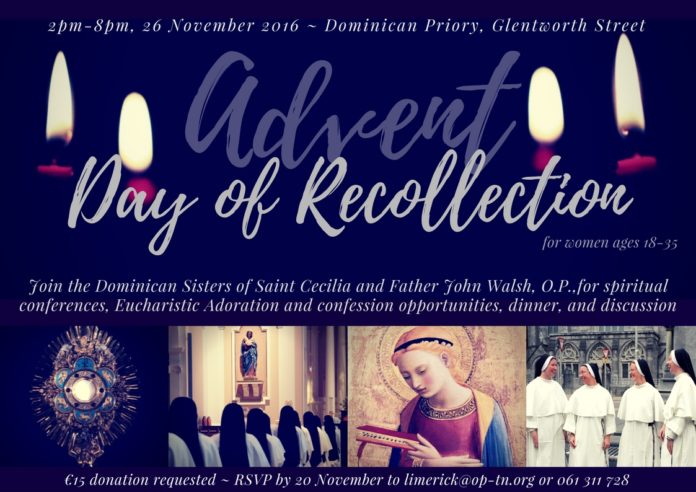
Advent Day of Recollection for young women age 18-35

Advent Day of Recollection for young women age 18-35, on November 26th, 2016, 2-8pm at the Dominican Priory, Glentworth St. Limerick. 

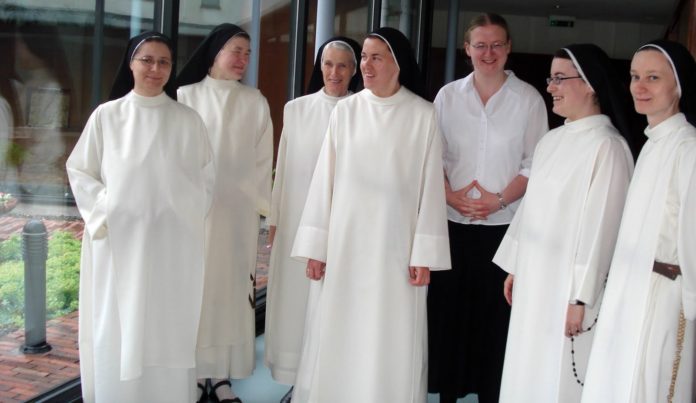
Join the Dominican Sisters of Saint Cecilia and Father John Walsh, O.P. for spiritual conferences, Eucharistic Adoration and  confession opportunities, dinner and discussion. Please RSVP by 20th November to [email protected] or 061-311728. Donation of €15 requested.

COME AND SEE : Dominican Contemplative Nuns

COME   AND   SEE

Dominican Contemplative Nuns

Invite single young women (20-40) who are interested in learning about Monastic life as lived by Dominican Nuns to a

Day of Prayer & Reflection

Saturday 12th November 2016

9.00 am – 7.00 pm

Liturgy – Eucharistic Adoration – Talks –

Sisters’ testimonies – Lectio Divina –

Question time – Food and Fellowship

With the possibility of a full Weekend (Friday (11th) afternoon until Sunday (13th) after lunch for those who wish.

(Early  booking advisable as places are limited)

Venue: Siena Monastery, The Twenties, Drogheda

Contact: Sr Breda OP –

Email: [email protected] or phone 041 -9838524

Address by Archbishop Eamon Martin at the National Safeguarding Conference

Cardboard figures of the family


INTRODUCTION 

Friends, this conference provides all of us with an opportunity to
reflect on where the journey of ‘safeguarding’ in the Church has taken
us. I am honoured – especially as a previous National Board member – to
give the opening address. I encourage you to participate fully in this
important event: by listening carefully to the presentations, by
engaging in the discussions and feedback, and by offering your
suggestions about how we might build upon the progress that we have
already made.

NATIONAL BOARD FOR SAFEGUARDING 

It is now twenty years since the publication in 1996 of the so-called
‘green book’: _Child Sexual Abuse: Framework for a Church Response_. Ten
years later, at their _ad limina_ visit in 2006, Pope Benedict XVI set
out for the Irish Bishops the principles by which to guide our efforts
in safeguarding. He said:

“_In your continuing efforts to deal effectively with this problem, it
is important to establish the truth of what happened in the past, to
take whatever steps are necessary to prevent it from occurring again, to
ensure the principles of justice are fully respected and, above all, to
bring healing to the victims and all those affected by these egregious
crimes_’.

Shortly after this the National Board for Safeguarding Children in the
Catholic Church in Ireland began its work in preliminary mode, although
it was not formally incorporated until 2008. The Board has helped to
bring us a long way. Still, we recognise that when it comes to
safeguarding we can never say we have arrived at the point where our
work is done. We continue to learn from best practice which is always
evolving; we remain open to new ways of going about our work, to
learning from our mistakes, and to identifying and responding to new
challenges and emerging risks. In short, we avoid complacency.

When it comes to the protection of our little ones, and those who are
most vulnerable, we want only the best, knowing that they are special in
the eyes of God. Jesus said (Mark 9:37): “_Whoever receives one such
child in my name receives me, and whoever receives me, receives not me
but him who sent me_.”

Today, I want to thank Mr John Morgan (Chairman) and the members of the
National Board who continue to help us identify, develop and disseminate
best practice in the field. I thank Mrs Teresa Devlin and the staff of
the National Office for the huge amount of work that has gone into the
production and ‘roll-out’ of the revised Standards and Guidance
materials during the past year. Of course the implementation of the
Standards will take substantial commitment and effort from all of us,
but great credit is due to all those who contributed their time and
expertise in refining the materials and ensuring their compliance with
developments in the statutory sector – north and south.

SAFEGUARDING VOLUNTEERS IN PARISHES

An occasion like this also provides me with an opportunity to say thanks
to you – the people who help to translate the words and aspirations on
the pages of our safeguarding manuals into action and change on the
ground. Risk to children, young people and the vulnerable is minimised
when there is a pervasive ‘culture’ of safeguarding with everyone
playing their part at every level of Church life. You represent the many
hundreds of volunteers who care enough about children and their Church
to become involved in this essential task. As designated persons,
training facilitators, local and diocesan safeguarding representatives
and Committee members, you are exercising your baptismal calling by
bringing your gifts and expertise to the service of your local parish,
diocese, religious community or congregation. It is your active
commitment and vigilance, with the support of clear standards in
Safeguarding and Guidance materials, which helps to maintain an
environment that is as safe as possible for our children and young
people.

JUBILEE YEAR OF MERCY AND THE SYNOD ON THE FAMILY

We are in the Jubilee Year of Mercy, and Pope Francis is encouraging all
of us to become more actively involved in the work of mercy. I see the
work of safeguarding as a prophetic work of mercy in the Church today.
This time last year I had the privilege of being present with Pope
Francis at the Synod on the Family. Delegates from all over the world
shared with us their experiences of real threats to children and the
vulnerable. We heard about dangers to children due to forced migration
of families, and about young people getting caught up in international
networks of human trafficking. Other delegates spoke to us of the
exploitation of children in prostitution or as cheap labour, as child
soldiers or for organ trafficking.

We have seen for ourselves shocking scenes of little children being
handed from choppy waters into the arms of rescuers, or washed up like
discarded dolls on the seashore. I found it very disturbing during the
summer to read that more than 600 unaccompanied children wander around
the Calais refugee camp, clearly in a situation of great risk.

The risks are not always far away from us. We have learned to our shame
that abuse of young people too often occurs in the very places where one
might have thought they would be most safe and cared for, including,
sadly, in their homes, schools, and parish communities.

Let us remain alert to potential risk situations here in Ireland with
our increased rates of homelessness, forced home repossessions and
alarming levels of violence in the home. We cannot ignore the bleak
solution for children and their parents who are spending long periods in
direct provision centres for asylum seekers in this country. Consider
also the new challenges presented by social media, easily accessible
pornography on the internet and the vulnerability of young people to
those who would entrap or deceive them.

Let no one say the work of safeguarding is done. It remains an essential
outreach of mercy towards the marginalised, the neglected and those most
at risk. You are at the vanguard of this important work of mercy,
witnessing prophetically from within the Church to the need for society
always to be on the alert for danger and exploitation.

2016 CONFERENCE

This year’s conference will include a particular focus on two new
standards to guide our safeguarding work: ‘Care of the Complainant’ and
‘Care of the Respondent’.

Pope Francis, by establishing and fully backing the work of the
Pontifical Commission for the Protection of Minors, has placed the
healing of victims of abuse firmly within the work of the Gospel of
Mercy. He sees outreach to those who have suffered abuse, and their
families, as “an expression of the compassion of Jesus”. He has
encouraged us to meet with victims and their loved ones, to listen to
those who have suffered so greatly and to ask their forgiveness.

This essential work is not easy for victims and survivors and it is
challenging for all of us in the Church. And mistakes have been made. I
have at times failed to realise how easily my own words and approach can
unintentionally come across as hurtful or defensive to those who have
been betrayed and let down by Church leaders or other personnel in the
past. As I said at our first National Conference last year, I am humbled
by the resilience and fortitude of those who come forward to share their
painful memories. There are deep emotions involved and sensitive
listening is needed so that the Church’s response, both during and after
any investigation, is compassionate, merciful, pastoral, proper and
just.

Responding to survivors is particularly challenging and sensitive when
it comes to issues of redress and compensation. These issues also need
to be approached with openness, respecting the right to justice for
survivors, respondents and all concerned.

A few years ago it would have been very difficult for us to address the
issue of pastoral care for respondents at a Church safeguarding
conference. Even today it is important for us not to deflect from the
immense hurt and trauma of complainants by considering care for those
who are accused of abuse. The work of mercy, however, compels us to
reflect on the impact of accusations on those accused, on their family
members and their communities.

For those falsely accused it can be very difficult for them to overcome
the mistrust and suspicion that sometimes accompanies lengthy criminal,
civil and canonical processes. Despite a lot of media attention and
speculation, bishops and religious superiors are often unable to clarify
publicly the precise status of the investigation and the details
surrounding it. No two cases are identical. Even when criminal, civil or
canonical processes are concluded, risk assessments by professionals may
indicate continued grounds for concern or intervention. Still, having
regard to all the particularities of a given case, Church authorities
must remain open to constructive criticism about the implementation of
our procedures. There remains much work to be done in this regard and I
trust that the new standard and associated guidance will assist us with
this effort.

Regarding priests and religious who are found guilty of the sexual abuse
of minors, Pope Benedict XVI had strong words to say in his letter to
the Catholics of Ireland in 2010:

“You betrayed the trust that was placed in you…you must answer for it
before Almighty God and before properly constituted tribunals. You have
brought shame and dishonour upon your confreres; you violated the
sanctity of the sacrament of Holy Orders… “

He went on:

_”I urge you to examine your conscience, take responsibility for the
sins you have committed, and humbly express your sorrow…Openly
acknowledge your guilt, submit yourselves to the demands of justice, but
do not despair of God’s mercy”._

The Church’s response to those found guilty is one of the most delicate
and controversial issues in safeguarding. In a society which demonises
and clamours for permanent exclusion of such offenders one wonders how
to strike the balance between mercy and justice, seeking redemption for
the offender while always being careful not to compound the lifelong
trauma of survivors. Whilst we must be mindful of the view that when
offenders are ostracised and cut off from support there is a greater
danger of reoffending, it is widely recognised now that those found
guilty of sexual abuse of minors cannot minister again as priests. As
Pope John Paul II said in 2002: ‘There is no place in the priesthood for
those who would harm the young’.

TOWARDS HEALING AND TOWARDS PEACE 

I wish to avail of this opportunity to acknowledge the vital work of the
Church’s _’Towards Healing_’ initiative which aims to provide outreach
to survivors of abuse in a professional and timely manner. As well as
contributing to safeguarding by reporting appropriately to the civil
authorities on behalf of clients, _Towards Healing_ has, over the past
five years, provided more than 150,000 face-to-face counselling sessions
and taken nearly 120,000 helpline calls. Its advocacy service has
supported almost 800 clients and it continues to develop a raft of
listening, referral, mediation and restorative justice services for
individuals, groups or families.

_Towards Healing_ is truly the work of mercy, as is _’Towards Peace’_,
the Church’s spiritual support service for survivors who wish to avail
of it. We must always remember that abuse not only damages lives, past
and present, but it is also, as Pope Francis has said, “toxic” to faith
and hope in God.

One of the painful legacies of the traumatic chapter of abuse in the
Church is that individuals and families who were once at the heart of
parish life, helping as altar servers, volunteers or helpers, often
highly supportive of their local priests, had that trust cruelly ripped
apart by abusive behaviour, and then their hurt compounded further by an
attitude of disbelief or an inappropriate response when they
courageously came forward with their story. It is no wonder that many
survivors of abuse have lost a sense of belonging to the Church.
_Towards Peace_ is there for those do come forward desiring to begin the
process of spiritual healing and reconciliation. Its spiritual direction
and support services are spiritual works of mercy.

DAY OF PRAYER FOR SURVIVORS OF ABUSE 

In this context I wish to mention that, in response to Pope Francis’
request, we will have the first dedicated day of prayer in Ireland for
the survivors of abuse. It will take place on the First Friday of Lent
next year and it will provide an opportunity at local level for parishes
and congregations to pray for all those involved in the work of
safeguarding, for healing in the lives of those deeply wounded by abuse,
for atonement and ongoing purification of all members of the Church in
this regard, and for raising awareness of the ongoing need for
prevention of abuse in parishes, homes and families.

I am mindful of the prayer on the Healing Stone which was placed before
the altar during the 50th International Eucharistic Congress in Dublin
four years ago. That stone now greets pilgrims to the penitential island
of Lough Derg. It reads: ‘_Lord, we are so sorry for what some of us did
to your children: treated them so cruelly, especially, in their hour of
need. We have left them with a lifelong suffering. This was not your
plan for them or us. Please help us to help them. Guide us, Lord,
Amen’_.

SAFEGUARDING THE FUTURE 

One thing we can be sure of, as we gather here for our annual
conference, is that the work of safeguarding and outreach remains
relevant and essential. Its place within the work of mercy reminds us
that it should not be seen as extraneous to pastoral ministry and the
work of the Gospel, but an essential and intrinsic element of the
pastoral ministry and mission of the Church. We are called to heal what
has been described as this “deep wound in the Body of Christ”. By
placing the needs of children and our most vulnerable parishioners in
paramount pastoral position, we enhance, rather than diminish our
pastoral practice.

At the beginning of this Year of Mercy Pope Francis said: “_Mercy is not
contrary to justice but is the behaviour of God toward the sinner_.”
(Misericordiae Vultus, 21), and again:

“_The Church starts from the real-life situations of today’s families,
all in need of mercy, beginning with those who suffer most. With the
Merciful Heart of Jesus, the Church must draw near and guide the weakest
of her members, who are experiencing a wounded or lost love, by
restoring confidence and hope, as the beacon light of a port or a torch
carried in the crowd, to illuminate those who have lost their way or
find themselves in the midst of a storm_” (MV, 25).

May God bless you in your work and continue to guide us all in the
merciful work of safeguarding.