Friday, December 26, 2025
Home Blog Page 59

Confirmation list for 2017

FULL PDF: confirmation-list-2017


PARISH – DAY – DATE  – TIME
Ardboe Sunday 05-Mar-2017 11.30am
Ardee Sunday 02-Apr-2017 2.00pm
Armagh I Saturday 03-Jun-2017 2.00pm
Armagh II Sunday 04-Jun-2017 2.00pm
Ballinderry Friday 10-Feb-2017 5.00pm
Ballygawley Sunday 26-Mar-2017 11.30am
Beragh Friday 03-Mar-2017 5.00pm
Bessbrook Saturday 20-May-2017 11.00am
Carlingford & Omeath Tuesday 07-Mar-2017 11.00am
Clogherhead Sunday 07-May-2017 11.30am
Cloghogue Saturday 20-May-2017 11.00am
Clonoe Sunday 26-Feb-2017 3.00pm
Coalisland Friday 28-Apr-2017 5.00pm
Collon Sunday 19-Mar-2017 11.00am
Cookstown Sunday 26-Mar-2017 3.00pm
Cooley Wednesday 15-Mar-2017 11.00am
Crossmaglen Saturday 25-Feb-2017 11.00am
Cullyhanna Tuesday 04-Apr-2017 11.00am
Darver & Dromiskin Tuesday 23-May-2017 11.00am
Donaghmore Thursday 02-Mar-2017 5.00pm
Drogheda I Wednesday 03-May-2017 11.00am
Drogheda II Thursday 04-May-2017 11.00am
Dromintee Thursday 23-Mar-2017 11.00am
Dundalk, Holy Family (Bay Estate) Thursday 25-May-2017 11.00am
Dundalk, Holy Family (St Joseph’s) Thursday 18-May-2017 11.00am
Dundalk, Holy Redeemer Sunday 02-Apr-2017 11.30am
Dundlk, H Redmr St Brigid’s Spec SchFriday 24-Mar-2017 11.00am
Dundalk, St Patrick’s I Saturday 04-Mar-2017 11.00am
Dundalk, St Patrick’s II Saturday 11-Mar-2017 11.00am
Dundalk, St Patrick’s III (St Nicholas’) Saturday 01-Apr-2017 11.00am
Dungannon I Saturday 06-May-2017 3.00 pm
Dungannon II Sunday 07-May-2017 3.00 pm
Dunleer Tuesday 30-May-2017 11.00am
Dunleer (Drumcar Special Sch)Wednesday 05-Apr-2017 11.00am
Eglish Friday 26-May-2017 5.00pm
Faughart Saturday 01-Apr-2017 2.00pm
Haggardstown & Blackrock Tuesday 21-Mar-2017 11.00am
Keady & Derrynoose Sunday 12-Mar-2017 3.00pm
Kildress Thursday 06-Apr-2017 5.00pm
Kilkerley Friday 17-Feb-2017 11.00am
Killcluney Wednesday 29-Mar-2017 5.00pm
Killeeshil Tuesday 28-Mar-2017 5.00pm
Kilsaran Wednesday 07-Jun-2017 11.00am
Knockbridge Friday 07-Apr-2017 11.00am
Lissan Friday 02-Jun-2017 5.00pm
Lordship Friday 05-May-2017 11.00am
Loughgall Monday 03-Apr-2017 5.00pm
Louth Friday 19-May-2017 11.00am
Magherafelt Sunday 21-May-2017 3.00pm
Mell Tuesday 09-May-2017 11.00am
Mellifont Friday 10-Mar-2017 11.00am
Middle Killeavy Thursday 01-Jun-2017 5.00pm
Middle Killeavy (Rathore SNS)Saturday 10-Jun-2017 11.00am
Middletown Sunday 19-Feb-2017 11.30am
Monasterboice Tuesday 28-Feb-2017 11.00am
Moneymore Wednesday 10-May-2017 5.00pm
Moy Friday 31-Mar-2017 5.00pm
Mullaghbawn Thursday 11-May-2017 5.00pm
Newbridge Thursday 30-Mar-2017 5.00pm
Pomeroy Wednesday 15-Feb-2017 5.00pm
Portadown Saturday 25-Mar-2017 3.00pm
Tallanstown Monday 22-May-2017 11.00am
Tandragee Friday 09-Jun-2017 5.00pm
Termonfechin Saturday 27-May-2017 11.00am
Termonmaguirc Sunday 11-Jun-2017 3.00pm
Whitecross Wednesday 15-Mar-2017 5.00pm
Gaeilge (Drogheda) Wednesday 31-May-2017 11.00am
Gaeilge (Tyrone/Derry) Tuesday 14-Mar-2017 5.00pm


Mass on The Feast of the Epiphany with Seminarians & Permanent Deacons in Formation in St Patrick’s Cathedral Armagh

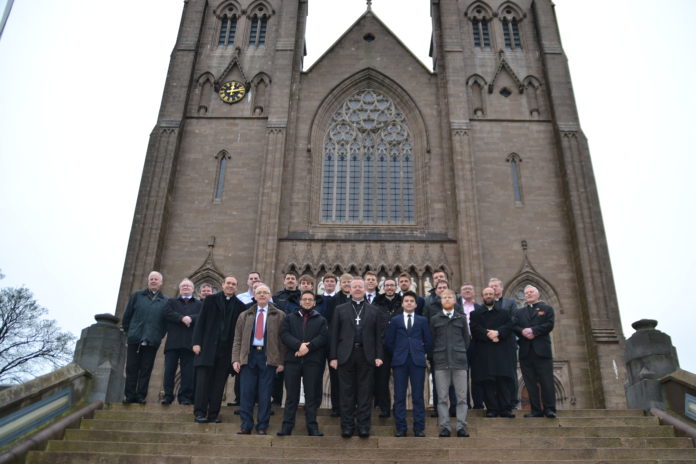
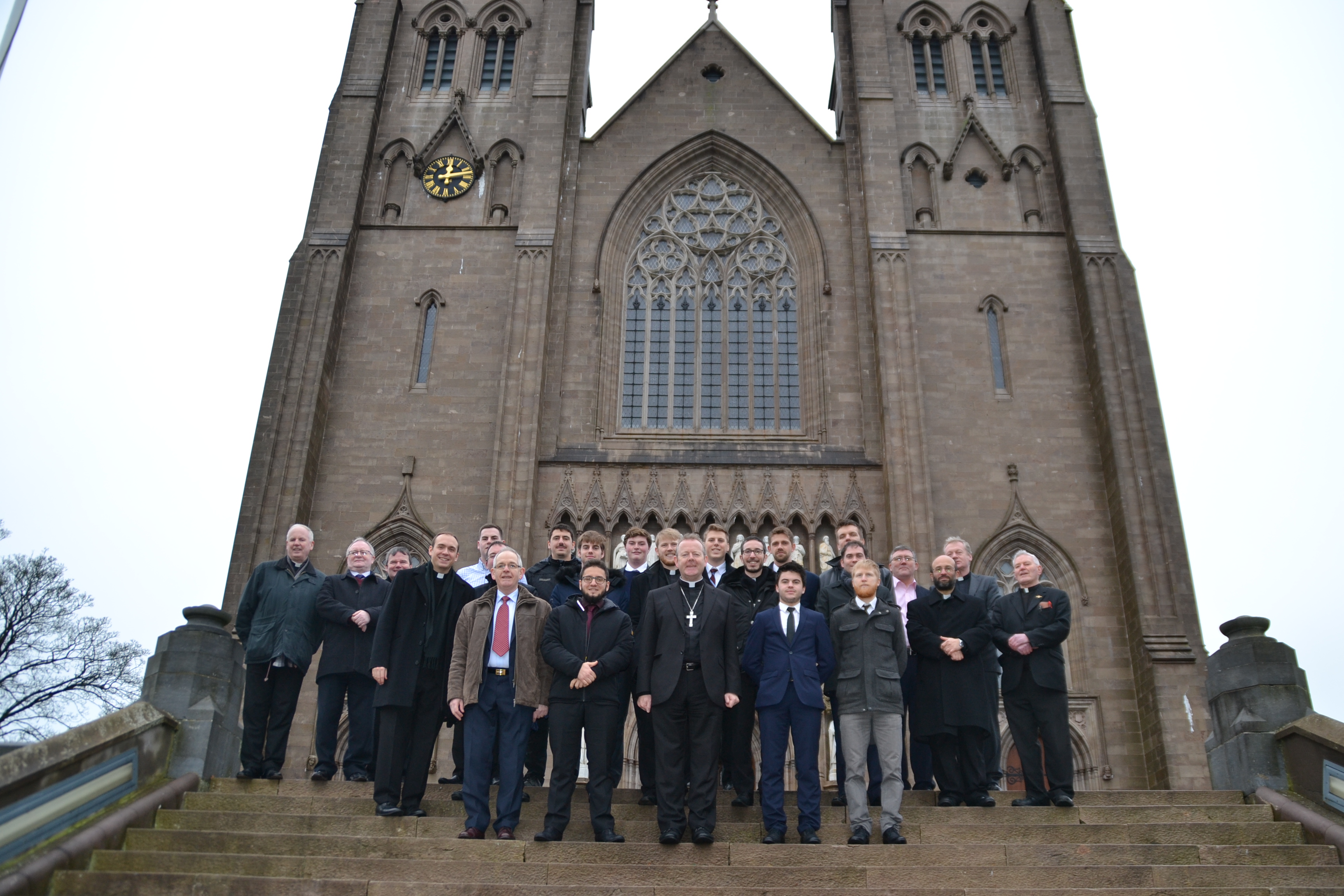
Archbishop Eamon Martin and the Priests of the Diocese Celebrated Mass on The Feast of the Epiphany with Seminarians and Permanent Deacons in Formation in St Patrick’s Cathedral Armagh on Friday 6th January 2017.

Archbishop Eamon Martin’s New Year Message for the 50th World Day of Peace 2017

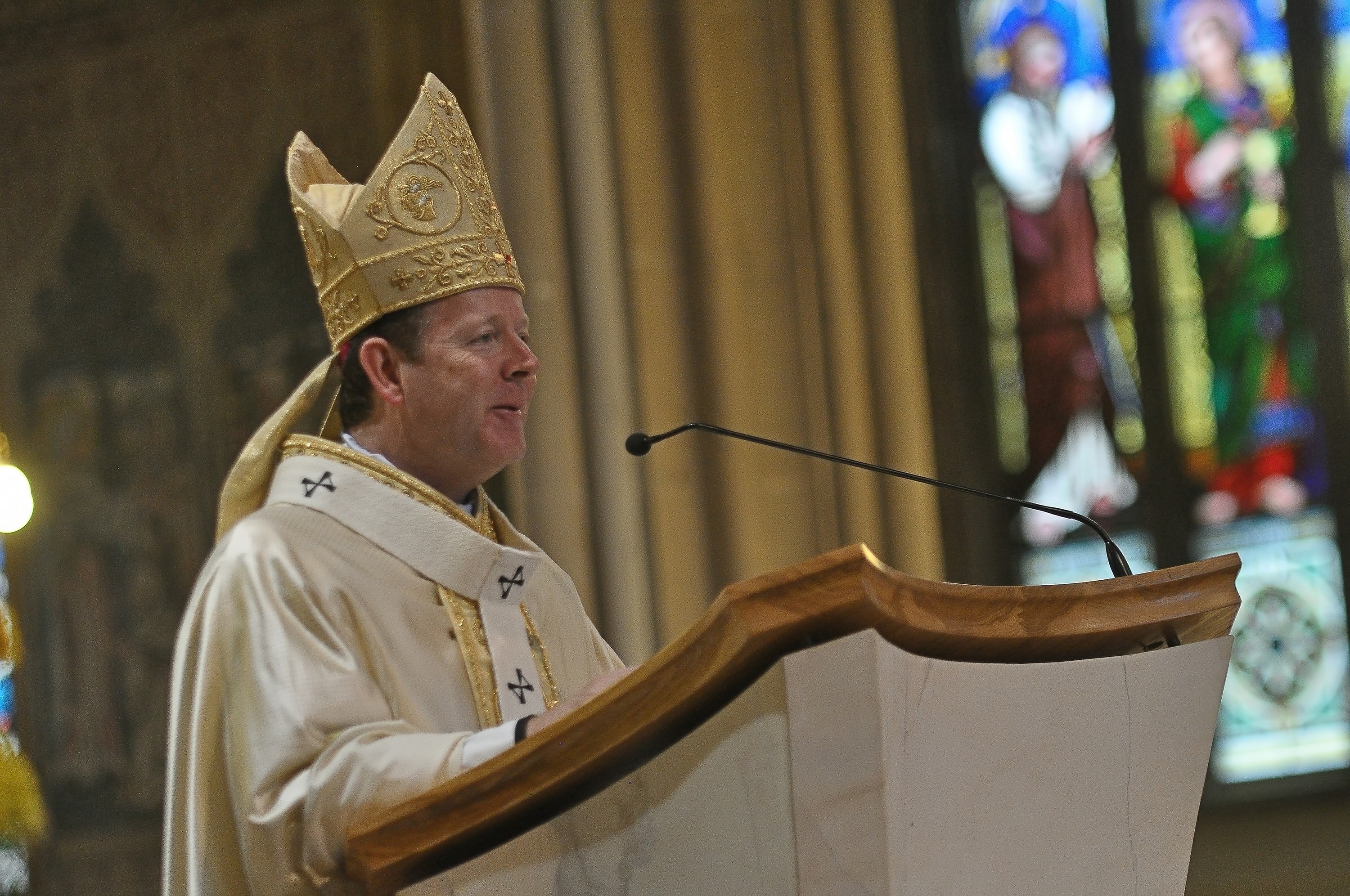
Archbshop Eamon Martin Investiture with the Pallium of Archbishop Eamon Martin St Patrick's Cathedral Armagh 4 July 2015 Credit: LiamMcArdle.com

Message

As a teenager growing up in Derry, I remember being inspired by the witness of the Peace People who brought many ordinary people onto the streets in a call for an end to the terrible violence at that time.  The mid-seventies saw some of the most shocking bombings and shootings of “the Troubles”.  Terrible tit-for-tat sectarian murders were leaving more and more families bereaved and traumatised.  It is hard to believe that it is now forty years since Mairead Corrigan and Betty Williams were awarded the 1976 Nobel Peace Prize for their courageous stand against all violence.


They touched my heart at the time, and the hearts and minds of so many ordinary women and men from every community who had enough of awful violence and who wanted to help build a better future based on dialogue, reconciliation, peace and cooperation.  Some people said that the Peace People were naive, others, that they were being manipulated.  For me, their message and actions were motivated by a strong belief in non-violence and a conviction that peace begins from the ground up in the simple yet powerful actions of good people who want to break the downward cycle of death and destruction.


Tragically for too many more families, the killings and grief did not stop in 1976 – nor even in 1979 when Pope Saint John Paul himself came to Ireland and got down on his knees and pleaded with men of violence to “turn away from the paths of violence and return to the ways of peace”.  He declared unequivocally in Drogheda that, “violence is evil, that violence is unacceptable as a solution to problems, that violence is unworthy of man.  Violence is a lie, for it goes against the truth of our faith, the truth of our humanity.  Violence destroys what it claims to defend: the dignity, the life, the freedom of human beings”.


Pope Saint John Paul paid tribute to the inspiration of “countless” men and women in Ireland who had been prepared to stand against violence and whose courage had “lighted up the darkness” of those “years of trial”.  He predicted, “In the years to come, when the words of hatred and the deeds of violence are forgotten, it is the words of love and the acts of peace and forgiveness which will be remembered.”


I mention all this today as Pope Francis has chosen 1st January 2017 – this 50th World Day of Peace – to reiterate the Christian message of non-violence and non-retaliation.  The Pope does so in the context of a world where there is still too much violence and merciless destruction of human dignity.  In his message for today, Pope Francis describes a horrifying “world war fought piecemeal” which causes great suffering. 


“Violence is not the cure for our broken world”, Pope Francis says.  “Countering violence with violence leads at best to forced migrations and enormous suffering, because vast amounts of resources are diverted to military ends and away from the everyday needs of young people, families experiencing hardship, the elderly, the infirm and the great majority of people in our world.”


Of course our commitment to peace and non-violence finds its deepest roots in the message of Christ our Saviour, born the Prince of Peace.


Pope Francis explains how Jesus “unfailingly preached God’s unconditional love, which welcomes and forgives.  He taught his disciples to love their enemies (cf. Mt 5:44) and to turn the other cheek (cf. Mt 5:39).  When he stopped her accusers from stoning the woman caught in adultery (cf. Jn 8:1-11), and when, on the night before he died, he told Peter to put away his sword (cf. Mt 26:52), Jesus marked out the path of nonviolence.  He walked that path to the very end, to the cross, whereby he became our peace and put an end to hostility (cf. Eph 2:14-16).”


Over Christmas a man expressed to me his frustration about being unable to make a difference to the violence in the world.  From Aleppo to Berlin, from Mosul to Cairo, we see such terrible things happening in every corner of the globe.  “What are we to do, he asked?”  I found it difficult to give an easy answer.  I suggested that the first thing we all need to do is to look into our own hearts and minds.  Because it is here that all violence, anger, and the desire for revenge and retaliation begin.  Sadly, there is so much violence even in our own neighbourhoods and violence and aggression is often hidden in families behind the front doors of our own homes.  I was shocked recently to learn of the extent of domestic violence that leads to phone calls every twenty minutes or so to police and support services.


We can all contribute during 2017 to peace if we learn to model our lives more closely on the beautiful, yet challenging example of Jesus.  Saint Francis of Assisi, Saint Mother Teresa, Saint Thérèse of Lisieux assure us that little acts of love and kindness can melt even the most stubborn of vengeful hearts.  Dr Martin Luther King, Mahatma Gandhi, the Peace People and many others since have shown that it is possible to mould the path of non-violence and non-retaliation into a powerful movement for change and reconciliation.


The final words of Pope Francis in his message for the 50th World Day of Peace sum it up:

“All of us want peace.  Many people build it day by day through small gestures and acts; many of them are suffering, yet patiently persevere in their efforts to be peacemakers.  In 2017, may we dedicate ourselves prayerfully and actively to banishing violence from our hearts, words and deeds, and to becoming nonviolent people and to building nonviolent communities that care for our common home.”

A joint Christmas message from the Archbishops of Armagh, The Most Revd Richard Clarke & The Most Revd Eamon Martin

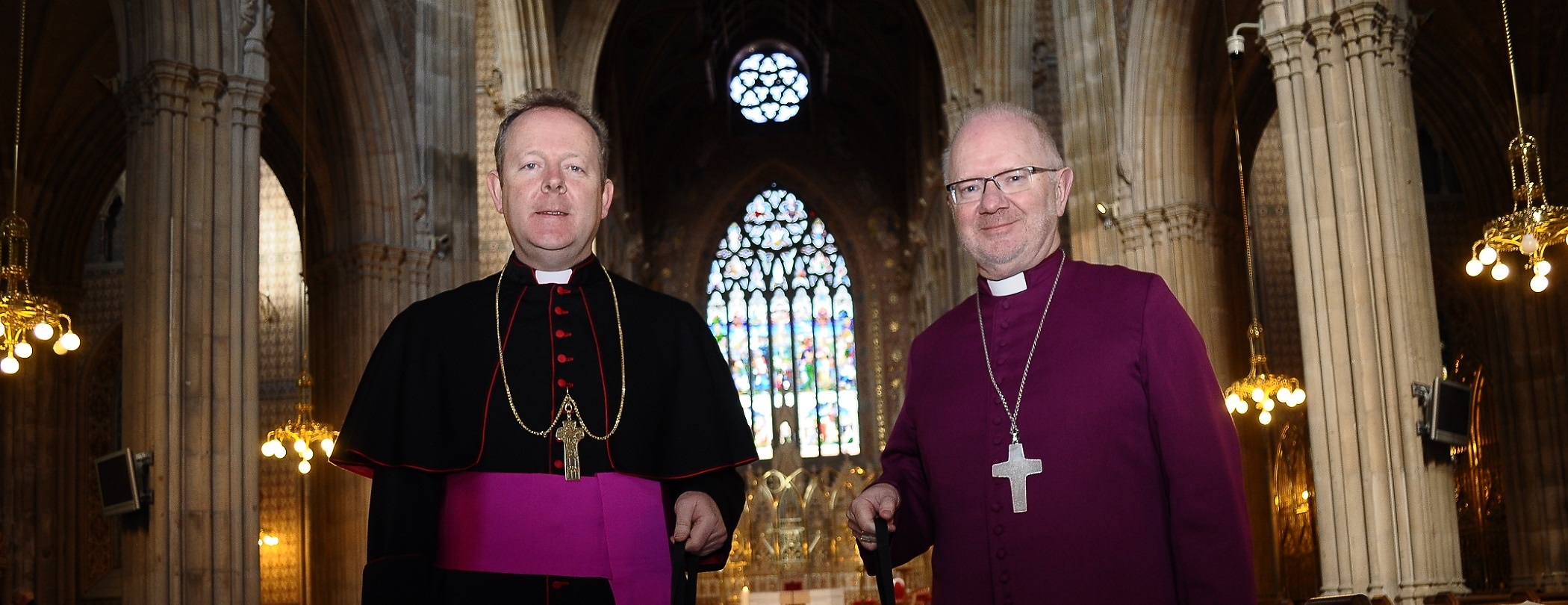
Archbishop Eamon Martin and Archbishop Richard Clarke at Launch of Flesh and Blood Ireland St Patrick's Cathedral , Armagh, 2 March 2015 Credit: LiamMcArdle.com

“God’s love was revealed among us in this way: God sent his only Son into the world so that we might live through him.” 1 John 4:9


Together we wish you all a very happy and blessed Christmas, and God’s richest blessings in the year that lies ahead. 


The world at the end of 2016 seems a very different place than it did at this time last year.   People speak of a profound and pervasive sense of uncertainty and insecurity all around us. Many are now finding themselves asking questions about their identity in a new and bewildered way.  Is our deepest identity to be found in the local setting, or in a wider context?  How local a setting, and how much wider a context?


From a Christian perspective, our fullest identity is found in our being children of God, an identity we share with everyone on this planet.  This is the central message of the Gospel and it is presented with a supreme clarity in the Christmas story.  God comes among us in the person of Jesus Christ, not as an outsider but as fully human and with a perfect love for all humankind.


The story of Christmas is however the story of someone who does not fit easily into neat categories.  Jesus Christ became, for a time, a migrant child.  He and his family fled to a foreign country because their lives were at risk. The plight of so many hundreds of thousands of displaced people in the world today gives us all cause for thought.  If our concern with our own identity allows us to think of others as less worthy of God’s love or less in his heart of love than are we, then we are both deluded and dangerous. But Christmas, with its message of joy and hope, is a celebration of the real identity we all share in the love of Jesus Christ for us. 


Let us bring that joy and hope into our Christmas festivities and into the coming year.


+Richard                                                               +Eamon

Church of Ireland Archbishop of Armagh            Roman Catholic Archbishop of Armagh

Job advertisement for the position of President of Saint Patrick’s College, Maynooth

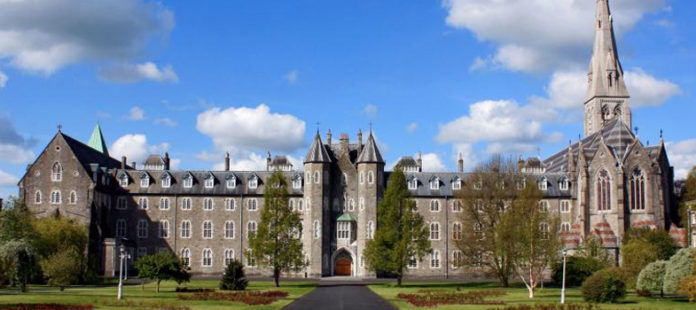
The Trustees of Saint Patrick’s College, Maynooth, wish to appoint a President of Saint Patrick’s College.  The position arises in 2017 and the appointment will be for a five year term which may be renewed or extended for one further term.

Saint Patrick’s College, Maynooth, was founded as a seminary in 1795 and received the status of a Pontifical University in 1896.  It has the Faculties of Theology, Philosophy and Canon Law.  The Pontifical University and the Seminary are located next to, and cooperate closely with, Maynooth University.


Role

“Under the authority of the Trustees the President is the pastor of the seminary community. He shall be a man of good faith, learning and good judgement, committed to his priestly duties and able to work well with others.”  (Statutes of Saint Patrick’s College, Maynooth. #43-44).

The President/Rector, while leading the full seminary formation programme for the Roman Catholic Priesthood, will also be responsible for the overall operational efficiency of the college.  He will oversee the strategic development of the college’s faculties, responding to the challenges and positive changes in the education sector.  He will be able to envision, propose and implement changes set out in the College’s strategic plan.


Requirements

Roman Catholic Priest who is in good standing and over 35 years of age; Commitment to priestly duties and personal faith; Candidates must provide written permission from their Ordinary or Religious Superior before the closing date set out below.

Desirable Attributes

A Doctorate and Licentiate in Catholic Theology or Biblical Studies or Canon Law or Philosophy or Ecclesiastical History; a qualification or experience in ministerial formation or other relevant experience; and, experience in Human/Estate/Resource Management

Application Procedure

Candidates should submit a written application to Rev Father Enda Cunningham, Secretary to the Trustees, c/o Columba Centre, Maynooth, Co Kildare no later than 5.00pm on Wednesday 25 January 2017.  Applications must include details of qualifications and experience and a covering letter setting out reasons the candidate views his experience as relevant to this appointment.  The written permission of the Ordinary or Religious Superior should accompany the application

.

The proposed nominee is subject to approval from the relevant Congregation in Rome.

Further information is available on www.http://maynoothcollege.ie


Statement by Archbishop Eamon Martin on the death of Bishop Gerard Clifford RIP & funeral arrangements

Reception of Remains today, Tuesday 13 December, at St Patrick’s Cathedral, Dundalk, at 7.15pm, followed by Mass at 7.30pm. Lying in state until Thursday, 11.45am. 

Evening Prayer, Wednesday at 7.30pm.

Requiem Mass on Thursday at 12 noon, followed by burial at Calvary Cemetery, Ravensdale.

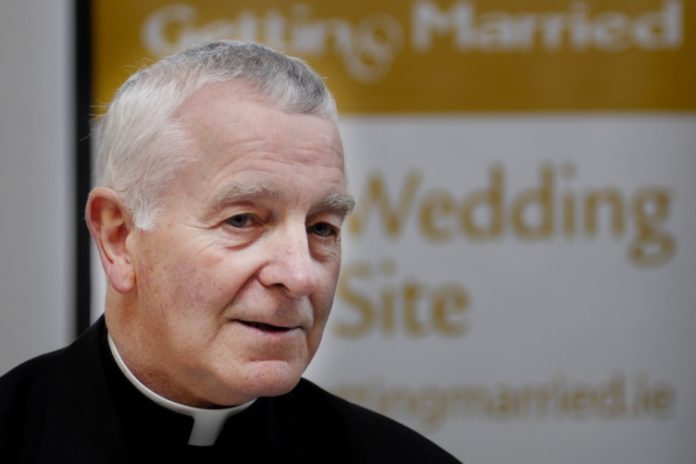
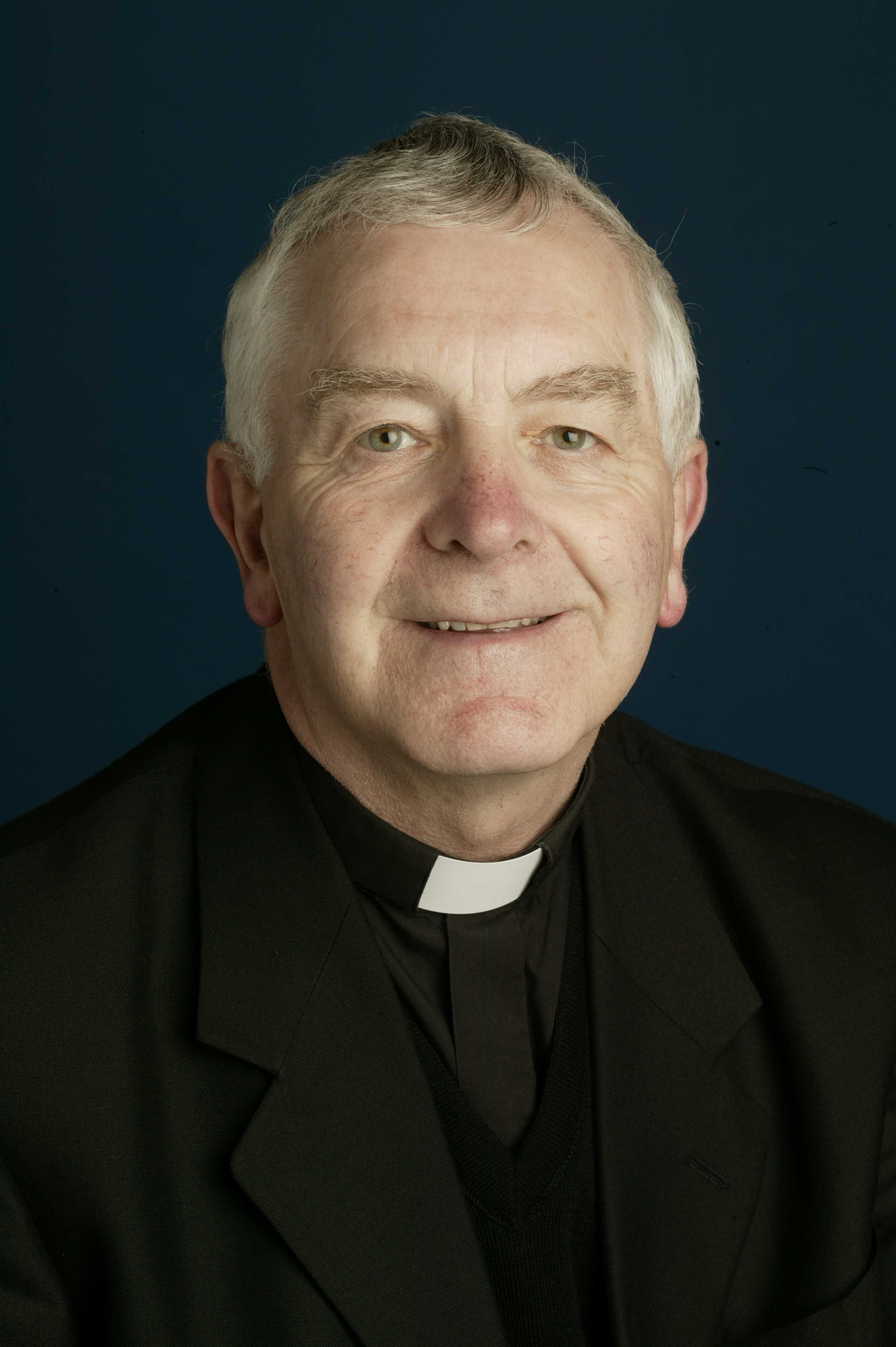
 bishop-clifford-photo

Together with Cardinal Séan Brady, my fellow bishops and the people, clergy and  religious of the Archdiocese of Armagh I am deeply saddened to hear of the death today in Dublin, of my dear episcopal colleague and friend Bishop Gerard Clifford. 


We have always held Bishop Gerry in great affection and esteem.  He was a devoted and generous priest and bishop who reluctantly had to resign from active ministry in 2013 due to ill health.  Sadly, since then, he has had to endure increasing frailty and illness and he has done so with characteristic courage, patience and faith.  When he retired, Bishop Gerry acknowledged and thanked the people of the diocese for “their great warmth and affection”.   These were precisely the qualities that everyone received from this good and faithful priest and bishop. 


Bishop Clifford was a holy and humble man who instinctively placed the concerns of others first, as befits a true messenger of the Gospel. 


Born in the border parish of his beloved Lordship and Ballymascanlon, Bishop Gerry was a tireless peacemaker and bridge-builder.  He was one of the great figures of the ecumenical movement in Ireland – a role he accomplished through gentle friendship and witness.  His episcopal motto in 1991 was “That all may be one”, from Christ’s prayer at the Last Supper.  Bishop Gerry said at the time that “the unity implied is a firm ‘yes’ to the way of love and a firm ‘no’ to the way of hatred”.   He placed great store in the innate decency of people and he used every opportunity to heal the wounds created by violence, distrust and fear.


Bishop Clifford served with distinction as a member of the Irish Catholic Bishops’ Conference for more than twenty years, having previously served as its Executive Secretary.  His episcopal ministry involved working in ecumenism, education and, as President of Cura, in the pastoral care area of crisis pregnancy.


In my visits to Bishop Gerry in recent weeks and months he seemed at peace.  As he was a man of deep faith I ask you to join with me in prayer for the repose of his soul.  May he rest forever in the peace of The Lord whom he generously and faithfully served.  May God console his sister Rose, brother Christopher, his extended family, the people, priests and religious of the Archdiocese of Armagh along with his many friends. 


Ar dheis Dé go raibh a anam dilís.


Biographical Details

Date of Death: 12 December 2016, Highfield Healthcare, Whitehall, Dublin

Born: 24 June 1941, Parish of Lordship and Ballymascanlon

Studied Bellurgan National School; Bush Technical School, Cooley; St Mary’s College, Dundalk; St Patrick’s College, Armagh.

St Patricks College, Maynooth 1960 – 1968

Licentiate in Sacred Theology, Maynooth 1968

Lumen Vitae International Catechetical Centre, Brussels, Belgium 1968 – 1969

Ordained Priest: 18 June 1967, St Patrick’s College, Maynooth

Ordained Bishop: 21 April 1991, St Patrick’s Cathedral, Armagh

Appointments

Assistant Diocesan Ecclesiastical Inspector 1969 – 74

Diocesan Ecclesiastical Inspector 1974 – 79

CC, Portadown 1979 – 80

CC, Kilmore 1980 – 84

Diocesan Ecumenical Director 1980 – 91

Executive Secretary, Irish Episcopal Conference 1985 – 91

Auxiliary Bishop to Archbishop of Armagh 1991 – 2013

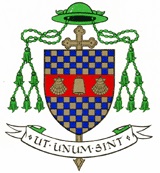
bishop-clifford-coat-of-arms

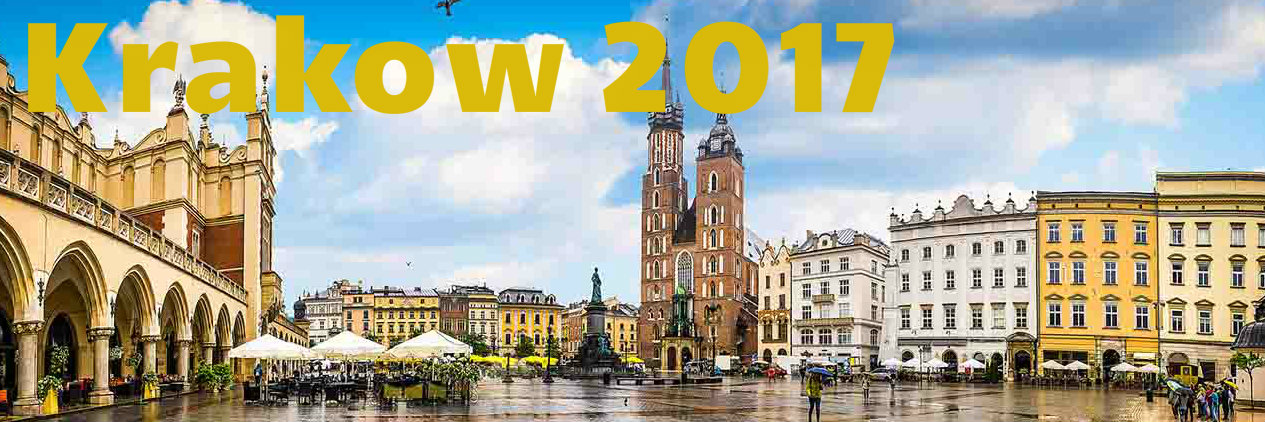
ADYC Pilgrimage to Krakow 2017 registration

krakow

6 – 11th July 2017 (5 nights)

Young people aged 16 – 20

£370

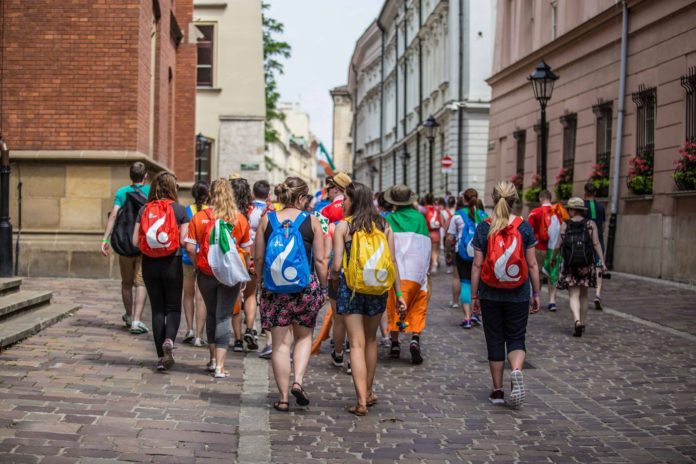
Armagh Diocesan Youth Commission (ADYC) is bringing 30 pilgrims to Krakow Poland.  We feel that this is a wonderful faith development project to enable young people to develop friendships, grow in faith and have good fun.

We are totally inspired by Krakow after attending the international World Youth Day 2016 and we felt we would like to provide this opportunity to welcome young people back to this great city of Saint.  

Poland is the much loved homeland of the late Pope John Paul II. Krakow, where we are based for the duration of our pilgrimage is the ancient capital of Poland known for its beauty, historical monuments and role in the life of John Paul II. 

As you make your way to Poland, Land of Kings, Saints, and Divine Mercy! Walk in the footsteps of St. John Paul II – from where he was born, baptised, where he became a Priest – Bishop – Cardinal, and where he spent his time visiting as Pope. Take in the Shrine of Divine Mercy (in Lagiewniki) and be drawn closer to the life of St. Faustina and her Divine Mercy message. 

What you going to see/do?

  • Divine Mercy Shrine of Saint Faustina & Pope John Paul II Centre
  • Salt mines
  • Auschwitz and Birkenau day trip. Seeing the place where Saint Maximilian Kolbe was martyred.  
  • Historical city of Krakow

Whats included

  • Round trip airfare with 20kg luggage included
  • All airport transfers
  • 5 nights in centrally located hotel
  • Bed & Breakfast
  • Pilgrimage Jersey

What’s Next?

We have reserved and paid for 30 places.  If you are 16-20 years old and are willing to be part of this worldwide encountering of faith, then we would like you to complete your registration TODAY.  


CLICK HERE FOR THE ONLINE REGISTRATION FORM


You can download a printable form here for the Pilgrimage.  

Krakow 2017 registration form

krakow

    Pilgrim Name (required)

    Pilgrims Date of birth(required)

    Age at time of pilgrimage (July 2017) (required)

    Address (required)

    Home telephone (required)

    Mobile number(required)

    Your Email (required)

    Pilgrim Occupation (required)

    Parent/Guardian names (required if under 18)

    Any other comments

    Click below to send your details to us

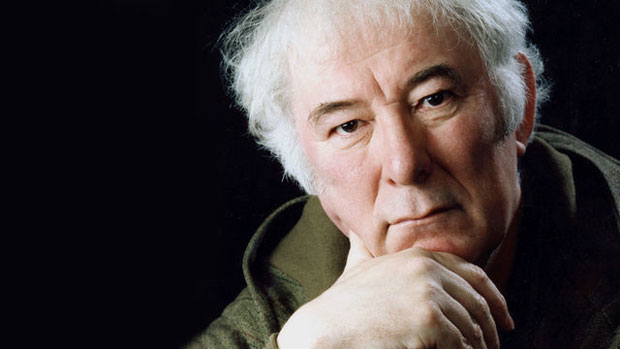
    Archbishop Eamon Martin speaking notes for ‘Growing Up In Between – a conversation about parish and diocese’ at Seamus Heaney Home Place Bellaghy

    Every year the diocese of Derry issues a directory listing all the priests of the diocese. It was with a sense of loss that I discovered in the January 2014 edition that, having moved to Armagh, I was no longer counted among the priests of Derry. It wasn’t that I hadn’t settled in Armagh, or even that I was pining for the town I loved so well! It was one of those moments when I realised that I was ‘in between’ – I’d moved on from the city of the oak grove to new pastures; I now had a new flock, new responsibilities and challenges in the orchard county and beyond.

    The life of a priest is bound up with his diocese. At ordination we join a ‘presbyterate’, a brotherhood or fraternity of priests within a particular local church or diocese, as co-workers with our bishop. We become members of a family whose ties are not from flesh and blood, but from the grace of Holy Orders which binds us together in spiritual and pastoral belonging to the people of the parishes in our diocese. That sense of belonging, consecrated by the laying on of hands at ordination, is still strong in me. This connection was somehow disrupted when I made my way from the pastures of Columba and Eugene to the territory of Patrick, Malachy, Brigid and Oliver Plunkett.

    Among my earliest memories as a pupil of St Columb’s College in Derry is of hearing the sound of the College bell in Bishop Street. Our English teacher reminded us that was the same bell which Seamus Heaney had written of ‘knelling classes to a close’ in his powerful poem, ‘Mid Term Break’. We studied the poem in my first year and I remember thinking Heaney was just around my age when he made that sad journey home for his younger brother’s funeral – only he was a ‘boarder’ who had to leave his beloved Bellaghy home as a young boy to find himself bereft and far from home in the City. He has written about the unforgettable homesickness and grief he felt during his earliest schooldays at St Columb’s.

    Heaney’s rootedness and attachment to his home place and family in Mossbawn was to stay with him all his life. So much of his poetry and thought sprung from his sense of belonging to place and people in the Bellaghy area. It was deep down in him, the place in which he grew to know who he was – not just as a child, but also as an adult. Here was his personal Mount Helicon – the source of his understanding of himself, the font of his poetic inspiration. His early poem ‘Personal Helicon’ draws this out in a striking way. It is also an example of the way in which Heaney’s poetry was steeped in the Classics he first learnt at St Columb’s. As pupils we struggled with Ovid but young Heaney seems to have lapped up his Homer and Livy and Virgil.

    Life is full of curious intersections of events and places and people. In the chapel in Bishop Street I remember one of our teachers telling us that the famous Seamus Heaney would have sat on those same pews as a young ‘first year’ like us. I have since contemplated him sitting there, perhaps praying for his family and people at home, especially his grandfather, father and mother. Perhaps this was the place that a homesick young County Derry boy noted in his mind’s eye the memories that would later brim over in his poetry – like peeling spuds with his mother; seeing her out hang out the sheets to dry; the sounds of his father digging, the smells and sights of the turf banks, cattle and fields around home. Was it there that ideas were set down in chrysalis that would later burst out in the lines of his poetry? Links and connections are made in early life which last a lifetime. In that same chapel, as a young member of the Gregorian ‘schola’, I chanted for the first time the words from the Christmas antiphon: ‘Cantate Domino Canticum Novum’ – ‘Sing a New Song to the Lord’, words I would later choose for my Episcopal motto.

    Moving to a new diocese with new priests and parishes has given me a greater sense of belonging to the wider, universal family of the ‘one, holy catholic and apostolic Church’. I have come to realise that ‘parish’ ought never to be ‘parochial’ in the pejorative sense of the word. It is merely a gateway, threshold or opening to something beyond itself – the diocese, the universal Church, and on to the eternal kingdom of God. Last year at the Synod of Bishops in Rome I had a strong sense of the universality of the Church. The first bishops I met were from Lesotho, Darwin and Slovenia. I found myself sitting in the Synod Hall between a bishop from Fiji and another from Buenos Aires. I shared with the Fiji bishop that my mother’s cousin, a Columban missionary from Donegal, had worked for many years in Fiji. It turned out he knew of him! I was also able to share with my neighbour from Buenos Aires that my father’s cousin works there as a Christian Brother! There we were, three bishops from places thousands of miles apart, yet linked by a network of family, parishes and dioceses and by the missionary endeavour of the Irish Church.

    It’s difficult for me to understand the Church without thinking of belonging, family and connections. Pope Francis has described the church as a ‘family of families’. The family in Catholic tradition is the ‘little church’, or domestic Church. Parish is a ‘’family of families’ linked by faith, place, priest, land, tradition. Diocese is a family of parishes, and, in turn, the universal Church links dioceses through faith in ‘one Lord, one faith, one baptism and one God who is Father of all, with all, through all and within all (Eph 4:5)’.

    Patrick Kavanagh famously drew out the links between the parochial and the universal: “All great civilisations are based on the parochial”, he wrote and, again: “To know fully even one field or one land is a lifetime’s experience. In the world of poetic experience it is depth that counts, not width. A gap in a hedge, a smooth rock surfacing a lane, a view of a woody meadow, the stream at a junction of four small fields – these are as much as a man can fully experience”.

    Strong links between family and Church are deep down in the spiritual psyche of Ireland. Unlike the continental model, in which Church structure was based on the Roman Imperial administrative units of ‘dioceses’ normally centred on major cities, monasticism in Ireland had facilitated more fluid, familial types of federations. The Irish words ‘muintir’ (family or people) and ‘mainistir’ (monastery) are closely linked. Irish ecclesiastical territories were based around ‘tuatha’ or tribes; the role of abbot was often passed down within families – and a lay leader (airchinnech or erenagh) often acted as administrative head of ecclesiastical units. When it came to the much needed twelfth century reform at the Synods of Rathbreasail (1111) and Kells (1152) the Church in Ireland was to some extent attempting to fit a continental system onto the pattern of ancient Irish ‘paruchiae’ that had emerged in the previous seven centuries.

    My family had strong connections, growing up, with my local parish of St Patrick’s Pennyburn in Derry where I was an altar server, and later a reader and assistant sacristan. The priests of the parish were household names; home, school and parish closely cooperated in handing on the faith. Nowadays that sense of belonging is perhaps less significant in the life of the average Catholic, although this varies from area to area, from rural to urban. As bishop I’ve visited parishes where I’ve experienced a strong sense of identity and community, connection and belonging. However few would disagree that all forms of community have taken a battering in a culture where individualism, personal autonomy and choice are often paramount. Although social media links us in a great global network, still it can be shallow and cosmetic, fleeting or superficial.

    Last summer I spoke to the parents of a practising Catholic family with two teenagers and two younger children. On a typical weekend the teenagers go to the early Vigil Mass in their neighbouring parish. Dad brings the youngest boy to football training early on Sunday morning and later they both go to Mass in the chapel of a Religious Congregation. Meanwhile, mum and five year old daughter go the children’s Mass in their own parish. The family seldom gets the opportunity to attend Mass together except perhaps at Christmas and Easter Sunday.

    It is time for us to “sing a new song to the Lord” – to re-imagine parish and diocese in Ireland. In ‘The Joy of the Gospel’ (28) Pope Francis encourages a parish to be “a community of communities, a sanctuary where the thirsty come to drink in the midst of their journey, and a centre of constant missionary outreach”. The parish, he says “continues to be ‘the Church living in the midst of the homes of her sons and daughters’. This presumes that it really is in contact with the homes and the lives of its people, and does not become a useless structure out of touch with people or a self-absorbed cluster made up of a chosen few”.

    We might ask to what extent are our parishes living, worshipping ‘communities of the faithful’ (Canon 515) with a sense of belonging and connectedness? To what extent is a parish a ‘community of communities’, a family of families? We are in a transition time between the relative security and certainties of past times and what discovering what the Spirit wants of the Church in Ireland today and tomorrow. It will impossible for us to hold on to the ways we lived parish in the past. The parishes of tomorrow will be ‘communities of intentional disciples’ sustained by committed and formed lay people. The key to this will be the formation of cells, or smaller gatherings of committed people who meet and pray and develop together their understanding of faith, and who find there the courage to engage in mission and outreach. Many parishes already have prayer groups, lectio divina groups, adult faith groups, youth groups or adoration teams. Each of these gives to its members a sense of belonging, identity, mission and vocation. Think also of Baptismal teams, bereavement or Bethany Groups – each of these is helping to build links and connections in which a person’s faith can grow, be expressed and strengthened.

    What if we were to take this a step further? What if a number of families were to begin meeting together to pray, share their joys and struggles in faith, read the Word of God together, talk about their personal faith journey, discuss and study together aspects of faith, commit to mission, and then, on Sunday join together with similar cells or ‘families of familie’ in the Parish Sunday Eucharist? Something like this model is already being developed within the Neocatechumenal Way and in many of the new ecclesial movements that are springing up around Ireland. It will of course mean a certain amount of ‘letting go’ by priests and even bishops as the centre of gravity of life, worship and mission in the parish shifts from the parochial house or diocesan curia to the little domestic churches and gatherings of families on the ground. However the dividend for such a divestment could be more energised, connected families approaching Sunday Eucharist as the summit of their week and as the source of nourishment and life for the week ahead.

    All of this might seem a strange thought process for me to engage in here at the home place of the great Seamus Heaney. But the more I read his poetry the more I sense his deep understanding of how people are connected to one another by their locality and their shared sense of place, history and tradition. Heaney develops somewhat his understanding of this ‘connectedness’ in his final volume of poetry, ‘Human Chain’ (2010) He certainly saw his home place as a liminal space or ‘aperture’ connecting him as a person to the world at large, to times past in Ancient Ireland, Rome or Greece, and even to the infinite and transcendent.

    As believers we are challenged to find ways of opening the lives of people today to the transcendent, to the God who gives life its foundation and purpose. In one of my favourite Heaney poems, ‘St Kevin and the Blackbird’, the kneeling saint, with arms outstretched in prayer, shelters in his upturned palm the nest of a blackbird until its young are ‘hatched and fledged and flown’. In an act of complete generosity, the saint links his whole being with the transcendent, eternal God, forgetting himself entirely.

    Alone and mirrored clear in love’s deep river,
    ‘To labour and not to seek reward,’ he prays,

    A prayer his body makes entirely
    For he has forgotten self, forgotten bird
    And on the riverbank forgotten the river’s name.

    There is an absence in the lives of so many people today of any sense of the eternal; there are few opportunities in this hectic world to connect with the infinite. Our task, as people of faith, is to share with others ‘the reason for the hope we have within us’ – the joy of a personal, loving relationship with God.

    Seamus Heaney was not easily drawn on the subject of his own spirituality – perhaps it was a case of, as he quipped in ‘North’ (III), ‘whatever you say, say nothing’; ‘religion’s never mentioned here’. He was certainly steeped in the tradition, culture and mystery of the faith in which he was raised and, despite expressing occasionally his doubts and lapse, he never once to the best of my knowledge, profaned or disparaged the religion of his youth. In ‘A Found Poem’ (2005), he shares so honestly:

    There was never a scene

    when I had it out with myself or with an other.

    The loss of faith occurred off stage. Yet I cannot

    disrespect words like ‘thanksgiving’ or ‘host’

    or even ‘communion wafer.’ They have an undying

    pallor and draw, like well water far down.

    His son shared with us that, in the minutes before he died, Seamus Heaney sent a text message to his wife Marie saying Noli Timere – do not be afraid. Despite all the words he himself had written, he could think of no greater gift than the consoling Word, central to the Judeo-Christian tradition of an all-loving, all-merciful God. Heaney has hinted that

    his love of words was nourished by the mystique and beauty of the liturgy like the litany of the Blessed Virgin his family used to recite at home, connected together in prayer – “Tower of Gold, Ark of the Covenant, Gate of Heaven, Morning Star, Health of the Sick, Refuge of Sinners, Comforter of the Afflicted.”

    On the day of his burial I had the privilege of walking with his loved ones in the funeral procession to his final resting place in a corner of St Mary’s Churchyard, Bellaghy. Just as the prayers ended I had the privilege of leading with the other priests present the singing of the Salve Regina. Marie and many around us joined in. For a moment we were all linked ‘in between’ – family, friends, neighbours, priests, believers and non- believers alike, ‘sending up our sighs, mourning and weeping in this valley of tears’, but looking to heaven forgetting self, forgetting earthly barriers, forgetting Bellaghy even.