Saturday, December 27, 2025
Home Blog Page 71

Homily of Archbishop Eamon Martin for the Easter Vigil 2015

Homily of Archbishop Eamon Martin for the Easter Vigil 2015

9:00pm Mass to be celebrated at Saint Patrick’s Cathedral, Armagh

“This Easter let us pray and work for the gift of hope for those in Ireland who are finding it difficult to cope with financial problems, relationship difficulties, sickness or bereavement – those who may be tempted to despair about the future” – Archbishop Martin
There is little for the homilist to add during the celebration of the great and noble Easter Vigil. The preparation of the new paschal candle, the singing of Exultet, the Easter proclamation, such a wonderful selection of Old Testament readings and psalms telling the great events of salvation history, and then that beautiful Gospel account of the Lord’s resurrection – this year from the Gospel of Mark. And soon we will have an opportunity to bless the Easter water and renew our Baptismal promises, before entering into and receiving the real presence of Christ in the Eucharist.

The Easter Vigil is a truly joyful celebration and ‘Alleluia’ is our song. Our Alleluias are made all the more joyful by the realisation that God became a human being and suffered for us on Good Friday. Sadly, the Cross of Good Friday continues to cast a long shadow in our world – from the hungry lands of Ethiopia where Mahlet, the young girl on this year’s Lenten Trócaire box, lives – to the refugee camps of Syria, to the homes of Kenya where families are left devastated this weekend by the murder of their loved ones at Garissa University on Holy Thursday.

If the story of salvation had ended on Good Friday, we would be a people of despair, only able to cry out as Jesus did on the Cross: “My God, my God, why have you abandoned us?” I know that for many people across the world and here in Ireland that feeling of abandonment and emptiness is very real. It is comforting for them and for all of us to know that Jesus also felt rejected, abandoned, almost swallowed up by evil before the victory of Easter destroyed death and restored life.

This Easter let us pray and work for the gift of hope, especially for those in Ireland who are finding it difficult to cope with the worries of everyday life – like financial problems, relationship difficulties, sickness or bereavement – those who may be tempted to despair about the future. During the Easter season let us consider ways in which we can bring the joy and comfort of the Risen Christ into the lives of those who have heavy crosses to carry.

Beannachtaí na Cásca oraibh go leir.

Happy Easter to you and your families.

Simon Community

A little about us…

Dundalk Simon Community has been working with people who experience homelessness for forty years. Exceptional work with significant outcomes has been achieved over these years and a vibrant and creative community of staff, volunteers, residents and former residents now form the backbone of the organisation. From its beginnings as a soup run in 1973, Dundalk Simon has grown and developed in a manner that has placed the needs of people who are homeless in Dundalk and the wider counties of the north-east to the forefront of everything we do.

Dundalk Simon Community offers a range of options to people who are experiencing homelessness; from temporary emergency accommodation in Barrack Street for up to 26 people at any one time (114 individuals in 2014) to day centre services for 165 people (2014) in Seatown House. Seatown House is also the base for the administration functions of Dundalk Simon and has very quickly become a focal point for former residents and people who are living in Barrack Street and are being supported in their move to independent living. Open Monday to Friday, 9am- 5pm, with a further drop-in service on a Saturday morning, Seatown House has become a vital part of Dundalk Simon’s efforts to ensure that people who are homeless in Dundalk have access to support across the organisation at all times of the week.

The work of Dundalk Simon is further enhanced by the Crescent Project on Castle Road which is run in conjunction with the HSE and provides a supported home for four adults with learning disabilities, as well as the Mo Shaol Shared Lodgings Scheme, servicing an additional ten individuals within an adult fostering envrionment. Both are innovative projects in that they bridge a service gap for people with a learning disability who find themselves homeless or at risk of becoming homeless. We are presently exploring further the long term supported housing needs of the people living in the Crescent Project with a view to developing more individual independent living within a reduced support framework.

But the public face of Dundalk Simon Community is often, for many people, the Simon Shop in Yorke Street. Staffed by part-time workers (through supported employment programmes) and volunteers, the shop is yet another focal point of our work in Dundalk and provides an important source of income for the community.

Currently we are developing a workplan for 2015 that will cover all aspects of our work and which, when fully implemented, will ensure that Dundalk Simon Community remains at the forefront of service delivery for people who experience homelessness in Dundalk and the surrounding area.

Visit www.dundalksimon.ie, www.simon.ie or join us on facebook for further information.

St. Vincent de Paul

Vincent’s Shop Armagh:
19/21 Ogle Street
Armagh
BT61 7EN 
Helpline: 077 3348 2604

Facebook Page – SVP – Vincent’s Shop Armagh

The Society of St Vincent de Paul (SVP) is an international Christian voluntary membership organisation. Membership is open to anyone who can adopt our ethos. We believe that everyone should have the means to live life with dignity. Ireland is part of the international Society which is represented in over 140 countries: having 700,000 members and 1.5m volunteers : 51,000 Conferences: helping 30 million poor throughout the world. SVP was founded in Ireland in 1844. It is the largest voluntary charitable organisation in Ireland. Our focus is on practical approach to dealing with poverty, alleviating its effects on individuals and families through working primarily in person-to-person contact by a unique system of family visitation and seeking to achieve social justice and equality of opportunity for all citizens. The Society respects the dignity of those who contact us, offering assistance and advice when sought, maintaining their dignity while assisting them towards long-term self-sufficiency in a relationship of friendship, trust and confidentiality.

More information can be found on svp.ie or svp-ni.co.uk


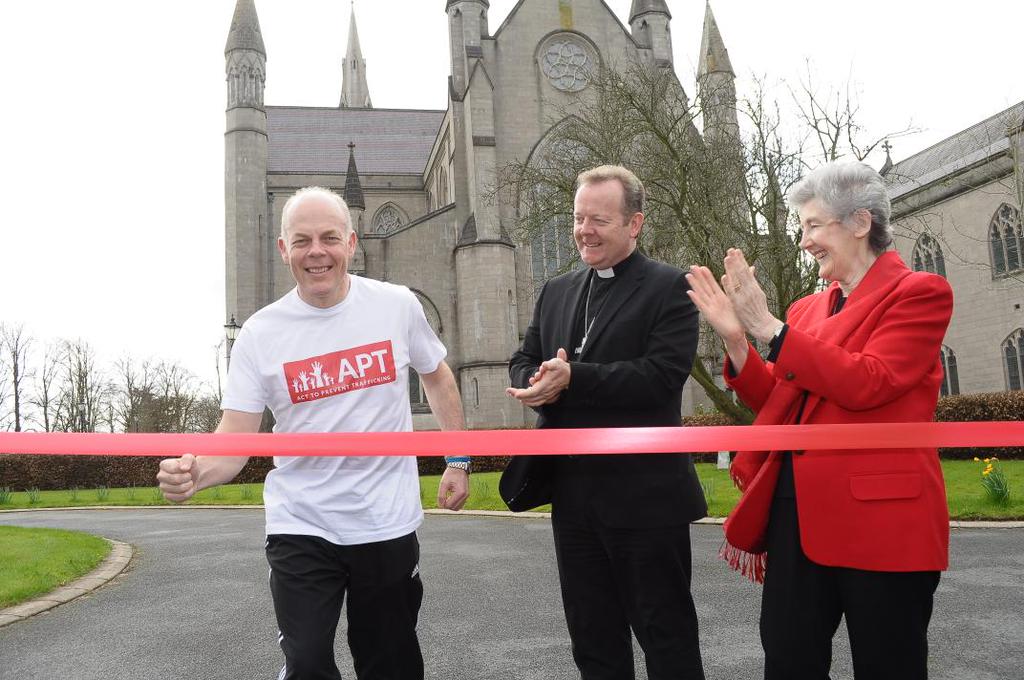
Fr. Gerry is running in support of APT (Act to Prevent Trafficking)

Earlier this year, Archbishop Eamon Martin proposed that a resolution for 2015, might be to raise awareness and do what we can to tackle the global scandal of human trafficking. The Archbishop proposed that we might ask questions of ourselves and our public representatives: where is trafficking happening in this country? What are we doing to make Ireland the land of one thousand welcomes and a cold place for human traffickers? Clearly trafficking is a problem to be addressed both nationally and internationally. It begins, however, with personal and public awareness of what trafficking is, and how it can be prevented.

In his message for New Year’s Day – the World Day of Peace – Pope Francis places before us the cruel facts of modern day slavery: that millions of children, women and men throughout the world are deprived of their freedom and forced to live in conditions akin to slavery. He spoke with bluntness about the greed and corruption which preys upon the dignity of our fellow human beings who are ‘trafficked’ from place to place and mistreated as objects for exploitation and prostitution. Many of them, because of extreme poverty and helplessness get caught up into a vicious circle, accepting roles and situations that are beneath their human dignity. And sadly, because of selfishness and global indifference, we can easily remain blind and ignorant of their plight – perhaps even tacitly complicit.

Fr. Gerry Campbell Parish Priest of Kilkerley, Dundalk in an effort to create awareness of the scourge of modern day trafficking will undertake a diocesan run – from the Bann to the Boyne on April 26th, 27th, 28th & 29th. Fr. Gerry a native of Magherafelt, Co Derry is no stranger to running the length of the Archdiocese of Armagh. His first diocesan walk/run was in 2013 when a team of runners and walkers joined him at various parts of the Archdiocese to support him in raising funds for ISPCC. Last year he ran the same route in support of the Trócaire Lenten Campaign.

This year he will commence his run in Newbridge, Co Derry on Sunday 26th of April when he will run from St. Trea’s Church Newbridge to Dungannon, Co. Tyrone. On Monday his run will begin from St. Patrick’s Church Dungannon and end in Newtownhamilton, Co. Armagh. On Tuesday he will run from St. Michael’s Church, Newtownhamilton to Kilsaran (Castlebellingham) Co. Louth and finally complete the run on Wednesday by running from St. Mary’s Church, Kilsaran to St. Peter’s Drogheda. As on other years Fr. Gerry is hoping he will be joined by supporters along the route. Each run begins with a prayer service at 8.30am (Dungannon 9.30am) and the run begins at 9.00am.

This year Fr. Gerry is running in support of APT (Act to Prevent Trafficking). Apt is a faith-based group working to end the trafficking of humans for sexual exploitation. The members of APT belong to religious congregations or missionary societies that are part of the Conference of Religious of Ireland (CORI) and/or the Irish Missionary Union (IMU).

An estimated 21 million people are trafficked globally, and Ireland has been identified as a source, transit, and destination country for human trafficking which is a modern form of slavery.

Approximately 80% of the victims in Ireland are trafficked into the sex industry. Human trafficking is increasingly lucrative, comparable to the illegal arms and drugs trades as one of the most profitable criminal activities in the world.

The purpose of APT is twofold; firstly to raise awareness of the issue of sex trafficking; and to work in collaboration with others for the prevention of the trafficking of women and children for sexual exploitation.

Pope Francis has called human trafficking a scourge and an open wound in contemporary society. APT is committed to healing this wound; to working towards a society free from slavery, in which the inherent dignity of each individual is respected and protected.

If you wish to make a donation to APT please check out their website   www.aptireland.org (cheques payable to ‘Cori Anti-Trafficking Group’) or you can email Fr. Gerry directly for further information [email protected]

We wish Fr. Gerry every success on this year’s run.

APT Poster

Vocation Sunday 2015 Resources

This year Vocation Sunday falls on Sunday 26th April.  Find below a number of resources for use in parishes, schools and family homes.


Vocations-Sunday-2015-general-poster-2

Vocations-Sunday-2015-General-Poster-on-vocations

Vocations-Sunday-2015-resource-pack-from-Bishops-Council-for-Vocations


Click here to read the Popes message for World day of prayer for Vocations


As always check out our Diocesan Vocations Website at www.armaghpriest.com


VOCATION PRAYER
Lord, make me a better person, more considerate towards others, more honest with myself, more faithful to you. Make me generous enough to want to do your will, whatever it may be. Help me find my true vocation in life and grant that through it, I may find happiness myself and bring happiness to others. We pray through Christ our Lord, AMEN


Armagh Vocations Director

Fr. Peter McAnenly
Parochial House
42 Abbey Street
Armagh BT61 7DZ
Numbers
Phone: (028) 3752 2802
(Republic of Ireland: replace 028 with 048)
Email: [email protected]

Chrism Mass homily of Archbishop Eamon Martin – St Patrick’s Cathedral, Armagh – 2 April 2015

Chrism Mass homily of Archbishop Eamon Martin
11.00am at Saint Patrick’s Cathedral, Armagh

Sometimes daring to witness openly to our sincerely held Christian convictions can bring upon us ridicule, condemnation or even persecution. I am thinking, for example, about our strong beliefs in the sacredness of human life from the first moment of conception until the moment of natural death; our Church’s understanding of marriage and the family; our Catholic social teaching about the fair distribution of goods, care for creation and concern for the weakest and most vulnerable – Archbishop Eamon Martin

It is an honour and a great joy for me to celebrate the Chrism Mass for the first time as Archbishop of Armagh, to consecrate the holy chrism and bless the other oils and to renew, in communion with you, my brother priests, our commitment to priestly service.

It is fitting that we do so in the presence of representatives of the people, deacons, and consecrated persons of the Archdiocese, because it is before you, my brothers and sisters, that we do our best every day to bear witness to Jesus Christ, the Anointed One, who, by His Cross and resurrection, redeemed the world.

On the day of Baptism, when we were all first anointed with the Oil of Chrism, these words were spoken:

“As Christ was anointed Priest, Prophet, and King, so may you live always as a member of his body, sharing everlasting life”.

At Confirmation we were again anointed with chrism, this time with the words: “Be sealed with the gift of the Holy Spirit”.

On the day of our ordination, we priests were once more anointed with chrism – this time on the palms of our hands by the Bishop, saying:

“May Jesus preserve you to sanctify the Christian people and to offer sacrifice to God”.

And at my episcopal ordination here in the Cathedral two years ago this month, Cardinal Seán, as principal consecrator, poured the oil of chrism over my head, saying:

“God has brought you to share the high priesthood of Christ. May he pour out on you the oil of mystical anointing and enrich you with spiritual blessings”.

When I consecrate the chrism today in communion with the priests present, I will breathe over the oil: firstly, to symbolise the calling down of the Holy Spirit; and secondly, to emphasise the life-giving, sanctifying character of the sacraments where chrism will be used.

Chrism marks us out for special service – by Chrism we are consecrated, set apart to serve God. Holy Chrism therefore belongs to the sacraments of Baptism, Confirmation and Ordination because these are the sacraments which impart an indelible character – they seal us with a particular calling and service in mind, so that we may be God’s witnesses in the midst of a busy world.

But what does this ‘setting apart’, this ‘consecration for special service’ mean for us nowadays? In the early Church people noticed something different about the Christians. The followers of Jesus were remarkable because of their prayerfulness, charity, joy, their willingness to suffer for their faith, their peaceful nature and communion with one another. People observed: ‘See how these Christians love one another’.

Two thousand years later, our challenge, as baptised, confirmed, and in some cases ordained Christians, is to be just as ‘remarkable’, to be a ‘people set apart’, known and recognised as people who are not afraid to witness to Christ, the Anointed One.

Of course, to be like Christ in an increasingly secularised world often means being different, counter-cultural, and not easily swayed by the prevailing attitudes and opinions around us. This is not easy. The pressure on us to conform, to become just like everyone else is often immense and overpowering. Sometimes daring to witness openly to our sincerely held Christian convictions can bring upon us ridicule, condemnation or even persecution. I am thinking, for example, about our strong beliefs in the sacredness of human life from the first moment of conception until the moment of natural death; our Church’s understanding of marriage and the family; our Catholic social teaching about the fair distribution of goods, care for creation and concern for the weakest and most vulnerable.

It is equally challenging for us in our ministry as priests and bishops. At ordination we promised to become more and more closely conformed to the Lord Jesus, and to discharge faithfully the sacred office of teaching. But we know how difficult it can be sometimes to speak clearly and courageously about the truths of the Gospel and the riches of the faith handed down to us. The world in which we minister is inclined to shun moral absolutes, or any talk of God’s law and the natural order of things. That is why, as today’s liturgy puts it, we need you, “dearest sons and daughter”’ to “pray for your priests and bishops, that the Lord may pour out his gifts abundantly upon us and keep us faithful as ministers of Christ, the High Priest”.

The Second Reading speaks of us being “a line of kings, priests to serve our God and Father”. But how can we meet the challenge of being like more like Christ as Priest, Prophet, King in today’s world? Perhaps the answer lies in the deep symbolism of the oil with which we have been anointed at Baptism, Confirmation, and Ordination. The oils used in our sacraments come from olives that have been crushed and pressed, that same fruit which grew abundantly in the Gethsemane garden of Christ’s agony, on the Mount of His Ascension into glory, oil which the ancient peoples used to soothe, to comfort, to strengthen. It is interesting that the Greek word for ‘olive oil’ and the Greek word for ‘mercy’ share the same language root: eleos. Thus Kyrie eleison, ‘Lord have mercy’ evokes also: ‘Lord soothe me’, ‘Lord comfort me’, ‘Lord anoint me with your steadfast love’.

Pope Francis wrote in his 2013 Apostolic Exhortation Evangelii Gaudium (The Joy of the Gospel):

“The Church must be a place of mercy freely given, where everyone can feel welcomed, loved, forgiven and encouraged to live the good life of the Gospel.”

To emphasise this he has called an extraordinary Holy Year of Mercy to begin in December on the theme: “Be merciful, just as your Father is merciful”. It promises to be indeed a ‘year of the Lord’s favour’. For what better message can God’s holy people, God’s ‘people set apart’ bring to the world than: Be merciful, just as your Father is merciful This is the Good News that proclaims liberty to captives, new sight to the blind; that sets the downtrodden free:– to pour the oil of God’s mercy and steadfast love into the wounds and broken lives of those around us, never excluding or condemning the sinner, but instead accompanying and welcoming them with the compassion of Christ who died to save sinners like us and bring back the lost.

Joint Holy Week and Easter 2015 message from the Archbishops of Armagh Archbishop Eamon Martin and Archbishop Richard Clarke

We join in wishing you all, wherever you may be, a blessed Holy Week and a joyful Eastertide.
We invite you to enter with real spiritual seriousness into the powerful story of Holy Week so that you can experience personally and profoundly the joy and happiness of Easter.


Easter Day is far more than a happy ending to the sad tale of Good Friday. Rather it is the celebration of the ultimate victory of God over all that damages, terrifies and destroys us.
On Good Friday it seemed that the worst that the world can do was victorious over the best that there can ever be. The crucifixion was the rejection of all that it is to be truly human. It was the refusal to believe that only in Christ can men and women find their truest identity and fullest humanity. It was the attack of darkness on the reality of a total Love.
All around us today, we still see powerful signs of that same darkness in our world. It is found in in the horrors of cruel and vicious inhumanity to those who are seen as other; in the day to day debasement of the dignity of those who are unable to defend themselves; in physical violence, murder, war and persecution. It issues in the extreme selfishness of some individual lives that have fallen away catastrophically from any generosity and forgiveness.
But in the compassionate cry of abandonment from the cross, Good Friday reminds us that God is to be found not among those who can destroy others most effectively, but rather totally with those who are at the receiving end of the envy, spite and viciousness of others.
Saint Paul describes the resurrection of Christ as the “first fruits” – the evidence that there will be a harvest of hope, and a final victory of love over hatred, injustice and futility.
May we together follow trustfully with Jesus Christ on the way to the Cross, and share fully with him in the joy of his resurrection. Christ is risen. He is risen indeed, Alleluia!


+Eamon Martin​​​​​                                                                             +Richard Clarke

Roman Catholic Archbishop of Armagh                      ​​Church of Ireland Archbishop of Armagh


Holy Week begins on this Sunday 29 March, Palm Sunday.  This day marks the celebration of the entrance of the Lord into Jerusalem.  The Palm Sunday ceremony begins with the blessing of the palms.  It is an occasion for reflecting on the final week of Jesus’s life and a time for Christians to prepare for the agony of His Passion and the joy of His Resurrection.

Homily of Archbishop Eamon Martin for Saint Patrick’s Day 2015 – 11:00am Mass in Saint Patrick’s Cathedral, Armagh

“On this Saint Patrick’s Day I offer every blessing and good wish to the people of Ireland, to all Irish people overseas and especially to Irish missionaries – lay people, religious and priests – who are following in the footsteps of Saint Patrick in bringing the comfort and the joy of the Gospel of Mercy to faraway places.”


“Like Saint Patrick, Pope Francis has a strong sense of his own unworthiness, and of God’s mercy.  Also like Saint Patrick he insists on calling us to be missionary. People of faith should not to be turned In on themselves, Pope Francis says, but they should go out to the peripheries, accompanying the poor and the marginalised, touching lost lives with the fire of God’s love and mercy”


– Archbishop Martin


Homily

All over the world today people of many creeds, languages and race are celebrating our national saint, Saint Patrick. It is a testimony to the tremendous outreach to the rest of the world that Ireland has had over many centuries. Everywhere the Irish have gone we have brought warmth and smiles, laughter and music, tales of our beautiful green island home – and devotion to the patron saint Patrick who first brought to them the Gospel of Jesus Christ.


Ireland’s greatest export down the centuries has been our people and our faith. Almost as soon as the Irish heard the Good News about Jesus, they wanted to give it away.  Within years of first hearing the Gospel, Irish missionaries in the sixth and seventh centuries were already braving the wind, the waves and other dangers to rekindle the flame of faith of faith across Europe in hearts that had grown cold or lukewarm.


This year we celebrate the fourteenth centenary of the death in Bobbio, Italy, of Saint Columbanus, the great apostle of Europe. And during this universal Year of Consecrated life, parishes all over Ireland will be remembering sons and daughters who left these shores to give their lives to the great Irish missionary outreach across the world in the nineteenth and twentieth centuries.


What is it about Ireland, that our hills and valleys could awaken such missionary fervour and zeal in the hearts of so many and inspire them to respond to God’s call: Go, and announce the Gospel of the Lord?


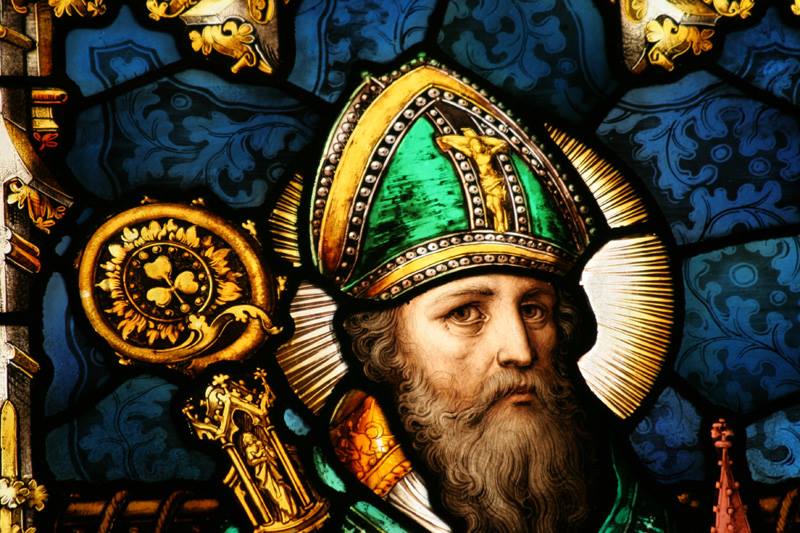
Perhaps it has something to do with our patron Saint Patrick, who once left his own home to return to the land of his exile in order to bring our ancestors the beautiful gift of faith.  He did so without fanfare or flourish.  Instead he preached the Gospel with a huge sense of his own unworthiness. ‘I am Patrick, a sinner’, he wrote, ‘ most unlearned, the least of all the faithful, and utterly despised by many’. But Patrick was convinced that God, in His great mercy, poured His grace and strength upon him, calling him, sinner as he was, to do great things for God.


In one of my favourite passages from Saint Patrick’s writings he describes himself as being like a stone, lying in the mud, which God lifted up and placed at the very top of the wall.  It was this sense and acceptance of God’s mercy in his life that allowed Saint Patrick to make the choice to face every danger and opposition in order to introduce so many people to the love of God the Father, Son and Holy Spirit.


Last weekend as we celebrated the second anniversary of the election of Pope Francis, I was reminded of Pope Francis’ words in one of his very first interviews when he identified himself to the interviewer as Jorge Bergoglio, a sinner. Like Saint Patrick, our Holy Father has a strong sense of his own unworthiness, and of God’s mercy.  Also like Saint Patrick he insists on calling us to be missionary. People of faith should not to be turned In on themselves, Pope Francis says, but they should go out to the peripheries, accompanying the poor and the marginalised, touching lost lives with the fire of God’s love and mercy.


Speaking in Rome at the weekend, Pope Francis said: ‘No one can be excluded from the mercy of God; everyone knows the way to access it and the Church is the house that welcomes all and refuses no one. Its doors remain wide open, so that those who are touched by grace can find the certainty of forgiveness’.  He went further to say: ‘The greater the sin, so much the greater must be the love that the Church expresses toward those who convert’.


To help us in our reflection on this theme, Pope Francis has called an extraordinary Jubilee Year to begin next December that is to have the mercy of God at its centre. It shall be a Holy Year of Mercy, calling us all to live in the light of the Lord’s words: “Be merciful, just as your Father is merciful. (cf. Lk 6:36)”
As he wrote in his 2013 Apostolic Exhortation in Evangelii Gaudium (The Joy of the Gospel):
“The Church must be a place of mercy freely given, where everyone can feel welcomed, loved, forgiven and encouraged to live the good life of the Gospel.”


It would be wonderful if the people of Ireland, in imitation of Saint Patrick, and inspired by the great Irish missionary endeavours of past centuries, could rekindle their missionary zeal to become ‘missionaries of mercy’ for today’s world.  Mission is in our blood as Irish people.  There will be no renewal of faith in Ireland without a parallel renewal of mission, and that mission will be a mission of mercy, one that is conscious of our sinfulness, weakness and need for God’s abundant mercy for ourselves and others.


On this Saint Patrick’s Day I offer every blessing and good wish to the people of Ireland, to all Irish people overseas and especially to Irish missionaries – lay people, religious and priests – who are following in the footsteps of Saint Patrick in bringing the comfort and the joy of the Gospel of Mercy to faraway places.


Beannachtaí na Féile Pádraig oraibh agus go mbeannaí Dia dhaoibh go leir.


Amen

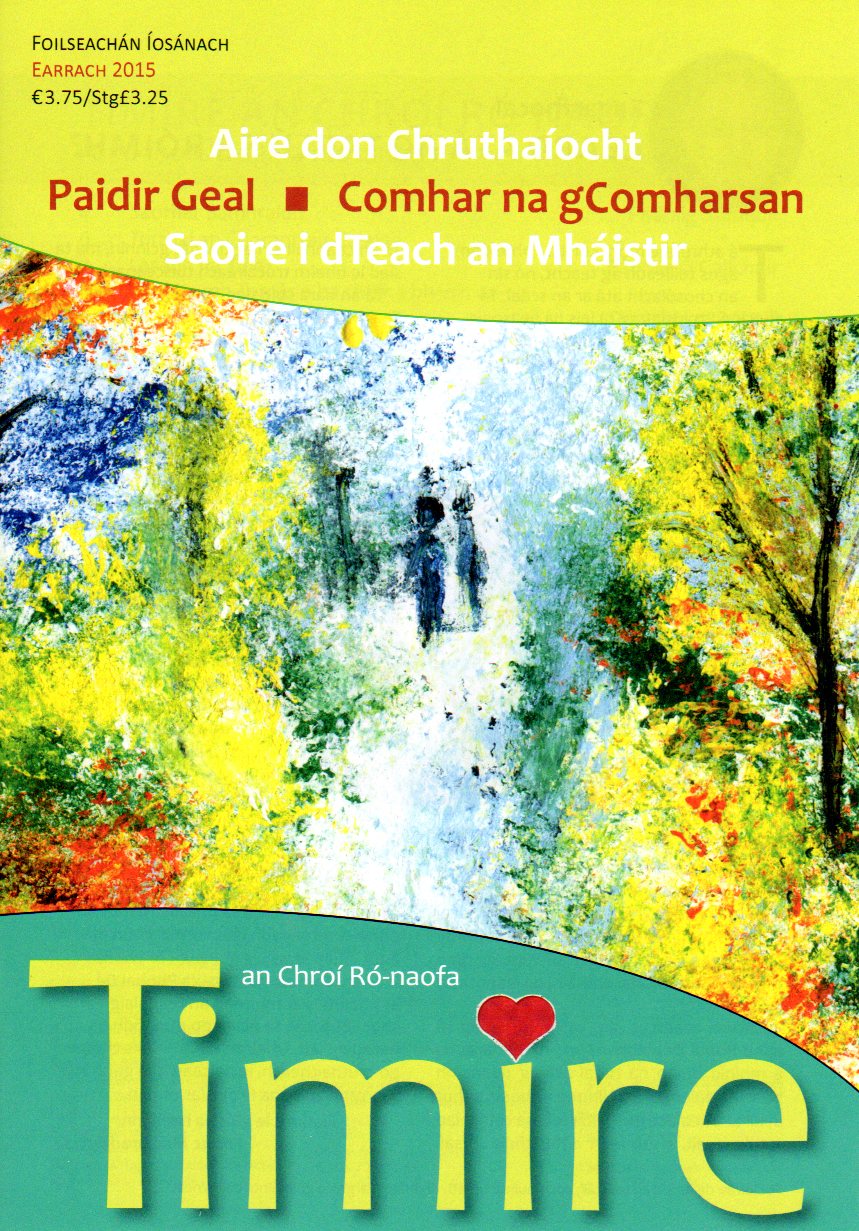
An Timire

Timire an Chroí Ró-Naofa or an Timire as it is better known is the oldest Irish Language magazine in the world, in print since 1911 and now available on the web. It comes out 4 times per year, Spring Summer, Autumn and Winter. The anchor articles offer reflections on the intentions of Pope Francis for the coming 3 months. Each issue contains a variety of other articles in social, cultural and spirituality areas that would be of interest to our Catholic Christian readers.

From our editorial:

Céard atá ag tarlú sa Róimh?

Tá athruithe móra curtha i bhfeidhm agus tuilleadh ag teacht. Tá an Pápa Proinsias ag rá leis na heaspaig is leis na cairdinéil gur seirbhís atá de dhíth ar Phobal Dé. Leis an tseirbhís sin a thuiscint, ní mór don duine mór teagmháil phearsanta a bheith aige leis an duine beag. Ní mór dó siúl in éineacht leis an gcosmhuintir, an chuid den bhealach fad is féidir. Níl bealach ar bith eile le cruachás na cosmhuintire a thuiscint. Bhí an t-eolas sin ag an Éireannach fadó a scríobh:

Conas sin, a Phápa?

Cad a bheir na bráithre ag marcaíocht?

Is gurb amhlaidh bhí San Proinsias,

Dar mo choinsias, ag coisíocht!


What’s happening in Rome?

Big changes are taking place. Pope Francis is telling us that leadership means service and if those in charge are to serve God’s people they must be in personal contact with those on the ground and walk some of the way with them / us in so far as they are able. That is the only way to understand the predicaments of ordinary people.

Léigh leat / read more at www.timire.ie

Do altanna ón Timire ar Intinní an Phápa Proinsias: Link: www.tearmann.com


Timire March 2015

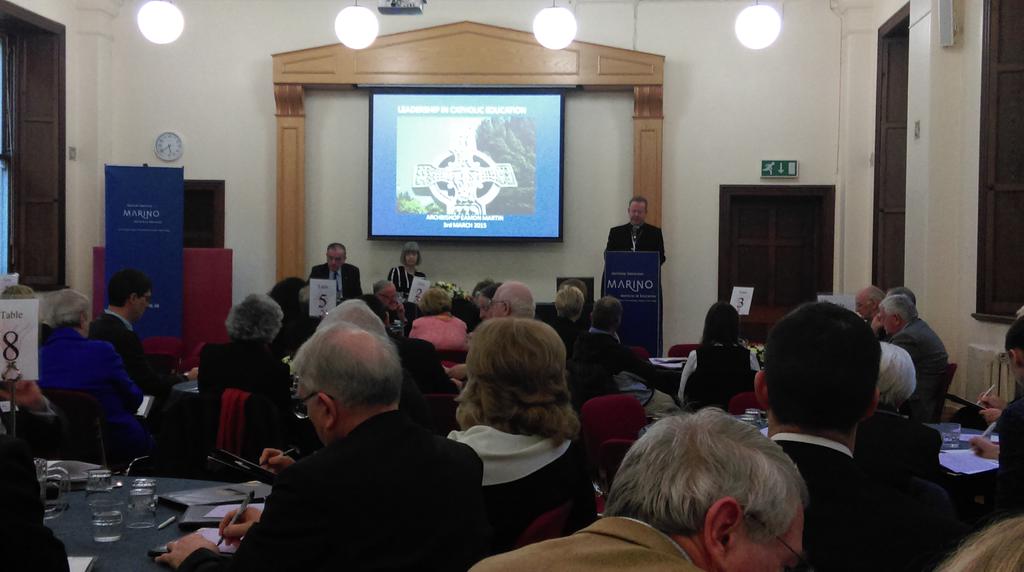
‘Leadership – a Catholic Perspective’ Opening address by Archbishop Eamon Martin to Annual Round Table Discussion at Marino Institute of Education

It is dangerous when you are preparing a talk to ‘Google’ your theme. You get 492 million results for the word ‘leadership’, 106 million for ‘Catholic leadership’! An Amazon book search brings up almost 20,000 books on leadership. I decided it was best to offer you instead some personal reflections, largely based on my experience of working in a variety of leadership roles in schools: as a teacher, school principal, a member of several Boards of Governors, as a Trustee, and of course as a priest, and more recently as a Bishop. Thank you for inviting me.

I am conscious that I’m standing in a roomful of leaders, so, in our round table discussion I look forward to learning from you. I’d like to share with you three ideas of leadership from a Catholic perspective: Calling and Charism; Communicating Catholic Vision and Values; and, Fostering Faith Formation and Mission.

CALLING AND CHARISM

From a Catholic perspective I have always considered leadership to be a calling and a charism. In the secular world, people speak of ambition to become a leader – if necessary, it’s ‘dog eat dog’ on the way to the top. Seeing leadership as a ‘calling’, or a vocation from God, is something very different. It has its roots in our baptismal calling.

I also see leadership as a charism – a gift given to some people by the Holy Spirit for the good of others and for the building up of the Body of Christ. When God grants us the gift of leadership, and calls us to use it, it is not for our own benefits or simply to satisfy some personal ambition. It is given to us to make a difference, and, in the case of educational leadership, it is given for the well-being of our children and young people – can be a more precious and wonderful vocation or charism than that?

It is not surprising that many people react against a call to leadership. Almost in scriptural terms they say: ‘Not I Lord’. ‘You couldn’t possibly mean me’. At every juncture in my own vocational journey, I have found myself instinctively recoiling from additional leadership responsibilities – and no small part of this has been my sense of personal unworthiness, a knowledge of my own weakness. Nowadays leadership puts us in the spotlight of public attention. There is a false perception out there that leaders must be perfect people – squeaky clean – women and men who know it all, who have it all worked out.

I was inspired by Pope Francis in his first interview when he said, in words reminiscent of St Patrick: ‘I am Jorge Bergoglio, a sinner’. The motto he chose was taken from the call of St Matthew; ‘miserando atque eligendo’ – in showing mercy, God chose me. The consolation of these words draws upon a well-known maxim within Catholic spirituality that when God calls us, for example to a position of leadership for the good of His People, he does not leave us alone. He helps us out. As the medieval saying puts it: ‘to those who do what is in them to do, God does not deny his grace’.

In imitation of Christ, the Teacher, the Catholic leader is ‘one who serves’ and ‘one who shares’ leadership. The Catholic leader will always be on the look-out for others who have a calling to leadership – she or he will learn to recognise the gifts of leadership in others, and will call these gifts forth. Hence, leadership in Catholic schools and organisations cannot be concentrated in one person ‘at the top’. Instead, it will be collaborative, collegial, and will permeate all aspects of the life and activity of the school or parish or wherever it is being exercised.

That is why we ought to be on the look-out for leadership everywhere: for young leaders among our pupils; for beginning teachers or support staff who are demonstrating leadership potential in their ideas and activities; for the enthusiastic parent who leads by example; for the member of middle or senior management, or the Board member who is clearly bringing something special to the table.

From the Catholic perspective, leadership is never autocratic or selfish; it respects and calls forth the gifts and skills of everyone; it acknowledges initiative and creates a culture where a variety of gifts is nourished, developed and celebrated. At times this might mean taking a risk with new leaders, allowing someone to lead even when you are uncertain it will work out. We all know our Leadership ability grows through mistakes, gentle constructive criticism and reflective conversations where we are not ‘put down’ or ridiculed for failure, but encouraged to try again doing things slightly differently.

COMMUNICATE THE CATHOLIC VISION AND VALUES

The second idea I’d like to stress about leadership from a Catholic perspective, is the importance of the leader communicating Catholic Vision and Values. The desire to articulate what is distinctively ‘Catholic’ about the organisation, be it school or parish, to a wide variety of internal and external audiences, is central to the role and responsibility of the leader.

This can be challenging, especially if the leader is unclear about what the Catholic ethos is, or sees it as merely an ‘add-on’ to the role. In recent years we have gotten better at describing and envisioning what is distinctive about Catholic education and schooling. The work of diocesan education teams and Trusts like ERST, CEIST and others at macro level, and more openness to discussing ethos at school level, have helped considerably in this regard. I should mention the tremendous catalyst that Catholic Schools Week has been in encouraging young people, teachers, Boards and parishes to describe and celebrate in simple, yet powerful ways, what it means to be a Catholic school.

The school leader needs to be at the heart of these efforts. In a Catholic school, leaders like the principal, the Board of Management and Trustees have a particular responsibility to promote what it means to be a Catholic school – and to provide resources so that there will be opportunities every year (for example at an in-service day) for the whole school community to better understand and evaluate progress against the ethos ‘indicators’ that are now described in the charter and policy documents of most patron bodies and trustees. Unlike many other sectors, the family of Catholic schools shares a vision for Catholic education. There are, of course, particular embodiments of this vision rooted, for example, in the foundational charisms of various religious congregations. These add richness and diversity to our understanding of the ‘Catholic school’.

Recently, during his visit to the Philippines, Pope Francis, perhaps unintentionally, gave us a model of the Catholic vision for education. He told young people that the most important subject they must learn in life is to love. To love like Jesus, he said, we need three languages: the language of the mind, the language of the heart and the language of the hands. These three languages, he said, must be spoken together in harmony, so that what we think harmonises with what we feel and what we do.

Applying Pope Francis’ words to our Catholic schools challenges us to see our schools as communities where our young people can learn to love and to serve God with the languages of the mind, the heart and the hands. We ought not to concentrate all our energies on any one of these three languages: as if the language of the mind was superior to that of the hands; or, as if our knowledge and actions mean anything without love – the language of the heart. A good Catholic school leader ensures that young people are given opportunities to integrate their thoughts, feelings and actions so that they leave school as fully rounded and developed individuals, not only with good grades, but also with Christian attitudes and values. In a good Catholic school our children and young people learn to think like Jesus, to feel and love like Jesus, and to do and act like Jesus – with all three in harmony.

The wonderful privilege of the leader in the Catholic school is to put flesh on the macro-level vision statements about Catholic education, whether they be from the Congregation of Catholic Education in Rome or from the ERST Trustees in Dublin or Belfast. As leaders in Catholic schools we have that sense of belonging to a much wider family and one of our main tasks is to promote a sense of being the Body of Christ at school level. None of us are leaders to promote our own vision. Building links with our neighbouring schools within the Catholic family is an important aspect of the leader’s role. Together, we are active participants, keepers and shapers of a vision that is much greater than any of us. Our task is to ‘incarnate’ what it means to be a Catholic school today, with all the joys and hopes, achievements and struggles of this time and place. This is what makes leading from a Catholic perspective at once so fulfilling and challenging.

Today’s leaders in Catholic education have no easy task. To articulate Catholic vision and Gospel values in an increasingly secular world and sometimes in an aggressively secular environment which sees no place for faith schools, can make us defensive or even guilty about our ‘Catholicity’. Our schools exist within a culture of individualism and moral relativism where ‘truth’ is often presented as personal opinion. We can no longer take the Catholic vision and ethos of our schools for granted. As leaders, it is good to ask ourselves key questions: what is unique and distinctive about Catholic education? Is Jesus Christ the centre of everything that we are doing? Are our pupils leaving us, not only with the best possible grades and achievements, but also having had a living encounter with Jesus? To what extent do they leave us with a mature understanding of the fullness of faith which will sustain them in the ups and downs of their lives?

Leaders at all levels in Catholic education should not be afraid of these questions. On the contrary, these are the questions which add spiritual value and fulfilment to our day. To have a sense of direction for education that is more than simply about equipping young people with grades and skills to be contributors to the economy – this puts heart and soul into the teacher’s and principal’s occupation – or should I say, vocation.

In my travels around schools I notice that deep sense of calling in our school leaders. It presents as optimism, joy and positivity about young people and the dignity of every person; it shines out in their wanting to promote a culture of forgiveness, reconciliation, tolerance and respect for all; it is there in the pursuit of excellence and high expectations for all young people, but not in an overly competitive way, boasting success over neighbouring schools against a very narrow range of ‘success indicators’. Rather, the Catholic vision looks way beyond exam outcomes to the ultimate purpose of life – our personal fulfilment and salvation in Jesus Christ. Our leaders will therefore invest in relationships and people. They show commitment to improvement at every level and for everyone in the school community. Pupils and staff are encouraged to become the best they can be: intellectually, socially, morally, emotionally, physically and spiritually. –

FAITH FORMATION AND MISSION
That brings me to my third point about leadership, from a Catholic perspective: the role of leaders in faith formation and mission.

It is important for us not to lose sight of the responsibility that our schools have, along with our parishes and homes, for helping young people to grow in faith. Parents are, of course, the first educators of their children in the ways of faith. The parish community will also be supportive of its young members as they continue their faith journey from infancy to childhood to adulthood. The contribution of the Catholic school to this is essential and life-giving. There are some who question the role of Catholic schools in faith formation and mission – some prefer to place responsibility for sacramental preparation, catechesis and faith development wholly within the remit of the home and parish.

The vision for evangelisation and catechesis articulated in the National Catechetical Directory, Share the Good News, sees a continued role for all three partners – home, school, and parish – in evangelisation and the handing on of faith. But the corresponding roles and responsibilities of each need to be revisited – we cannot rely on a model of forty years ago. Why is it that, despite the wonderful examples of awareness, outreach and prayer in many of our Catholic schools, the presence of young people in our Churches at weekends is ‘few and far between’?

In many of our primary schools, teachers find themselves quite literally ‘in loco parentis’, being the first to introduce children to God, to teach them to pray and what it means to be loved by God. First Holy Communion and Confirmation teachers are often disappointed that, having put so much effort into explaining the meaning and beauty of the sacraments to their pupils, parents are simply not bringing their children to Mass on a regular basis.

These issues are important for all of us in respective leadership roles within our schools and Church. How much do our teachers and school leaders see it as part of their calling to help educate our young people in the faith? What is the optimum relationship between school, home and parish in the Ireland of 2015 to enable all our young people to hear the Good News, begin and build a mature and prayerful relationship with Jesus nourished by the sacraments, grasp and profess the central truths of the Catholic faith, live good and moral lives, make decisions which promote love, peace, justice and dignity for all? It is time re-imagine and re-configure the traditional ‘triad’ of home, school, and parish, and to put in place the best infrastructure for the proclamation of the Gospel with a coherent programme of catechesis and faith formation for young people.

Young people are often left without moral reference points and are easily swayed by ethical relativism, or by a comfortable ‘spirituality without challenge’. In some cases they are tempted towards a kind of ‘nihilism’, viewing life as basically meaningless. Why is it that so many of our young people are struggling with addictions, depression or anxiety at such an early age? My most difficult and traumatic experience as a school principal was to get news that a pupil or past pupil had taken his own life and to witness the devastating impact it had on their families, close friends and my school colleagues. Our challenge, as leaders, is, as the first letter of Peter puts it, to give our pupils a reason for the hope that is within us (1 Pet3: 15).

There are ways of doing this. An essential task of leaders is to ensure that prayer and worship forms part of the day for every teacher and pupil, that there are opportunities for Confession and for the celebration and adoration of the Eucharist, and that the Catholic prayers and the Rosary are taught to all pupils. In cooperation with diocesan religious education advisers, leaders should also ensure that there is a strong catechetical component to Religious Education so that all pupils can learn the truths of the faith, are offered relationships and sexuality education within a Catholic morals and values framework, are instructed in all aspects of the moral life and grasp the essentials of Catholic social teaching. This responsibility does not rest solely within Religious Education. Other subjects can help pupils engage in dialogue about the interaction of faith and culture, promote a culture of life, love and respect for creation and develop a sense of wonder through the beauty of religious art and music.

There is no doubt that our schools are becoming increasingly more diverse with pupils and teachers from a wide variety of cultural, religious or non-religious backgrounds. Speaking last year, Pope Francis pointed out that our Catholic schools and universities are spaces of ‘dialogue and encounter, not unlike that in which Jesus began to proclaim the Good News – a ‘Galilee of the nations’, a crossroads’ of people, diverse in terms of race, culture and religion’.
It is also true that many teachers are struggling with their own faith and practice and may feel inadequate when it comes to faith formation or dialogue. An important leadership task, therefore, is to encourage and provide opportunities for teachers to pray, to speak about faith, and learn their own mature language for discussion about faith matters. A help in this is the variety of faith development and adult catechism opportunities are now available at parish, diocesan and national level throughout Ireland. These initiatives are helping many Irish Catholics, young and older, to find their ‘Catholic voice’

It is clear from what I am saying that I see schools playing a critical role in the new evangelisation within Ireland. I would go so far as to encourage a re-writing of our approach to Catholic education within a missionary frame of reference. In Evangelii Gaudium Pope Francis suggests we should put everything we are doing in the Church in a ‘missionary key’ and evaluate all of our structures, schedules in pastoral ministry in the light of mission.

An essential part of this mission is to be on the look-out for those who are being left behind or neglected in any way. The holy founders of our schools were inspired by a preferential option for the poor and we can be rightly proud of our efforts to serve the most disadvantaged students in our Catholic schools. It is important that leaders in our Catholic schools continue to evaluate school assessment and admissions policies, exclusion policies, special needs and bullying policies to ensure that those who are most marginalised are not being neglected or unfairly disadvantaged and that they are enabled to reach their full potential.

A good Catholic school will also challenge us to confront ‘worldliness’, that ‘throwaway culture’ which reduces everyone and everything nowadays to consumers or units of consumption. Catholic school leaders will encourage their pupils and staff to ‘tune in’ to the cry of the poor in the world. I applaud those Catholic schools which organise outreach programmes for their pupils, establish youth branches of St Vincent de Paul Society, organise trips to Lourdes for pupils as helpers of the sick, plan educational visits to orphanages in Romania, or to mission countries like Kenya or Uganda. These experiences can have a profound, lifelong impact on our young people and on the teachers who accompany them, helping them to grasp key concepts of Catholic social teaching such as solidarity, fair distribution of the world’s goods, and the impact of poverty on the dignity of the human person.

Having examined three key issues for leadership from a Catholic perspective: Calling and Charism; Communicating the Catholic Vision and Values; Fostering Faith Formation and Mission, I would like, in conclusion, to thank you for accepting the call to leadership and encourage you to persevere.

Being a leader in Catholic education today is a privilege but also a tough challenge. To remain enthusiastic, fresh and positive as a leader, you need regular opportunities to rest and reflect, and to nourish the spirit. When I look back on my own journey in leadership, I know I have been sustained by trusted mentors and by close and caring friends who are there to listen when I feel stressed or frustrated. From a Catholic perspective, I also know it is essential to feed the soul, to replenish the spirit through prayer and regular confession. Unless you are a saint, you will make many mistakes in leadership, and possibly hurt people at times through over-tiredness, irritability or lack of understanding. I have found the Word of God and a close relationship in prayer with Mary, our Blessed Mother to be indispensable in my leadership. Bringing the joys and struggles of the day to her in prayer helps me to renew my ‘Yes’ to God’s will and to my call to leadership.

I recommend that all leaders in Catholic education should be alert to their own faith journey. In addition to some form of professional supervision, I believe that a spiritual director or regular confessor will be of immense help. Not only is it important for a leader to be merciful, compassionate and forgiving towards others, but it is equally important to receive forgiveness and mercy yourself.

And every morning, before leaving for work, it is worthwhile offering all up to God – the prayers, works and sufferings of every day. After all, we are mere servants, God’s instruments, doing God’s work, building God’s kingdom.