
‘A better future: towards a culture of life, care and hope for all’ –
A Pastoral Reflection by the Catholic Bishops in Northern Ireland on 5 May elections to the Legislative Assembly
Summary of the document for easy printing: NI Bishops’ Pastoral Armagh Archdiocese
- Voting for those who will govern our society is a moral act. Each vote cast, or not cast, potentially influences the values that will shape future law and policy
- We appeal for a new and more constructive political culture, one based on a shared commitment to the common good and the priorities of citizens rather than on traditional constitutional issues
- We call on all parties to address, in the next Programme for Government,the disturbing levels of childhood poverty and the systemic issues of social need … One practical appeal is for funding to schools so that no pupil begins the day without a nutritional breakfast
- The social and moral teaching of the Church is clear, that it is never morally acceptable to support any policy that undermines the sacred inviolability of the right to life of an innocent person in any circumstances
- As Pope Francis has recently said, there are “no grounds for considering homosexual unions to be in any way similar or even remotely analogous to God’s plan for marriage and family”
- We call on all politicians to respect the positive contribution to peace and good relations made by all school sectors and to ensure that all school sectors are treated equally in terms of funding and policy
- See appendix below: Ten questions which Catholics are encouraged to ask candidates who are standing in the Assembly elections
Outline of content:
- Introduction (n. 1-3)
- Political participation and the moral duty to vote (n.4-5)
- The failure of the Assembly to address childhood poverty and social need (n.6-9)
- A call to a new political culture (n.10-14)
- Building a pervasive culture of life, care and hope (n.15-19)
- Considering the moral consequences of casting a vote (n.20-22)
- Encouraging a culture of welcome and hope for all (n.23-25)
- Respect for Religious Freedom and concern for persecuted Christians (n. 26-30)
- Respect for the Right to Faith-based Education in a genuinely pluralist society (n.31-37)
- On caring for our Common Home (n.38-41)
- Support for the family based on marriage between one man and one woman (n.42-44)
- Conclusion: A culture of life, care and hope for all (n.45-46)
- Appendix for Parishes: ‘Ten questions based on Catholic Social Teaching for Catholics to ask candidates standing in the Assembly elections’
__________________________________________________
Introduction.
- As Christians, our encounter with the risen Jesus, living and among us, is a decisive event that has consequences for every aspect of our lives. This includes our lives as citizens. Renewed by the Spirit, Christ calls us to be artisans of a new creation, the leaven in society of ‘a new social, economic and political order, founded on the dignity and freedom of every human person, to be brought about in peace, justice and solidarity.’ (Compendium of the Social Doctrine of the Church, n.19)
- Far from separating us from concern about society and its development, the Gospel commandment to love one’s neighbor as oneself commits us ‘to work for the good of all people and of each person, because we are all really responsible for all’. This is what Catholic social teaching calls our duty to the ‘Common Good’.
- In this pastoral reflection, we consider what some key principles of Catholic Social teaching offer by way of direction and priorities in the search for the common good in Northern Ireland at this particular time. In doing so, we have no desire to interfere in the legitimate autonomy of politics, or to support one political party or candidate over another. This is a matter of conscience for each Catholic voter to determine after careful consideration of all the issues, in light of the Gospel and the teaching of the Church. Our sole concern here is to present the universal values of the Gospel, in the tradition of Catholic Social teaching, as an aid to the formation of conscience, in the run-up to the forthcoming Assembly election. We do so with humility, as pastoral leaders in a Church community where, as pilgrims with others, we often fall short of our own ideals and depend completely on the strength and mercy of God. The reflection we offer, therefore, is offered as part of our pastoral responsibility within the community of the Church, and as an expression of the cherished freedom that all enjoy in a democratic society.
Political participation and the moral duty to vote.
- Fundamental to our duty as citizens is the exercise of the precious freedom we enjoy to elect those who govern our society. Catholic Social Teaching affirms the moral duty to vote in free and just elections (CCCn.2240). It values the democratic system and considers politics a noble vocation, insofar as they both serve objective moral truth and affirm the inviolable dignity of every person, reflected in respect for their inalienable right to life and care from conception to natural death.
- We therefore call on Catholics and all citizens to participate in the forthcoming elections in an informed, reflective and respectful way. Recalling the tradition of our Church to include prayers in the liturgy for those who serve in the civil and political sphere, we encourage all people of faith to pray for those who have the courage and generosity to stand for elected office. Our particular prayer is that they will be motivated and sustained by a genuine desire to serve the common good, with an abiding concern for the most vulnerable and disadvantaged in our society.
The failure of the last Assembly to reduce childhood poverty and social need.
 Consistent with our prayer that politicians will have an abiding concern for the most vulnerable, we make as our first appeal a call to all parties in the Northern Ireland Assembly to address, as the foremost priority in the next Programme for Government,the disturbing levels of childhood poverty here, and the systemic issues of social need that fracture so many homes and communities. Pope Francis reminds us that, ‘Just as the commandment “Thou shalt not kill” sets a clear limit in order to safeguard the value of human life, today we also have to say “thou shalt not” to an economy of exclusion and inequality. Such an economy kills’, he says (EG, 53). Quoting one of the leading Christians of the early Church, Pope Francis also reminds us that ‘Not to share one’s wealth with the poor is to steal from them and to take away their livelihood. It is not our own goods which we hold, but theirs.’ (EG, 57).
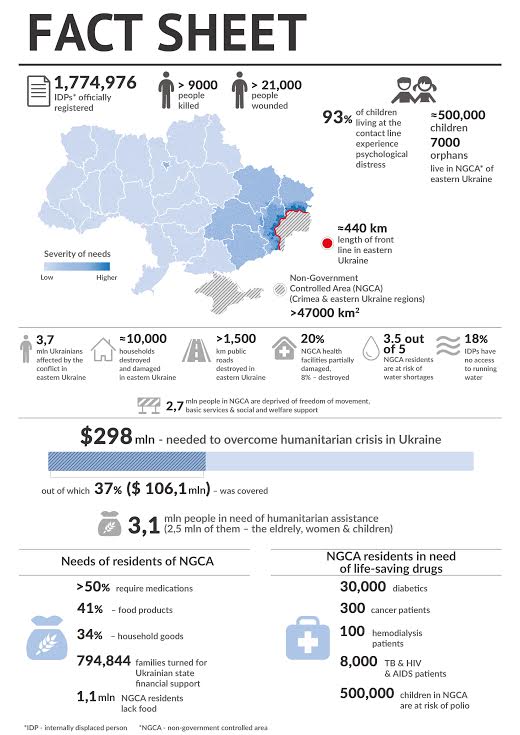
- It is an indictment on the priorities and preoccupations of the last Assembly that Northern Ireland was the only region in the UK where levels of childhood poverty actually increased,with over 101,000 children in Northern Ireland now living below the poverty line. This is in spite of the fact that child poverty levels here were already more than twice those of other UK regions, and the highest across the island of Ireland, at the time of the Good Friday [Belfast] Agreement. If the Gospel values of Christianity mean anything in our society, if our societal commitment to the welfare of children is real, then this cannot be allowed to continue. It is a salutary reminder to all of us, including every politician who bears the name Christian, that how we will be judged by the Lord at the end of time will be determined by how we fed the poor, gave water to the thirsty, clothed the naked, welcomed the stranger, responded to those in captivity and cared for those who are sick (Mt. 25: 34-36).
- Northern Ireland also has some of the highest levels of fuel poverty, of working poor, of those on disability related benefits and other forms of welfare support on these islands and is expected to be the last to benefit from any wider economic recovery.The last Assembly failed to address the issues of poverty, social need and economic recovery in any systemic or long term way. In an environment of excessive and even morally questionable austerity policies imposed by Westminster, it is understandable that it was difficult for politicians in Northern Ireland to achieve all they had hoped for in terms of the ‘peace dividends’ of the Good Friday Agreement. Individual politicians and parties will also be able to point to some important improvements they have made to the quality of life and financial support available to help those in need, including important mitigations of the Westminster welfare reforms. However, it is morally and politically inexcusable that some twenty years after the Agreement, Northern Ireland still experiences the widest gap on these islands between the haves and the have nots, and that this gap is widening further.
 In this pastoral statement, therefore, we appeal to Catholics and all who believe in a more just and equitable society, to make the systemic and comprehensive eradication of childhood poverty and social need the key priority of the next Assembly. One practical appeal we make is for funding to be made available to schools so that no pupil begins the day without a nutritional breakfast. The benefits that flow from such a policy in terms of health, concentration, behavior and outcomes are well established in research and represent, in purely economic terms, an excellent return for the relatively small financial investment this requires in the future of our young people. We are particularly proud that some of our Catholic schools, working in some of the most disadvantaged communities in Northern Ireland are taking the lead even in the context of enormous pressures on their school budgets.
A call to a new political culture.
- The poor and most vulnerable have paid the greatest price in Northern Ireland for a political culture that has too often been dominated by constitutional rivalries, a preoccupation with “tribal issues” and party point-scoring. This has contributed in turn to a discernible alienation from politics on the part of many, particularly the young.
- Following the Good Friday Agreement, almost two decades ago, many had hoped for a new political culture in Northern Ireland, one that would open up the space to address, as a shared priority, the urgent issues of social need and disadvantage, the healing of the legacy of hurt and pain created by violence, and the building of a social and economic infrastructure that would give grounds for hope to current and future generations. By committing all political parties to ‘partnership, equality and mutual respect’ (art. 2), and assigning the question of the constitutional future of Northern Ireland to a separate referendum (art. 1.ii), an exciting opportunity was created to move away from traditional tribal politics and an adversarial political culture dominated by the constitutional question.
- As the Assembly elections approach, we make an appeal for a new and more constructive political culture, one based on a shared commitment to the common good and the priorities of citizens rather than on traditional constitutional issues. This will require the Assembly to look beyond its own resources and preoccupations to widen the social and civic base of politics. The loss of the ‘Civic Forum’, for example, committed to in the Agreement but quietly shelved in subsequent years, is only one symptom of a political culture that has become more and more detached from the wider interests, experience and expertise of civic society, including of Churches and faith groups. We urge the next Assembly to establish new mechanisms of regular and transparent dialogue between the political institutions in Northern Ireland and the wider sources of social and political capital in our society, such as business organisations, agricultural organisations, universities and educational groups, voluntary organisations and NGO’s, as well as Churches and faith organisations.
- Something important is lost when the enterprise of politics becomes detached from these vital and positive sources of the common good, which make a significant contribution to the life and well-being of citizens and society. We also appeal for a new culture of political discourse, one that is able to argue and differ respectfully, to build constructive consensus around areas of common concern and to set aside differences when issues fundamental to the common good are at stake. This call to a new and more constructive civil discourse extends also to those who are involved in the world of social, print and broadcast media, who have a vital role to play in enriching public debate and improving the quality of life of citizens.
- We make this call mindful that as a Church we too must play our part in creating a new and positive civic and religious culture, one focused on working together with others for reconciliation and an end to sectarianism in all its forms.
Building a pervasive culture of life, care and hope.
- The Gospel of love, and from it the ideal of the ‘civilisation of love’ that Catholic Social Teaching proposes to the world, calls on all of us to build a pervasive culture of care for others, especially for the most vulnerable. Building such a culture of care demands that we prioritise those policies in health, welfare, employment and economic distribution that improve the life and dignity of every citizen, irrespective of their stage of life or state of life. It calls us to become active citizens in what Pope Francis calls the ‘revolution of tenderness’, a revolution by which our ‘hardness of heart’, that gives rise to so much inhumanity and cruelty in the world, is replaced by a sensitivity and active concern to protect all and care for all, including the earth itself, our common home.
- One of the great contradictions of our age, is that at the same time as society is developing a more urgent sense of the need to care for our planet and other creatures, many seem determined to treat some of our fellow human beings as something ‘disposable’, to be ‘thrown away’, as part of what Pope Francis calls our pervasive ‘throw-away’ culture. This is particularly true with respect to both ends of the spectrum of human life.
- Central to the good news that the Church proclaims is that the life of every person is sacred and inviolable, irrespective of the stage or state of that life. It is regrettable that some choose to caricature the Church’s promotion of the inviolability of human life, from conception to natural death, as a mere ‘religious doctrine’, and therefore to be dismissed in the name of a free and secular society. Secularism is not a neutral philosophy of life among others, uniquely capable of facilitating pluralism in society, and the grounds upon which the Church upholds the inviolability are both rational and human, as much as they are religious. The principle of the inviolability of innocent human life is the most fundamental of all moral principles. It is the basis upon which every human right we enjoy as persons is predicated. This is not only a religious doctrine, but a universal human value upon which our very freedom and dignity as a person rests. It admits of no exceptions. To deliberately and intentionally take the life of an innocent person, whatever their state or stage of life, is always gravely morally wrong. To co-operate in such an act, by supporting it directly or indirectly, as an individual act or as a social policy, is also gravely wrong.
- In situations of human crisis and need, our humanity is deepened and ennobled when we respond from our endless capacity for compassion and care. As a Church, motivated by the Gospel of love, and inspired by the call to the ‘revolution of tenderness’ proposed by Pope Francis, we call on all those who believe in a better future for humanity to preserve the dignity and sanctity of human life, in all its stages and conditions, as an affirmation of our human capacity to love, support and care for those faced with the most challenging circumstances. We call on our politicians to provide every possible service and support to women, parents and families who are faced with severe difficulties and crises in pregnancy. The services and care provided at the moment are far from adequate. We make a particular appeal, with others, for the next Assembly to commit to the provision of comprehensive peri-natal hospice services for women and their families responding to a diagnosis of life-limiting disability for their unborn child. These unborn children are in every human, medical and moral sense living human beings who, especially in their vulnerability, and with their mother, deserve the utmost love, care and support we can give them as a society. Taking the life of an unborn child with severe life-limiting conditions cannot be the most compassionate and humane response we have to offer to a mother in crisis pregnancy in the twenty-first century.
- In the often emotionally charged and adversarial debates that take place on these issues, it can be difficult to convey the sensitive and hope-filled vision for humanity at the core of the Church’s belief in our noble capacity as humans to care, and to work for life-affirming solutions to challenging human problems. What is needed is a calm, rational discussion about these sensitive issues marked by a common concern to ensure that all those facing difficult situations in pregnancy, or at the end of life, receive a compassionate response based on the greatest degrees of love, understanding and care as a society we can provide, a response that affirms rather than undermines the universal moral principle that the right to life of every innocent and vulnerable person is inviolable.
Considering the moral consequences of casting a vote.
- Voting for those who will govern our society is a moral act. Each vote cast, or not cast, potentially influences the values that will shape future law and policy, by endorsing the values and policies of a particular candidate or party. Voting for a particular candidate is an expression of one’s own ideals and moral vision for society. At the heart of Catholic Social teaching is the moral vision of a society worthy of the human person, marked by a culture of justice and care for all, especially the most vulnerable, and built upon respect for the inherent right to life of every person, from conception to natural death.
- In recent years, it is striking how many Catholics and others in Northern Ireland have indicated to us, and to many priests, that they find it increasingly difficult to find a political party for whom they can vote in good conscience. While respecting the right of any citizen not to vote, where there is no clear alternative in an election, Catholic social teaching encourages us to maximize the good in the political choices that we make, and to limit any potential harm. What this means in any given election, requires careful moral discernment and a decision based on a sincere and informed conscience which has the pursuit of the good, and the avoidance of what is morally wrong, as its principal motivation.
- The next Assembly term will see further pressures being brought to bear on politicians to introduce abortion to Northern Ireland. The moral issue here is not whether what is proposed is abortion ‘on demand’ or some form of so-called ‘limited’ abortion. From a moral point of view, there is no such things as ‘limited’ abortion. Abortion is always the deliberate and intentional taking of an innocent, vulnerable human life, and a direct breach of the commandment ‘Thou shalt not kill’. All forms of direct and intentional abortion contravene this fundamental sacred and human moral principle. The medical prognosis for the life of a child in the womb, or the extent of that child’s disabilities, is no more morally relevant than it is when considering an adult who faces the diagnosis of a life-limiting condition. This is why the social and moral teaching of the Church is clear, that it is never morally acceptable to support any policy that undermines the sacred inviolability of the right to life of an innocent person in any circumstances. A society worthy of our dignity as human persons, is one that calls us to respond from our noble capacity as human beings to care for and support someone in crisis, thereby valuing equally the life of a mother and her unborn child, rather than diminish our humanity by destroying another human life.
Encouraging a culture of welcome and hope for all.
- An authentic and pervasive culture of care also involves commitment to a culture of welcome and support for the stranger and those fleeing from persecution, war or natural disaster. Many local communities, schools, parishes, voluntary and charitable organisations across Northern Ireland have been outstanding in their response to those refugees and asylum seekers who arrive daily to our shores. This includes those coming through the official Westminster scheme to assist people fleeing war and persecution in Syria. The numbers provided for through this scheme, however, remain tiny in proportion to the actual need. Others tell us of asylum seekers from Syria and other parts of the world who no-longer receive support from the State and live among us in the most precarious conditions. We ask those elected to the new Assembly to lobby the Westminster Government to increase the overall number of refugees accepted through the Syrian Vulnerable Person Resettlement Scheme, and to increase the numbers being resettled in Northern Ireland. We also ask that a comprehensive review of the care that is being provided to asylum seekers who arrive in Northern Ireland and to ensure adequate resources for the excellent NGO’s already providing vital support in this area.
- It is also disturbing that Northern Ireland continues to be a destination for persons who have been trafficked and are now subjected to various forms of exploitation on our streets and local workplaces. The legislation passed on Human Trafficking by the current Assembly marked a welcome and important step in expressing our societal opposition to such exploitation and put it place various measures that will help on Human Trafficking. It is vital that the PSNI and relevant statutory care services are provided with adequate resources to respond to the scale of human trafficking taking place in our very midst. We also appeal to anyone who knows of persons who have been trafficked and are being exploited as workers or in any other way to report this to the PSNI as a matter of urgency.
- In addressing the need for a culture of welcome and care for those fleeing their homeland, as so many from our own land had to do over the centuries, it is important to also acknowledge the disturbing levels of homelessness that exist among us. The tragic deaths of an unprecedented number of homeless people on our streets in recent months highlights the complexity of responding to the individual circumstances and needs of those who find themselves in this situation. There are many outstanding groups and services already working in this area. It is vital that the next Assembly undertakes a rigorous review of the nature, extent and causes of homelessness in Northern Ireland as a matter of priority and provides the maximum possible support to those agencies and groups that are responding to those in need of housing on a daily basis.
Respect for Religious Freedom and concern for persecuted Christians.
- International surveys show that Christians are now the most persecuted group across the world. The Centre for the Study of Global Christianity in the United States estimates that 100,000 Christians now die every year, targeted because of their faith – that is 11 every hour. The Pew Research Center says that hostility to religion reached a new high in 2012, when Christians faced some form of discrimination in 139 countries, that is almost three-quarters of the nations of the world.
- The lack of public outcry and political response to such persecution is in stark contrast to the media attention given to many other issues. The former Chief Rabbi Jonathan Sacks told the House of Lords recently that the suffering of Middle East Christians is “one of the crimes against humanity of our time” and said he was “appalled at the lack of protest it has evoked”.
- Research also shows that in addition to violent persecution, Christians have become subject to subtle forms of exclusion and discrimination in various western democracies. This is sometimes experienced as a cultural ‘chill factor’, where expressions of Christian belief and conscience are no longer tolerated in the public square, while secular or other philosophical-ethical views, are incorrectly considered ‘neutral’ and given a certain primacy in decisions about public policy and law. Many local Christians now speak of a growing ‘chill factor’ in public policy and law here in Northern Ireland. This includes examples of exclusion of Church and faith groups from access to public funding for services because of their religious ethos and values, or of being caricatured in public debate as ‘archaic’ for promoting perennial human values such as the importance to society of traditional marriage and the family, or the preciousness of human life in the womb.
- The right to religious freedom is a fundamental right universally recognized as foundational to a genuinely pluralist and tolerant society. It is not limited to the right to worship. The question of how freedom of religious conscience can be most appropriately accommodated and expressed in law is a matter we believe the next Assembly should address. The failure of the Northern Ireland Assembly to protect the rights of a Catholic Church-sponsored adoption agency to provide services in a manner consistent with its religious ethos was a siren call to all who uphold respect for religious freedom as an essential hallmark of an authentically free and pluralist society.
- We encourage the next Assembly to set up a joint-working party on freedom of religion that would explore these issues in consultation with other relevant groups and to make recommendations for future policy and law. We also encourage the next Assembly and its politicians to highlight the issue of the violent persecution of Christians in the Middle East and other parts of the world, as well as the plight of other persecuted groups, by hosting debates and passing appropriate resolutions on these issues.
Respect for the Right to Faith-based Education in a genuinely pluralist society.
- Closely related to respect for religious freedom is respect for the right of parents to have their children educated in conformity with their religious convictions. This right is explicitly recognized in the European Convention on Human Rights and the EU Charter of Fundamental Rights. Respect for this right implies a duty on the State to facilitate a plurality of types of schools where parental demand and public resources reasonably allow for it.
- This is consistent with a society that believes in genuine pluralism and tolerance. Yet the impression is often given in political and public debate about education in Northern Ireland, as well as in certain policy decisions, that the very existence of faith-based schools, and Catholic schools in particular, is something to be regretted and discouraged, rather than celebrated and encouraged as part of a genuinely tolerant society that respects diversity and parental choice.
- Suggestions that only one model of integration of schools can contribute positively to reconciliation, understanding and tolerance is not only offensive to the positive contribution that all other school sectors in Northern Ireland make to peace and reconciliation but is monistic rather than pluralist, is inimical to parental rights and sometimes cloaks a deep-seated hostility to the Catholic faith itself. This is reflected in the suggestion sometimes made that those parents who want a faith-based education for their children should have to pay for it. This is to ignore the fact that all parents have the same rights in this regard and that all parents are tax-payers. Those who are not tax-payers have the same rights as those who are not to a faith-based education for their children.
- The requirement in the Good Friday Agreement to promote integrated education was not intended to create a hierarchy of schools in terms of the rights of parents or recognition of the positive social role that all schools in our society play in terms of promoting peace, understanding and good relations. Yet this is the impression sometimes given, not least by some politicians and others who claim to espouse respect for difference as the very motivation for insisting that ALL children be educated together, irrespective of parental choice.
- Catholic schools, by their very nature promote a pervasive Christian ethos that is inclusive, welcoming and tolerant. As well as in academic outcomes, they often lead the way in terms of pastoral care, welcome for new-comer children to Northern Ireland, inclusion of a diversity of religious and ethnic minorities, support for the disadvantaged, engagement in shared activities with schools from others sectors as well social outreach to local and international communities.
- As a Church we welcome the opportunity to move towards the advent of jointly managed Church-schools in Northern Ireland, similar to those we share with other Churches in England, Wales and Scotland. Through our negotiations with the Transferors and the Department of Education, this is now possible for the first time in law. We continue to encourage all our Catholic schools to be at the forefront of sharing and inclusion. We also call on all politicians to respect the positive contribution to peace and good relations made by all school sectors and to ensure that all school sectors are treated equally in terms of funding and policy.
- A key priority for the next Assembly has to be the need to address educational under-achievement, across all sectors. This includes the need to address the problems of post-primary transfer including, by aligning the curriculum, educational policy and resources more closely to the needs of the real economy.
On caring for our common home.
- In his most recent encyclical letter, Laudato sí: On Care for Our Common Home, Pope Francis reminds us that the planet we share, our common home, faces an urgent and fundamental challenge that affects us all. This is the challenge of environmental degradation and the increasingly dramatic consequences of climate change.
- Whatever the causes of climate change, to care for our common home in a responsible and sustainable way is a good in its own right and something we owe to future generations. The recent Paris summit set challenging but achievable targets for carbon emissions and for the transition to more sustainable forms of renewable energy. Northern Ireland is already a world-leader in the development of such renewable technologies and has enormous natural, educational and other resources to allow this vital aspect of our local economy to grow even further.
- We encourage the next Assembly to invest in research and training to ensure the Northern Ireland economy is well placed to take full advantage of the developing market for new renewable technologies. We also call on the next Executive to support the rapid implementation of the recently approved Environmental Better Regulation Billand to supplement this bill with well-funded measures to secure the environmental integrity of our precious natural waterways, landscapes, seas, fisheries and other resources, as well as supporting all citizens in living in a more environmentally sustainable way, for the sake of future generations.
- As Pope Francis reminds us in Laudato sí,those who will suffer most from any failure to act now to protect our common home will be the poorest around the world. Catholic Social Teaching highlights the essentially global nature of the common good and emphasizes the universal destination of the goods of the earth, as a gift of God, for the benefit of all. This highlights the importance of the local Assembly having a global as well as a regional and national perspective on what constitutes the common good. We encourage the next Assembly and Executive to play their part in contributing to those UN Sustainable Development Goals for 2030 that are ethically consistent and to support the many local individuals and organisations that provide international outreach and outstanding development work in some of the most disadvantaged regions of the world.
Support for the family based on marriage between one man and one woman.
- In Laudato sí, Pope Francis also reminds us that natural ecology and human ecology are inextricably linked. Echoing the words of his predecessor, Pope Emeritus, Benedict XVI, he reminds us that, ‘The book of nature is one and indivisible; it includes not only the environment but also individual, family and social ethics’ (CV, 12). In respect of the ethics of marriage and the family, religious and non-religious people alike have long acknowledged and know from their experience that the family, based on the natural institution of marriage between a woman and a man, is the best and ideal place for children. When legislation is proposed that equates other forms of relationship to the marriage between a man and a woman it effectively says to parents, children and society that the State should not, and will not, promote any normative or ideal family environment for raising children. Such legislation implies that the biological bond and natural ties between a child and its mother and father have no intrinsic value for the child or for society.
- As Pope Francis has stated, ‘we must reaffirm the right of children to grow up in a family with a father and a mother capable of creating a suitable environment for the child’s development and emotional maturity’ (16 April 2014). It is also important to reiterate the objective moral truth, affirmed by the recent post-Synodal Apostolic Exhortation of Pope Francis, Amoris Laetitia(The Joy of Love), that ‘as for proposals to place unions between homosexual persons on the same level as marriage, there are absolutely no grounds for considering homosexual unions to be in any way similar or even remotely analogous to God’s plan for marriage and family’ (n. 251).
- The truth about marriage derives from its intrinsic nature as a relationship based on the complementarity of a man and woman and the unique capacity of this relationship alone to generate new life. This truth does not change with the shifting tides of historical custom or popular opinion. In this context we make a special appeal to those standing for election to the next Assembly to reflect on the importance of the family based on marriage between one man and one woman, as the foundation and cornerstone of society and therefore deserving of special recognition and protection in policy and law. This includes an appeal to protect those institutions and services that provide essential supports to family and marriage such as marriage preparation, relationship counselling, parenting support and other services in a manner consistent with the religious ethos and conviction of the organizations concerned. We call on members of the next Assembly to recognize in law and policy that freedom of religion means more than freedom to worship. It also involves the freedom to live and engage in society in a manner that is consistent with one’s own religious identity and deeply held beliefs.
Conclusion: A culture of life, care and hope for all.
- In conclusion, we recall the fundamental Christian conviction that underlies this pastoral reflection in advance of the Assembly elections. It is this, that the future of humanity lies in the choice between a culture of life and care, or a ‘throwaway’ culture of destruction and death. The greatest hope for our local community and for our common home can only be built on a new and constructive culture of civil dialogue and wider participation in the processes of politics. A new and better future is possible, if it is built on a culture of life, care and hope for all.
- In encouraging all citizens to fulfill their moral duty to vote in the forthcoming Assembly elections, we ask all who do so to inform their conscience in advance about the important moral, social and economic issues that are at stake. In expressing our good wishes to all who are standing for election, and acknowledging the spirit of public service that motivates the noble calling of politics, we assure every candidate of our prayers and encourage potential voters in a respectful and constructive manner to ask the following questions of any candidate to whom they are considering giving their vote.
Ten questions based on Catholic Social Teaching for Catholics to ask candidates standing in the Assembly elections
- What will you do to address the unacceptable levels of childhood poverty in Northern Ireland and the widening gap between rich and poor?
- What will you do to uphold the right to life of unborn children and adults with severe life-limiting disabilities, as well as children conceived through sexual crime, if the next Assembly seeks to introduce legislation that removes the fundamental right to life from them?
- Do you support abortion, the direct and intentional taking of an innocent human life in any circumstances?
- What will you do to protect and support family and marriage and in particular the natural institution of marriage between one man and one woman as the fundamental building block of society?
- Will you support the right of religious organisations to provide services in a manner consistent with their religious ethos and beliefs?
- Will you support the right of parents to have Catholic schools as part of a diverse system of educational provision, based on parental choice?
- What will you do to highlight the persecution of Christians and other persecuted groups across the world?
- What will you do to address human trafficking in Northern Ireland and to help improve services for refugees, asylum seekers and the homeless?
- What will you do to help achieve those UN Sustainable Development goals that are ethically consistent and ensure proper care and respect for the natural environment?
- What will you do to create a more constructive and inclusive political culture in the next Assembly, one that gives hope to all in our society for a better future?
ENDS
For media contact: Spokespersons are available for interview and please contact the Catholic Communications Office, Maynooth: Martin Long 00353 (0) 86 172 7678 and Brenda Drumm 00353 (0) 87 310 4444